
You need to measure a specific weight, but there's no scale in sight. Inaccurate measurements can ruin your project. There are clever ways to estimate weight in a pinch.
You can measure 500g without scales by using common items with known weights, like a 500ml bottle of water. You can also use volume-based estimates with measuring cups, or even apply basic physics principles with a DIY lever balance. These are only estimates, not precise measurements.
I get this question a lot, both in my professional life and from friends. It is a fun challenge. We all find ourselves needing a quick measurement sometimes. Exploring these methods is interesting. But it also shows why we developed precise tools in the first place. Let's look at some of these creative solutions and see how they work.
What can I use to measure 500 grams?
You're searching your home for a benchmark weight. But using the wrong item could lead to a big mistake. Luckily, some common household items have fairly consistent weights.
You can use a standard 500ml bottle of water, which weighs very close to 500 grams. Other options include using coins or standard spoons as smaller reference weights, but you will need many of them to reach 500g, and the small errors add up.
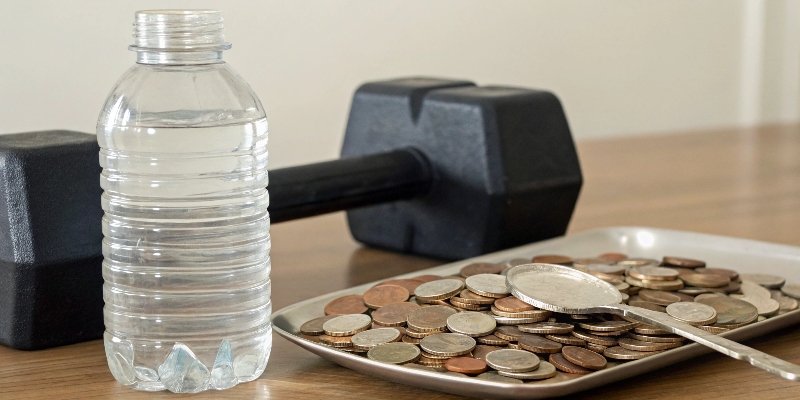
As a manufacturer, I deal with precision every day. But sometimes, an estimate is all you need. The key is to find an object with a weight that is regulated during its own manufacturing process. A bottle of water is a great example. Water has a density of 1 gram per milliliter, so 500ml of water weighs 500 grams. The bottle itself adds a few grams, but it's a very close approximation for most needs. Coins are also useful because their weight is standardized by the government.
Everyday Objects as Weight References
Here is a quick table of common items you can use.
| Tool Type | Conversion Standard | Error Range |
|---|---|---|
| 500ml Bottle of Water | Filled with water ≈ 500 grams | ±10 grams |
| Standard Teaspoon | 1 teaspoon of water ≈ 5 grams | ±1 gram |
| 1 Yuan Coin | 1 coin ≈ 6 grams | ±0.1 gram |
This method is convenient because these items are easy to find. However, it's not perfect. The "±" column shows the possible error. A 10-gram error might not matter for cooking, but in a commercial or industrial setting, that small error can become a big problem when repeated hundreds of times. That's why for any business process, a calibrated digital scale1 is the only reliable option.
How can I measure 500g of flour without scales?
Baking is like chemistry, and recipes demand exact flour measurements. Just scooping flour with a cup is easy, but it is also very inaccurate. Understanding volume-to-weight conversions can get you closer.
To measure 500g of flour without a scale, you can use standard measuring cups. One cup of all-purpose flour is about 125 grams. Therefore, you would need around four cups. This method's accuracy depends heavily on how you pack the flour into the cup.
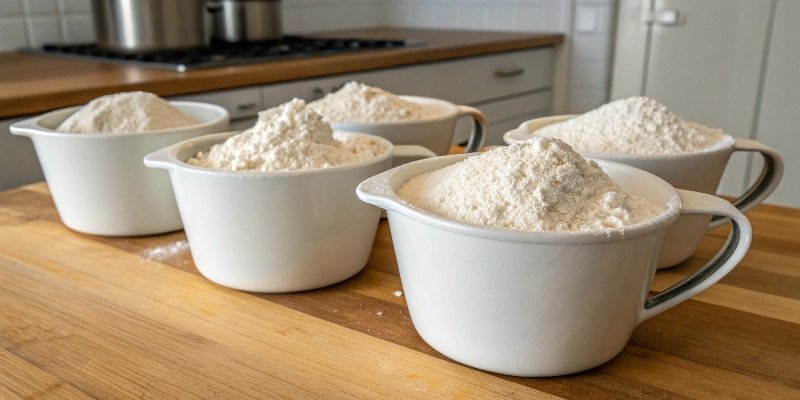
I learned this the hard way when I first started baking. I followed a recipe perfectly by volume, but the results were terrible. The problem was the flour. Powders like flour can be compressed. If you scoop it directly from the bag, the flour is packed tightly, and you get more than you need. If you sift it first or spoon it lightly into the cup, you get less. The difference can be 20-30 grams per cup. For 500 grams, that could be an error of over 100 grams. This is a huge difference.
The Problem with Volume
Using volume to measure weight works well for liquids like water, but not for solids, especially powders.
- Flour: 1 cup ≈ 125 grams
- Granulated Sugar: 1 cup ≈ 200 grams
- Cooking Oil: 1 cup ≈ 224 grams
The density of each material is different. Even the same material, like flour, can have a different density depending on humidity and compaction. In industrial settings, this is a major issue. Businesses cannot rely on volume for measuring raw materials. It leads to inconsistent products, wasted material, and lost profit. This is precisely the problem our weighing systems solve. They provide accurate, repeatable data regardless of how a material is packed.
How much is 100g without scales?
You need a smaller, more precise amount like 100g. Estimating small weights is even harder. The potential for a large percentage error increases. You can break down a larger known weight.
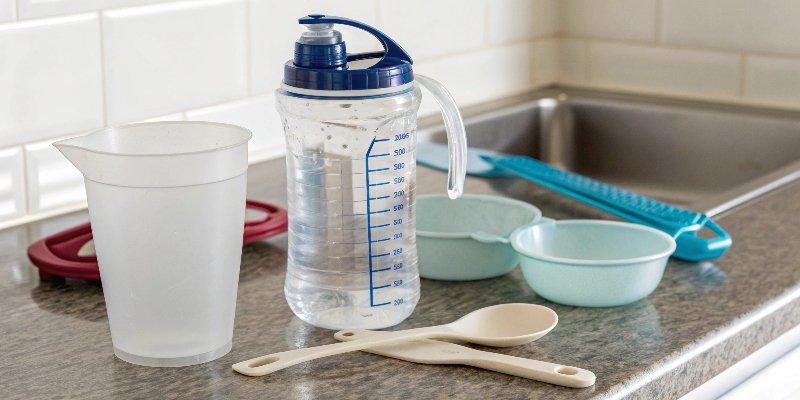
One of the most accurate ways to measure 100g is to use water. Since 1ml of water weighs 1g, you simply need to measure 100ml of water in a kitchen measuring cup. This is far more precise than trying to guess with solid items.
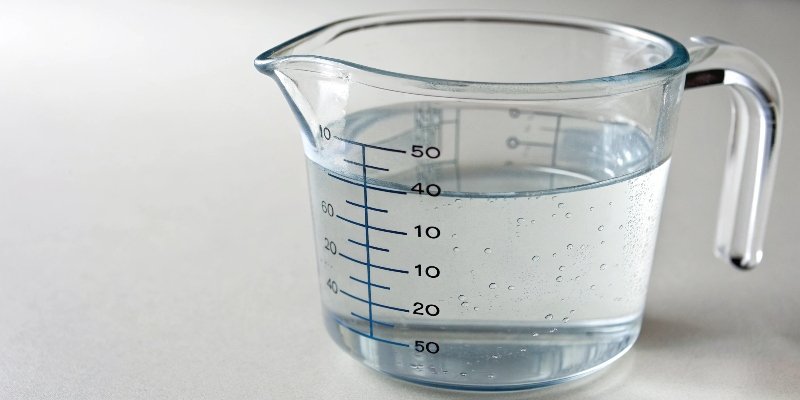
When dealing with smaller weights, a small error becomes a big deal. For example, if your measurement is off by 10 grams when you need 500g, that is a 2% error. But if you are off by 10 grams when you need 100g, that's a 10% error. This is a critical concept in engineering and manufacturing. As we scale down, the need for precision scales up.
Scaling Down: The Challenge of Small Weights
Using water is your best bet for accuracy. Most kitchen measuring cups2 have milliliter markings, making this easy. If you must use solid objects, you could use something like coins. A 1-Yuan coin weighs about 6 grams, so you would need about 16 or 17 of them to get close to 100g. But again, you are adding up the tiny errors of each individual coin. In my work, we provide scales that can measure with an accuracy of a fraction of a gram. This level of precision is essential for many industries, from pharmaceuticals to electronics, where even the smallest error can have huge consequences. It highlights the gap between a household estimate and a professional measurement.
Is there any way to measure weight without a scale?
You need a solution that is more technical than just using household items. Guessing is not a reliable method for anything important. You can use basic principles of physics to create a makeshift balance.
Yes, you can use physics to compare an unknown weight to a known one. A simple DIY lever balance, made with a ruler and a pivot, is a great example. You can also use Archimedes' principle of water displacement to calculate an object's weight from its volume.
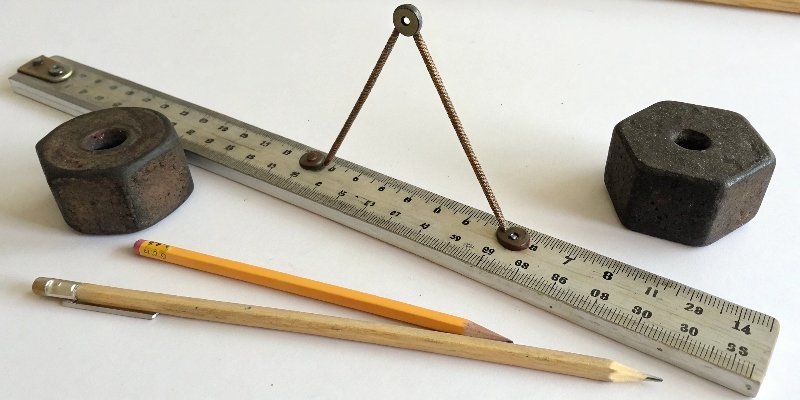
These methods are fun to try and show fundamental scientific concepts. I remember building a simple lever in a science class. It's a powerful tool. You are not measuring absolute weight; you are comparing one weight to another. This is the same principle behind old-fashioned balance scales.
Leveraging Physics for Measurement
Here are two classic methods grounded in science:
-
The Lever Balance Method:
- Take a rigid, straight object like a ruler or a chopstick.
- Place a pivot (like a pencil) under its center to create a fulcrum.
- Put a known weight on one side. A 500ml bottle of water (500g) is a great reference.
- Place your unknown item on the other side.
- Adjust the positions of the items until the lever is perfectly balanced.
- Measure the distance from the fulcrum to the center of each item. The formula is:
Unknown Weight = (Known Weight × its Distance) / Unknown item's Distance.
-
The Buoyancy Method:
This works for solids that sink in water.- Fill a measuring cup with water and note the volume.
- Submerge the object completely and note the new volume.
- The difference in volume is the volume of the object.
- You would then need to know the object's density to calculate weight (
Weight = Volume × Density). This is more complex and less practical.
While these methods are clever, they are also slow and have many sources of error. In a business environment, efficiency and accuracy are key. Our customers in the software industry understand this perfectly. They need reliable data inputs for their systems to work. Inaccurate weight data is like a bug in the code; it can cause the whole process to fail.
Conclusion
While many creative ways exist to estimate weight, they are just that: estimates. For the reliability, speed, and accuracy needed in any professional task, a purpose-built electronic scale is essential.


Comments (0)