
Your scale's accuracy is drifting, causing costly errors in your production line. This inconsistency wastes materials and money. Following a simple maintenance routine is the key to reliable measurements.
To properly maintain a digital scale, you must clean it regularly, calibrate it every 3-6 months with standard weights, and protect it from overload, physical shocks, and extreme environments. This ensures its accuracy and extends its lifespan, giving you consistent and trustworthy results.
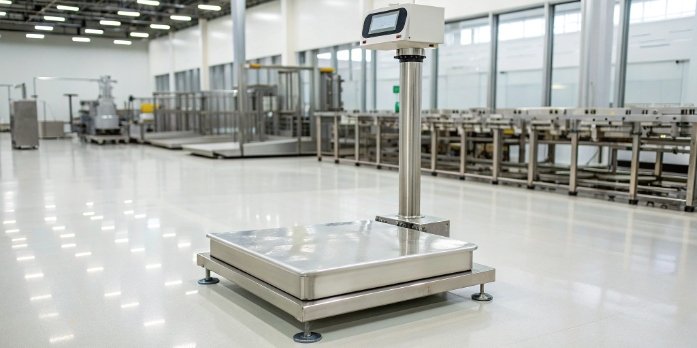
Proper care for your digital scale1 is not just about cleaning. It is a complete process that protects your investment and guarantees precision. In my 18 years of manufacturing industrial scales2, I’ve seen that the best-performing equipment is always the best-maintained. If you want to get the most out of your scale and avoid frustrating errors, you need to understand what helps and what hurts it. Let's explore the simple steps you can take to keep your scale in top condition.
What can damage a digital scale?
You assume your industrial scale is built to last. But simple, everyday mistakes can cause serious damage, leading to expensive repairs or replacement. Knowing these common dangers helps you avoid them.
Overloading, physical drops, and exposure to dust, moisture, or extreme temperatures can severely damage a digital scale. Power surges and improper cleaning with harsh chemicals also risk harming sensitive internal components like the load cell sensor, leading to inaccurate readings or total failure.

In my experience, most scale failures are preventable. The biggest culprit is often the environment. A scale is a precision instrument. It doesn't like vibrations from nearby machinery, direct sunlight heating its components, or high humidity. I always advise my clients to place their scales on a sturdy, level surface away from these elements and use a dedicated power outlet to prevent electrical interference.
Physical damage is another major issue.
- Overloading: Every scale has a maximum capacity. Exceeding it, even once, can permanently damage the load cell. It's like bending a piece of metal too far; it never returns to its original shape.
- Impact: Dropping a heavy object onto the weighing pan3 is just as bad. The sudden shock can send a destructive force through the sensor. I remember a client who had to replace a brand-new scale because an employee carelessly tossed a heavy part onto it. Treat the scale with care; place items gently.
- Contamination: In an industrial setting, dust, oil, and chemicals are everywhere. If they get inside the scale, they can interfere with the electronics and sensor. Even something as simple as a leaking battery can corrode the internal circuits, so always check and replace batteries regularly, or remove them if storing the scale.
How to clean an industrial/kitchen digital scale?
A dirty scale looks unprofessional. Worse yet, the grime and debris can build up and affect its accuracy, throwing off your measurements. A simple cleaning routine prevents these problems.
To clean a digital scale, first turn it off and unplug it. Use a soft, dry cloth to wipe the surface and display. For stubborn dirt, lightly dampen the cloth with a mild, neutral detergent solution. Never spray liquids directly onto the scale.
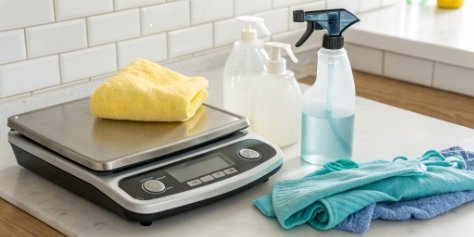
Keeping a scale clean is fundamental to its accuracy. However, cleaning it the wrong way can cause more harm than good. I've seen many scales damaged by good intentions. The key is to be gentle and keep moisture away from the sensitive parts.
Here is the process we train our clients to follow:
- Preparation: Always disconnect the scale from its power source. If it's a portable model, remove the batteries to be safe. If the weighing pan is removable, take it off to clean separately.
- Cleaning: Use a soft, lint-free cloth for general dusting. If you face grease or dried-on material, mix a few drops of a neutral pH detergent (like mild dish soap) in water. Dampen your cloth with this solution, wring it out completely, and then gently wipe the dirty areas.
- Drying: Immediately wipe the scale with a separate dry, soft cloth. Don't let any moisture sit on the surface, especially near the display, buttons, or where the pan rests.
Never use harsh chemicals, solvents, or abrasive pads, as they can damage the scale's housing and display. And unless your scale is specifically rated with an IP waterproof certification, never submerge it or spray it with a hose.
| Do's and Don'ts of Scale Cleaning | |
|---|---|
| Do ✔️ | Don't ❌ |
| Use a soft, dry cloth. | Use abrasive scouring pads. |
| Use a mild, neutral detergent4. | Use harsh chemicals or solvents. |
| Dampen the cloth, don't soak it. | Spray liquid directly on the scale. |
| Unplug the scale before cleaning. | Submerge the scale in water (unless IP-rated). |
Can I leave my digital scale plugged in all the time?
You want your scale ready to use at a moment's notice. But you might worry if leaving it on wastes power or wears it out. Here is the straightforward answer from an expert.
Yes, for most high-precision industrial and lab scales, it is better to leave them plugged in. This keeps the internal electronic components at a stable temperature, which is crucial for consistent accuracy. It also eliminates the need for a long warm-up time before use.
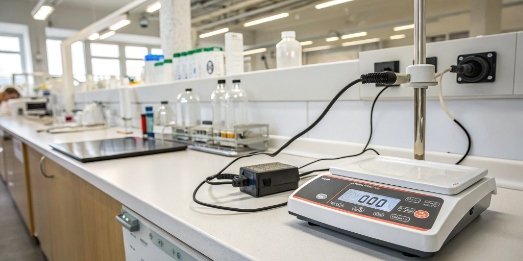
This might seem counterintuitive, but keeping a scale powered on often improves its performance. The electronic components inside a scale, especially the strain gauge load cell, are sensitive to temperature changes. When you turn a scale on from a cold start, its internal temperature rises, and this can cause the readings to drift slightly until everything stabilizes. At Weigherps, we design our scales for stability, but physics is physics.
By leaving the scale plugged in (often in a standby mode), you maintain what's called "thermal stability." The internal components stay at a constant, warm temperature, so the scale is ready to give an accurate reading almost instantly. For standard scales, you should still allow a 15-minute warm-up after turning it on. For high-precision models, that wait can be 30 minutes or more. Leaving it plugged in bypasses this waiting period, which is a huge benefit in a busy production environment. The power consumption in standby mode is typically very low, so it won't have a major impact on your energy bill. The only precaution is to use a surge protector to shield the scale from electrical spikes.
How to calibrate a digital scale at home/in the factory?
You notice your scale's readings are no longer accurate. This drift can ruin product quality and cost your business money. Regular calibration is the only way to ensure reliable measurements.
To calibrate a digital scale, you need a certified calibration weight. Access the scale’s calibration mode through its menu, then follow the on-screen prompts. This usually involves zeroing the scale and then placing the specific weight on the pan so it can adjust itself.
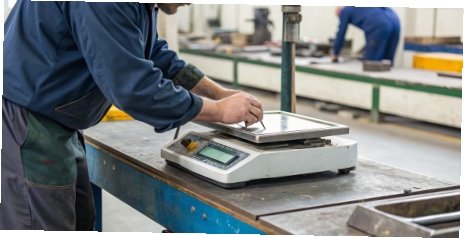
Calibration corrects any inaccuracies that develop over time. All scales drift due to use, environmental changes, and minor wear. I recommend my clients calibrate their industrial scales every 3 to 6 months.
The most critical part of calibration is using the right tool: a certified calibration weight5. Don't use a random object like a bag of sugar or a can of food. Their actual weight is not precise enough. You need a weight that is known to be exact.
Here is a simplified step-by-step guide:
- Prepare the Scale: Place the scale on a perfectly level surface. Use the built-in level bubble if it has one. Turn it on and let it warm up for at least 15-30 minutes.
- Enter Calibration Mode: This process varies by model, so you'll need to check your user manual. It usually involves holding down a button during startup or selecting an option from a menu.
- Follow the Prompts: The display will guide you. It will first ask to confirm that the pan is empty to set its zero point. Then, it will display the required calibration weight (e.g., "1000g" or "5kg").
- Place the Weight: Carefully place the exact weight specified onto the center of the pan. The scale will measure the weight, compare it to the correct value, and adjust its internal settings.
- Confirm and Record: Once the display indicates the process is complete, remove the weight. I strongly advise keeping a calibration log, noting the date, the result, and who performed it. This log is essential for quality audits and tracking the scale's long-term health.
Conclusion
Proper maintenance isn't complex. By cleaning your scale correctly, handling it with care, and calibrating it regularly, you ensure it remains accurate and reliable for years to come.
-
Explore this resource to learn essential maintenance tips that ensure your digital scale remains accurate and reliable. ↩
-
Explore best practices specifically tailored for maintaining industrial scales to ensure optimal performance. ↩
-
Discover the best methods for cleaning the weighing pan to maintain your scale's accuracy. ↩
-
Learn about the benefits of using a neutral detergent for cleaning your digital scale effectively. ↩
-
Find out why using a certified calibration weight is crucial for accurate scale calibration. ↩


[…] cornerstone of a safe and efficient workplace. Based on my 19 years of experience in manufacturing industrial scales2, I’ve seen firsthand how simple checks can prevent major disasters. It’s not just about the […]