

Water damage is a costly risk for your digital scales. This can ruin your equipment and completely halt your operations, but you can prevent it with the right knowledge.
The best way to protect a digital scale is to choose one with the right IP rating (like IP67 or IP68) for your environment. Always keep the scale's surface dry, and if it gets wet, immediately disconnect the power and let it dry for 24-48 hours.
This is one of the most common questions we get from clients. At first, it seems simple. But the details really matter if you want to protect your investment and keep your operations running smoothly. As a manufacturer with nearly two decades of experience, we've seen it all. A little bit of knowledge here goes a very long way. Let’s break down what you really need to know to keep your scales safe, accurate, and reliable for years to come.
What Is an IP Rating and Why Does It Matter for Scales?
You see "IP ratings" on equipment all the time, but what do they really mean? Choosing the wrong one for your environment means your scale is left unprotected and vulnerable. Understanding IP codes is surprisingly simple and it can save you a lot of money and downtime.
An IP (Ingress Protection) rating tells you exactly how well a device is sealed against solids, like dust, and liquids, like water. For scales, a higher second digit, like IP67 or IP68, means better water protection. This is crucial for wet or washdown environments to ensure accuracy and longevity.
The IP rating1 is more than just a feature; it's a promise of performance in a specific environment. When we work with clients, this is one of the first things we discuss. The rating is made of two numbers, and both are important in an industrial setting.
Understanding the Numbers
The first digit rates protection against solids. This includes everything from large objects down to fine dust particles. For a tech director, think of this like protecting server room equipment from dust. A '6' is the highest rating here, meaning the scale is completely dust-tight. This is vital in places like a bakery with flour in the air or a workshop with fine debris.
The second digit rates protection against liquids. This is where we focus for water damage2. The scale goes from protection against dripping water (1) all the way up to continuous immersion in water (8).
Here is a simple table we use to help clients decide:
| IP Rating | Liquid Protection Level | Common Use Case |
|---|---|---|
| IP65 | Protected against low-pressure water jets from any direction. | General purpose, can be wiped down, resists splashes. |
| IP66 | Protected against high-pressure water jets from any direction. | Environments requiring regular, powerful hose-downs. |
| IP673 | Protected against immersion in water up to 1 meter for 30 minutes. | Areas where accidental submersion or heavy washdowns occur. |
| IP684 | Protected against continuous immersion in water under specified pressure. | For extreme conditions, like food processing or marine use. |
Matching the IP rating to your actual daily operations is the key. Spending a little more on an IP67 scale for a wet area is much cheaper than replacing a less protected scale every six months.
What's the Difference Between Water-Resistant and Waterproof Scales?
The terms "water-resistant" and "waterproof" sound almost the same. But one can only handle a light splash, while the other can survive being submerged in water. Knowing this difference is critical for protecting your investment and ensuring you buy the right tool for the job.
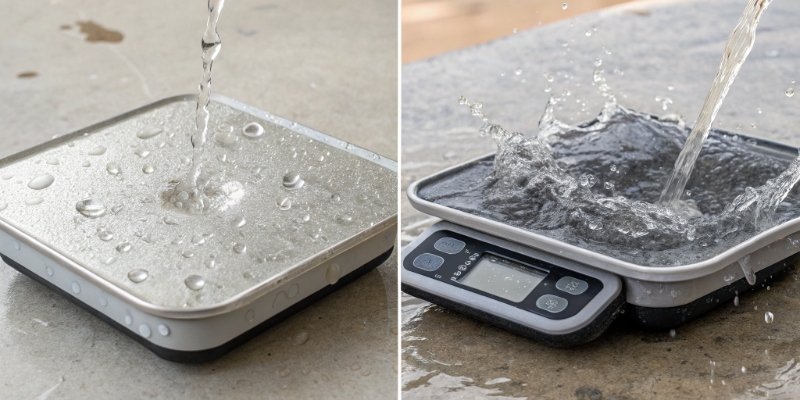
"Water-resistant" means the scale can handle light splashes or humidity, often with an IP rating like IP65. "Waterproof" means it can be fully submerged in water without damage, which typically requires a higher rating like IP67 or IP68. The best choice depends entirely on your operational environment.
As an OEM/ODM manufacturer, we have to be very precise with these terms because our clients depend on it. These are not marketing words; they are technical specifications5 that define what a scale can and cannot survive.
Water-Resistant: The Splash Guard
A water-resistant scale is designed to work in environments where moisture is present but not extreme. Think of a laboratory bench where small spills might happen, or a packing station in a humid climate. These scales often have an IP65 rating. Their housing includes seals around the display and buttons to prevent light splashes from getting inside. However, they are not designed to be hosed down with a pressure washer or dropped into a bucket of water. They offer good, basic protection for many applications.
Waterproof: The Submarine
A waterproof scale is built for the toughest, wettest jobs. These scales have IP67 or IP68 ratings. We build them with fully sealed stainless steel enclosures, waterproof connectors, and potted load cells. Every potential entry point for water is sealed shut. I remember one client in the seafood industry who kept buying cheaper, water-resistant scales. They failed every few months from the constant hosing down. We switched them to one of our IP68 models. The upfront cost was a bit higher, but they have been running that same scale for years now. Their total cost of ownership dropped dramatically. For software vendors, this distinction is important. Your solution is only as reliable as the hardware it runs on. Ensuring your end-user has the right hardware for their environment is part of delivering a robust total solution.
What Should You Do Immediately If Your Digital Scale Gets Wet?
Your expensive digital scale just got soaked in water. Panic can set in as you think about the high cost of replacement and the unexpected downtime for your operations. But if you act fast with the right steps, you have a very good chance of saving it.
First, immediately disconnect all power sources, including the battery if possible. Do not try to turn it on. Gently dry the exterior with a soft cloth. Then, place the scale in a warm, dry, and well-ventilated area for at least 24 to 48 hours to let internal components dry out.
In our 18 years of business, our after-sales department has heard every story about water damage. The scales that survive are almost always the ones where the user acted quickly and correctly. Panic is the enemy. Follow a clear plan.
Your 5-Step Emergency Plan
- Power Down Immediately. This is the most important step. Electricity and water create short circuits that permanently destroy electronics. Unplug the scale from the wall and, if you can, remove the batteries. Do not press any buttons.
- Dry the Exterior. Use a soft, absorbent cloth like microfiber to gently pat the outside dry. Don't shake the scale, as this can move water deeper inside. Avoid paper towels, which can leave behind lint that causes problems later.
- Encourage Interior Drying. Now you must be patient. Place the scale in a location with good air circulation. A fan on a low setting can help, but do not use a hairdryer. The intense heat can melt plastic components and damage sensitive electronics. Just give it time.
- Inspect for Corrosion. After at least 48 hours, carefully check the battery compartment and any connection ports. Look for green or white powdery residue, which is a sign of corrosion6. If you see any, the scale will likely need professional service.
- Test Carefully. Only when you are certain the scale is completely dry should you reconnect the power. Turn it on and test its functions. Use a weight you know is accurate to check if it's still measuring correctly. If the display flickers or the readings jump around, it needs to be sent for repair.
Are There Special Covers or Enclosures to Shield a Scale From Water?
Your work environment is messy, dusty, or wet. But you can't always afford a fully waterproof, top-of-the-line scale for every single workstation in your facility. Luckily, protective covers and enclosures can provide an excellent extra layer of defense for a small cost.
Yes, many manufacturers, including us at Weigherps, offer accessories like custom-fit scale covers or washdown shields. These transparent plastic covers protect the display and keypad from spills and debris while still allowing normal operation. For extreme environments, full enclosures provide even more robust protection.
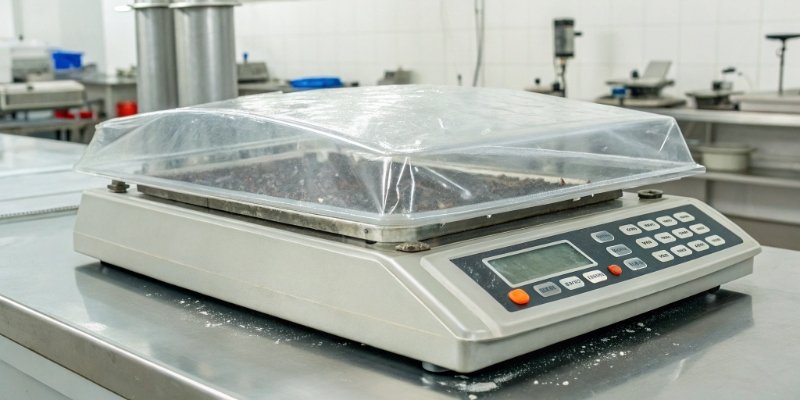
Thinking about protection after you've chosen your scale is a smart move. It's a simple way to extend the life of your equipment and reduce maintenance costs. We often help clients find the right balance between the scale's built-in protection and these add-on solutions.
In-Use Covers
The most common solution is a simple, transparent cover. These are typically made of thin, flexible plastic and are molded to fit the scale's indicator perfectly. They are great for shielding the keypad and display from things like flour in a bakery, dust in a warehouse, or minor drips in a lab. They are inexpensive and easy to replace, acting as a sacrificial layer that keeps the scale itself clean and dry.
Washdown Shields and Enclosures
For more demanding situations, you can use more robust protection. A "washdown shield" is often a thicker, hard plastic guard that deflects water spray during cleaning. It protects the most sensitive parts of the scale from direct hits. A full "enclosure" is even more protective. This is usually a stainless steel box that the scale sits inside of, often with a sealed door. This solution can effectively upgrade the protection of a lower-IP-rated scale, allowing it to be used in an area where it normally wouldn't survive. As an ODM provider, we sometimes find that designing a custom enclosure for a client is more cost-effective than developing a brand new IP68 scale for a very specific application. It's all about finding the smartest solution.
Conclusion
Protecting your scale from water is simple. Choose the right IP rating, know the difference between water-resistant and waterproof, act fast if an accident happens, and use covers. This saves money and ensures your operations remain accurate and reliable.
-
Understanding IP ratings is crucial for selecting the right scale for your environment, ensuring durability and performance. ↩
-
Learn about the impact of water damage on scales and how to prevent costly repairs or replacements. ↩
-
Discover the significance of IP67 ratings and how they protect scales in wet environments. ↩
-
Find out how IP68 ratings provide superior protection for scales in extreme conditions. ↩
-
Familiarize yourself with essential specifications to make informed purchasing decisions. ↩
-
Recognizing signs of corrosion early can prevent further damage and costly repairs. ↩


[…] a wet food processing area require different scales. Look for an IP (Ingress Protection) rating. An IP67 rating3 means the scale is dust-tight and can be submerged in water. This ensures longevity and accuracy […]
[…] IP682 […]
[…] IP67 rating1 is more than just a label; it’s a promise of durability. As a manufacturer of industrial […]