
Choosing the right industrial scale feels overwhelming. A wrong move means wasted money and operational headaches. But what if you could confidently select the perfect scale by following a clear guide?
To purchase the best industrial scale, you must evaluate its capacity and accuracy against your weighing needs. You also need to consider the operating environment, like wet or hazardous areas, and identify essential functions such as data output. Matching these factors ensures your scale is a perfect fit.
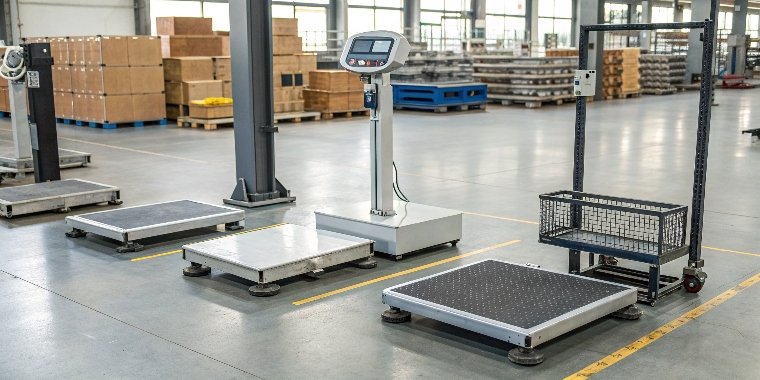
You now have a basic idea of what to look for. However, the details are what make the difference between a good purchase and a great one. Getting these details right is how you avoid costly mistakes and find a scale that boosts your efficiency. Let's dig deeper into the specific factors you need to analyze to make a truly informed decision.
What key factors should be considered when buying an industrial scale?
You know you need a scale, but the technical sheets are confusing. Capacity, accuracy, IP ratings—where do you start? Making the wrong choice can lead to frequent breakdowns and inaccurate results. Let's simplify it by focusing on four core factors.
The most important factors are capacity and accuracy, the operating environment, the functional requirements, and any needed accessories. Analyzing these four areas will guide you directly to the scale that perfectly matches your operational needs from day one.

Based on my 18 years of experience helping clients, these four factors are the foundation of a successful purchase. Let's break them down further so you can understand them clearly.
1. Capacity and Accuracy
This is the most fundamental consideration. You need a scale that can handle your heaviest loads but is also precise enough for your smallest measurements.
- Capacity (Range): This is the maximum weight the scale can measure. We produce scales ranging from 3kg for small parts to over 3 tons for large pallets. Always pick a capacity that is slightly higher than your heaviest expected load to allow for future growth.
- Accuracy (Resolution): This is the smallest increment of weight the scale can display. A laboratory might need a scale with 0.1g accuracy for formulas, while a warehouse shipping large boxes might only need 100g or 200g accuracy.
2. Operating Environment
Where will the scale be used? The environment drastically impacts the scale's longevity and performance.
- Moisture/Corrosion: For wet, humid, or washdown areas like food processing, you must choose a scale made of stainless steel with a high IP rating1 (like IP65 or IP67) to prevent rust and water damage.
- Hazardous Areas: If you work with flammable gases or dust, you need a scale with an explosion-proof certification2, like ATEX or IECEx, to ensure safety.
- Mobility: Do you need to move the scale around? If so, a model with built-in wheels or a wireless design would be a better choice than a fixed installation.
3. Functional Needs & Accessories
What do you need the scale to do besides weighing?
- Basic Functions: Most modern scales come with tare (zeroing out a container's weight), counting, and unit conversion.
- Advanced Functions: For production lines, you might need features like Statistical Process Control (SPC)3 or recipe management. As a software vendor, this is where integration is key. We can provide scales with data output4 capabilities to connect seamlessly with your systems.
- Accessories: Think about printers for labels, barcode scanners for product identification, or pit frames for in-floor installation. We help ensure any accessories you choose are fully compatible.
| Factor | Low Requirement Example | High Requirement Example |
|---|---|---|
| Capacity | A 15kg bench scale for counting screws. | A 2-ton floor scale for weighing pallets. |
| Accuracy | A platform scale with 50g resolution. | A lab scale with 0.1g resolution. |
| Environment | A simple plastic-housed scale for a dry office. | A full stainless steel, IP67 scale for a fish market. |
| Functions | Basic weighing and tare. | Data output to ERP, recipe formulation. |
How do you choose the right industrial scale for a specific application?
A scale that is perfect for a warehouse is useless in a laboratory. Buying a generic scale for a specialized job only leads to inefficiency, inaccurate data, and frustration for your team. The secret is to match the scale's features directly to the application.
To choose the right scale, first define your application's main task. For logistics, prioritize high capacity and durability. For food processing, focus on stainless steel and high IP ratings for hygiene. For laboratories, precision and readability are the most important.
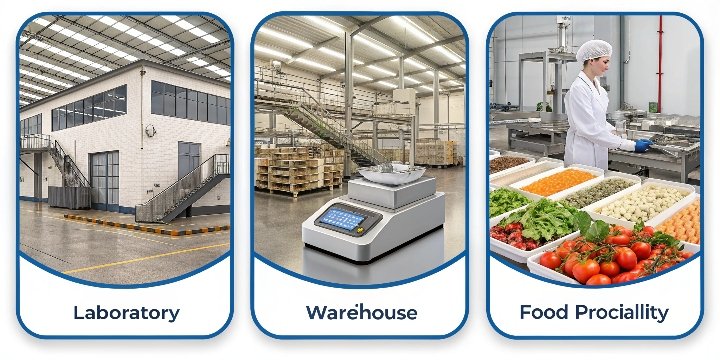
Choosing an application-specific scale ensures you get the features you need without paying for ones you don't. As a manufacturer, we build specialized scales because we know one size does not fit all. For my clients, especially those in software, understanding the end-user's application is critical for successful integration. Here are a few common scenarios I've encountered.
Scenario 1: Logistics and Warehousing
In a fast-paced warehouse, scales must be tough, fast, and reliable.
- Primary Need: Weighing large, heavy items like boxes, pallets, or shipping containers quickly and accurately.
- Key Features: High capacity (300kg to 3t), large platform size, and extreme durability to withstand forklift traffic and constant use.
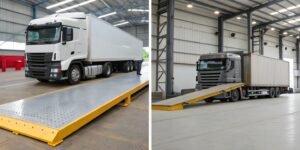
- Recommended Scale: Heavy-duty floor scales or platform scales. For software providers, our IoT-enabled scales are perfect here. They can send weight data directly to a Warehouse Management System (WMS), automating inventory tracking and shipping calculations.
Scenario 2: Food and Beverage Industry
Hygiene is the top priority in this industry. Scales must be easy to clean and able to resist constant moisture and harsh cleaning agents.
- Primary Need: Accurate weighing for recipe formulation and portion control in a sanitary environment.
- Key Features: Stainless steel construction, a high IP rating (IP67 or IP68 for washdown capability), and a smooth, crevice-free design to prevent bacteria buildup.
- Recommended Scale: Stainless steel bench scales or washdown platform scales. Accuracy is also key for maintaining product consistency.
Scenario 3: Chemical or Pharmaceutical Lab
This environment demands the highest level of precision. Even a tiny error can ruin an entire batch.
- Primary Need: Extremely precise measurement of small quantities of materials.
- Key Features: High accuracy and readability (often to 0.01g or 0.001g), a draft shield to prevent air currents from affecting results, and potentially explosion-proof certification (ATEX) if working with volatile substances.
- Recommended Scale: A high-precision balance or an analytical balance5.
| Application | Key Requirement | Recommended Scale Type |
|---|---|---|
| Logistics | Durability & High Capacity | Floor Scale, Platform Scale |
| Food Processing | Hygiene & Water Resistance | Stainless Steel Washdown Scale |
| Pharmaceuticals | High Precision & Safety | Analytical Balance, ATEX Scale |
What are the common mistakes to avoid when purchasing an industrial weighing scale?
It is surprisingly easy to make a costly mistake when buying an industrial scale. I've seen many buyers fall into the same predictable traps over the years. Imagine your new scale failing after just a few months because it was not built for your workflow. Knowing these common mistakes is the best way to avoid them.
The most common mistakes are buying on price alone, which sacrifices quality; ignoring the environment by choosing the wrong IP rating; and failing to consider future needs like data integration or higher capacity. Avoiding these mistakes ensures a better long-term investment.

A scale is more than just a piece of equipment; it's a critical tool for your business operations. As your manufacturing partner, my goal is to help you find a reliable solution, not just sell you a box. Here are the four mistakes I warn my clients about most often.
Mistake 1: Focusing Only on the Initial Price
The cheapest scale is often the most expensive in the long run. A low upfront cost usually means lower-quality components, poor construction, and a shorter lifespan. When that cheap scale fails, you face costs from production downtime, inaccurate inventory, and frequent repairs or replacements. A reliable scale from a trustworthy manufacturer might cost more initially, but its durability and accuracy provide a much better return on investment.
Mistake 2: Ignoring the IP Rating
I cannot stress this enough: the environment matters. An IP (Ingress Protection) rating tells you how well a scale is protected against dust and water. Buying a scale with a low IP rating (like IP54) for a wet food processing plant is a recipe for disaster. It will fail quickly due to water damage. Always match the IP rating to your environment.
- IP65: Protected against water jets. Good for light-duty cleaning.
- IP67: Can be temporarily submerged in water. Ideal for heavy washdown environments.
Mistake 3: Underestimating Future Needs
Don't just buy for today; think about tomorrow. Will your products get heavier? Will you need to integrate the scale with a new software system next year? Purchasing a scale with a capacity that's too low or without data output options can limit your growth. It is wise to invest in a scale with slightly more capacity than you currently need and with communication ports (like RS-232 or USB) for future integration.
Mistake 4: Forgetting About After-Sales Service and Support
What happens when your scale needs calibration or repair? Choosing a supplier with no local support or a poor warranty can leave you stranded. A scale is a long-term asset. At Weigherps, we provide a 12-month after-sales service6 guarantee and have a dedicated technical team to support our clients. Ensure your supplier offers reliable service, readily available spare parts, and professional technical support.
What level of accuracy and certification is required for industrial weighing scales?
You see terms like "OIML," "NTEP," and "Class III," but what do they really mean for your business? Using an uncertified scale for commercial transactions can lead to legal fines and a loss of customer trust. Understanding certifications is not just about compliance; it's about guaranteeing fairness and accuracy in your business.
The required accuracy depends on your application. For "Legal for Trade" applications, where you sell goods by weight, you must use a certified scale (e.g., OIML or NTEP). These certifications ensure the scale meets strict government standards for accuracy and reliability.
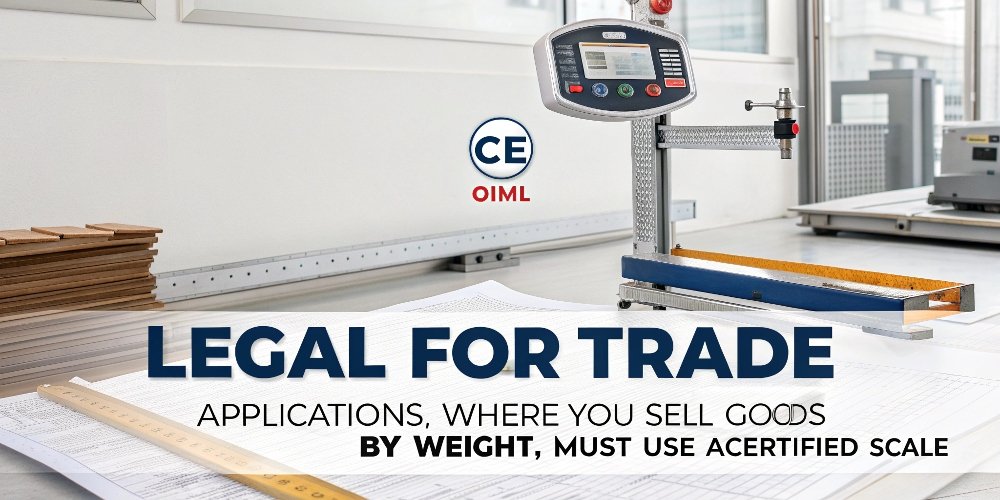
Navigating the world of certifications can seem complex, but it boils down to one simple question: are you selling products based on the weight measured by the scale? If the answer is yes, you need a certified scale. Let's clarify what these terms mean for you.
"Legal for Trade" Certification
This is the most important concept to understand. A scale is considered "Legal for Trade" if it has been tested and approved by a regulatory body to be used in commercial transactions where the price is determined by weight.
- OIML (International Organization of Legal Metrology): An international standard. A scale with an OIML certificate is accepted in many countries worldwide.
- NTEP (National Type Evaluation Program): The standard required in the United States and Canada.
If you are packaging goods to a stated weight, billing a client based on the weight of a shipment, or selling bulk material by the kilogram, you must use a Legal for Trade scale. Using a non-certified scale for these tasks can result in significant legal penalties.
Accuracy Classes
OIML also defines accuracy classes for scales. The class you need depends on the value of the product and the required precision.
| Class | Description | Typical Application |
|---|---|---|
| Class I | Highest Precision | Analytical weighing in laboratories. |
| Class II | High Precision | Weighing precious metals, pharmaceuticals. |
| Class III | Medium Precision | Most industrial and retail applications. |
| Class IV | Low Precision | Rough weighing, waste management. |
For most industrial applications, like warehousing, shipping, and general manufacturing, a Class III scale is the standard.
Other Important Certifications
Beyond legal metrology, other certifications ensure product quality and safety.
- CE Marking: This indicates that a product complies with EU safety, health, and environmental protection requirements. As a global exporter, we ensure our products carry the CE mark for our European clients.
- ATEX / IECEx: These are not accuracy certifications but safety certifications for equipment used in potentially explosive atmospheres. They are mandatory for scales used in chemical plants, refineries, or any area with flammable dust or gas.
Conclusion
Choosing the right industrial scale means balancing capacity, environment, functions, and certifications. This approach ensures you get a reliable, accurate, and compliant tool that will serve your business for years.
-
This article provides insights into the significance of high IP ratings for durability in wet environments. ↩
-
Find out why explosion-proof certification is essential for safety in hazardous environments. ↩
-
Explore how SPC can improve your production processes and scale efficiency. ↩
-
Discover how data output capabilities can enhance your operations and integration with existing systems. ↩
-
Discover the precision and applications of analytical balances in various industries. ↩
-
Discover the key aspects of after-sales service that ensure long-term support for your scales. ↩


Comments (0)