
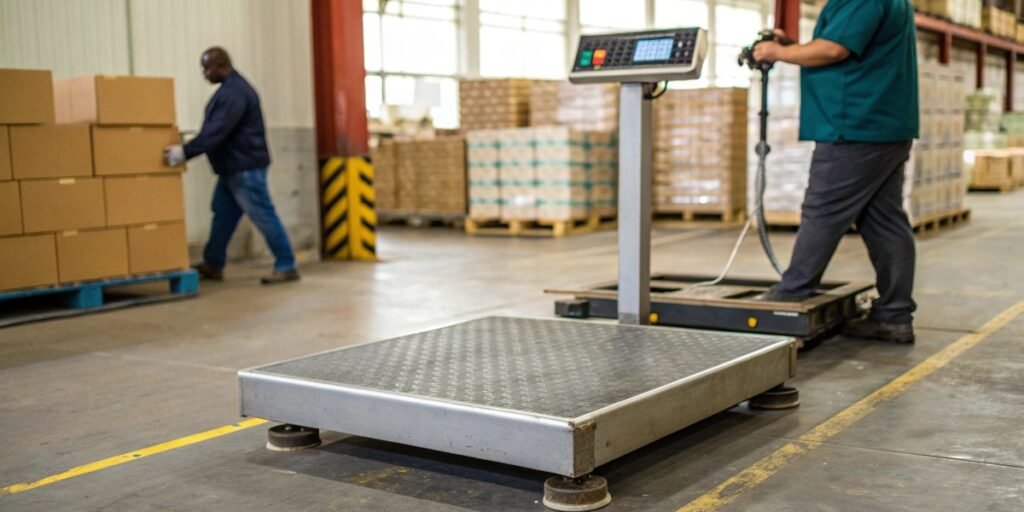
Confused by the endless options for industrial scales? A wrong choice can cost you dearly. I'll show you how to find the perfect scale that fits your needs and budget.
The best industrial weighing scale is one that meets your specific operational needs, offers customization, and has proper certifications. Focus on function and value over big brand names to get the best performance without overpaying for a label. This approach saves you money and ensures a perfect fit.
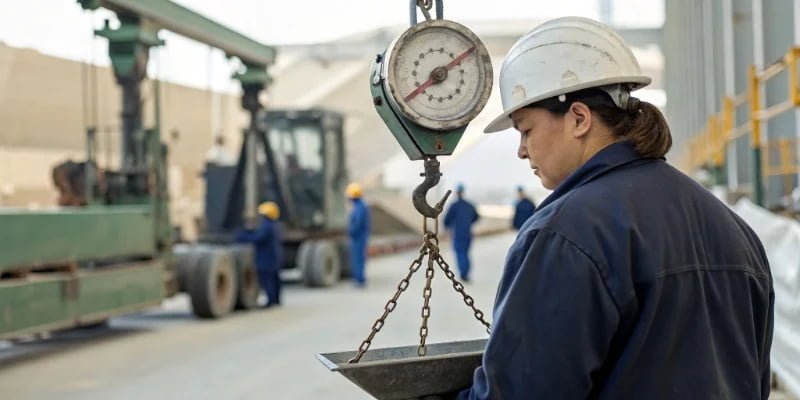
Finding the right scale is more than just looking at a price tag. It's about understanding the technology, the features, and what truly matters for your business. Let's break down the essential questions you should be asking before you make a purchase.
What to look for when buying a weighing scale?
Overwhelmed by technical specs when choosing a scale? Buying the wrong one means wasted money and operational headaches. Let me show you exactly what key features truly matter.
Look beyond the price. Focus on three things: first, avoid cheap commercial scales. Second, choose a manufacturer that offers customization for your specific tasks. Finally, ensure the product has necessary certifications like CE. These factors guarantee you get a reliable, purpose-built tool for your business.
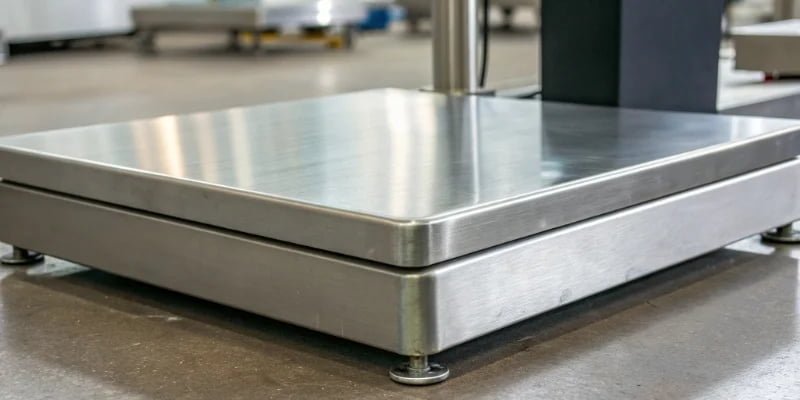
In my 19 years in this industry, I've seen too many businesses make the same costly mistake. They try to save money upfront by purchasing a cheap counting scale designed for retail, not for the factory floor. These simply aren't industrial scales.
The Industrial-Grade Difference
An industrial environment is demanding. It involves dust, moisture, vibrations, and heavy, continuous use. A true industrial scale is built to withstand this.
- Durability: They use robust materials like stainless steel1, not flimsy plastic. The load cells2 are engineered for higher capacities and shock resistance.
- Functionality: They go beyond simple weighing. They can be integrated into production lines3, connect to data systems (IoT), and perform specialized tasks like check-weighing4 or batching.
Customization and Certification Are Key
Your production process is unique, so your weighing solution should be too. A good manufacturer won't just sell you a box; they will work with you to provide a targeted, cost-effective solution5. This could mean custom software for data output or a specific platform size. Finally, never buy a scale without proper certification (like CE). This is your guarantee of quality, safety, and accuracy6. It shows the manufacturer stands behind their product.
Which brand is best for weight scale?
Do you think a famous brand name guarantees the best scale? This assumption can cost you a fortune for features you don't need. Let's uncover the truth about branding.
The "best" brand is the one that meets your needs at the best price. Many famous brands are simply rebranded products from OEM/ODM manufacturers like us in China. Paying for the brand name is like buying a luxury good—you're paying for marketing, not superior performance.
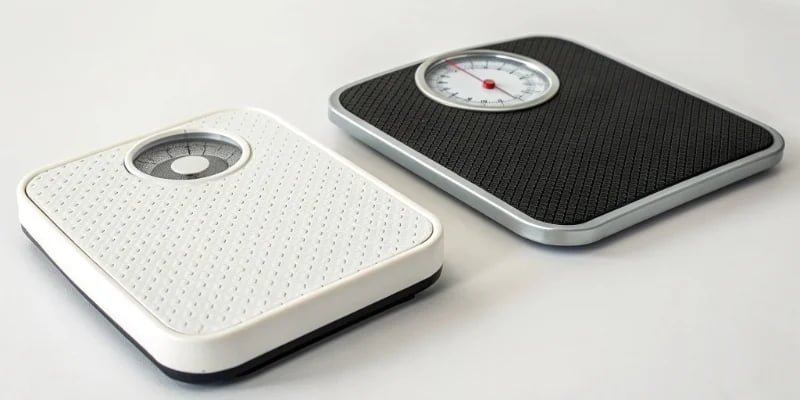
This might be controversial, but it's a truth I've seen firsthand for nearly two decades. The brand you recognize on a scale is often not the company that designed or built it. Many of the world's most well-known industrial scale brands rely on OEM/ODM partners in China—companies like mine—to manufacture their products. They provide the specifications, and we handle the engineering and production. The final product is identical in quality and technology, but the price tag is vastly different.
Brand Premium vs. Direct Value
When you choose a big brand, a large portion of your money isn't going toward the hardware. It's paying for their massive marketing budgets, global sales teams, and shareholder profits.
| Aspect | Big Brand | Direct from Manufacturer (OEM/ODM) |
|---|---|---|
| Cost | High (includes brand markup) | Lower (direct factory pricing) |
| Core Tech | Often identical | Often identical |
| Customization | Limited or very expensive | Highly flexible and cost-effective |
| Support | Can be slow, bureaucratic | Direct access to technical experts |
By working directly with a manufacturer, you bypass the brand tax. You get the same quality and more flexibility for a fraction of the cost.
How accurate are industrial weighing scales?
Is your scale's accuracy a constant concern? Small errors can compound into significant losses and quality failures. Let's clarify what 'accuracy' really means for industrial scales.
Industrial scales are highly accurate, with precision defined by their readability and division size. Accuracy depends on the quality of the load cell, proper calibration, and the operating environment. High-quality scales can be accurate to within 0.01% of their total capacity or even better for specific applications.
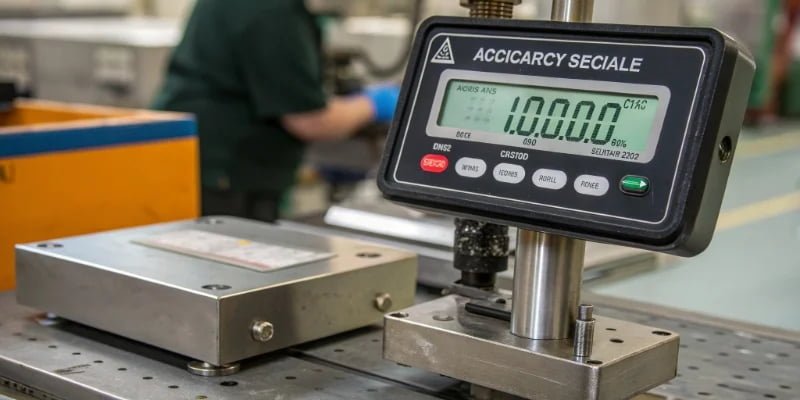
Accuracy in industrial weighing isn't a single number; it's a combination of several factors. Understanding them helps you choose a scale that is precise enough for your needs without overpaying for unnecessary precision. For example, a scale for weighing large pallets doesn't need the same micro-level accuracy as one used for mixing chemical formulas.
Key Accuracy Terms Explained
- Capacity: The maximum weight the scale can measure.
- Readability: The smallest change in weight the scale can display. This is often confused with accuracy.
- Repeatability: The scale's ability to show the same result when weighing the same object multiple times.
What Determines Real-World Accuracy?
The manufacturer's specifications are just a starting point. True accuracy on your factory floor is affected by several things. The quality of the internal load cell is paramount—it's the heart of the scale. But external factors are just as important. Vibrations from nearby machinery, drafts from open doors, and extreme temperature fluctuations can all introduce errors. This is why proper installation and regular calibration7 are not just recommendations; they are requirements for reliable, accurate measurements every single day.
How to calibrate an industrial weighing scale?
Are your scale's readings off? Inaccurate measurements can cause huge production losses and quality issues. Let's walk through the simple steps to ensure your scale is always precise.
To calibrate an industrial scale, first stabilize it on a level surface with no load. Enter its calibration mode, then place a certified test weight on the platform. The scale will adjust itself to this known weight. Always follow the manufacturer's specific instructions for your model.
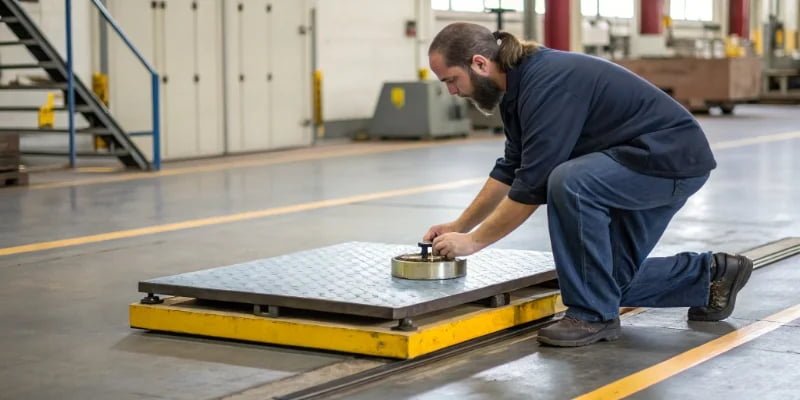
Calibration isn't just a one-time setup; it's a vital, ongoing maintenance task. Over time, factors like temperature changes, mechanical stress, and general wear can cause a scale's accuracy to drift. This drift can lead to incorrect product counts, failed quality checks, and even legal compliance issues. For us at Weigherps, we see it as the foundation of reliable production. A well-calibrated scale is a trustworthy tool.
A Simple Calibration Guide
While every model has its unique procedure, the core steps are generally the same. It's about teaching the scale what a specific weight truly weighs.
| Step | Action | Purpose |
|---|---|---|
| 1. Prepare | Place the scale on a stable, level surface, away from vibrations or drafts. | Ensures a pure and accurate reading environment. |
| 2. Zero | Turn on the scale and allow it to warm up. Press the 'Zero' or 'Tare' button. | Establishes a zero-point baseline. |
| 3. Calibrate | Enter the calibration mode (check your manual). | Prepares the scale to accept a reference weight. |
| 4. Test | Place a certified test weight on the scale and confirm. | The scale adjusts its internal settings to match the standard. |
Always use certified test weights. Using an object with an unknown or estimated weight will only make your scale less accurate.
Conclusion
Ultimately, the best industrial scale is a certified, customizable tool that fits your needs and budget. Prioritize function over a famous brand name to get the best value.
-
Discover the benefits of using stainless steel in industrial scales for durability and hygiene. ↩
-
Gain insights into the critical role of load cells in ensuring accurate measurements in industrial scales. ↩
-
Discover how integrating scales into production lines can streamline operations and improve efficiency. ↩
-
Explore the concept of check-weighing and its significance in quality control processes. ↩
-
Find strategies to obtain high-quality industrial scales without overspending. ↩
-
Find out the factors that influence the accuracy of industrial scales and how to ensure precise measurements. ↩
-
Learn the essential steps for calibrating your scale to maintain its accuracy and reliability. ↩



Comments (0)