
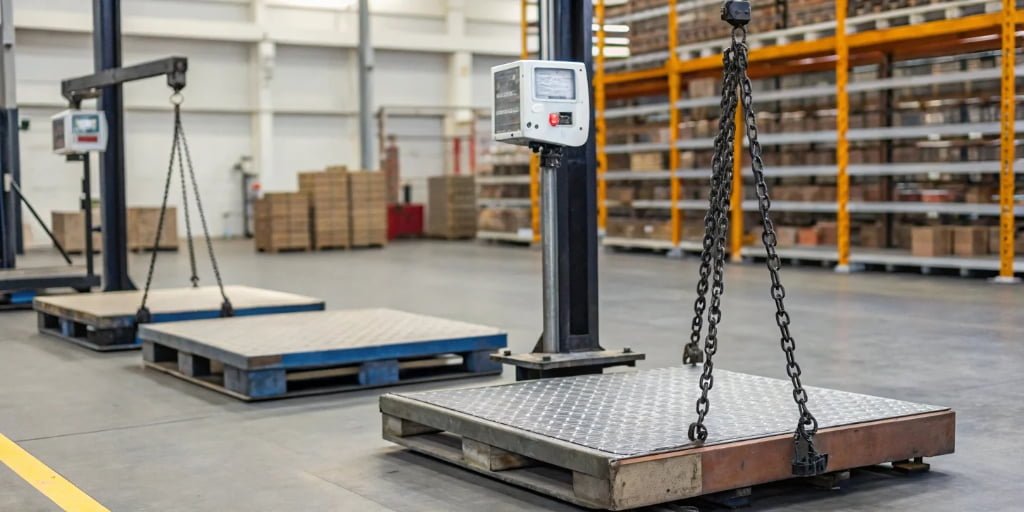
Are you struggling with inaccurate inventory or inefficient production workflows? These issues can lead to wasted materials and lost profits, making you feel stuck in outdated processes.
Industrial scales provide the solution by delivering precise weight data in demanding environments. They are heavy-duty, accurate instruments built for manufacturing, logistics, and processing, helping you optimize operations, control quality, and improve your bottom line.
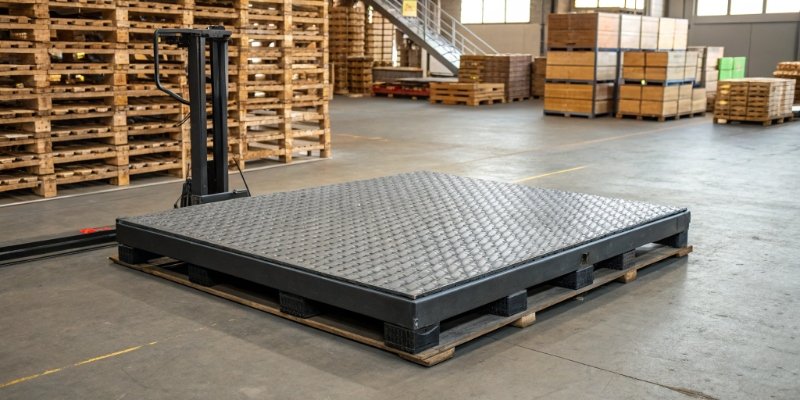
Getting the right data is the first step toward improving any process. In my 18 years of manufacturing industrial scales1, I've seen firsthand how the right weighing solution can transform a business. But not all scales are the same, and choosing the wrong one can be a costly mistake. To make the best decision, you first need to understand the fundamentals. Let's dive deeper into what makes these tools so essential for modern industry.
What are the four main types of weight scales?
Are you overwhelmed by all the different scales on the market? Picking the wrong one is a common mistake that can lead to inaccurate measurements and workflow disruptions.
The four primary types are bench scales for small items, floor scales for pallets and heavy loads, counting scales for inventory management, and checkweighers for quality control. Each serves a specific purpose to streamline your operations.
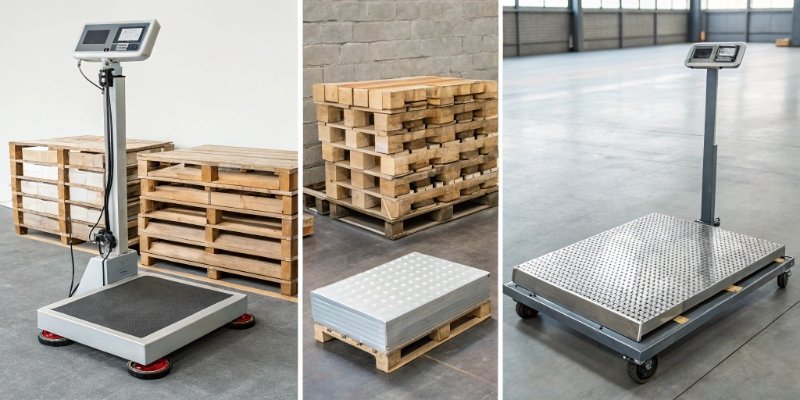
Choosing the correct scale type is crucial for maximizing efficiency. You wouldn't use a massive floor scale to weigh small parts, nor would you use a small bench scale for a one-ton pallet. The key is to match the tool to the task. For example, software vendors integrating with inventory systems will find counting scales2 invaluable for providing accurate piece counts. Those working with automated production lines need checkweighers3 to ensure every product meets weight specifications. Understanding these categories helps you invest in a solution that directly addresses your specific pain point, whether it's tracking stock, ensuring quality, or speeding up logistics.
| Scale Type | Common Use Case | Capacity Range | Key Feature |
|---|---|---|---|
| Bench Scale | Weighing small parts, food portioning | 1 kg - 300 kg | Compact, placed on a workbench |
| Floor Scale | Weighing pallets, drums, large containers | 500 kg - 10,000 kg | Large platform, durable for heavy loads |
| Counting Scale | Inventory management, kitting | 1 kg - 100 kg | Calculates piece count from sample weight |
| Checkweigher | In-line quality control, verifying package content | 1 g - 50 kg+ | High-speed, often with reject mechanisms |
What is an industrial scale, really?
Do you think any heavy-duty scale qualifies as "industrial"? This common misunderstanding can lead to equipment that fails quickly and delivers unreliable data when you need it most.
An industrial scale is more than just a weighing device. It is a robust system engineered for durability, consistent precision under harsh conditions, and seamless data integration with your existing software and machinery to drive automation.
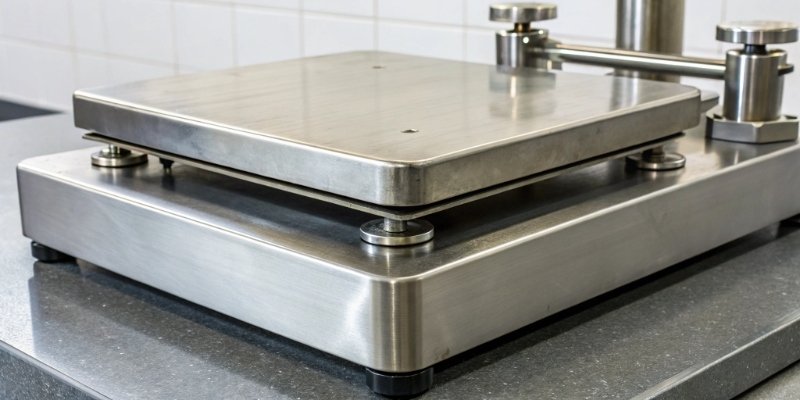
When we talk about an industrial scale, we're talking about a tool built for a specific job: performing reliably in tough environments. These settings can include dust, moisture, vibrations, and extreme temperatures. A regular scale simply won't last.
Durability and Construction
Industrial scales are typically made from materials like stainless steel or powder-coated mild steel. Their load cell4s and internal components are often environmentally sealed5 (e.g., IP67 or IP68 rated) to protect against water and debris. This ensures a long operational life and a better return on investment6.
Precision and Accuracy
Despite their rugged build, these scales deliver high precision. This is critical for everything from mixing chemical formulas to ensuring shipping weights are correct, helping you avoid fees and maintain product quality. At Weigherps, every scale undergoes comprehensive testing to guarantee this accuracy before it ever leaves our facility.
Connectivity and Integration
This is where industrial scales truly shine for a tech-focused business. Modern scales are designed as data collection points. They feature communication ports like RS-232, USB, and Ethernet, allowing them to feed real-time weight data directly into your ERP, WMS, or custom IoT platforms. This capability is the foundation for automating processes and achieving a quantum leap in business development.
How does an industrial scale work?
Are you curious about what happens inside a scale when you place a load on it? Understanding the technology helps you appreciate its value and reliability for your operations.
An industrial scale works using a component called a load cell. When weight is applied, the load cell deforms slightly, which changes its electrical resistance. This change is precisely measured and converted into a digital weight reading.

The process seems simple, but it relies on a few key, high-quality components working together perfectly. Breaking it down helps show why quality is so important for obtaining reliable data.
The Load Cell: The Heart of the Scale
The load cell is the most critical component. It's a transducer that converts mechanical force into an electrical signal. Inside, a precision-engineered structure with attached strain gauges flexes under load. This flexion is tiny and invisible to the naked eye, but the strain gauges detect it and alter their electrical resistance accordingly. The quality of the load cell directly determines the scale's accuracy and longevity.
The Indicator: The Brain of the Scale
The weak electrical signal from the load cell is sent to the indicator. The indicator acts as the brain. It filters out electrical noise, amplifies the signal, converts it from analog to a digital value, and displays the final weight on a screen. More importantly for your business, the indicator is also the communication hub. It houses the ports and software needed to transmit this weight data to other systems, making it a vital link in your data-driven workflow.
The Platform: The Body of the Scale
The platform is the physical surface where you place objects to be weighed. Its design and material are chosen based on the application. For example, a food processing plant will need a stainless steel platform that’s easy to sanitize, while a logistics warehouse may need a heavy-duty, tread-plate steel platform to withstand forklift traffic.
What is the difference between an industrial scale and a commercial scale?
Are you using a commercial scale for an industrial task to save money? This can lead to frequent breakdowns and inaccurate data, costing you more in the long run.
The main difference is the environment and purpose. Industrial scales are built for durability and system integration in harsh production settings. Commercial scales are designed for cleaner, retail environments where items are sold by weight.
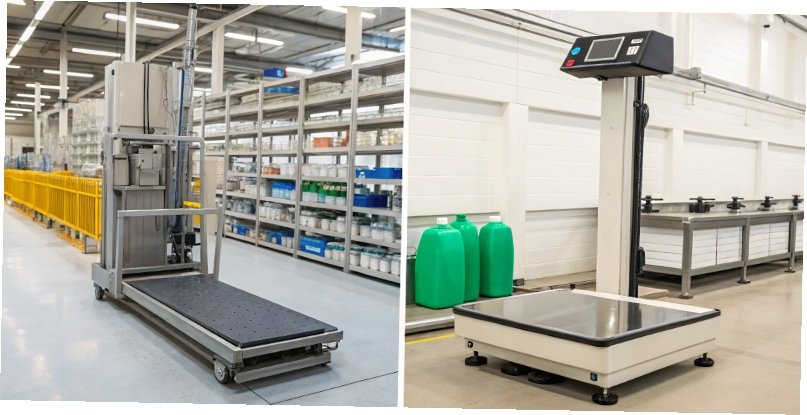
Choosing between an industrial and a commercial scale7 comes down to using the right tool for the job. While they both measure weight, they are engineered for very different worlds. A commercial scale in a factory is like a city car on a farm road—it just won't hold up. The initial cost for an industrial scale might be higher, but its durability and advanced features deliver a far greater return on investment6 by minimizing downtime and enabling automation8. As we strive to be your most reliable weighing expert, we always help clients find the most cost-effective solution tailored to their actual needs, not just the cheapest one upfront.
| Feature | Industrial Scale | Commercial Scale |
|---|---|---|
| Environment | Harsh (dust, water, vibration) | Clean (retail, lab, office) |
| Construction | Heavy-duty (stainless/mild steel) | Lighter (plastics, light metals) |
| Capacity | High (up to several tons) | Low (typically under 50 kg) |
| Connectivity | Designed for system integration (IoT, ERP) | Simple output for POS systems |
| Main Goal | Process control, efficiency, automation | Point-of-sale transactions, "Legal for Trade" |
| ROI | Long-term value through durability and data | Short-term value through transactions |
Conclusion
Choosing the right industrial scale is a strategic decision that boosts efficiency, ensures accuracy, and delivers a powerful return on investment for your business's long-term growth.
-
Explore how industrial scales can enhance precision and efficiency in manufacturing processes. ↩
-
Discover how counting scales can simplify and enhance inventory management. ↩
-
Understand how checkweighers ensure product quality and compliance. ↩
-
Gain insights into the technology behind load cells and their importance in weighing. ↩
-
Learn why environmentally sealed scales are crucial for durability in harsh conditions. ↩
-
Find out how to assess the ROI of investing in industrial scales for your business. ↩ ↩
-
Learn about the key differences to make informed purchasing decisions. ↩
-
Explore the transformative effects of automation on industrial operations. ↩



[…] this single device. Once that’s done, you simply connect it to your network. The master scale5 then sends, or “pushes,” this complete data package to all the other […]