

Facing an ISO 9001 audit can be stressful. You think your supplier's Certificate of Conformity (CoC) is your golden ticket, but is it enough to get you through?
No, a Certificate of Conformity (CoC) alone is not enough to pass an ISO 9001 audit. It only proves a specific product meets set standards. The audit examines your entire quality management system, which requires far more comprehensive documentation and process evidence.

Over my 18 years in manufacturing, I've seen many clients, especially those in software and systems integration, ask this very question. It's a common point of confusion that can cause major problems during an audit. A CoC is a critical piece of the puzzle, but it's just one piece. To pass your audit with confidence, you need to understand the full picture of what the auditor is looking for. Let’s break down what you really need to be prepared.
What is the difference between a Certificate of Conformity and a Certificate of Calibration for ISO 9001?
You have documents from your scale supplier. One says "Conformity," another "Calibration." They seem similar, but this confusion can put your audit at risk. Let's clear this up.
A Certificate of Conformity (CoC) states a product was made to specific design standards. A Certificate of Calibration verifies the equipment's measurement accuracy against a known standard. For ISO 9001, you often need both.
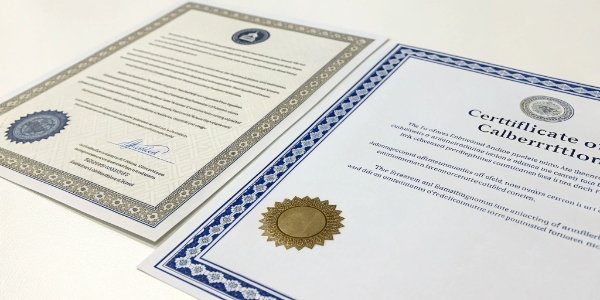
Think of it this way: the CoC is about the product's design, while the calibration certificate is about its current performance. As a manufacturer, we issue a CoC to promise that the scale we built for you meets all the required industry regulations, like CE standards. It's our guarantee of quality from the factory floor. The calibration certificate, on the other hand, is about what happens next. It's proof that the scale provides accurate readings right now, in your facility. An auditor sees these two documents very differently.
The Auditor's Perspective
The CoC tells an auditor that you purchased equipment that was suitable from the start. But the Certificate of Calibration1 shows them that you are actively maintaining that equipment's accuracy, which is a core requirement of process control under ISO 9001. One without the other leaves a gap in your quality story.
| Document | Purpose | Role in Audit |
|---|---|---|
| Certificate of Conformity (CoC)2 | Confirms product meets design/safety standards. | Verifies initial product and supplier suitability. |
| Certificate of Calibration | Confirms measurement accuracy at a specific time. | Demonstrates ongoing process control. |
How do auditors verify supplier records during an ISO 9001 audit?
You've collected all your supplier documents. But what exactly will the auditor do with them? Simply having a file folder isn't enough. You need to know how they test your system.
Auditors verify supplier records by sampling the "paper trail." They will cross-reference your supplier list with purchase orders, receiving inspection reports, and the supplier's certificates. They are checking for consistency and traceability, not just document existence.

An auditor wants to see that your quality management system3 is a living, breathing process, not just a collection of papers. They will follow the journey of a component from start to finish to test this. This is about proving you follow your own procedures for managing the quality of what you buy.
Following the Paper Trail
Here’s a typical scenario I’ve seen play out. The auditor starts with your approved supplier list and picks one, like us, Weigherps.
- Purchase Order: They'll ask for a Purchase Order you sent us for a specific scale.
- Receiving Record: Next, they'll want your inspection record for when that scale arrived. Did you check it for damage? Did you verify the model?
- Supplier Document: Finally, they'll ask for the CoC we sent with that scale.
They will check that the part numbers, quantities, and dates all line up. Any inconsistency is a red flag that your process control is weak, even if you have the CoC. They are looking for proof that you verified what you received.
Beyond a CoC, what documentation is required for demonstrating product conformity?
You hand the auditor the CoC, but they keep their hand out, asking for more. This can be a moment of panic. What else could they possibly need to see?
Beyond a CoC, you need your own internal records to demonstrate product conformity. This includes receiving inspection reports, quality checks, test results, and any reports on how you handled non-conforming products. These prove your quality system is actually working.

The key thing to remember is that an auditor is there to audit your company, not your suppliers. A CoC is a document from your supplier. Your internal records are the real evidence that your Quality Management System is functioning as designed. An auditor needs to see that you didn't just trust the CoC, but that you have a process to verify incoming quality yourself.
Internal Evidence is Key
Here are the essential documents you need to have ready to show your own verification process:
- Receiving Inspection Reports: This is your first line of defense. It's a checklist or report showing what you inspected when the product arrived from us. For our scales, this could be a simple check for shipping damage, verifying the correct model, and ensuring the CoC was included in the box.
- Final Inspection Reports: If the scale is integrated into a larger system you build, you need to show records of your own final quality checks before you ship to your customer.
- Non-Conformance Reports (NCRs): What happens when a product fails your inspection? Your NCRs show the auditor you have a robust process for identifying, documenting, and resolving quality issues.
How does a Certificate of Conformity support traceability requirements in a quality management system?
Traceability can feel like a complex industry buzzword. You know it's a critical part of ISO 9001, but how does a simple CoC actually help you meet that requirement?
A Certificate of Conformity supports traceability by creating a formal link between a specific product, identified by a batch or serial number, and the manufacturing standards it was built to. It's a key document in your evidence chain.

Traceability is all about being able to tell a product's life story, from its origin to its current state. If a problem arises, you need to be able to trace it back to its root cause. The CoC serves as a vital chapter in that story, acting as a formal 'birth certificate' for the product.
Connecting the Product to its History
Imagine your customer reports an issue with one of your systems. You need to investigate. Using the system's serial number, you trace it back in your records and find that it includes one of our industrial scales, model number ABC, serial number 123. You can then pull up your receiving inspection record for that specific scale. Attached to that record should be the Certificate of Conformity we provided, which also lists serial number 123. Instantly, you have a direct link. This CoC confirms that scale 123 was manufactured on a specific date and met all required standards when it left our factory. This helps you quickly determine if the issue was related to original manufacturing or something that happened later.
Conclusion
A Certificate of Conformity is an essential document, but it's not enough. Passing an ISO 9001 audit requires a complete, functioning quality management system supported by thorough documentation and records.


[…] main point of the ISO 90012 standard is about creating a reliable quality management system3. It doesn't give you a strict […]