
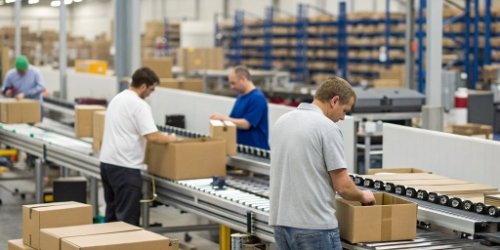
Your production line feels sluggish, and delays are piling up. What if the hidden culprit is your separate labeling station? It's time to rethink this common workflow step.
Yes, a dedicated labeling station often creates a major bottleneck. It forces an extra step where items queue up, halting the continuous flow of production. This stop-and-go process leads to significant delays and lost efficiency, especially during high-volume periods.
It seems almost too simple to be true, doesn't it? A single station causing so much trouble. But over my 19 years in manufacturing weighing solutions, I have seen this exact problem slow down countless operations. The issue is that we often see weighing, labeling, and packing as separate jobs. This way of thinking is what holds companies back. Let's break down exactly how this bottleneck forms, why it's so damaging, and what you can do about it. The details might surprise you and reveal opportunities for huge efficiency gains in your own facility.
How Can a Dedicated Labeling Station Cause Workflow Bottlenecks?
Products move smoothly along your line until they hit the labeling desk. Suddenly, everything grinds to a halt. A single operator becomes the chokepoint, and pressure mounts.
A dedicated station causes bottlenecks by creating a single point of failure and a queuing area. It separates weighing from labeling, forcing items to be moved, placed, labeled, and then moved again. This stops the continuous flow and wastes valuable time with each product handled.
Material Handling Delays
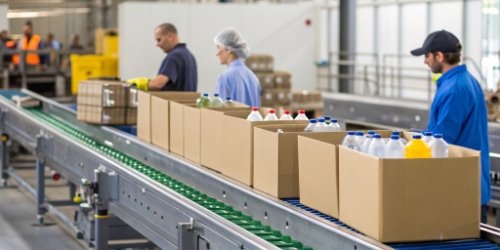
The core problem is the extra physical steps involved. An item comes off the line or from a scale. A worker has to pick it up, walk it to the labeling station1, and place it down. After the label is printed and applied, the item must be picked up again and moved to the next stage, like packing or shipping. Each of these small movements adds seconds. While a few seconds seems minor, they multiply quickly over a full shift with thousands of items. These seconds turn into minutes, and minutes into hours of lost productivity. The entire flow of work is constantly being stopped and started.
Operator and Speed Mismatches
A separate labeling station is only as fast as its operator. If the person is new, tired, or simply takes a break, the entire line before them backs up. This creates a dependency that is a huge risk in a fast-paced environment. Furthermore, the speed of machinery and the speed of a manual task rarely match. Your production equipment2 might process items quickly, but a human can only apply labels so fast. This mismatch in speed is the classic recipe for a bottleneck.
| Process Stage | Potential Speed (Units/Minute) | Result |
|---|---|---|
| Production Output | 100 | Items Flowing |
| Manual Labeling | 30 | Items Piling Up (Bottleneck) |
| Packing | 100 | Waiting for Labeled Items |
What Are the Downsides of Using a Separate Labeling Station in Production?
You might think a separate station seems organized, but hidden costs are eating into your profits. Increased labor, more errors, and wasted space are just the beginning of the problems.
Beyond slowing down a workflow, separate labeling stations increase labor costs by requiring dedicated staff. They also raise the risk of human error, like applying the wrong label, which can lead to costly rework, customer complaints, and compliance failures. The station itself also consumes valuable floor space.
Increased Labor Costs
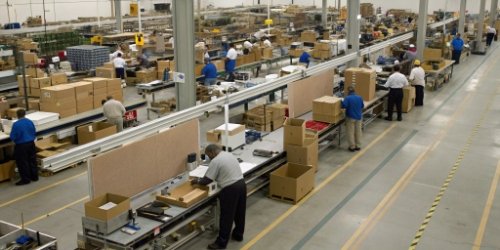
The most obvious downside is the cost of labor. A dedicated labeling station often requires a dedicated operator. You are paying a full salary for a person whose main job is to stick labels on boxes. If the production line3 has a temporary stoppage or is running at a slow pace, that operator is being paid to wait. This represents a direct hit to your operational efficiency and bottom line. That labor cost could be eliminated or repurposed for a higher-value task if the labeling process was integrated elsewhere in your workflow.
Higher Risk of Error
Any time a human has to manually select information or apply an item, the risk of error goes up. At a labeling station, an operator might grab the wrong roll of labels, or accidentally apply a label for Product A onto a box for Product B. I once visited a client whose entire shipment was rejected because of a simple labeling mix-up at their manual station. It was an expensive lesson for them, leading to freight costs, rework, and a damaged relationship with their customer. These errors are not just inconvenient; they can be catastrophic for quality control4 and customer trust.
Wasted Floor Space
In a busy production facility or warehouse, every square meter of floor space is valuable. A separate labeling station is a space hog. It requires a table, a computer, a printer, and power. More importantly, it requires clear space around it for a queue of incoming items and a separate area for outgoing items. This entire footprint could be used for more valuable activities like production, storage, or packing if the labeling function was absorbed into another process.
How Does Labeling Station Placement Affect Workflow Efficiency?
You probably placed your labeling station where it fit, maybe in an empty corner. But this small decision could be forcing workers to take thousands of extra steps every single day.
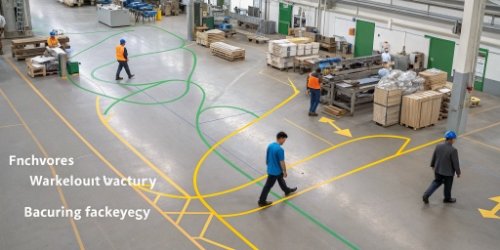
Placement is critical. A poorly placed labeling station forces unnecessary movement across the factory floor. It interrupts the natural, linear flow of materials, forcing detours and backtracking that waste time and energy, directly impacting output and increasing worker fatigue.
The Cost of Extra Steps
The location of the station dictates how much your team has to move. If it is far away from the scale where items are weighed or the conveyor where they are produced, workers must walk back and forth all day. These extra steps are pure waste. Think about it: if it takes an extra 10 seconds to walk an item to and from the labeling station, and you process 3,000 items a day, you lose over 8 hours of productive time. That is an entire workday for one employee, lost just to unnecessary walking. This hidden cost adds up quickly and directly hurts your bottom line.
Disrupting the Production Line
An ideal workflow is a straight line. Materials come in one end, flow through value-added processes, and exit the other end. When you place a labeling station off to the side, you break this line. You create a detour. This disruption makes the entire process more complex and harder to manage. It can cause traffic jams with workers and forklifts, increasing the chance of accidents and further slowing things down. The best placement combines steps, while poor placement separates them and creates chaos.
Ergonomics and Worker Fatigue
Poor placement does not just waste time; it also wears out your team. If workers have to constantly bend, twist, and carry items over long distances, their fatigue increases significantly throughout the day. A tired worker is a slower worker who is more likely to make mistakes or get injured. Designing a workflow that minimizes movement and makes the job easier is not just good for your employees' health; it is good for business. A well-placed, integrated process keeps workers fresh and focused.
What Solutions Exist for Avoiding Bottlenecks Caused by Labeling Stations?
The bottleneck is clear, and the costs are mounting. You feel stuck between slow manual work and the huge expense of a fully automated system. But is there a middle ground solution?
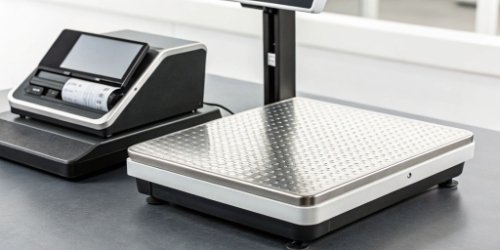
The best solution is to eliminate the separate station by integrating weighing and labeling into one step. An integrated IoT smart scale with a built-in printer automatically weighs an item and prints the correct label on the spot. This creates a seamless, one-touch workflow that boosts speed and accuracy.
The Power of Integration
The solution is to merge process steps. Instead of weighing an item, moving it, and then labeling it, you can do it all at once. When you integrate these tasks at a single point, you eliminate the bottleneck entirely. There is no more queuing, no extra material handling5, and no wasted motion. The workflow becomes smooth and continuous. The operator at the weighing station simply places the item on the scale, and by the time they take it off, it is ready for the next stage with a label in hand. This simple change completely transforms the efficiency of the entire line.
Introducing the IoT Smart Scale
As a manufacturer, we designed our integrated IoT smart scale6s to solve this exact problem. It's more than just a scale; it's an intelligent workstation. An operator places a product on the scale. The system instantly captures the weight, identifies the product through a scanner or touchscreen, and prints the correct label with all necessary information—weight, product ID, barcodes, and more. For you as a software provider, this is a smart device ready for integration. Its IoT capabilities allow it to communicate directly with your Warehouse Management System (WMS) or Enterprise Resource Planning (ERP) software, ensuring data is always accurate and available in real-time.
The Stepping Stone to Automation
This is not just about a faster process today. For our clients, an IoT smart scale is a key stepping stone toward greater automation7. It bridges the gap between inefficient manual labor and a complex, fully robotic system. You get a massive leap in productivity and accuracy without the huge capital investment and implementation headaches of full automation. It empowers your business—or your clients' businesses—to grow step-by-step, using technology to revolutionize a conventional process and achieve a quantum leap in efficiency and profit.
Conclusion
A separate labeling station creates costly bottlenecks. By integrating weighing and labeling with an IoT smart scale, you can streamline your workflow, boost efficiency, and pave the way for future automation.
-
Understanding the role of labeling stations can help you identify bottlenecks in your production line. ↩
-
Stay updated on advancements that can enhance your production capabilities. ↩
-
Learn how to enhance your production line for maximum efficiency and output. ↩
-
Explore quality control strategies to minimize errors and enhance product quality. ↩
-
Learn how to improve material handling to reduce delays and increase productivity. ↩
-
Discover how IoT smart scales can revolutionize your production processes. ↩
-
Discover how automation can streamline processes and boost efficiency. ↩
Comments (0)