

Are you getting inconsistent weight readings from your industrial floor scale? This inaccuracy could be costing your business money, disrupting your production line, and making you question your equipment's reliability. The problem might not be the scale itself, but something much simpler: your floor.
Yes, an uneven floor is a primary cause of floor scale inaccuracy. The scale's sensors need a perfectly flat surface to distribute weight evenly. Any tilt or bump can lead to incorrect force measurement from the load cells, resulting in unreliable and fluctuating readings.
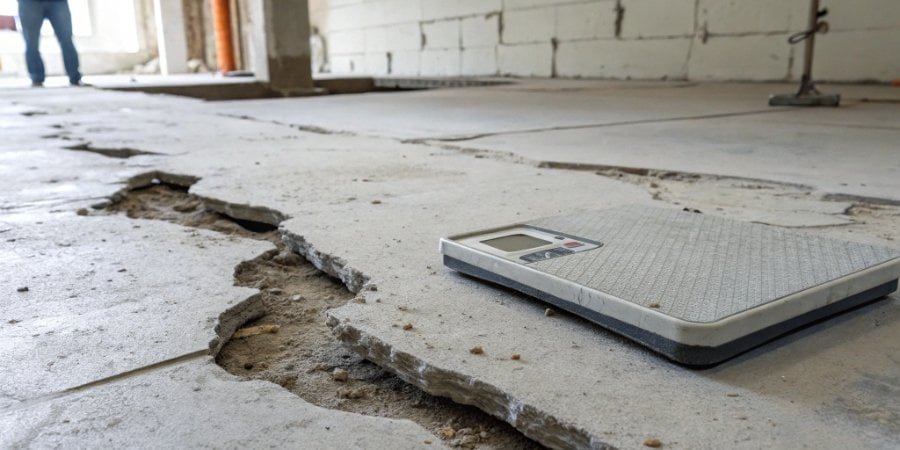
You've invested in quality weighing equipment1, expecting precision. But when the numbers just don't add up, it's frustrating. It is easy to blame the machine, but in my 18 years of experience in the weighing industry, the foundation is just as critical as the hardware. So, let's look closer at how the surface beneath your scale impacts its performance. Understanding this relationship is the first step to achieving the accuracy your operations depend on.
Do scales work on an uneven floor?
Do you need to place a scale in an area where the floor is not perfectly level? You might worry that any measurement you take will be flawed, potentially leading to inventory errors or compliance issues. While scales can function, their accuracy is severely compromised on uneven surfaces.
Technically, a scale will power on and give a reading on an uneven floor. However, this reading will almost certainly be inaccurate. The internal load cells are designed to work on a flat plane. An incline causes uneven pressure, leading to significant measurement errors that make the data unreliable for any professional use.
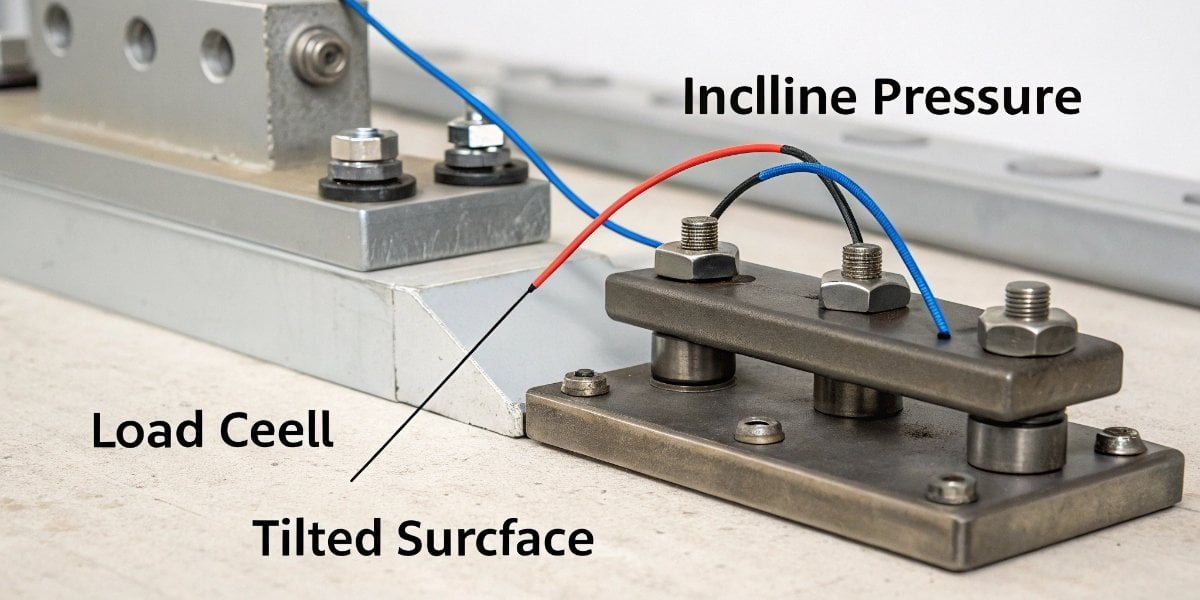
Let's break down exactly what happens inside the scale. As a manufacturer, we design industrial floor scales to rely on multiple load cells2, typically one at each corner. When you place a load on a perfectly level scale platform, the weight is distributed predictably across all these cells.
How an Incline Skews Readings
On an uneven surface, the scale tilts. This shift causes more force to be applied to the load cells on the lower side and less on the higher side. The scale's software is calibrated to sum the inputs from all cells under the assumption of a level plane. This uneven distribution completely breaks that crucial calibration.
The Role of Load Cell Design
- Compression Load Cells: These are the most common type in floor scales. They are engineered to measure the compressive force applied directly down on them. A tilt means the force is not purely vertical, which introduces a fundamental error.
- Signal Interpretation: The scale's indicator interprets the combined electrical signals from the load cells to display a weight. But remember the principle: garbage in, garbage out. If the signals are skewed by an uneven foundation, the final reading will be wrong. It is a fundamental principle of physics, not a manufacturing fault in the scale.
Why is my scale different on different floors?
You move your scale from the warehouse to the production area, and suddenly the same item has a different weight. This inconsistency creates confusion and doubt about your entire weighing process, making quality control a nightmare. The variation is likely due to subtle differences in the flatness and stability of each floor.
A scale shows different weights on different floors because no two surfaces are identical. Variations in levelness, rigidity, and even background vibrations can alter how the scale’s load cells perceive weight. A solid concrete warehouse floor behaves very differently from a suspended or tiled lab floor, directly impacting measurement consistency.
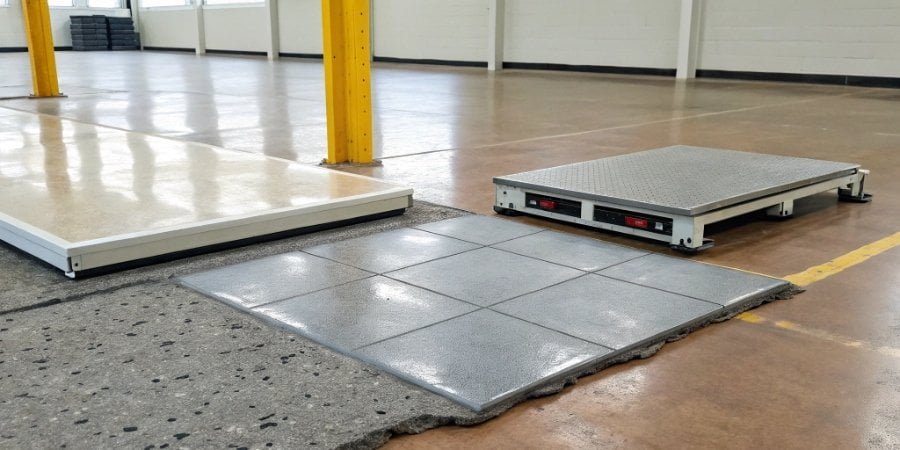
When I visit client facilities to help with a weighing challenge3, this is one of the most common issues I troubleshoot. The problem is not just about whether the floor is level; it is also about the floor's material and stability. You should think of it like this: your scale is a highly sensitive instrument, and the floor it sits on is part of its operating system.
Key Floor Characteristics
- Levelness: As we have discussed, even a slight slope can cause significant errors. A floor that looks flat to your eye might have a one or two-degree slope that is enough to throw off a sensitive scale.
- Rigidity: Is the floor solid concrete, or is it a suspended floor on an upper level that has some flex? A floor that gives way, even microscopically, will absorb some of the force and can lead to lower weight readings.
- Vibrations: A floor near heavy machinery will have constant, low-level vibrations4. These vibrations can "excite" the load cells, creating noise in the electronic signal and causing the reading to bounce around or become inaccurate.
| Floor Type | Potential Issue | Impact on Scale |
|---|---|---|
| Solid Concrete | Generally stable but can be uneven. | Best option, but requires checking for levelness. |
| Wood or Mezzanine | Can flex and vibrate. | Readings may be inconsistent and lower than actual. |
| Tiled Floor | Grout lines create an uneven surface. | Can cause the scale to rock and give bad readings. |
Is it normal for floors to be slightly uneven?
You have discovered your facility’s floors are not perfectly flat. You might be concerned that this means your entire building has a structural flaw or that you will never achieve accurate weighing. Do not worry. It is completely normal for industrial and commercial floors to have minor imperfections.
Yes, it is entirely normal for floors to be slightly uneven. Construction standards allow for certain tolerances in floor flatness and levelness. Achieving perfect flatness is nearly impossible and extremely expensive. Most industrial floors have subtle slopes for drainage or have settled slightly over time.
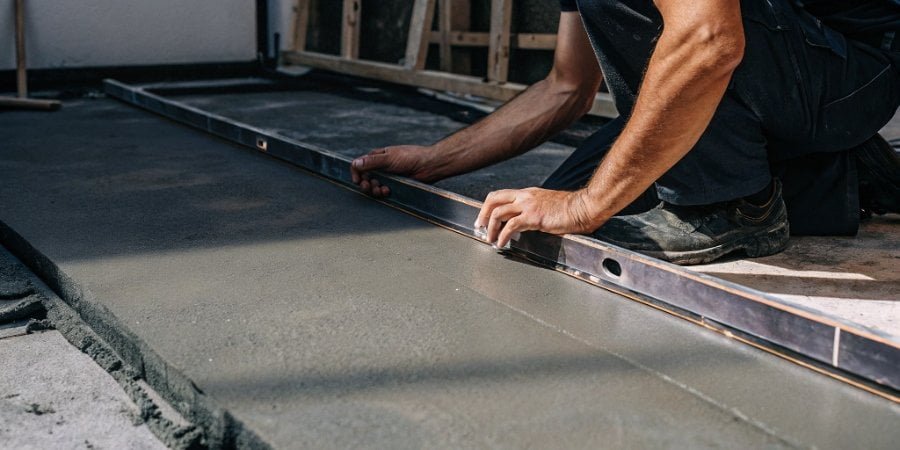
In the construction world, nobody expects a perfectly flat floor. Builders use a system called F-Numbers5 to define a floor's characteristics. This is something technical directors at our client companies often appreciate knowing.
Understanding F-Numbers
- FF (Floor Flatness): This number relates to the smoothness of the floor. It measures the "bumpiness" over short distances of one or two feet. A higher FF number means a smoother, less bumpy floor.
- FL (Floor Levelness): This number describes how closely the floor conforms to a true horizontal plane over longer distances, like ten feet. A higher FL number means the floor is more level overall.
For a general warehouse, an FF of 25 and an FL of 20 is common. This is far from perfect. High-precision operations, like those with automated guided vehicles, might require floors with F-numbers of 50 or more. The important takeaway here is that your "uneven" floor is likely well within building industry standards. The challenge is not to rebuild the floor, but to work with it. This is where adjustable feet on the scale and proper installation become critical.
How much uneven floor is acceptable?
You know your floor is a little uneven, but you need to know how much is too much. Without a clear standard, you are just guessing whether your scale's location is good enough. This risks continuous inaccurate measurements and undermines your data.
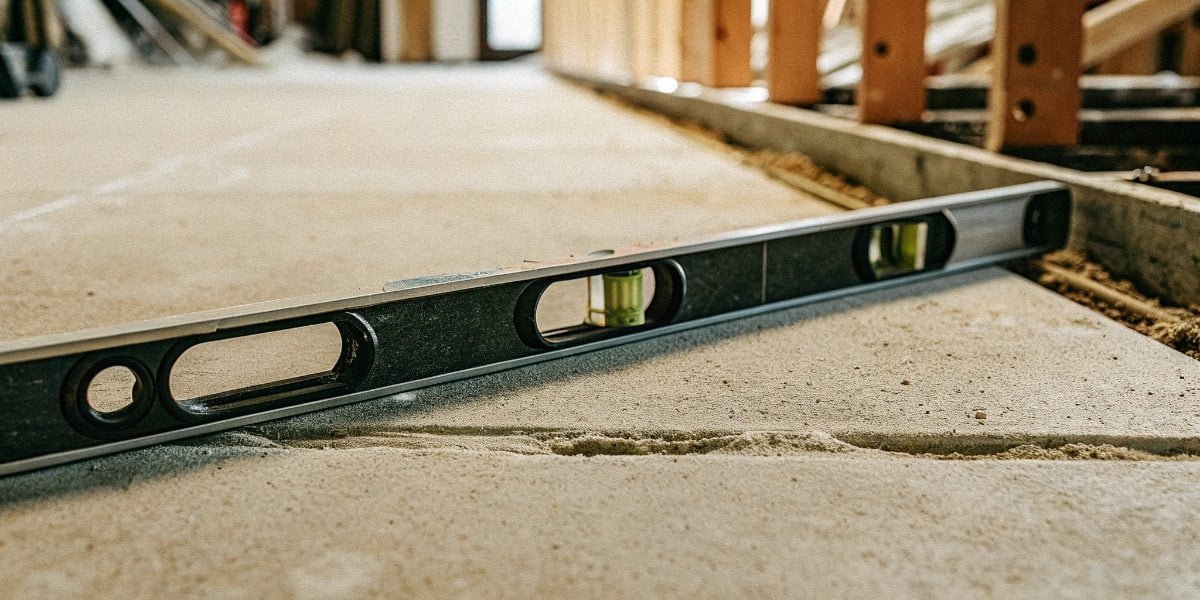
For most industrial floor scales, the surface should be level within ±0.2 degrees. Anything more can introduce significant errors into your measurements. You can check this easily using a good quality spirit level. If the bubble is noticeably off-center, the floor is likely too uneven for precise weighing without taking corrective action.
Over my career, I have seen many clients struggle with this question. The real answer depends on the required precision of your application. Let's make this practical instead of theoretical.
A Simple Test
You do not need expensive laser equipment for a basic check. Take a standard, reliable carpenter's spirit level and place it on the spot where your scale will sit. Check it in both directions, length-wise and width-wise. If the bubble is not perfectly centered between the lines, you have a slope that needs to be addressed.
Solutions for Uneven Floors
If your floor is outside the acceptable range, you have a few excellent options:
- Use the Scale's Adjustable Feet: Most of our industrial scales6 come with heavy-duty, adjustable, load-bearing feet. Their primary purpose is to level the scale on an imperfect surface. Use your spirit level on the scale’s platform itself, not the floor, and adjust each foot until the platform is perfectly level.
- Install a Steel Plate: For a more permanent solution, you can grout a thick steel plate into position, ensuring it is perfectly level. The scale then sits on this plate. This creates an ideal, stable foundation.
- Consult a Professional: As a manufacturer, we often help clients with site preparation. A weighing expert can assess your floor and recommend the most cost-effective solution for your specific needs.
Conclusion
An uneven floor is a common enemy of accurate weighing. By understanding its impact and using simple tools to level your scale, you can ensure reliable data and protect your operations.
-
Get insights on selecting the right weighing equipment for your specific needs. ↩
-
Discover the role of load cells in weighing systems and how they affect measurement accuracy. ↩
-
Find effective strategies for troubleshooting and resolving common weighing challenges. ↩
-
Understand the impact of vibrations on scale readings and how to minimize their effects. ↩
-
Explore the concept of F-Numbers and how they define floor characteristics in construction. ↩
-
Learn about the various types of industrial scales and their applications in different industries. ↩



Comments (0)