

Unsure if your business legally needs NIST traceable calibration? This confusion can lead to compliance risks and costly errors in your operations. Don't risk fines or product recalls.
No, NIST traceable calibration isn't universally required by federal law for all industries. However, specific regulatory bodies like the FDA or quality standards like ISO often mandate it. Its necessity depends entirely on your industry's regulations and quality management system requirements for compliance.

Understanding calibration requirements can feel complex. It often seems like a gray area, but it's black and white when an auditor shows up. The key is to stop thinking about it as a general rule and start looking at what your specific industry and customers demand. Your quality system1 is your guide. From my experience helping thousands of clients, the question isn't just "Is it required?" but "What level of risk am I willing to accept without it?" Let's break down the specifics so you can make an informed decision for your business.
Does my industry (e.g., food/pharmaceutical/jewelry) require NIST calibration?
Working in a regulated industry like food or pharma? You're constantly worried about meeting strict quality standards and avoiding harsh penalties for any non-compliance.
Yes, highly regulated industries such as pharmaceuticals, aerospace, food and beverage, and medical device manufacturing typically require NIST traceable calibration. This is to comply with standards like FDA regulations, ISO 9001, or AS9100, ensuring accuracy, safety, and product quality.

Over my 18 years in this business, I've seen firsthand how an unbroken chain of measurement traceability2 is non-negotiable in certain sectors. It's not just about having an accurate scale; it's about being able to prove it. A NIST traceable calibration3 provides that proof. It connects your scale's measurement all the way back to the national standard held by the National Institute of Standards and Technology (NIST). This documented evidence is exactly what auditors for agencies like the FDA or assessors for ISO standards look for. Without it, your entire quality system could be questioned.
Why Regulations Drive Calibration Needs
The demand for calibration is driven by the need for safety, quality, and fair trade. In the pharmaceutical industry, an incorrect weight could alter a drug's potency, putting patient safety at risk. In the food sector, it ensures correct ingredient quantities and net weight labeling. For jewelry, it's about consumer trust and legal trade.
Industry-Specific Requirements at a Glance
Here is a simple table to show which industries commonly require this level of certification.
| Industry | Requirement Level | Key Regulations/Standards |
|---|---|---|
| Pharmaceutical | Mandatory | FDA 21 CFR, GMP |
| Food & Beverage | Highly Recommended/Mandatory | FSMA, HACCP, SQF |
| Aerospace & Defense | Mandatory | AS9100, FAA Regulations |
| Jewelry & Precious Metals | Mandatory (for legal trade) | NTEP, Handbook 44 |
| General Manufacturing | Recommended (for ISO 9001) | ISO 9001 |
Approximately how much does a NIST calibration certificate cost? Is it included in the price when purchasing a new scale?
Budgeting for new equipment is already tough. Hidden costs like calibration certificates can throw your entire financial plan off track and cause unexpected expenses down the road.
A NIST calibration certificate typically costs between $50 and $200 per device, depending on the complexity of the scale. It is usually not included in the standard price of a new scale. You must specifically request and purchase it as an add-on service.
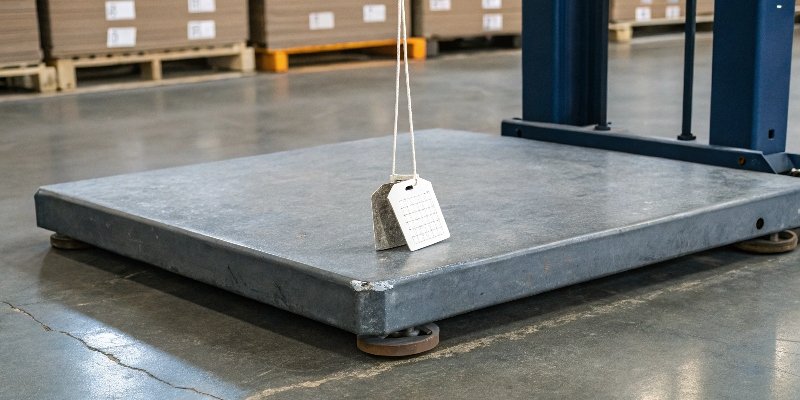
At our company, Weigherps, we are very transparent about this. A new scale from the factory is accurate, but "accurate" is not the same as "calibrated with NIST traceability". The process of generating a NIST traceable certificate involves using specific, certified test weights and documenting the results according to strict procedures. This is a separate service. When a client tells us they are in a regulated industry, we always make sure to discuss this requirement early on. Failing to budget for this can cause major headaches later, especially if you need to get your equipment operational to meet a project deadline. Always treat the certificate as a separate line item in your budget and confirm with your supplier before you buy.
Factors Affecting Calibration Cost
The price of a certificate isn't one-size-fits-all. Several factors can change the final cost, and you should be aware of them.
- Scale Complexity: A high-precision laboratory balance with many decimal places requires a more rigorous and time-consuming calibration process than a large-capacity floor scale. More precision means more cost.
- On-site vs. Mail-in: If a technician has to travel to your facility, you'll pay for their time and travel expenses. This is often necessary for large or fixed equipment. Sending a smaller scale to a lab is usually cheaper.
- Accreditation Level: A certificate from an ISO/IEC 170254 accredited lab will typically cost more than one from a non-accredited provider, but it offers the highest level of trust and is often required for the strictest compliance standards.
Can I perform NIST calibration on my equipment myself?
Want to save money and handle things in-house? The idea of performing your own calibrations seems appealing, but you're not sure if it is even allowed or valid.
You cannot perform an accredited NIST traceable calibration yourself unless your in-house lab is ISO/IEC 17025 accredited. This requires specific training, documented procedures, and using traceable reference standards. For most companies, using an accredited third-party lab is the only practical option.

Many of my clients ask me about this. They want to be self-sufficient and control costs. I always explain that there's a big difference between a daily or weekly check and a formal calibration. You and your team should absolutely be performing routine checks on your scales using a reliable check weight. This ensures the scale is still performing as expected between formal calibrations. However, this check does not produce a NIST traceable certificate. To do that yourself, you would need to invest heavily in creating a calibration lab5, training personnel, purchasing expensive master weights that are themselves calibrated, and getting the entire process audited and accredited. For nearly all businesses, this is simply not cost-effective.
Routine Checks vs. Formal Calibration
Understanding the difference is crucial for a healthy quality system. One doesn't replace the other; they work together.
| Aspect | Routine User Check | Formal Calibration |
|---|---|---|
| Purpose | Verify performance between formal calibrations | Establish traceability and adjust if needed |
| Performed By | A trained equipment operator | An accredited calibration technician |
| Equipment | User-owned check weights | Calibrated master weights (NIST traceable) |
| Outcome | A simple go/no-go decision for daily use | An official certificate with measurement data |
How long is a NIST calibration certificate valid? How often do I need to recalibrate?
You have your NIST certificate, but now what? The uncertainty about its expiration and when to recalibrate can lead to compliance gaps and potential audit failures.
A NIST calibration certificate does not have a fixed expiration date. Instead, the recalibration interval is determined by you, the user. A one-year interval is a common industry standard, but it should be adjusted based on usage, environment, and your quality system's requirements.

This is a point of confusion for many people. A calibration lab can't tell you when your certificate expires because they don't know how you use your equipment. It is your responsibility, as the equipment owner, to define and justify your calibration frequency6. An annual interval is a safe starting point for most applications. However, you should document your reasoning for this choice in your quality management system. For example, if you have a scale in a harsh, dusty environment that is used 24/7 for a critical process, you might need to calibrate it every six months. If another scale is in a clean lab and used only once a week, a one-year or even two-year interval might be justifiable.
Key Factors for Determining Calibration Frequency
When deciding on your calibration interval, you need to conduct a risk assessment. Here are the main factors to consider and document.
- Frequency of Use: The more you use a scale, the higher the chance of wear and drift. Heavy use requires shorter calibration intervals.
- Criticality of Measurement: If an incorrect measurement could lead to a safety issue or major financial loss, the scale is critical. Critical equipment needs more frequent calibration.
- Operating Environment: Scales in areas with vibrations, extreme temperatures, or dirt will lose accuracy faster than those in controlled lab environments.
- Manufacturer’s Recommendation: As a manufacturer, we provide a suggested starting interval. This is a good baseline to use for your initial decision.
- Historical Data: Track your calibration results over time. If a scale is consistently well within tolerance at each annual calibration, you may have evidence to justify a longer interval. If it frequently needs adjustment, you must shorten the interval.
Conclusion
NIST calibration is key for regulated industries to ensure accuracy and compliance. While not always a legal rule, it is best practice. Know your needs, costs, and recalibration schedule.
-
Explore the relationship between quality systems and calibration to enhance compliance and performance. ↩
-
Understanding measurement traceability is essential for compliance and quality assurance in regulated industries. ↩
-
Understanding NIST traceable calibration is crucial for compliance and quality assurance in regulated industries. ↩
-
Learn about ISO/IEC 17025 to understand its importance in ensuring high-quality calibration services. ↩
-
Understanding calibration labs helps you choose the right service for your calibration needs. ↩
-
Explore the factors that influence calibration frequency to ensure compliance and accuracy. ↩



[…] to meet regulatory standards2 (like net weight requirements) can lead to fines and […]