

Tired of watching operators waste time walking back and forth? This lost time adds up, hurting your bottom line. Integrating your devices is the simple, effective solution you need.
Yes, absolutely. The seemingly small walk between a scale and a printer accumulates into significant labor costs, production delays, and potential data entry errors. It directly reduces your overall operational efficiency and profit margins by introducing unnecessary manual steps into your workflow.
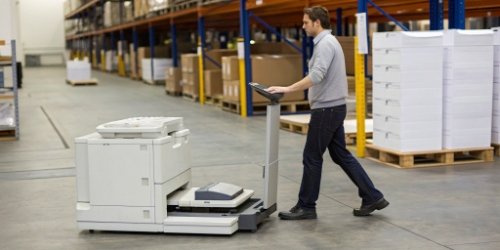
I have been in the industrial weighing business for nearly 20 years, and I’ve seen this exact problem in countless facilities. It is a small leak that can slowly sink a big ship. The process seems so minor that leadership often overlooks it. But when you start to calculate the seconds lost on every single package, the numbers become alarming. But what exactly are those costs, and how do they really add up over time? Let's break it down. Understanding the problem is always the first step to finding a powerful solution.
How does walking between a scale and a printer impact productivity?
Is your production line always feeling a step behind? This constant movement between stations creates bottlenecks and slows everything down. Streamlining this one simple step can immediately boost your daily output.
Walking between a scale and a printer directly hurts productivity by adding non-value-added time to every single weighing task. This movement interrupts the operator's focus, increases the total cycle time for each product, and reduces your overall throughput and output capacity.
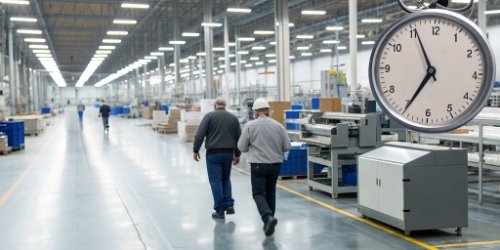
I remember visiting a client's e-commerce fulfillment center in Germany. Their process was typical. An operator would place a box on the scale, read the weight, walk about 15 feet to a shared computer station, manually enter the weight to generate a shipping label, print it, and then walk back to the box to apply it. On the surface, it didn't seem like a big deal. But they were processing over 1,000 packages a day in that section alone. Every single package had this built-in delay.
The Cycle of Interruption
This constant back-and-forth is more than just walking; it's a cycle of interruption. The operator's focus is broken with every trip. They switch from a physical task (handling a package) to a mental task (remembering or noting the weight) and then a data-entry task (typing it into a system). This context switching is mentally draining and is a known killer of productivity. A focused operator working at a single, integrated station is always faster and more accurate.
Quantifying the Time Loss
Let's do some simple math. If a walk takes just 15 seconds, and you weigh 400 items a day, that's 6,000 seconds of lost time1. This adds up to 100 minutes, or over 1.5 hours of paid labor spent on just walking.
| Items Weighed per Day | Seconds per Trip | Daily Time Lost (minutes) | Annual Time Lost (hours, 250 workdays) |
|---|---|---|---|
| 200 | 15 | 50 | 208 |
| 500 | 15 | 125 | 520 |
| 1000 | 15 | 250 | 1041 |
As you can see, the numbers are staggering. That's a huge amount of payroll spent on an activity that adds zero value to your product or your customer.
What are the hidden costs of frequent trips between a scale and a printer?
Your labor costs might seem high, but you can't figure out why. Hidden inefficiencies like this constant walking are quietly draining your budget. Identifying these costs is the first step to recovery.
The hidden costs go far beyond wasted wages for walking. They include increased risks of human error from manual data transfer, potential for product mix-ups during the walk, and higher employee fatigue, which leads to even more mistakes and lower morale.

At our company, Weigherps, quality control is at the heart of everything we do. We understand that a tiny error at the beginning of a process can create massive problems and expenses down the line. That's why we obsess over designing systems that eliminate the chance for human error2. The walk between the scale and the printer is a huge source of these preventable errors.
The High Price of Human Error
What happens when an operator misremembers a weight? They might write down 5.2 kg instead of 2.5 kg. This simple mistake can lead to massive shipping overcharges. Or, worse, they could grab the wrong label on their way back from the printer and apply it to the wrong box. Now you have a customer receiving the wrong item. This leads to costly returns, refund processing, and sending out a replacement shipment. Most importantly, it damages your brand's reputation, which is the hardest thing to repair. The cost of one mistake often wipes out the profit from dozens of successful transactions.
Operator Strain and Opportunity Costs
This inefficient process also causes physical and mental strain on your team. Repetitive, non-productive movement leads to fatigue, which in turn leads to lower morale and higher employee turnover. But the biggest hidden cost is the opportunity cost. That hour and a half your operator spends walking each day could have been spent packing an additional 100-200 packages. The lost revenue from that unfulfilled capacity is a direct hit to your bottom line. You are paying for capacity that you aren't even using.
How can efficiency be improved by reducing the distance between a scale and a printer?
Do you want a simple way to get more done with the same team? Optimizing your workstation layout is a powerful, yet often overlooked, strategy that delivers immediate results.
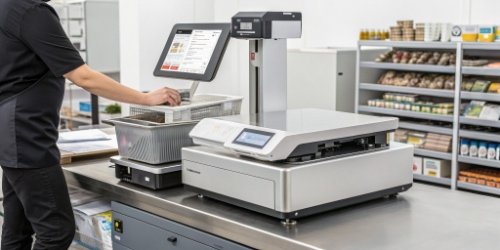
You can dramatically improve efficiency by co-locating the scale and printer, or even better, using a single scale with an integrated printer. This eliminates travel time, prevents data entry errors, and allows one operator to complete the entire process in a single, fluid motion.
For the 19 years we've been manufacturing industrial scales3, our core mission has been to help businesses like yours become more efficient. We empower our customers to use technology to revolutionize their old ways of working. Solving the "walk of waste" is one of the easiest wins you can get. The solution is often simpler and more affordable than you think. As an OEM/ODM provider, we have developed a range of targeted solutions for this exact problem.
Solution 1: Workstation Redesign
The simplest approach is to redesign your packing stations. Place a dedicated printer right next to every scale. This immediately eliminates the walk. This is a low-cost starting point, but it still requires two separate pieces of hardware, two power outlets, and two data connections for your software to manage.
Solution 2: Mobile Weighing Stations
For warehouses where operators need to move around, a mobile cart with a scale, a laptop, and a printer can be a great solution. We've helped clients build these using our durable, battery-powered scales. This brings the entire workflow to the product, rather than bringing the product to the workflow, which is ideal for inventory counting or weighing oversized items.
Solution 3: Integrated Weighing and Printing Systems
This is the most powerful solution. A scale with a built-in printer combines two devices into one. When a package is weighed, the data is instantly sent to the printer, which produces a label on the spot. This single piece of hardware eliminates walking, data entry errors4, and the need to manage multiple devices. For software vendors, this is a dream come true. You only need to integrate your software with one API for one device, simplifying development and support. It is the most streamlined and error-proof method available.
What potential losses occur due to the travel time between a scale and a printer?
Are you consistently missing production targets or shipping deadlines? The cumulative effect of these small delays can lead to major business losses that stunt your company's growth and profitability.
The potential losses are significant and include lost production capacity, which means less product shipped per day. This leads to missed sales opportunities, delayed orders, customer dissatisfaction, and ultimately, a direct hit to your revenue and market competitiveness. Every second truly counts.

The impact of this inefficiency goes far beyond the walls of your warehouse. It directly affects your customers and your position in the market. As a partner to many software providers, I always stress this point: your software can be brilliant, but if it's connected to a clunky and inefficient hardware process, the end-user will blame the entire system.
Impact on Throughput and Revenue
Think about it this way: if eliminating the walk allows you to ship just 10% more packages per day, what does that mean for your annual revenue? For most companies, that's a massive increase in sales without having to hire more staff or expand their facility. Conversely, the lost potential from your current, inefficient process is money you are leaving on the table every single day. Slow operations can also lead to missing carrier pickup deadlines, causing a full day's delay on shipments and hurting your delivery speed metrics on platforms like Amazon or Shopify.
The Integration Challenge for Software Providers
If you are a technical director at a software company, this problem should be on your radar. Your customers look to you for a complete solution. When they face integration issues between a scale from one brand and a printer from another, your support team gets the call. By recommending or providing an integrated hardware solution, like our IoT-enabled scales, you simplify the entire process. You provide your customer with a reliable, pre-vetted system that works seamlessly with your software. This makes their life easier and makes your software look even better, reducing your support costs and increasing customer loyalty.
Conclusion
That small walk is a big problem that quietly costs you time, money, and accuracy. By integrating your weighing and printing, you can immediately boost productivity and protect your bottom line.
-
Understanding lost time can help you identify inefficiencies and improve productivity. ↩
-
Learn effective strategies to reduce human error and enhance operational accuracy. ↩
-
Stay updated on advancements that can enhance your weighing processes. ↩
-
Discover how to reduce data entry errors and improve accuracy in your processes. ↩



Comments (0)