
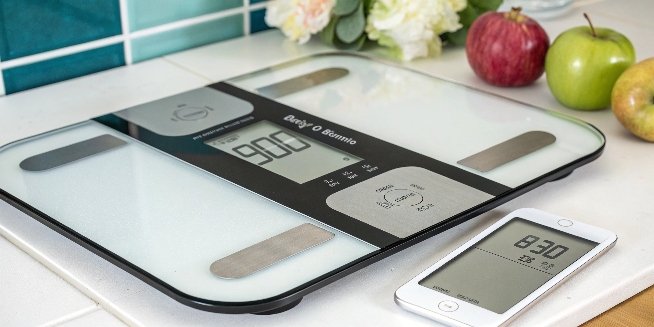
Struggling with scales that only offer a single number? This limits your ability to make informed decisions. Imagine a scale providing deeper insights into your products or processes instead.
Yes, many modern scales offer more than just weight. Smart scales, laboratory balances, and industrial systems can measure metrics like nutritional data, body composition, material density, and track trends over time through software integration.
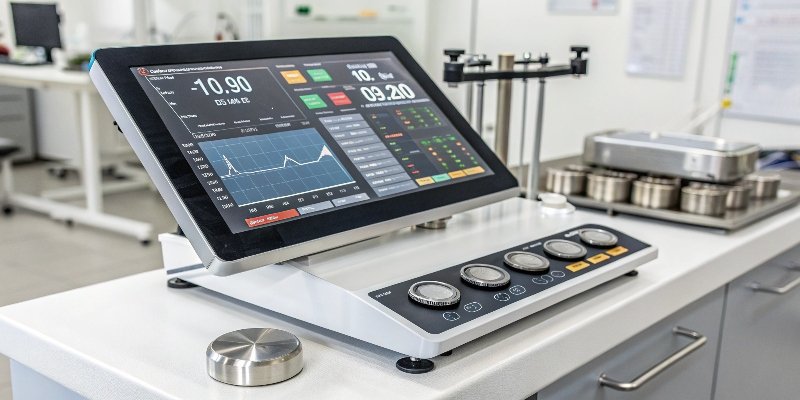
This evolution in weighing technology is a game-changer. For over 18 years, I've seen firsthand how moving beyond a simple weight reading can revolutionize a business. The extra data provides a complete picture, turning a basic tool into a powerful data collection1 point. This information unlocks new levels of efficiency, quality control2, and operational intelligence. It’s not just about what something weighs, but what that weight means in a larger context. Let's explore some of these advanced weighing solutions and see how they can benefit you.
What is the most precise scale?
Do you need absolute accuracy in your operations? An imprecise scale can lead to wasted materials and costly production errors. Discover which scales provide the highest level of precision for critical tasks.
The most precise scales are analytical and microbalances, primarily used in laboratories, which can measure to 0.0001g or less. For industrial settings, high-precision scales using advanced load cells deliver the necessary accuracy for specialized applications.
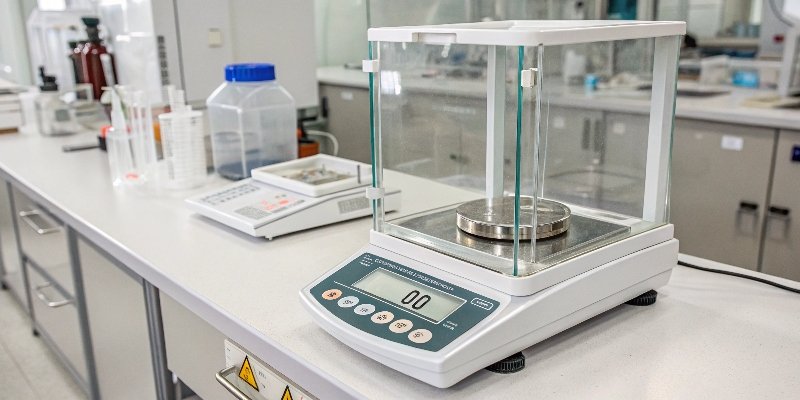
When we talk about precision, it’s important to understand what it means. Precision is about repeatability—getting the same result every time you weigh the same object. This is different from accuracy, which is how close the measurement is to the true value. In professional applications, you need both. As a manufacturer, I've learned that different tasks require different levels of precision. A scale for weighing gravel doesn't need the same sensitivity as one for mixing pharmaceutical compounds.
Understanding Precision Levels
High-precision scales are categorized by their readability, which is the smallest increment they can display.
- Microbalances: These are the top tier, used for scientific research where even a speck of dust matters.
- Analytical Balances: Common in labs for quality control and chemical analysis. They are sensitive enough to be affected by air currents, which is why they often have a protective enclosure.
- Industrial Precision Scales: We build these for factory environments. They combine robust construction with sensitive load cells to handle tasks like parts counting, ink mixing, or quality checks on small components, where even a gram can make a difference.
Comparing Precision Scale Types
| Scale Type | Typical Readability | Common Application |
|---|---|---|
| Microbalance | 0.000001g (1µg) | Pharmaceutical research, chemical analysis |
| Analytical Balance | 0.0001g | Laboratory testing, quality control formulation |
| Precision Industrial Scale | 0.01g - 1g | Parts counting, ink mixing, food portioning |
| Standard Bench Scale | 1g - 10g | Shipping, general manufacturing, receiving |
Choosing the right precision ensures your processes are efficient and your final product meets specifications. It's a critical investment, not an expense.
Is there a scale that does not show weight?
A scale that hides the weight sounds counterintuitive. But in a fast-paced production line, operators looking at a number can be a distraction. What if a scale just told them "good" or "bad"?
Yes, they are called checkweighers or comparator scales. Instead of displaying a specific weight, they use simple indicators like lights or sounds to show if an item is under, within, or over a preset target weight range.
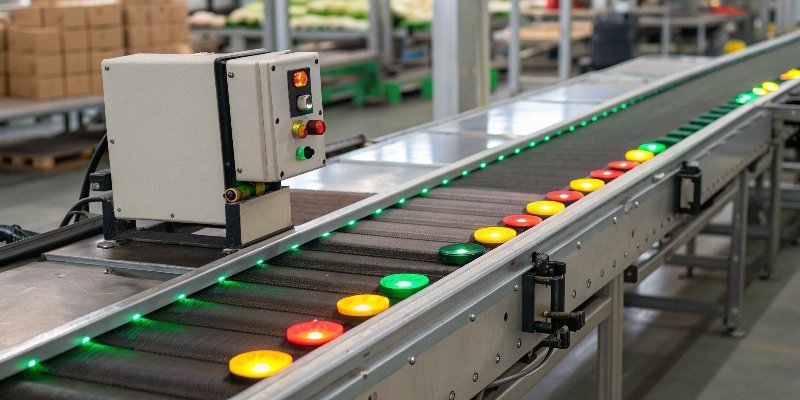
I've seen these scales drastically improve efficiency for my clients. The main purpose of a checkweigher is to make quick go/no-go decisions. On a busy packaging line, an operator doesn't have time to read "502 grams" and compare it to the target of "500 grams." They just need to know if the package is acceptable. The checkweigher automates this decision. This simple concept eliminates human error and significantly speeds up the quality control process. It’s a perfect example of how technology can simplify a complex task.
How Checkweighers Streamline Production
The process is brilliantly simple. You program the scale with your target parameters, and it does the rest.
- Set the Target: Define the ideal weight and the acceptable tolerance (e.g., 500g ±5g).
- Weigh the Item: Place the product on the scale.
- Get an Instant Result: The scale instantly compares the actual weight to the programmed range.
- See the Signal:
- Green Light: OK (weight is within the 495g-505g range).
- Red Light: OVER (weight is more than 505g).
- Yellow Light: UNDER (weight is less than 495g).
Beyond the Lights: Data Integration
For software-focused businesses, here's where it gets interesting. These scales don't just have to flash lights. Our IoT-enabled checkweighers3 can send this data directly to a central management system or your custom software. You can track reject rates, monitor production trends, and identify issues in real-time, all without the operator needing to see or record a single number. This turns a simple QA tool into a rich source of production data.
How to calibrate a digital scale without weights?
Your scale's readings seem off, but you don't have certified weights on hand. Inaccurate measurements can compromise your entire operation. Is there any way to check it reliably without professional tools?
While using certified weights is the only correct method for true calibration, you can perform a quick check using items with a known, consistent weight, like new coins or a measured volume of water. This is for reference only.
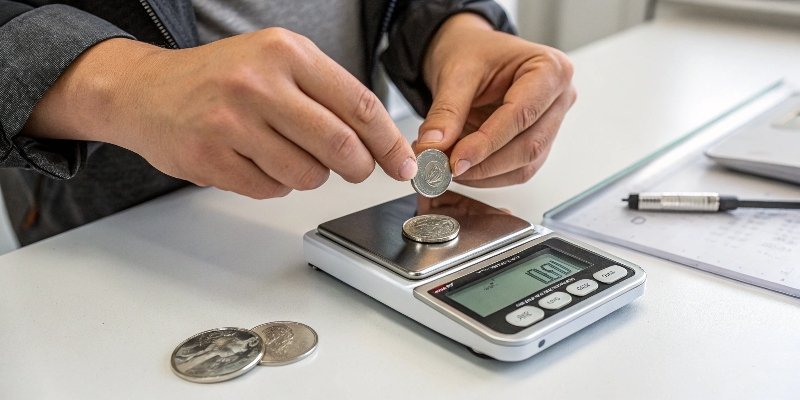
Let me be very clear: in my 18 years of manufacturing industrial scales, I can say with certainty that there is no substitute for professional calibration using certified, traceable weights. For any commercial, industrial, or scientific application, this is not optional. It’s a requirement for quality assurance standards like ISO and for any scale used in legal-for-trade transactions. However, if you're in a bind and just want to see if your scale is in the right ballpark, there are some household tricks you can use. Think of this as a quick health check, not a doctor's diagnosis.
Emergency Checks (Not a Substitute for Calibration)
These methods are useful for a quick sanity check but should not be used to formally adjust or certify a scale.
- Use Coins: Coins are minted to strict weight specifications. They are a great, accessible reference.
- Use Water: In chemistry, we know that 1 milliliter (ml) of water weighs exactly 1 gram (g). So, 1 liter (1000 ml) of water weighs 1 kilogram (1000 g). You can use a measuring cup to get a known volume, but remember to subtract the weight of the container first by using the "tare" function.
Weight Reference for Common Coins
| Coin (Country) | Official Weight |
|---|---|
| Nickel (U.S.) | 5.000 g |
| Penny (U.S., minted after 1982) | 2.500 g |
| One Euro (€1) | 7.50 g |
| Pound Sterling (£1) | 8.75 g |
Our quality control department tests every single scale with certified weights before it leaves our factory. We ensure it is accurate from day one, but all scales can drift over time. Regular professional calibration is key to long-term reliability.
What is a smart scale?
You collect data across your business, from sales to marketing. So why is your scale still an isolated device? You are missing out on valuable insights that could streamline operations and boost profits.
A smart scale is a weighing device with connectivity, like Wi-Fi or Bluetooth. It sends weight data to an app, software, or cloud system for tracking, analysis, and integration with other business processes like inventory or quality control.
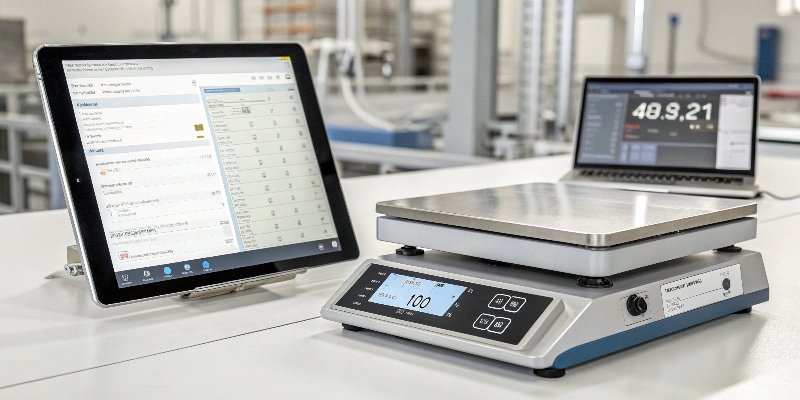
A smart scale transforms a simple measurement tool into an active part of your digital ecosystem4. As a provider of IoT weighing solutions, this is an area where I've seen incredible innovation. The scale itself is just the beginning. The real power comes from what you do with the data it collects. For a software provider, this is a huge opportunity. Our hardware becomes a reliable data source for your applications. The system consists of three key parts: the scale hardware, the connectivity link, and the software that brings the data to life.
From Consumer Tech to Industrial Powerhouse
Smart scales5 first became popular in homes for tracking health metrics. They use Bioelectrical Impedance Analysis (BIA)6 to estimate body fat, muscle mass, and more. We have taken this core concept—a scale that provides more than a number—and applied it to the demanding industrial world. Our industrial smart scales are built for durability and precision, but they operate on the same principle: capture data and make it useful.
Smart Scale Applications in Industry
| Feature | Traditional Industrial Scale | Industrial Smart Scale |
|---|---|---|
| Data Output | Shows weight on a display. | Sends weight, time, and ID to a server via API. |
| Integration | Standalone device. | Integrates with ERP, WMS, and custom software. |
| Process | Operator manually records weight. | Weight is logged automatically, reducing errors. |
| Use Case | Simple weighing for shipping. | Guides an operator through a recipe, ensuring each ingredient is added correctly. |
| Benefit | Basic weight measurement. | Creates a complete digital record for traceability and process optimization. |
For example, a client can place a smart scale under a pallet of raw materials. The scale communicates with their inventory management software, automatically updating stock levels as material is used. This provides real-time visibility and automates reordering. It's about making weighing an intelligent, connected part of the workflow.
Conclusion
Scales have evolved far beyond simple measurement tools. Modern smart and specialized scales now offer valuable data and seamless software integration, transforming business operations and providing critical insights for growth.
-
Learn effective strategies for data collection to enhance operational insights. ↩
-
Understand the role of scales in maintaining quality standards in production. ↩
-
Discover how IoT technology enhances checkweighers for better data management. ↩
-
Explore the concept of a digital ecosystem and its impact on business operations. ↩
-
Explore how smart scales can enhance data collection and operational efficiency in your business. ↩
-
Explore how BIA is used in smart scales for health metrics. ↩



[…] Consistency / Repeatability3 […]
[…] the very top of the precision ladder are microbalances6 and ultra-microbalances. Here, we are talking about readability of 0.001mg (a microgram) or even […]