

Are you still using outdated scales in your business? These "dumb" devices might be costing you much more than you think, silently eating into your profits every single day.
Yes, your traditional or ‘dumb’ scale is likely costing you a fortune. This happens through manual data entry errors, wasted labor, material overages, and a complete lack of actionable data. These hidden costs directly impact your efficiency, inventory accuracy, and ultimately, your bottom line.

If you are a purchasing manager or a technical director, you are always looking for ways to improve efficiency and reduce costs. You probably spend a lot of time optimizing software and complex systems. But have you ever considered the simple weighing scale on your production floor? I’ve been in this industry for nearly 20 years, and I’ve seen countless businesses overlook this critical component. Let’s explore how this oversight might be a significant financial drain on your operations and what you can do about it.
How Can Traditional Scales Lead to Hidden Costs in Your Business?
Are your staff still writing down weights by hand? This simple, everyday task is a breeding ground for errors that slowly bleed your business dry. It’s time to stop the bleeding.
Traditional scales create hidden costs through three main areas: labor-intensive manual processes, inaccurate measurements leading to material waste, and production bottlenecks. These issues accumulate over time, creating significant, yet often unnoticed, financial losses for the company.

When I first started in this business, I visited a small food processing client. They were proud of their efficient team, but I noticed a recurring problem. An employee would weigh a product, scribble the number on a log sheet, and another person would later type those numbers into a spreadsheet. This double-handling of data seems small, but it’s a huge source of hidden costs. You’re not just paying for the weighing; you’re paying for the writing, the typing, and the inevitable fixing of mistakes. Let’s break down where these costs hide.
The True Cost of Manual Labor
The most obvious cost is the time your employees spend on tasks that a smart scale could automate. This isn’t just about the person doing the weighing. It includes the time spent by supervisors double-checking figures and administrative staff entering data into your ERP or inventory system. These labor hours add up quickly, representing a significant operational expense that could be eliminated.
The Price of Inaccuracy
Human error is unavoidable in manual processes. A "5" can look like a "6", or a decimal point can be misplaced. In manufacturing or logistics, these small errors have big consequences.
- Material Over-giving: Consistently adding a few extra grams to each package might seem insignificant. However, over thousands of units, this "giveaway" amounts to a substantial loss of raw materials and profit.
- Inaccurate Inventory: If your recorded weights are wrong, your inventory data is wrong. This leads to poor purchasing decisions, stockouts, or overstocking, all of which tie up capital and hurt your cash flow.
Inefficiency and Production Bottlenecks
A weighing station that relies on manual recording is always slower than an automated one. This can create a bottleneck in your entire production line, reducing your overall throughput and limiting your capacity to fulfill orders.
| Hidden Cost Source | Direct Financial Impact | Operational Impact |
|---|---|---|
| Manual Data Entry | Extra wages for redundant tasks | Slower processes, data lag for decision-making |
| Human Error | Cost of wasted materials, chargebacks | Inaccurate inventory, compliance risks1 |
| Slow Processing | Lower production output per hour | Production bottlenecks, delayed shipments |
What Are the Financial Implications of Using Non-Intelligent Weighing Systems?
Are you making critical business decisions with yesterday’s data? A non-intelligent scale can’t talk to your other systems, leaving you financially vulnerable and competitively disadvantaged.
The financial implications are severe. Non-intelligent systems lead to poor inventory management from inaccurate data, potential fines from non-compliance, and missed optimization opportunities. They create data silos that prevent you from seeing the complete picture of your operations, leading to reactive instead of proactive management.

As a technical director or purchasing manager, you understand the power of integrated systems. You want your software, from your ERP to your WMS, to work together seamlessly. Your weighing scale should be part of that ecosystem, not an isolated island. I remember a client in the chemical industry who faced a major compliance audit. Their paper-based weight records were a nightmare to sort through. They couldn’t easily prove the exact composition of batches from six months prior. The stress and potential for fines were enormous. This is a classic example of the financial risk of using a non-intelligent system.
Data Integration and Its Failures
A "dumb" scale doesn’t have an API. It can’t send data directly to your database or cloud platform. This lack of connectivity has serious financial repercussions.
- High Integration Costs: You might have to pay for custom middleware or complex workarounds to get weighing data into your systems, if it’s even possible.
- Data Silos: When your weighing data is separate from your production and inventory data, you can’t get a holistic view. You can’t correlate material usage with production output in real-time, making it impossible to calculate true efficiency.
Compliance and Traceability Risks
In many industries, especially pharmaceuticals, food, and chemicals, strict traceability is a legal requirement. You need to be able to track every gram of material from receiving to shipping.
- Audit Failures: A non-intelligent system with manual logs is an auditor’s nightmare. It’s easy to lose records, and the data is hard to verify, which can lead to hefty fines or even a shutdown of operations.
- Costly Recalls: If a product recall is necessary, a lack of precise digital records makes it incredibly difficult to isolate the affected batches. This often results in a much broader, more expensive recall than necessary.
Our IoT-enabled scales are designed specifically for software vendors and tech-focused companies. They feature robust APIs that allow for straightforward integration with any system, whether it’s running on Windows, Linux, or a cloud environment. This turns your scale into a reliable, secure data node in your smart factory network.
How Does Upgrading from Conventional Scales Save Money for Businesses?
Do you view new scales as a cost? It’s time to reframe that thinking. An upgrade is an investment with a clear and often rapid return on your investment.
Upgrading saves money immediately by slashing labor costs and eliminating material waste. Long-term, it provides clean, real-time data that drives smarter purchasing, improves production scheduling, and future-proofs your operations against increasing demands for traceability and automation.
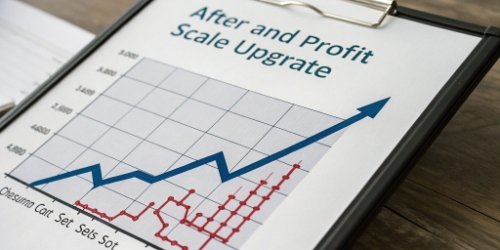
One of my proudest moments was with a mid-sized retailer who was struggling with their loose-goods packaging line. They thought a new weighing system was a luxury they couldn’t afford. After we helped them analyze their numbers, they realized they were giving away over $30,000 a year in product due to overfilling. We installed a system that integrated with their packaging machine to ensure precise weights every time. The system paid for itself in less than eight months. This is not an unusual story. The savings are real, and they start from day one.
Immediate and Measurable ROI
The return on investment2 (ROI) from upgrading to a smart scale is not a vague, long-term promise. It’s direct and quantifiable.
- Labor Redeployment: The hours your team once spent on manual data entry3 can now be used for higher-value tasks like quality control or process improvement.
- Waste Elimination: Smart scales, especially when integrated with fillers or controllers, enforce precision. This stops over-giving and ensures you are maximizing the yield from your raw materials.
The Power of Future-Proofing
In today’s market, you need technology that can grow with your business. A conventional scale is a dead end. Our philosophy at Weigherps is to build scalable solutions.
- Modularity: You can start with a basic smart scale for accurate weighing and data logging. Later, you can smoothly add a barcode scanner for product identification, connect to a printer for labeling, or integrate it into a larger automated conveyor system.
- Software Upgrades: As a software vendor, you know the importance of updates. Our intelligent scales are designed for easy software and firmware updates, allowing you to add new features, improve security, and adapt to changing market needs without replacing the hardware. This flexibility protects your initial investment.
Our systems are backed by a 12-month warranty and rigorous quality testing, ensuring you get a reliable tool that is ready to meet your needs today and tomorrow.
What Signs Indicate Your Business is Losing Money Due to Outdated Scales?
Are you experiencing operational headaches you can’t quite explain? There’s a good chance your outdated weighing equipment is the silent culprit behind these issues.
Clear signs include frequent inventory counts that don’t match records, customer complaints about shipment quantities, production lines slowing down at weighing stations, and teams spending more time on paperwork and data correction than on productive work.

If you notice any of these signs, it’s time to take a closer look at your scales. I often tell potential clients to perform a simple test: walk your production floor and just observe your weighing stations for an hour. How much time is spent waiting, writing, or re-weighing? How often is a supervisor called over to verify a number? These small moments of friction are the red flags. They are symptoms of a deeper problem that is actively draining your profits.
Diagnosing the Problem
Think of these signs as symptoms of a costly illness in your operations. Identifying them is the first step toward a cure. Let’s look at them in more detail.
| Red Flag (Symptom) | Direct Cost | Indirect Cost & Consequence |
|---|---|---|
| Inventory Discrepancies | Cost of manual recounts, write-offs for lost stock | Poor forecasting, frustrated purchasing department |
| Customer Quantity Complaints | Cost of returns, credit notes, re-shipping goods | Damage to brand reputation, loss of future sales |
| Weighing Station Bottlenecks | Overtime pay, reduced overall plant efficiency | Delayed order fulfillment, inability to scale production |
| Excessive Paperwork | Cost of printing, storage, and manual data entry | Slow decision-making, high risk of audit failure |
| Lack of Real-Time Data | N/A | Inability to track KPIs like OEE, making reactive decisions |
One client, a parts wholesaler, was constantly dealing with complaints about missing items in their kits. They traced the issue back to their manual packing and weighing station. By implementing a smart scale with a simple check-weighing function (a green light for correct counts, a red light for incorrect), they eliminated the errors entirely. The complaints stopped, and their customer satisfaction scores improved dramatically. Recognizing the sign—customer complaints4—allowed them to find the root cause and implement a simple, cost-effective solution.
Conclusion
Continuing with outdated scales is a hidden liability. Upgrading to a modern, intelligent weighing system is not an expense; it is a strategic investment in efficiency, accuracy, and profitability.
-
Understanding compliance risks can help you avoid costly fines and operational disruptions. ↩
-
Understanding the ROI of smart scales can help justify the investment to stakeholders. ↩
-
Explore how manual data entry can lead to inefficiencies and increased costs in your operations. ↩
-
Learn effective strategies for addressing customer complaints to improve satisfaction. ↩


Comments (0)