

You’ve built powerful software, but pairing it with unstable hardware leads to crashes and complaints. This hurts your reputation and your bottom line. The solution is choosing hardware built for stability.
Yes, our hardware provides a truly stable foundation for your software. The key is that we produce both the weighing hardware and develop our own software. This integrated approach ensures seamless compatibility, rigorous testing, and optimized performance, preventing the common integration failures seen when sourcing from separate suppliers.
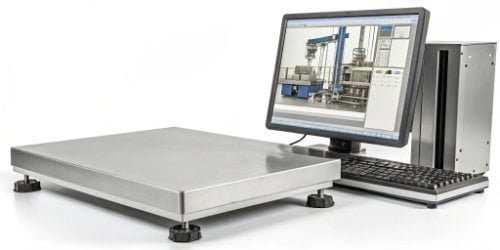
This concern about stability is something I hear all the time. As a software provider, your reputation depends on the entire solution working flawlessly, not just your code. The hardware underneath is the bedrock. If it cracks, everything built on top of it comes crashing down. It’s a risk you can’t afford to take, which is why a deeper look into what makes hardware truly reliable is so important. So, what exactly should you look for in hardware to ensure it’s a rock-solid foundation for your software? Let’s break it down.
What Factors Determine Hardware Stability for Supporting Weighing Software?
Picking hardware can feel like a gamble. You worry if it will really support your software under stress. A bad choice leads to project delays and frustrated developers. Understanding the core factors of stability helps you choose with confidence.
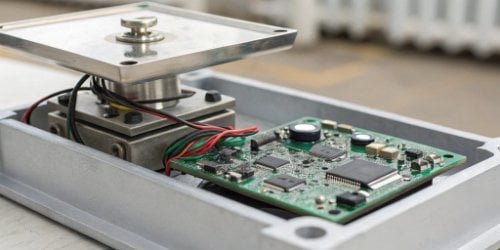
Hardware stability depends on three main things: the quality of its components, the strength of its physical design, and its ability to resist electrical interference. Things like electromagnetic compatibility (EMC), durable materials, and a reliable power supply are critical for preventing data errors and system downtime.
Let’s dive deeper into these factors. They are not just items on a spec sheet; they directly impact how well your software performs for your end-user. Thinking about these elements helps you move from hoping for the best to planning for success.
Component Quality and Sourcing
The performance of any device is only as good as its weakest part. For weighing hardware, this means the load cell1, processor (CPU), and memory are vital. A cheap load cell gives inaccurate readings, making your software’s data useless. A slow processor will cause your software to lag or freeze. With 19 years in this business, we have built a very reliable supply chain. We know which suppliers provide the most durable and high-performance components that can withstand constant use in tough industrial environments2.
Structural and Environmental Resilience
Industrial settings are rough. There is dust, water, vibrations, and impacts. The hardware’s physical body must protect the sensitive electronics inside. We use materials like reinforced stainless steel and design our scales with high IP ratings, like IP67 or IP68. This means they are sealed against dust and can handle being washed down. A strong structure ensures the sensitive load cell inside is not damaged, so your software always receives accurate data, no matter the conditions outside.
Electrical and Data Integrity
Factories are filled with electrical noise from motors, conveyors, and other machines. This electromagnetic interference (EMI)3 can corrupt the data signal traveling from the scale to your software. We build our hardware with extensive EMC shielding and filtering. Every product also must pass international CE certification, which includes strict EMI tests. This guarantees that the weight data your software receives is clean and accurate, preventing random errors that are impossible to trace back to your code.
| Factor | Why It Matters for Your Software | How We Address It |
|---|---|---|
| High-Quality CPU/Memory | Prevents software lag and crashes during heavy processing. | Sourced from trusted suppliers and rigorously tested for performance. |
| Robust Load Cell | Guarantees accurate and consistent weight data for your application. | We leverage our own R&D to ensure precision and long-term durability. |
| EMC Shielding | Protects data signals from corruption by factory electrical noise. | Comprehensive testing protocols4 and fully CE-compliant components. |
| IP67/IP68 Rating | Allows the hardware to function reliably in wet or dusty conditions. | We design various models specifically for different harsh industrial needs. |
How Can You Assess the Reliability of Hardware for Building Weighing Solutions?
You see impressive specifications, but how do you know if the hardware will be reliable long-term? A single point of failure can bring your whole system down. There are clear methods to verify reliability before you commit.
You can assess hardware reliability by checking for international certifications like CE, understanding the manufacturer’s quality control process, and running your own Proof-of-Concept (POC) tests on a sample unit. A transparent QC process and a strong warranty are excellent signs of a reliable product.

Trust should be earned, not given. A manufacturer’s claims are one thing, but verifiable proof is what matters. You need confidence that the ten-thousandth unit will be just as reliable as the first one you tested. Here are the practical steps I recommend to any software partner looking to assess our hardware.
The Power of Certification and QC
Certifications like CE are a baseline for reliability. They aren’t just a sticker; they prove the hardware meets international standards for safety and electrical emissions. This is your first line of defense against unstable products. But we go much further. I’ve personally watched our quality control department work. Before any product ships, it goes through a complete inspection. We test the weight accuracy through its full range, check battery performance and charging cycles, and even test the software drivers. Only after a unit passes every single test does it get packed for shipment. We stand behind this process with a 12-month after-sales service guarantee.
Proof-of-Concept (POC) Testing
This is the most critical step for any software vendor. Don’t just take my word for it; test it for yourself. We encourage our partners to get a sample unit for a POC trial. This is your chance to install your own software on our hardware. You can benchmark its performance, check for driver compatibility, measure API response times5, and see how it behaves under a sustained workload. This is where you see the real-world stability of the hardware. A POC test removes all the guesswork and builds a partnership based on proven performance, not just promises.
What Key Features Ensure Hardware Stability in Weighing Software Systems?
You need hardware that does more than just give a weight. You need it to integrate perfectly with your software system. Mismatched features lead to messy workarounds and a clunky experience. Focusing on key integration features makes all the difference.
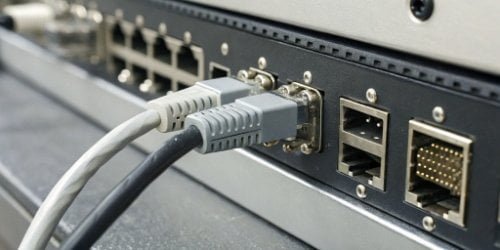
The most important features for stability are standardized communication protocols like Ethernet and USB, a well-documented Software Development Kit (SDK) or API, and enough processing power to run your software smoothly. These features ensure smooth data flow and prevent hardware from limiting your software’s potential.
When we design our hardware, we are always thinking about the software developer who will use it. It’s not enough for the scale to be accurate; it has to be easy to communicate with. The right features can save you hundreds of hours of development time and prevent countless support headaches down the road.
Connectivity and Communication
Flexibility is key. Your customers will have different IT environments. That’s why our hardware comes with a range of standard ports. We include Ethernet for easy integration into a local area network (LAN), USB for simple plug-and-play connection to a PC, and RS-232 for connecting to legacy industrial machines. This versatility means your software solution can be deployed in almost any facility without needing clunky adapters or custom wiring. Stable, standardized communication is the foundation for reliable data transfer.
Developer-Friendly Tools
This is where we really focus our energy for our software partners. A powerful piece of hardware is useless if it’s difficult to talk to. We provide a comprehensive Software Development Kit (SDK)6 and a clear API. Because we develop our own software applications, we know what developers need. Our SDK provides the pre-built functions and code samples to get, set, and monitor data from the scale, which drastically cuts down your development time. We provide the documentation and technical support to make the integration process as smooth as possible.
Onboard Processing and Memory
Many of our scales, especially our PC scales, are more than just sensors. They are complete computers. They have the onboard processing power and memory to run your applications directly on the device. This is a huge advantage for stability. It can reduce or even eliminate the need for a separate PC, which removes a potential point of failure. It also means your software can perform complex calculations, manage a local database, or run an advanced user interface right on the scale, ensuring fast and responsive performance.
How Do You Evaluate Hardware Compatibility with Weighing Software Requirements?
You worry that the hardware you choose won’t work well with your software. This can cause integration nightmares. Incompatibility means wasted time and money. A smart evaluation strategy ensures perfect harmony between your software and hardware.
The best way to evaluate compatibility is to partner with a manufacturer who understands both hardware and software. We build the hardware and also provide our own software for it. This integrated approach guarantees the hardware is built specifically to support advanced weighing software and is fully compatible.

This is probably the most important insight I can share based on my 19 years in this industry. True compatibility isn’t an accident; it comes from intentional design. Let’s look at the common problems and how our approach solves them.
The Problem with a Divided Supply Chain
The typical model in our industry is broken. You buy hardware from one company and then try to make your software work with it. When a problem happens, the finger-pointing begins. The hardware supplier says it’s a software bug. Your team says it’s a hardware fault. I recall a client who came to us after their project stalled for six months in this exact situation. Nobody would take responsibility, and the customer was stuck in the middle. This happens because the hardware was not designed with your software’s needs in mind.
The Power of an Integrated Manufacturer
We solve this problem by being different. We are one of the very few manufacturers in China that both produces advanced PC scales and develops the software to run on them. Because we are our own first customer for software integration, we design the hardware from the ground up for that purpose. The drivers are perfectly matched. The communication protocols are optimized. The components are chosen to deliver excellent software performance. When you build your application on our hardware, you are not trying to connect two separate products. You are leveraging a single, cohesive system designed to work in harmony from day one. This eliminates the risk of incompatibility and gives you a stable, reliable foundation you can trust.
Conclusion
Choosing stable hardware is vital for your software’s success. The surest path is partnering with an integrated manufacturer who builds both the hardware and software, guaranteeing a reliable, compatible solution.
-
Discover the role of load cells in ensuring accurate weight measurements in your applications. ↩
-
Explore the unique challenges of industrial environments and how to address them. ↩
-
Understanding EMI is key to preventing data corruption in industrial applications. ↩
-
Understanding testing protocols can help you assess hardware before purchase. ↩
-
Understanding API response times is crucial for optimizing software interactions. ↩
-
Learn how an SDK can streamline the integration of hardware and software. ↩



Comments (0)