
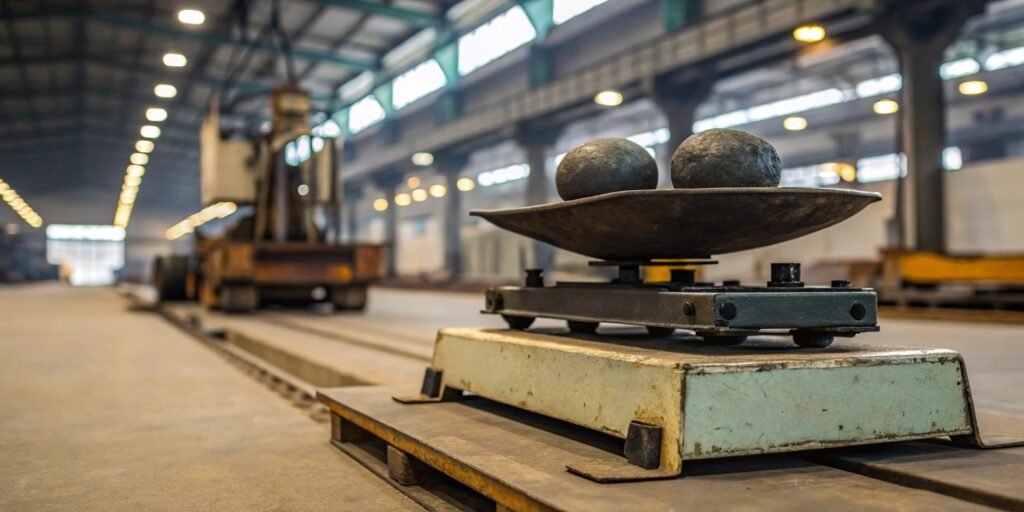
Your entire operation depends on accurate numbers, but what if your scale isn't telling the truth? A small error can snowball into huge losses. You need to trust your equipment.
Yes, your industrial scale can lie. This happens due to sensor wear, environmental interference, improper use, or lack of maintenance. The only way to ensure it tells the truth is through regular, professional calibration and by controlling factors like temperature, vibration, and humidity to guarantee precise measurements.
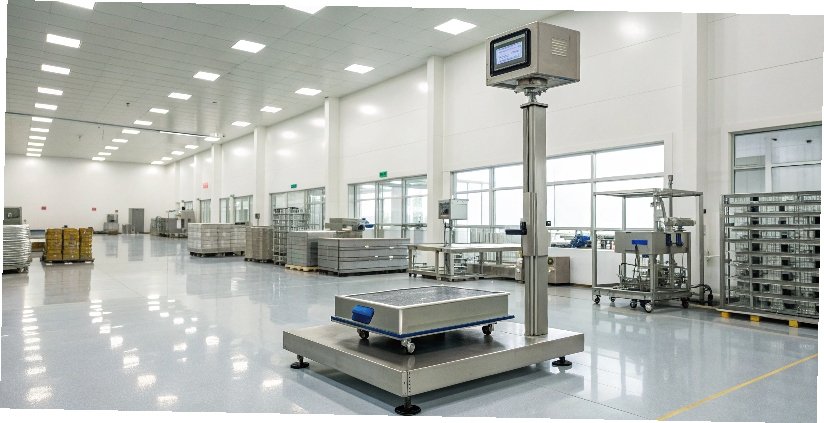
It’s easy to overlook a few grams here and there. But these small errors add up, impacting your profits, product quality, and even your company's reputation. You bought a precision instrument, and you deserve precision performance. But how do you make sure you are getting it? The key is knowing what to look for and how to be proactive. Let's dig deeper into how you can keep your scales honest and your business profitable.
What are the common signs of an inaccurate industrial scale?
You suspect something is wrong with your measurements, but you can't quite put your finger on it. Ignoring these feelings can lead to wasted materials and rejected shipments down the line.
Common signs of an inaccurate scale include inconsistent readings for the same object, failure to return to a perfect zero, and slow or fluctuating weight displays. If you notice these issues, it is a clear signal that your scale's precision is compromised and requires immediate attention.
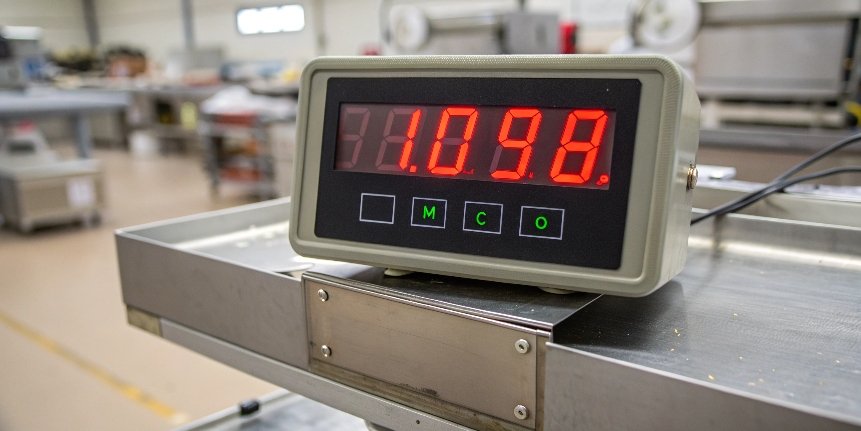
Recognizing the early warning signs of inaccuracy is crucial. As a manufacturer with 18 years of experience, we've seen how small drifts can become major problems if left unchecked. A scale that is losing its accuracy is not just an inconvenience; it's a financial risk. The most obvious signs are just the beginning. You need to look closer at the scale's behavior during daily operations. Paying attention to these subtle clues can save you from significant production errors.
Spotting the Drift: Beyond the Obvious
The most common issue we see is "zero drift1." This is when the scale shows a weight even when nothing is on it, or it fails to return to exactly 0.00 after an item is removed. Another red flag is poor repeatability2. If you weigh the same certified standard weight ten times and get ten slightly different results, your scale is no longer reliable. This inconsistency directly translates to inconsistent products.
Performance Red Flags
Watch for how the scale behaves. Does it take a long time to show a stable weight? This delay, or "slow stabilization," can slow down your entire workflow and may indicate a failing load cell3. Another critical sign is nonlinearity4. Your scale might be perfectly accurate when weighing 10kg but off by a significant margin at 100kg. This makes it impossible to trust your measurements across different product weights.
| Sign of Inaccuracy | What It Likely Means |
|---|---|
| Inconsistent Readings | The scale's sensor (load cell) is starting to wear out. |
| Failure to Return to Zero | The scale is experiencing zero drift due to wear or damage. |
| Slow Display Response | Electronics are malfunctioning or the sensor is failing. |
| Fluctuating Numbers | Caused by vibration, air currents, or electrical noise. |
How does scale calibration impact measurement accuracy?
You hear about calibration all the time, but it can feel like just another expense. Treating it as optional is a risky gamble that can compromise your quality control without you even knowing it.
Calibration directly ensures measurement accuracy. The process compares your scale's performance against certified, known weights and adjusts it to remove any errors. This reset guarantees that your scale's output is true, making it the most critical step for reliable and precise weighing.
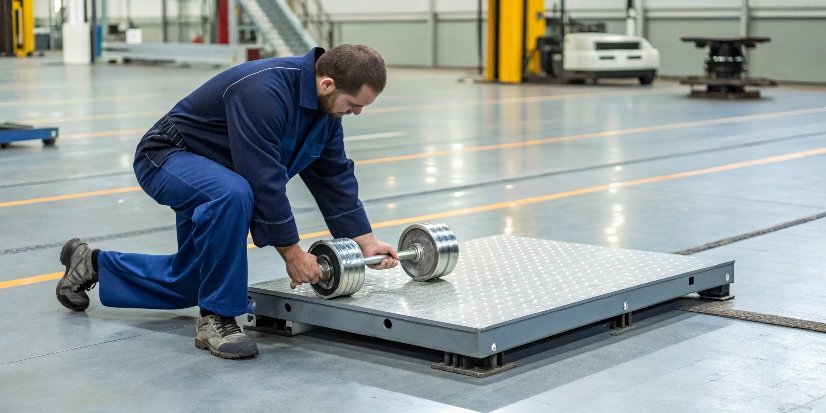
In my years in this industry, I have seen companies lose thousands of dollars simply because they skipped a calibration service. Think of calibration not as a cost, but as an insurance policy for your quality and profits. It's the only objective way to verify that your scale is performing to the standards you require. A scale can drift for many reasons, and without calibration, you are essentially flying blind, hoping that your measurements are correct. This is not a position any technical director or purchasing manager wants to be in.
The Foundation of Trust: What is Calibration?
Calibration is more than just a simple check. It's a precise adjustment process. A certified technician uses standard weights, which are known to be far more accurate than the scale being tested. They place these weights on the scale to measure any deviation. Then, they adjust the scale’s internal settings to correct that deviation. This process corrects the natural drift that occurs over time from sensor wear and environmental changes. We recommend this process be done every 3 to 12 months, depending on usage.
The Cost of Neglect vs. The Value of Precision
Failing to calibrate leads to costly consequences. You might be giving away extra product in every package, which erodes your profit margins. Or, you could be using incorrect ingredient amounts in a batch, leading to a failed product that must be discarded. In regulated industries, an uncalibrated scale can lead to non-compliance and heavy fines. Regular calibration, on the other hand, delivers a clear return on investment. It ensures product consistency, supports regulatory compliance, and protects your bottom line from preventable losses.
What factors can cause an industrial scale to lose accuracy?
Your scale was perfectly calibrated just a few months ago, but now the readings seem off. This frustrating situation can leave you questioning the reliability of your equipment and production data.
Industrial scales can lose accuracy due to environmental and operational factors. The most common causes are changes in temperature, humidity, excessive vibration, and electrical interference. Physical misuse, such as overloading or dropping items onto the scale, can also instantly damage sensitive sensors.
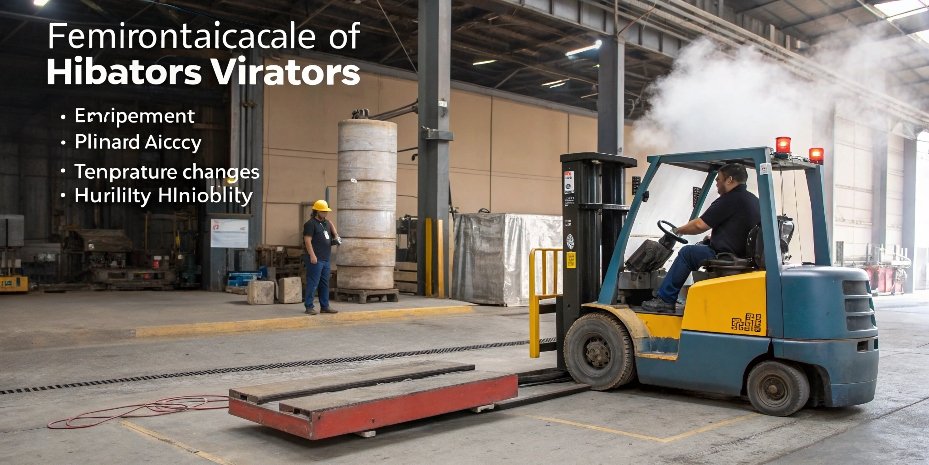
We build our scales to be tough, but even the most robust equipment is subject to the laws of physics. The sensors inside an industrial scale5, known as load cells, are incredibly sensitive instruments. Their job is to detect minute changes in force, and unfortunately, they can also be affected by things in their environment that have nothing to do with weight. Understanding these external factors is the first step in protecting your scale's accuracy and ensuring it delivers reliable performance day in and day out.
The Unseen Enemies: Environmental Sabotage
Your scale's immediate surroundings play a huge role in its accuracy. Load cells can expand or contract with temperature changes, throwing off readings. We recommend keeping the environment around 20±5℃. High humidity (above 85% RH) can also cause moisture to interfere with electronics. Vibrations from nearby machinery or forklifts can make it impossible for the scale to settle on a stable reading. Lastly, electromagnetic interference (EMI) from large motors or radio transmitters can corrupt the electronic signal, leading to false readings.
Human and Mechanical Errors
Beyond environmental issues, how a scale is installed and used is critical. A scale that isn't perfectly level will not weigh accurately across its entire surface. Loose or damaged cables can create intermittent signal problems. The most damaging factor, however, is often improper use. Dropping a heavy load onto the scale (shock-loading) or placing a weight on it that exceeds its maximum capacity (overloading) can permanently damage the load cell, requiring expensive repairs.
| Factor | Impact on Scale | Our Solution/Recommendation |
|---|---|---|
| Temperature & Humidity | Causes sensor material to expand/contract, leading to drift. | Maintain a stable environment and use temperature-compensating scales. |
| Vibration | Prevents the scale from stabilizing for an accurate read. | Place scale on a solid, isolated foundation away from machinery. |
| EMI Interference | Corrupts the electronic signal from the sensor. | Use shielded cables and keep the scale away from power sources. |
| Improper Use | Can cause immediate, permanent damage to the load cell. | Train operators on proper loading and never exceed capacity. |
Why is regular maintenance essential for industrial scale precision?
It's easy to adopt an "if it ain't broke, don't fix it" mindset with your equipment. But with precision instruments like industrial scales, hidden wear and tear can silently destroy accuracy.
Regular maintenance is essential because it prevents the root causes of inaccuracy. It involves cleaning debris that can obstruct movement, checking for loose connections that cause signal errors, and inspecting for physical damage. This preventative care ensures long-term reliability and accurate performance.
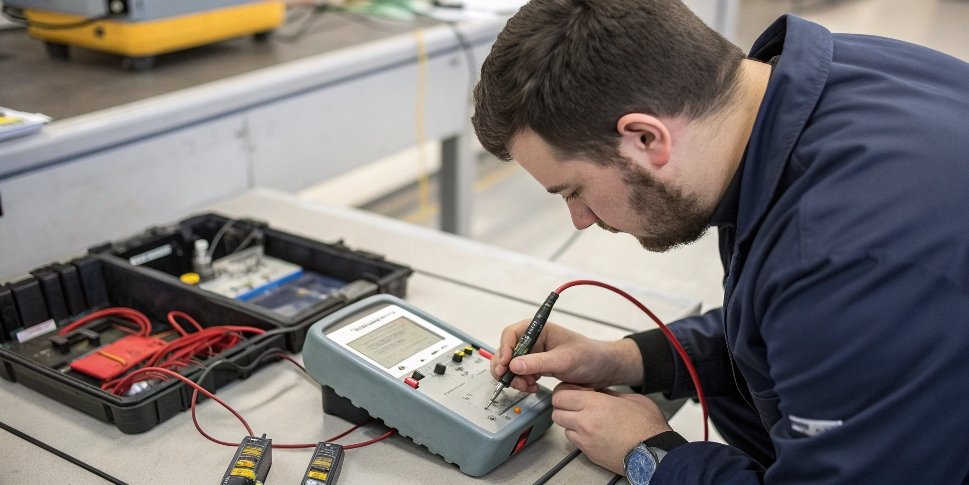
As a manufacturer providing a 12-month service guarantee, we know that maintenance is just as important as calibration. Calibration corrects errors that have already occurred, but maintenance stops many of those errors from happening in the first place. A simple cleaning schedule6 or a quick visual inspection7 can extend the life of your scale and save you from the cost and downtime of an unexpected failure. Think of it as the routine check-up that keeps your weighing system in peak health.
Beyond Calibration: The Role of Physical Upkeep
While calibration focuses on electronic adjustment, maintenance is about the physical integrity of the scale. Debris, dirt, and product buildup under the weighing platform can restrict its movement, leading to inaccurate readings. Over time, cables can become frayed or connections can loosen, causing an unstable signal. The foundation that the scale rests on can also shift, throwing it off level. A regular maintenance routine addresses all these physical factors, ensuring the entire weighing system is mechanically sound and ready for precise measurement.
A Maintenance Checklist for Peak Performance
Creating a simple maintenance checklist is a powerful way to ensure consistency and accountability. We advise our clients to implement a schedule that includes these key tasks:
- Visual Inspection: Regularly check the scale platform, base, and cables for any signs of physical damage, corrosion, or wear.
- Cleaning: Thoroughly clean under and around the scale platform to remove any buildup. Compressed air can be very effective for hard-to-reach areas.
- Cabling: Ensure all cable connections to the display and junction box are secure and tight. Look for any cuts or frays in the cable insulation.
- Level Check: The scale must be perfectly level to weigh correctly. Check the level bubble indicator and adjust the feet as needed.
Conclusion
An accurate scale is non-negotiable for success. By recognizing warning signs, committing to regular calibration, controlling the environment, and performing routine maintenance, you ensure your scale always tells the truth.
-
Understanding zero drift is crucial for maintaining scale accuracy; this resource provides insights on addressing it. ↩
-
Learn about repeatability and its importance in ensuring consistent measurements in your operations. ↩
-
Gain insights into load cells, their function, and their importance in maintaining scale accuracy. ↩
-
Discover the causes of nonlinearity and how to ensure your scale provides accurate readings across all weights. ↩
-
Explore this resource to learn essential maintenance tips that ensure your industrial scale remains accurate and reliable. ↩
-
A proper cleaning schedule is vital for accuracy; this resource provides a checklist for effective maintenance. ↩
-
Learn the key components of a visual inspection to ensure your scale remains in optimal condition. ↩



Comments (0)