
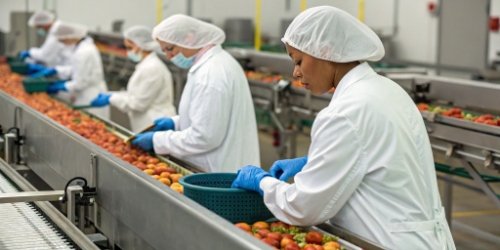
Are you worried about product recalls? Non-compliance with food safety rules can lead to huge fines and damage your brand's reputation, making all your hard work worthless.
Yes, you can achieve full compliance. The key is to integrate a robust food labeling and traceability system. This involves using accurate weighing scales that print compliant labels and record data, ensuring every product can be tracked from production to the consumer's hands.
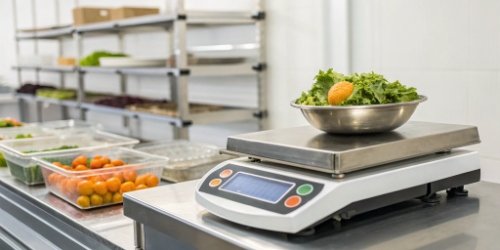
Staying compliant in the food industry feels like a moving target. Regulations change, and customer expectations1 for transparency are higher than ever. As someone who has been in the industrial scale business for almost 20 years, I've seen companies struggle with this firsthand. They invest in great products but stumble at the final step: labeling. Getting it wrong can stop your business in its tracks. The good news is that getting it right isn't as complicated as it seems. It starts with understanding the core ideas of labeling and traceability2 and then using the right tools for the job. Let's break it down so you can move forward with confidence.
What is food labeling and traceability?
Struggling to track your products through the supply chain? A single unlabeled item can create a massive recall, costing you time, money, and customer trust. Don't let this happen.
Food labeling is the process of putting essential information on a product's package. Traceability is the ability to follow that product's journey from its origin to the final sale. The two work together, with the label acting as the key to unlock the product's entire history.
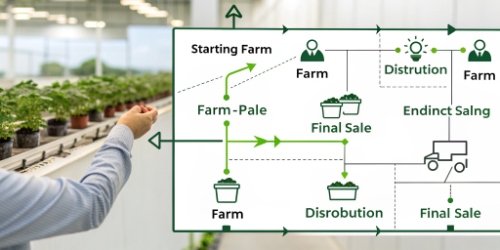
Let's dive deeper into this. Think of the label as a product's passport. It carries all the vital information needed for it to travel safely through the supply chain. This isn't just about a brand name; it's about detailed data that protects both the consumer and your business. Traceability is the system that reads this passport at every checkpoint.
From my experience working with global brands, a solid traceability system3 relies on precise data capture at every stage. This usually involves a unique code, like a barcode or QR code, printed directly on the label.
Key Components of an Integrated System:
- Identification: Each batch, and sometimes each item, gets a unique identifier4. This is the foundation of traceability.
- Data Recording: At every step—receiving raw materials, processing, packaging, shipping—information is recorded and linked to this unique ID. This includes dates, times, weights, and supplier details.
- Labeling: The final label, printed by a smart scale or printer, contains this crucial tracking information in a human-readable and machine-scannable format.
This integration means that if a problem arises, you can instantly pinpoint the affected batch and trace its entire history, minimizing the impact of a potential recall.
What is the food safety traceability procedure?
Worried about a food safety incident? Without a clear procedure, finding the source of a problem is like finding a needle in a haystack, risking your entire inventory and reputation.
A food safety traceability procedure is a step-by-step plan for tracking food products through all stages of production, processing, and distribution. It allows for rapid identification and recall of contaminated products, protecting public health and minimizing business losses. It's your documented safety net.
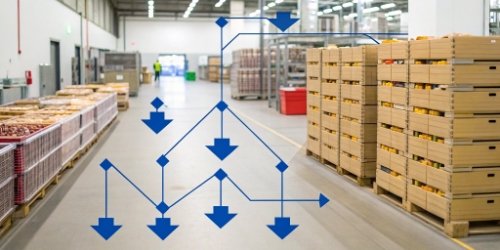
Having a documented procedure is non-negotiable. It’s the rulebook your team follows to ensure nothing falls through the cracks. In my years of providing weighing solutions, I've helped countless businesses set up these systems. The most effective ones are always simple, clear, and built around reliable technology. A traceability procedure isn't just a document that sits on a shelf; it's an active system that your team uses every single day.
Here is a typical breakdown of the procedure. We often help our clients, especially software vendors, integrate our scales into this flow to ensure the data is captured accurately from the start.
| Step | Action | Technology Involved |
|---|---|---|
| 1. Supplier Intake | Record all incoming raw materials, including supplier info and batch numbers. | Barcode Scanners, Weighing Scales, ERP Software |
| 2. Internal Processing | Track ingredients as they are mixed into new batches. Assign a new internal lot number. | Smart Scales, Mixing Software, Data Terminals |
| 3. Packaging | Weigh the final product and print a label with all relevant data: weight, date, batch number, and a unique barcode. | Programmable Labeling Scales (like ours) |
| 4. Shipping | Scan the labeled product to record which customer received which batch. | Handheld Scanners, Shipping Software |
| 5. Mock Recall | Regularly test the system by picking a product and tracing it backward and forward. | All of the above |
This structured process ensures that if an issue is reported with a final product, you can trace it back to the specific batch of raw materials in minutes, not days.
What are the food safety procedures for labelling and coding?
Are your labels causing confusion? Incorrect codes or missing information can lead to rejected shipments and regulatory fines, disrupting your operations and hurting your bottom line.
The procedure involves verifying all label information for accuracy, including dates, allergens, and weights. Then, a unique, scannable code (like a barcode or QR code) linking to the product's traceability data is generated and printed securely onto the final package, often during the weighing stage.
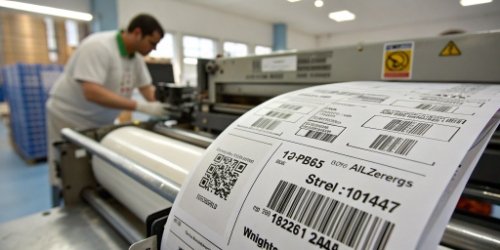
This is where precision truly matters. A simple typo in a date or a misprinted barcode can create a huge headache. The procedure for labeling and coding must be foolproof. We build our intelligent scales with this in mind, making them a central part of our clients' quality control. The goal is to automate and error-proof this critical step as much as possible. A good procedure removes the guesswork for your operators and ensures consistency across every single product that leaves your facility.
The process should be broken down into clear steps to ensure nothing is missed. When working with software vendors, we emphasize how our hardware can enforce these steps.
- Template Design and Approval: Before any printing, the label template must be designed to meet all regulatory requirements5 for the target market. This includes font sizes, placement of information, and allergen highlighting. This template must be approved and locked to prevent unauthorized changes.
- Data Verification: The system must pull real-time data for each batch. This includes the 'Best Before' or 'Use By' date, the specific batch code, and the precise net weight from the scale. Manual data entry should be minimized.
- Printing and Application: The label is printed and applied to the package. A high-quality printer is essential to ensure the barcodes are scannable throughout the supply chain.
- Verification Scan: After a label is applied, a scanner should immediately check the barcode to confirm it is readable and links to the correct data in your system. This simple check catches printing errors before the product is packed into a case.
This closed-loop process ensures the integrity of your labeling from start to finish.
What are the 5 requirements of a food label?
Do you know if your food labels meet all legal requirements? Missing just one required element can get your product pulled from shelves, creating a costly and embarrassing situation.
The 5 core requirements for a food label generally include: 1) a statement of identity (what the product is), 2) the net quantity of contents (weight), 3) the ingredient list, 4) the name and address of the manufacturer, and 5) nutrition information.
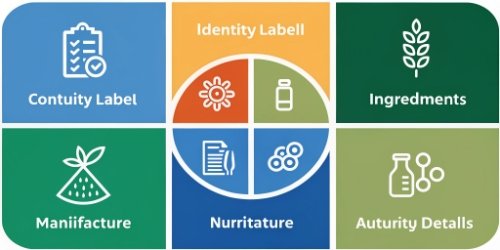
These five elements form the backbone of a compliant food label. However, here's the crucial insight: the specific rules for each element can change dramatically from one country to another. For example, the way allergens are listed in the EU is different from the requirements in the USA. This is a major pain point for brands that want to sell globally. As a manufacturer of industrial scales for 19 years, I've seen this challenge evolve. In the past, companies needed different machines for different regions.
That’s why we shifted our focus to developing fully programmable, intelligent label scales. Our clients, particularly software providers, need hardware that can adapt. They can design a label template for any country's regulations, load it onto our scale, and be ready to produce compliant labels6 for any market. It gives them the flexibility to serve a global customer base without needing a warehouse full of different hardware. It meets any different label requirement you can imagine.
| Requirement | What It Is | Why It's Important |
|---|---|---|
| 1. Statement of Identity | The common or usual name of the food. | Tells the customer exactly what they are buying. |
| 2. Net Quantity | The weight, measure, or count of the food in the package, excluding the packaging. | Ensures fair trade and allows for price comparison. This is measured by the scale. |
| 3. Ingredient List | All ingredients listed in descending order by weight. Allergens must be clearly identified. | Critical for consumers with allergies or dietary restrictions. |
| 4. Manufacturer Info | The name and address of the manufacturer, packer, or distributor. | Provides accountability and a point of contact for traceability and inquiries. |
| 5. Nutrition Facts | Information on the nutritional content of the food, such as calories, fat, protein, and carbs. | Helps consumers make informed dietary choices. |
Conclusion
In short, full compliance in food labeling and traceability is achievable. It requires understanding the rules and using smart, flexible technology to ensure accuracy and adaptability across all your markets.
-
Stay updated on evolving customer expectations to enhance your business strategy. ↩
-
Understand how labeling and traceability work together to ensure food safety. ↩
-
Discover the mechanics of traceability systems and their role in food safety. ↩
-
Explore the concept of unique identifiers and their importance in tracking food products. ↩
-
Stay informed about regulatory requirements to ensure your labels meet legal standards. ↩
-
Learn the key elements that make food labels compliant to avoid legal issues. ↩



Comments (0)