

Your lab balance is giving inaccurate readings, compromising your research and quality control. You need reliable results, fast. Here are the steps to restore the precision you depend on.
The fastest way to restore lab balance precision is to follow a 5-step troubleshooting process: check the environment, verify your procedure, confirm calibration settings, inspect hardware, and perform a final verification. This systematic approach isolates the problem, from simple operational errors to more complex hardware issues.

In my 18 years of experience manufacturing industrial scales at Weigherps, I've seen how even the most precise instruments can fail without proper care. A lab balance is a delicate tool, and its accuracy depends on a perfect synergy of environment, operation, and maintenance. When that synergy breaks, your data becomes unreliable. But don't worry, most issues are correctable. The key is to have a clear, logical process to follow. In this guide, I will walk you through the exact steps our technical team uses to diagnose and fix precision problems, empowering you to get your balance back to peak performance.
What are the most common causes of lab balance inaccuracy?
Getting inconsistent measurements from your balance? It’s a common frustration that can ruin an entire day's work. Let’s pinpoint the usual suspects so you can fix them quickly.
The most frequent causes of inaccuracy are an unstable environment (drafts, vibrations), incorrect user operation (improper warm-up, off-center placement), and issues with calibration weights (dirty or uncertified). These simple-to-fix problems account for over 80% of all precision errors we see in the field.
When a client calls us about an inaccurate balance, the first thing we do is rule out the simple things. You would be surprised how often a major "failure" is just a small oversight. Based on thousands of service calls, we've found that the problems usually fall into one of three categories. Understanding them is the first step toward a solution.
1. Environmental Interference
A high-precision balance is sensitive enough to measure the weight of a fingerprint. It can also "measure" forces from its surroundings.
- Air Currents: An open door, a nearby air vent, or even a person walking by can create drafts that push on the weigh pan, causing unstable or incorrect readings.
- Vibrations: A shaky bench or heavy equipment running nearby sends vibrations through the table, which the balance's sensor interprets as noise.
- Temperature: Rapid temperature changes cause parts of the balance to expand or contract, leading to drift.
2. Operator Error
Proper technique is not optional; it's essential for precision.
- Insufficient Warm-Up: Electronic components need to reach a stable operating temperature. We recommend at least 30-60 minutes, or even 2 hours for high-precision models.
- Incorrect Placement: Placing the sample off-center on the pan creates a torque. This can lead to what is known as corner load error1, giving an inaccurate reading.
3. Equipment Issues
The balance and its accessories must be in perfect condition.
| Common Cause | Solution |
|---|---|
| Unstable Environment | Use a draft shield2. Place the balance on a solid, vibration-free table. |
| Operator Error | Always warm up the balance. Place objects in the center of the pan. |
| Dirty/Damaged Weight | Clean calibration weights with a proper cloth. Store them in a case. |
| Incorrect Calibration | Always use certified weights and follow the manufacturer's procedure. |
Why are my lab balance readings drifting or unstable?
You place a sample on the pan, but the numbers just won’t settle down. This constant drifting makes it impossible to get a reliable measurement, creating massive frustration and wasted time.
Drifting or unstable readings are most often caused by environmental factors like air currents, temperature changes, or static electricity. They can also indicate that the balance wasn't warmed up long enough or, less commonly, point to a failing weigh sensor or unstable power supply.
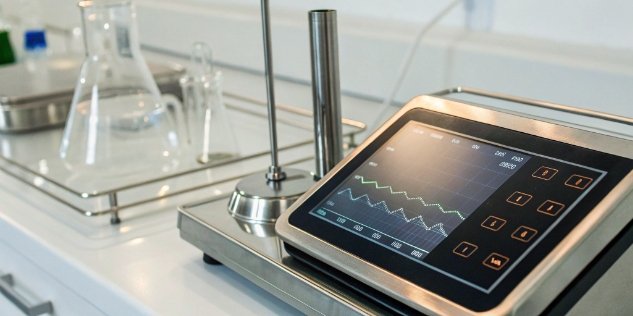
When the reading on a balance drifts, the machine is sensing a continuous change in force. The trick is to figure out what's causing that change. Is it something external, like the environment? Or is it something internal, related to the balance's electronics? From our experience at Weigherps, troubleshooting this starts with observing the environment. Drafts from an AC unit or even heat rising from your hand can be enough to throw off a high-precision balance. If the environment is stable, we then look at operational and hardware factors. Here's a deeper dive into the checklist our support team follows.
A Quick Troubleshooting Checklist for Drifting
First, ask yourself these simple questions:
- Is the draft shield closed? Open doors are the number one cause of instability.
- Is the balance level? Check the bubble indicator and adjust the feet if needed. An unlevel balance is mechanically unstable.
- Has the balance warmed up? Power it on and wait at least 30 minutes before use. The internal electronics need to stabilize their temperature.
- Is there static electricity? Plastic weigh boats or dry air (low humidity) can create static fields that push or pull on the pan. Using an anti-static device can help.
If you've checked all these and the problem persists, it's time to look at more technical causes. An unstable power source can cause the electronics to behave erratically. Try plugging the balance into a different outlet or using a power conditioner. In rare cases, persistent drift even in a perfect environment can be an early sign of sensor failure, which would require professional service.
What is the correct procedure for calibrating an analytical balance?
You performed a calibration, but you're still not sure if it's truly accurate. An improper calibration is worse than none at all, as it gives you a false sense of confidence in faulty data.
The correct calibration procedure involves three phases: preparation (leveling, cleaning, and a 30+ minute warm-up), execution (using the balance's calibration mode with a clean, certified weight placed centrally), and verification (testing with known weights to confirm linearity and repeatability).
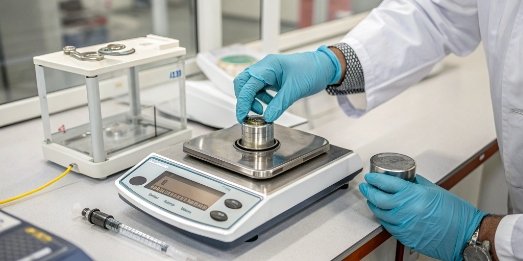
At Weigherps, we build our weighing systems to be robust, but their accuracy ultimately relies on proper user calibration. It's a non-negotiable step for anyone who needs precise results. An analytical balance3 doesn't just "know" what a gram is; you have to "teach" it by showing it a reference. This is what calibration does. It adjusts the balance's internal calculation to match the true mass of a certified weight. Following the correct procedure ensures this adjustment is accurate and reliable. Skipping a step or using a poor-quality weight can invalidate all your future measurements. Let me break down our professional, three-phase process.
Phase 1: Preparation is Key
Before you even touch the calibration button, the balance must be ready.
- Check the Level: Look at the leveling bubble. If it is not perfectly centered, adjust the balance's feet until it is. An unlevel balance will not weigh accurately across the entire pan.
- Clean the Pan: Remove any dust or residue from the weighing pan with a soft brush.
- Warm Up: Make sure the balance has been powered on for at least 30-60 minutes.
Phase 2: The Calibration Execution
Now you can perform the actual calibration.
- Enter Calibration Mode: Press the "Calibrate" or "Cal" button. The balance will likely display zero automatically.
- Use the Right Weight: The display will prompt you for a specific weight (e.g., 100g). Use a certified calibration weight of that exact value. For analytical balances, we recommend using at least an E2 class weight.
- Place and Confirm: Using forceps, gently place the weight in the center of the pan. Close the draft shield doors and wait for the reading to stabilize. The balance will then perform the adjustment and signal when the process is complete.
Phase 3: Verify, Don't Assume
A calibration is only successful if you can prove it.
- Test Linearity: Check the accuracy at multiple points, such as 25%, 50%, and 100% of the balance's capacity, to ensure it's accurate across its full range. The error should be within the manufacturer's specified tolerance.
- Test Repeatability: Weigh the same object 5-10 times. The results should be extremely close to one another.
How do environmental factors like temperature and drafts affect balance precision?
Your balance is calibrated, but readings are still inconsistent. Unseen environmental forces are likely sabotaging your results, but it's hard to fight an enemy you can't see or understand.
Environmental factors introduce physical forces that a high-precision balance misinterprets as mass. Temperature shifts cause thermal drift, air drafts exert pressure on the pan, and vibrations create mechanical noise, all leading directly to inaccurate and unstable measurements that compromise data integrity.
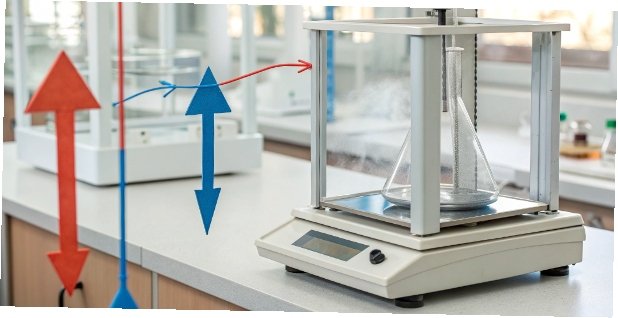
As a manufacturer, we design our balances with features like draft shields and stable internal electronics to minimize environmental effects. However, the laws of physics cannot be ignored. A high-precision balance is essentially a force meter, and it will measure any force applied to it, whether from a sample's mass or a gust of air. The key to precision is creating a controlled environment where the only significant force being measured is the object on the pan. Understanding exactly how each environmental factor interferes is crucial for troubleshooting. Let’s break down the main culprits and how to defeat them.
The Physics of Inaccuracy
| Factor | How It Affects the Balance | Solution |
|---|---|---|
| Temperature | Thermal Drift: Changing temperatures cause mechanical and electronic components to expand or contract, shifting the zero point. A warm object creates an air current (buoyancy effect), making it appear lighter. | Maintain a stable room temperature (change <2°C per hour). Let samples acclimate to room temperature before weighing. |
| Air Drafts | Direct air pressure on the pan or changes in pressure inside the chamber cause readings to fluctuate wildly. | Always use a draft shield. Position the balance away from doors, windows, and HVAC vents. |
| Vibrations | Shaking from the floor or bench is transmitted to the weigh sensor4, which sees it as constant, unstable noise. | Use a dedicated, heavy weighing table (like one made of stone). Avoid placing the balance near large machinery. |
| Static Electricity | A static charge on a plastic container or the object being weighed can create an electrostatic force that repels or attracts the pan, causing incorrect and drifting readings. | Use an anti-static device (ionizer). Increase room humidity if possible. Use metal weigh boats when practical. |
By systematically controlling these four factors, you create a "bubble" of stability around your balance, ensuring that your measurements reflect the true mass of your sample and not the noise of your lab environment.
Conclusion
Restoring lab balance precision is about a systematic process. By checking the environment, your operation, and the equipment itself, you can solve most issues and ensure your data is always reliable.
-
Learn about corner load error and how to avoid it for more accurate measurements. ↩
-
Find out how using a draft shield can significantly enhance the precision of your measurements. ↩
-
Explore the unique features of analytical balances that make them essential for precise measurements. ↩
-
Understanding the function of weigh sensors can help you troubleshoot balance issues effectively. ↩



[…] and circuit boards. Hold the can upright to avoid dispensing propellant. Follow up with a soft, anti-static brush3 to gently remove any remaining fibers or debris from tight […]