
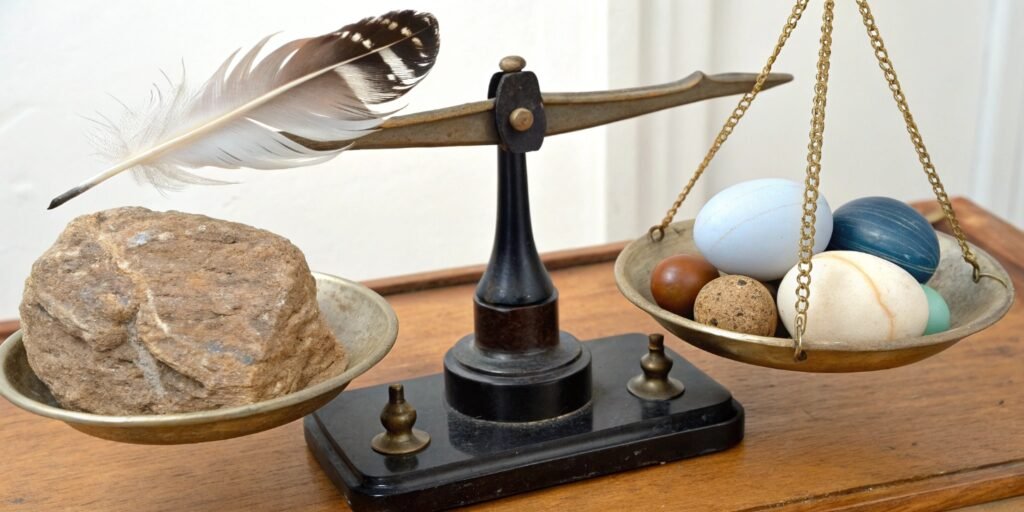
Are you frustrated by your weight changing every day? It feels like your scale is playing tricks on you. But these "lies" are normal and part of a bigger picture.
Your scale isn't truly lying. It measures weight, which is mass under the force of gravity. This number naturally fluctuates due to water, food, and even your location. It's okay because this is normal, and weight is just one small piece of your overall health puzzle.
You might be thinking, "If my scale isn't perfectly accurate, what's the point of using it?" That's a great question. In my 18 years of experience with high-precision industrial scales at Weigherps, I've learned something important. The key isn't chasing a perfect number. The key is understanding what your scale is really telling you. These numbers change for very specific reasons. Let's break down why your weight fluctuates and what it actually means for you.
Can a scale lie about your weight?
Do you step on the scale and see a different number every single time? It is confusing and can make you doubt all the hard work you're putting in.
Yes, in a way, a scale can "lie." It doesn't just measure your body's raw material. It measures the force of gravity on that material. This reading is easily impacted by normal things like water retention, undigested food, and even where you are on the planet.

Let's dive deeper into what your scale actually measures. It doesn't measure your mass directly. It measures the downward force you exert on it. We call this force "weight." A lot of factors can change this force, even when your body's actual mass hasn't changed much at all. Your body is about 60% water. Your diet, exercise, and hormones can make your body hold onto or release water. This can cause your weight to change by 1 to 3 kilograms in just a day. At our company, we build scales that need to be incredibly precise for industrial use. They have to account for tiny variables. Your bathroom scale is much simpler and is easily influenced by these daily biological changes.
Factors That Make Your Scale "Lie"
| Factor | Impact on a Scale's Reading |
|---|---|
| Water Retention | Can add 1-3 kg temporarily due to diet or hormones. |
| Undigested Food | Adds temporary weight until your body processes it. |
| Exercise | You lose water weight through sweat, but can gain muscle over time. |
| Geographic Location | Gravity is slightly weaker at higher altitudes, making you weigh less. |
Is mass more accurate than weight?
You hear scientists and engineers talk about mass, not weight. This might make you wonder if you have been tracking the wrong measurement all along. Let's clarify which one is better.
Yes, mass is a more accurate and stable measurement. It represents the amount of matter in your body. Your mass doesn't change if you are on Earth or the moon. It stays constant. Weight, on the other hand, is the variable measurement of gravity's pull on your mass.

Think about mass as the fundamental "stuff" you are made of: your bones, muscles, organs, and fat. That amount of "stuff" is constant, no matter where you are. Weight is the force that "stuff" creates because of gravity. Imagine you are holding a bag of apples. The apples themselves are the mass. The effort it takes you to hold that bag is the weight. Your mass is a single, true value. Your weight can change based on external forces. In the world of industrial weighing, this distinction is critical. We ensure our scales are calibrated for the specific location1 where they will be used. This gets our clients the most accurate measurement of mass, which is what they really need for materials and products.
Mass vs. Weight: The Key Differences
| Feature | Mass | Weight |
|---|---|---|
| Definition | The amount of matter in an object. | The force of gravity acting on an object's mass. |
| Measurement Unit | Kilograms (kg), Grams (g) | Newtons (N) |
| Consistency | Constant everywhere. | Varies with location (gravity). |
| Example | A person's mass is 70 kg on Earth and on the Moon. | A person weighs ~686 N on Earth but only ~114 N on the Moon. |
Does a scale tell you your mass or weight?
So, what is the final number on your scale? Is it your mass, or is it your weight? The answer might surprise you and change how you think about that number.
A scale technically measures your weight, which is a force. However, it is programmed to show you an estimated mass. It does this by using a standard value for gravity to convert the force reading into kilograms or pounds. So, it measures weight but displays mass.
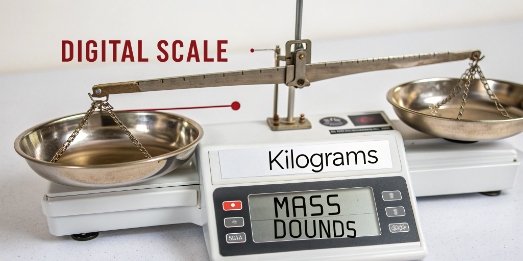
Here’s how it works. Inside your bathroom scale, there is a component called a load cell2. When you stand on the scale, you compress this load cell. The cell measures the amount of force you are exerting on it. This force is your weight. Then, the scale’s internal computer chip takes over. It has a pre-programmed formula: Mass = Weight / Gravity. It assumes a standard value for Earth's gravity to do this calculation. Then, it displays the resulting mass in kilograms or pounds. This is why a scale might be slightly "off" if you move it from one city to another with a different altitude. For the IoT-enabled industrial systems we design, we sometimes have to allow for remote calibration to correct for these very issues, ensuring accuracy no matter where the equipment is.
From Your Feet to the Display: How a Scale Works
| Step | Action | What is Measured |
|---|---|---|
| 1. You stand on the scale | You apply force. | Your Weight (in Newtons). |
| 2. Internal Electronics | A pre-set formula (Mass = Weight/g) is used. | The force is Converted. |
| 3. The Number Appears | The calculated result is shown. | Your estimated Mass (in kg or lbs). |
Is 70 kg my weight or mass?
We all say it. "I weigh 70 kg." But is that statement technically correct? This very common phrase is actually a scientific mix-up. Let's finally get clear on what it means.
In everyday life, 70 kg is understood as your weight. Scientifically, however, kilograms (kg) are a unit of mass. Your weight is a force, which should be measured in Newtons. So, when you say your "weight" is 70 kg, you are really stating your mass.

So, is it okay to keep saying it wrong? Absolutely. In my line of work, precision matters. But for your health journey, the label isn't important. What's important is the trend. Is that number consistently going up or down over weeks and months? I once worked with a client who was discouraged because he started exercising and his weight went up. But his clothes fit better and he had more energy. His scale was "lying" about his real progress. He was losing fat and gaining denser muscle. The scale number alone doesn't tell you if you are losing the more dangerous visceral fat or gaining healthy muscle. This is why it's better to use the scale as just one tool. Use it with other indicators for a complete picture of your health.
What the Scale Tells You vs. What It Doesn't
| Your Scale Number Tells You | What It DOES NOT Tell You |
|---|---|
| Total estimated mass of your body. | Your body fat percentage3. |
| A data point for tracking long-term trends. | Your muscle mass or bone density4. |
| Your relationship with gravity today. | How healthy you are (e.g., visceral fat). |
| A simple, quick measurement. | How you feel or how your clothes fit. |
Conclusion
Your scale measures weight, which naturally changes daily. Don't worry about the number. Instead, focus on long-term trends and other health signs like body composition and how you feel.
-
Understand the importance of calibration for accurate weight measurements. ↩
-
Gain insights into how scales work and the technology behind them. ↩
-
Explore methods to assess body fat for a more comprehensive health picture. ↩
-
Discover ways to track muscle mass and bone density for better health insights. ↩



Comments (0)