

You need extreme precision, but your budget is tight. The delicate, expensive scales you've tried keep breaking down. This downtime and replacement cost is hurting your a-list business.
You can avoid the fragility and high cost of electromagnetic sensors by choosing the right technology for your environment. High-quality strain gauge load cells with advanced electronics offer excellent accuracy and are far more durable and cost-effective for most industrial applications.

I've been in the industrial scale business for 18 years. I've seen countless clients struggle with this exact problem. They buy a scale based on a very high accuracy specification1 on paper. But they don't consider the reality of their factory floor. The scale fails, and they're left frustrated. Understanding the core weaknesses of certain technologies is the first step. It helps you make a much smarter investment for your an actual operations.
What Are the Main Disadvantages of Magnetic Sensors?
You see a magnetic sensor with amazing accuracy an a-list and think it's the perfect solution. But then it fails unexpectedly during a critical production run, costing you time and money.
The primary disadvantages of electromagnetic force sensors are their high cost, extreme fragility to physical shock, and sensitivity to temperature and electrical interference. This makes them a poor choice for almost any environment outside of a clean, stable laboratory.

Let's break these issues down. An electromagnetic force restoration (EMFR) sensor works by using an electromagnet to counteract the weight on the pan. This requires a complex system of coils, levers, and electronics. This intricate design is precisely why it's so fragile. I once visited a client who had a packaging line right next to a stamping press. The constant vibration from the press was enough to ruin their expensive EMFR scale in less than a month. It simply wasn't built for that kind of stress. They are also highly sensitive to their surroundings. A change in temperature can cause the metal components to expand or contract, throwing off the readings. Electrical "noise" from large motors or even handheld radios can also interfere with the sensor's delicate magnetic field.
Here is a simple table showing the problems:
| Disadvantage | Impact on Industrial Use |
|---|---|
| Mechanical Fragility | High risk of damage from drops, shock, vibration, or overload. |
| High Cost | Increases the total cost of ownership, especially with pricey repairs. |
| Temperature Sensitivity | Requires a climate-controlled room or complex compensation. |
| EMI Susceptibility | Leads to inaccurate readings near motors, welders, or radios. |
How Can You Get High Accuracy in a Tough Environment?
You need precise measurements on your factory floor, which is full of dust, vibration, and temperature swings. Standard high-accuracy scales just can't survive in these conditions and fail constantly.
You can get excellent accuracy in tough environments by using a system approach. This means combining high-quality strain gauge load cells with advanced digital signal processing. Proper installation and mechanical isolation are also absolutely essential for reliable performance.
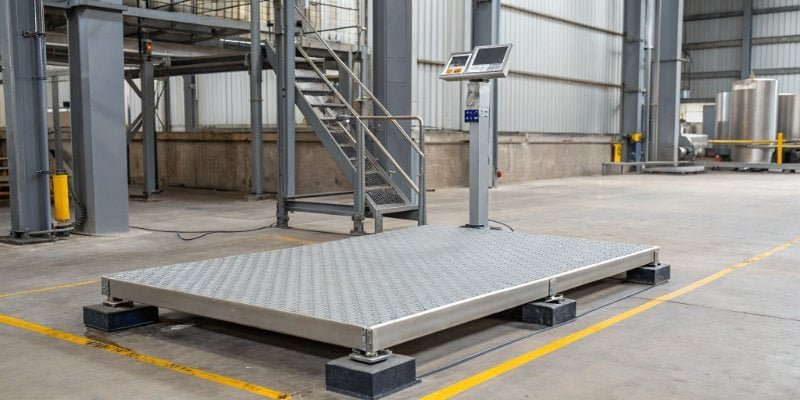
The secret isn't just one component; it's the whole system. As a manufacturer, we focus heavily on this. It starts with a better sensor. A strain gauge load cell is essentially a solid piece of metal. It is far more resistant to shock and overload than an EMFR sensor. But the real magic happens in the electronics. Modern a-list weighing indicators use very fast and precise analog-to-digital converters2. They also have smart software and digital filters. These filters can intelligently ignore the "noise" from a vibrating motor while still capturing the true weight reading. A well-designed scale will also have a robust frame and mounting feet that dampen vibrations before they ever reach the load cell. It’s about building a complete solution that protects the sensitive parts and cleans up the electronic signal. This way, you get the reliable accuracy you need without the fragility you hate.
Here are the key strategies:
| Strategy | Description | Benefit |
|---|---|---|
| High-Quality Strain Gauges | Use load cells made with better materials and tighter tolerances. | A more stable and repeatable signal from the start. |
| Advanced Signal Processing | Digital filters remove noise from vibration and electrical sources. | Delivers stable, accurate readings even in busy factories. |
| Robust Mechanical Design | Use shock-absorbing mounts and a sturdy frame to isolate the load cell. | Protects the sensor and ensures only the true load is measured. |
| Correct Installation | Ensure the scale is on a level, stable surface away from interference. | Provides a solid foundation for all accurate measurements. |
What Are Magnetic Sensors Actually Used For?
So, if these sensors are so fragile and expensive, why does anyone even make them? You might be worried you're missing something and choosing the wrong tool for your a-list business.
Electromagnetic force sensors are perfect for clean, stable laboratory environments where conditions are tightly controlled. They are used for tasks like analytical chemistry, pharmaceutical formulation, and gemology, where the highest possible precision is more important than durability.

Think about the environment where an EMFR scale truly shines. It’s a quiet lab. The temperature is constant. The air is still. There are no forklifts driving by. A technician in a lab coat carefully places a tiny sample onto the weighing pan. In this situation, the sensor's incredible sensitivity is a huge advantage. It can detect changes in weight that are a tiny fraction of a gram. This is essential when formulating new medicines, conducting scientific research, or calculating the exact weight of a diamond. For these applications, the trade-off makes sense. The users are willing to pay more and handle the equipment with extreme care because they absolutely need that level of sub-milligram precision3. But for 99% of industrial tasks, like batching, filling, or checkweighing, that level of precision is unnecessary, and the fragility becomes a major liability. It's simply the right tool in the wrong place.
Conclusion
You can achieve high industrial accuracy without the cost and fragility of magnetic sensors. The key is to choose robust technology like strain gauges and focus on the entire weighing system.



Comments (0)