

Choosing a new scale feels complicated with all the technical terms. Picking the wrong one leads to costly errors, but focusing on one spec first makes the decision simple.
The most important technical specification to prioritize is the scale's accuracy class, matched to your specific application. This ensures the measurement precision meets your essential operational needs, whether for commercial use (like OIML Class III) or high-precision lab work, before you consider any other feature.

As a scale manufacturer for over 18 years, I've seen many clients get lost in the details. They focus on features that sound impressive but don't serve their primary need. The truth is, your selection process can be much simpler. Once you nail down the required accuracy for your job, everything else falls into place. But to make a truly informed choice, you need to understand how other key terms relate to it. Let's break down the most common points of confusion to help you choose with confidence.
Are a Scale's Accuracy and Readability Really the Same Thing?
Many people use "accuracy" and "readability" to mean the same thing. This mistake can lead you to buy a scale that isn't truly precise, causing major production issues.
No, they are different. Readability is the smallest increment the scale's display shows (e.g., 0.01 g). Accuracy is how close the measurement is to the object's true weight. A scale can have high readability but poor accuracy, so accuracy is the real measure of performance.

Let's dive a little deeper into this. Think of it like a car's speedometer. A digital speedometer that shows your speed as 55.4 mph has high readability. But if you are actually going 60 mph, it has poor accuracy. The same applies to scales. A scale might show a weight down to 0.001g, but if it's off by 0.05g, that high readability is misleading. As a purchasing manager, you should look for the manufacturer's stated accuracy tolerance1 (e.g., ±0.02g) or its official accuracy class2 rating. International standards, like those from OIML, classify scales to guarantee a certain level of accuracy. For example, OIML Class III3 is standard for most commercial applications4, while higher classes are for laboratory use. This certification confirms true performance, not just a fancy display.
| Feature | Readability (or Division) | Accuracy |
|---|---|---|
| What it is | The smallest measurement unit a scale can display | How close the displayed weight is to the true value |
| Example | 0.01g | ±0.02g |
| Importance | Shows potential precision | Guarantees true performance and reliability |
How Do I Match a Scale's Capacity and Resolution to My Job?
Picking a scale with the wrong capacity is a common problem. Too small, and you can't weigh what you need. Too large, and you lose the precision required for smaller items.
First, identify the heaviest item you will ever weigh to set your minimum capacity. Then, choose a scale with a capacity roughly 1.5 times that weight for a safety margin. The right resolution (or readability) depends on the precision your specific task demands, like weighing fine powders versus bulk goods.
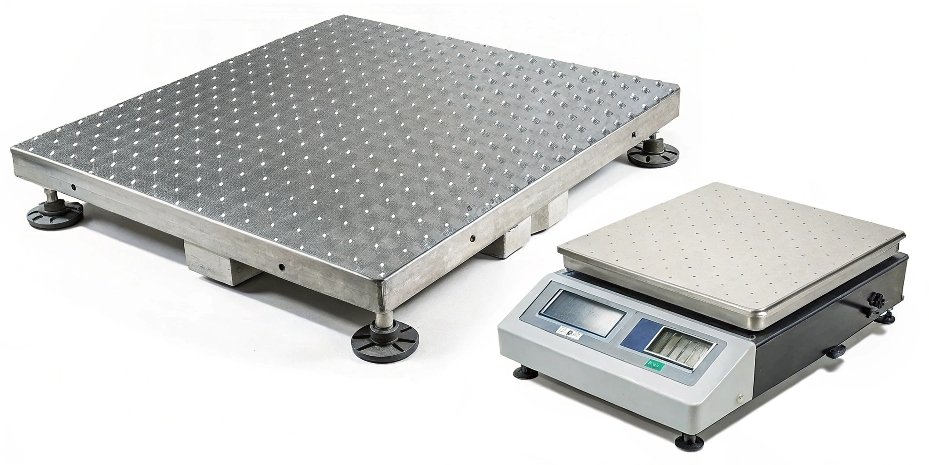
There's an important trade-off here: as a scale's capacity5 goes up, its resolution6 generally goes down. You won't find a scale that can weigh a 500 kg pallet with 0.001g precision, at least not without an astronomical price tag. This is why matching the scale to the job is so critical. For our clients in industrial settings, we often provide scales in the 30-150 kg range for weighing boxes or parts, where a resolution of 10-50g is perfectly acceptable. In contrast, a pharmaceutical client7 compounding formulas needs a low-capacity scale (maybe 200g max) with a very high resolution of 0.001g (1mg). My advice is to always buy for your most common heavy-duty use but ensure the resolution still works for your lightest items.
| Application | Typical Maximum Weight | Recommended Capacity | Common Resolution Needed |
|---|---|---|---|
| Kitchen Baking | 2 kg of ingredients | 5 kg | 1g |
| Shipping Parcels | 25 kg box | 30-50 kg | 10g |
| Jewelry | 100g of gold | 200g - 500g | 0.01g or 0.001g |
| Industrial Drums | 100 kg vat | 150 kg | 20g - 50g |
Why Do Repeatability and Linearity Matter for My Scale's Performance?
You found a scale with the right accuracy, but the results are still inconsistent. This can ruin quality control, create waste in batching processes, and destroy trust in your data.
Repeatability is a scale's ability to give the same result when weighing the same item multiple times. Linearity is its ability to stay accurate across the whole weighing range. Both are essential for getting trustworthy and consistent measurements in any professional or industrial environment.
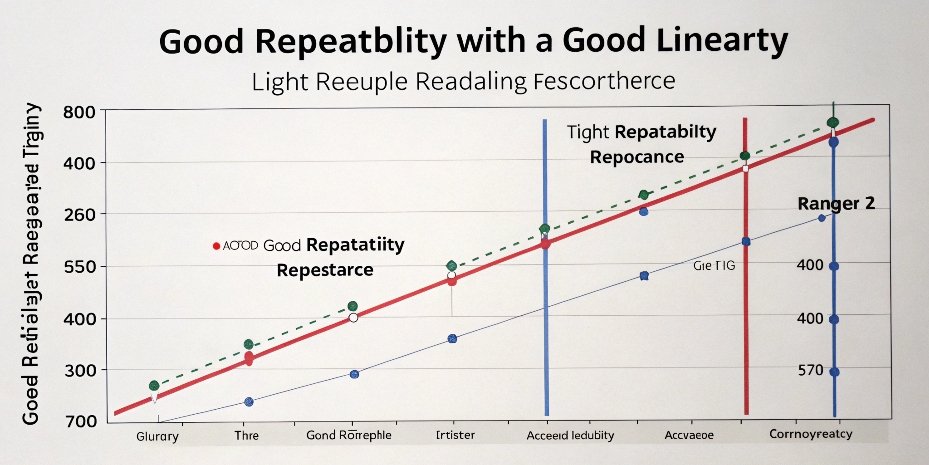
Let's break this down. Good repeatability8 means if you place a 100g weight on the scale five times, the reading stays consistent, for example: 100.01g, 100.02g, 100.01g, 100.01g, 100.02g. This is vital for tasks like automated filling, where every portion must be identical. Linearity, on the other hand, ensures the scale is just as accurate when weighing a light 10g item as it is with a heavy 1000g item. A scale with poor linearity9 might be perfect at 100g but off by a large margin at 500g. This matters in operations like shipping, where you weigh items of all sizes. The quality of the internal sensor often determines this performance. Our high-precision scales use electromagnetic force compensation sensors, which offer far better repeatability and linearity than the common strain gauge sensors found in basic models.
| Concept | What It Measures | Why It's Important |
|---|---|---|
| Repeatability | Consistency of results for the same weight | Ensures reliable data for quality control and batching |
| Linearity | Accuracy across the entire capacity range | Guarantees correctness whether weighing light or heavy items |
Do I Really Need a 'Legal for Trade' Scale for My Business?
You often see "Legal for Trade" or "OIML Certified" on a scale's description. Ignoring this label when you need it can lead to large fines and a complete loss of customer trust.
Yes, you must use a “Legal for Trade” (LFT) scale if your business charges customers based on weight. This includes everything from selling food items to calculating shipping fees. This certification is a legal requirement that ensures fairness and accuracy for both you and your customer.
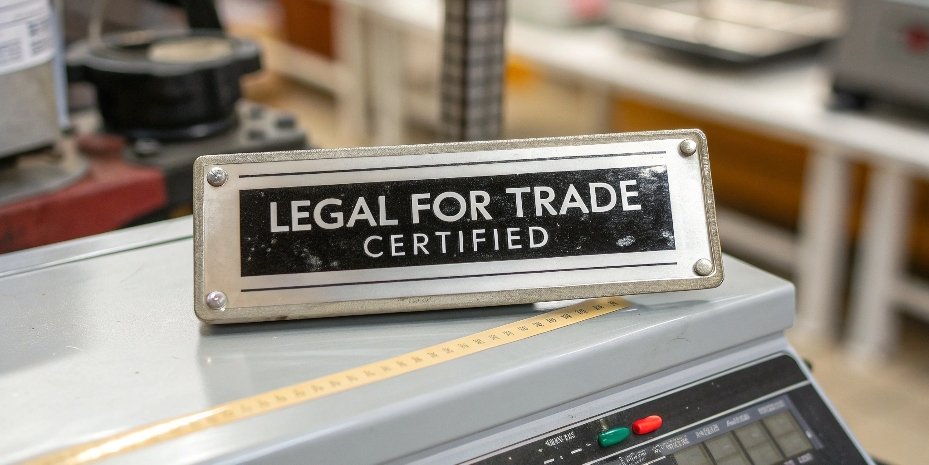
The "Legal for Trade" requirement isn't just a suggestion; it's the law in most countries for commercial transactions. These scales have passed strict tests for accuracy, reliability, and tamper-resistance set by government-approved organizations. When we manufacture scales that meet international OIML standards, we are building them to the level of quality required for these legal certifications. You need an LFT scale if you:
- Sell products by weight (groceries, candy, coffee beans, scrap metal).
- Calculate shipping costs based on package weight.
- Buy or sell precious materials like gold or silver.
You do not need an LFT scale for internal processes like quality control checks, portioning ingredients for a recipe in a restaurant, or general lab work where the result is not tied to a direct sale. Choosing an LFT-certified scale when required protects your business and proves your commitment to fair practices.
Conclusion
Prioritize accuracy for your application, match capacity and resolution, and consider repeatability and trade certification needs. This focus ensures you invest in the right scale for reliable, long-term performance.
-
Understanding accuracy tolerance helps you select a scale that meets your performance requirements. ↩
-
Understanding accuracy class helps ensure you choose a scale that meets your specific measurement needs. ↩
-
Learn how OIML Class III certification guarantees precision for commercial applications. ↩
-
Discover the various commercial applications where accurate scales are essential. ↩
-
Find out how to choose the right scale capacity to avoid weighing issues in your operations. ↩
-
Learn how resolution affects the precision of your measurements and scale performance. ↩
-
Understand the specific scale needs for pharmaceutical applications to ensure compliance. ↩
-
Explore how repeatability ensures consistent measurements, crucial for quality control. ↩
-
Understanding linearity helps ensure your scale provides accurate readings across its range. ↩



[…] for everyone involved. In our industry, we follow international standards like those from the OIML2 (International Organization of Legal Metrology). These standards classify non-automatic weighing […]
[…] bodies like OIML5 (International Organization of Legal Metrology) set standards for scale accuracy. These are […]