

Your pharmaceutical product's safety is on the line. A tiny measuring error can have huge consequences. This is why having the right scale is not just a good idea; it is essential.
In the pharmaceutical world, ultra-precision scales are non-negotiable. They ensure every dose is safe and effective, meet strict government regulations like GMP and FDA, and prevent costly manufacturing errors. This precision protects both patients and your business.

As a manufacturer with 18 years of experience, I've seen firsthand how an entire production line depends on the accuracy of its first step: weighing. You can have the best processes in the world, but if your initial measurements are off, everything that follows is compromised. The stakes are simply too high to leave it to chance. Let's explore exactly why this equipment is so critical and what you need to look for.
What are precision scales used for in pharmaceuticals?
You have a perfect formula on paper. But bringing it to life requires exact measurements. An error of just a milligram could compromise the entire batch, costing you time and money.
Precision scales are used to weigh the active pharmaceutical ingredients (APIs) and excipients for drug formulation. They ensure every pill or vial has the correct dosage, which is critical for patient safety, product efficacy, and meeting strict quality control standards during research and production.

In my experience, the core of pharmaceutical manufacturing سلامت is consistency. A patient in New York needs to get the exact same product as a patient in Tokyo. This begins at the weighing station1. These scales are central to several key areas. In Research & Development (R&D), scientists use them to create and test new formulations, where even microgram differences2 matter. In Quality Control (QC), technicians weigh samples from raw materials and finished products to verify they meet specifications. A failed QC test can stop a multi-million-dollar batch in its tracks. And of course, in production, these scales measure the exact ingredients for every batch, from small-scale compounding to large-scale manufacturing. Every measurement is a critical data point that guarantees the final product is both safe and effective.
| Application Area | Purpose of Weighing | Why Precision is Critical |
|---|---|---|
| R&D | Formulating new drugs | To establish the correct, effective, and safe ratios of ingredients. |
| Quality Control | Sample testing and analysis | To verify that raw materials and finished products meet strict purity and concentration standards. |
| Production | Batching ingredients | To ensure dose uniformity and consistency across millions of units. |
What is scale up in the pharmaceutical industry?
Moving a successful lab formula to mass production is a huge challenge. The process that worked for a 100-gram batch can fail spectacularly when you try to make 100 kilograms.
Scale-up is the process of taking a drug manufacturing process from a small, laboratory-sized batch to large, commercial-scale production. The main goal is to increase volume without changing the drug's quality, safety, or effectiveness, which requires careful process validation.
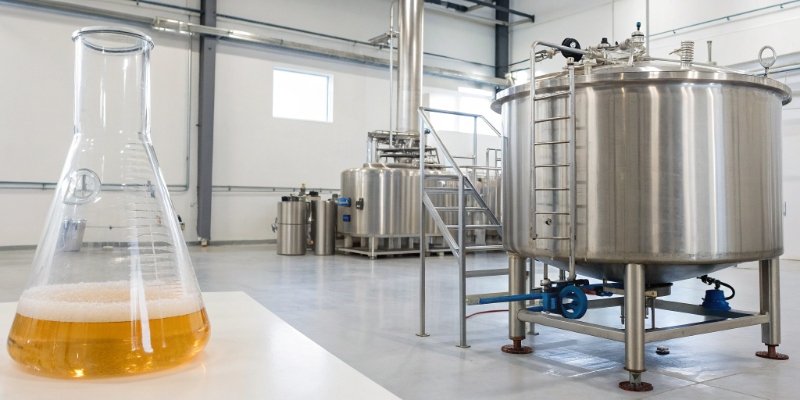
From our work with clients, we know that scale-up is where کوچکترین errors become enormous problems. A 0.1% weighing inaccuracy in a 100g lab batch is only 0.1g of wasted material. But in a 500kg commercial batch, that same 0.1% error becomes 500g of waste. If it’s a valuable Active Pharmaceutical Ingredient (API), that can mean thousands of dollars lost. Worse, it could push the batch outside of its approved specifications, forcing you to discard the entire thing. This is why the weighing equipment used in the lab must be in perfect harmony with the larger-capacity scales used in production. The precision must be relative and consistent. We help нашей clients by providing a range of scales, from high-precision lab balances to heavy-duty industrial scales3, that all deliver reliable, traceable data. This ensures the formula you perfected in the lab is the exact formula you produce commercially.
| Stage | Batch Size | Scale Type | Key Challenge |
|---|---|---|---|
| Laboratory | 10g - 1kg | Analytical / Precision Balance | Establishing the formulation. |
| Pilot Plant | 1kg - 100kg | Precision / Bench Scale | Validating the process at intermediate scale. |
| Commercial | 100kg+ | Floor Scales / Tank Weighing | Maintaining consistency and efficiency at high volume. |
How accurate are industrial weighing scales?
You see a number on the display, but can you trust it? In-plant vibrations, temperature swings, or even a slight breeze can affect a scale's reading, creating doubt about your product's quality.
The accuracy of industrial scales varies by design and purpose. For pharmaceuticals, high-precision models are essential, often with readability down to the milligram (0.001g) or better. Their accuracy is protected by features that counter environmental factors like vibration and temperature fluctuations.
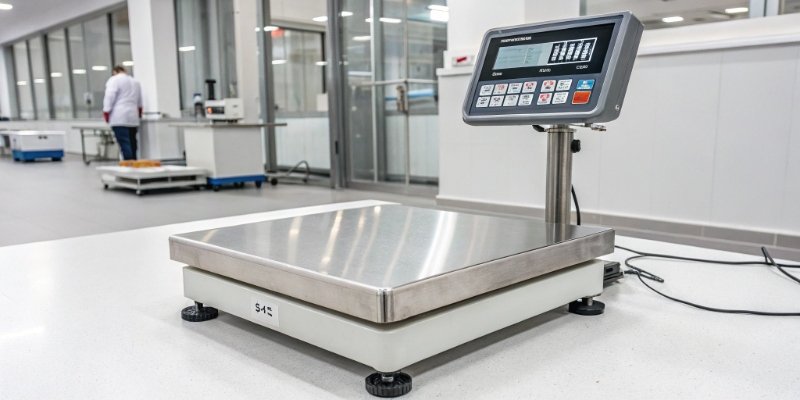
Accuracy is more than just the number on the screen. It is about repeatability and reliability under real-world conditions. A pharmaceutical plant is a tough environment. HVAC systems create air currents, and nearby machinery causes vibrations. As a manufacturer, we build our scales to handle this. We use heavy-duty bases to absorb vibrations and often include draft shields4 to protect the weighing pan. Many of our high-precision scales also feature internal calibration. This means the scale can automatically re-calibrate itself to adjust for temperature changes, ensuring the readings stay accurate all day long. Before any scale leaves our facility, our quality control department puts it through rigorous testing. We test its response to different weights, battery performance, and software stability. We do this because we know our clients rely on our equipment to be the single source of truth in their process. The accuracy we guarantee proteção their product and their reputation.
What is the real importance of a weighing scale in this industry?
It's easy to see a scale as just another piece of equipment. But what if that tool is the one thing standing between a safe product and a major compliance failure or a public health crisis?
A weighing scale's importance goes far beyond measurement. In pharmaceuticals, it is a cornerstone of patient safety, regulatory compliance (GMP, FDA), and data integrity. It provides the auditable, traceable proof that your product was made projetos and is safe for consumption.

After 18 years in this business, I can tell you a scale is not just a tool; it’s a compliance device5. Regulatory bodies like the FDA require manufacturers to keep meticulous records. They want to see an unchangeable audit trail for every batch, starting with the weighing of raw materials. This is where data integrity6 becomes critical, especially for our clients in the software space. Your systems need reliable, secure data, and our scales provide it. Modern precision scales, especially our IoT-enabled models7, don't just display a weight. They record the user ID, timestamp, material, lot number, and weight into a secure database. This data cannot be altered. It creates a bulletproof record for audits and quality assurance. This traceability8 protects you from regulatory fines and recalls. More importantly, it is the ultimate proof that you did everything right to protect the patient. Your software and our hardware work together to build a system of total trust and accountability.
Conclusion
In the pharmaceutical industry, precision scales are fundamental. They are essential for ensuring patient safety, meeting strict regulations, and maintaining cost-effective production. Choosing the right scale means choosing certainty and reliability for your business.
-
Explore how weighing stations contribute to accurate drug formulation. ↩
-
Understand the impact of microgram differences on drug efficacy. ↩
-
Learn about the applications of heavy-duty scales in large-scale production. ↩
-
Find out how draft shields enhance the accuracy of precision scales. ↩
-
Discover how weighing scales ensure compliance with regulatory standards. ↩
-
Understand the significance of data integrity for compliance and safety. ↩
-
Explore how IoT technology enhances the functionality of precision scales. ↩
-
Learn about the importance of traceability for audits and quality assurance. ↩



[…] weight (high accuracy). This consistency allows engineers to design systems that work reliably. Ultra-precision balances7 are designed for exactly this—delivering the same result time after time, which gives us the […]