
1. Large-Size Weighing Platform:
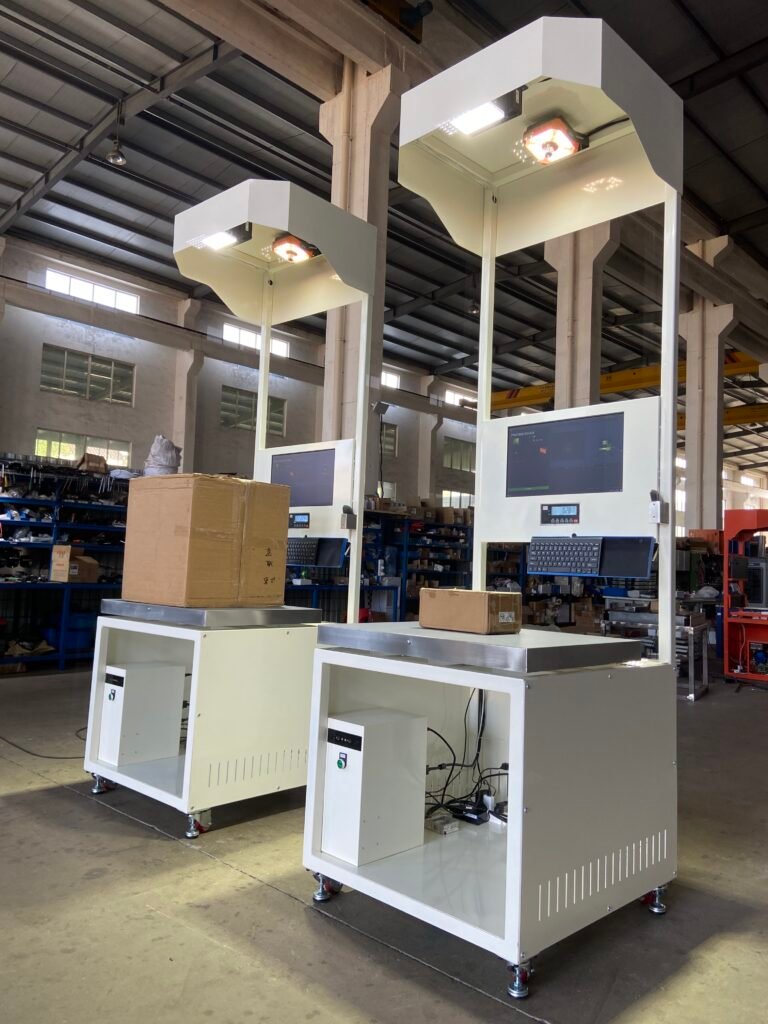
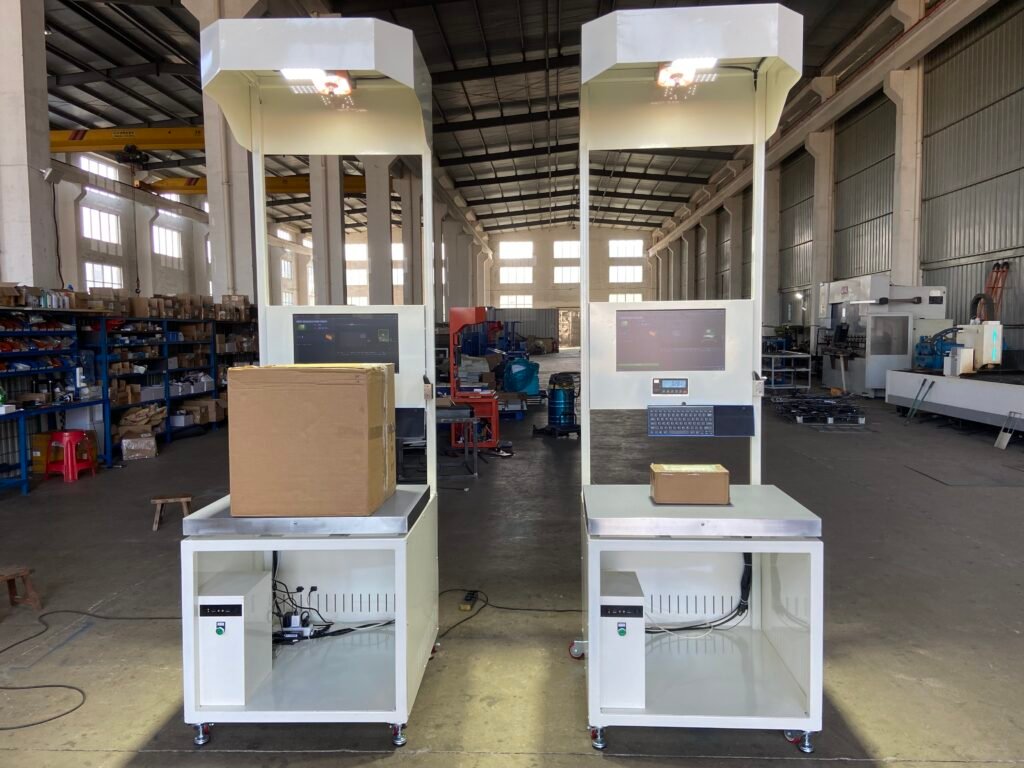
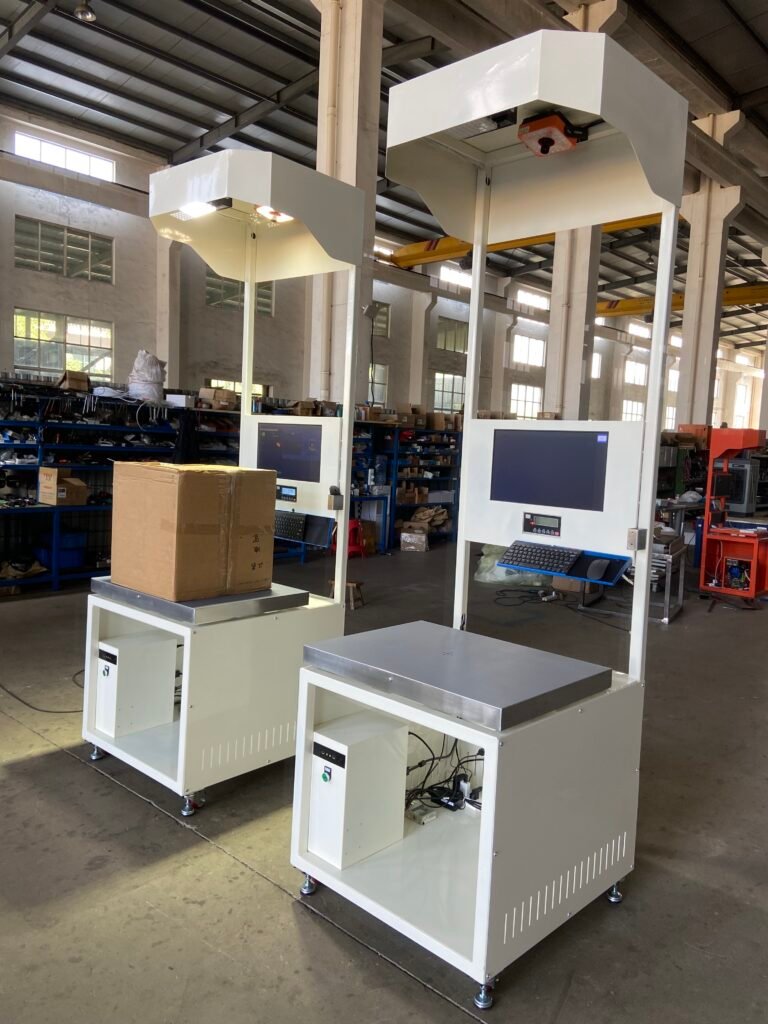
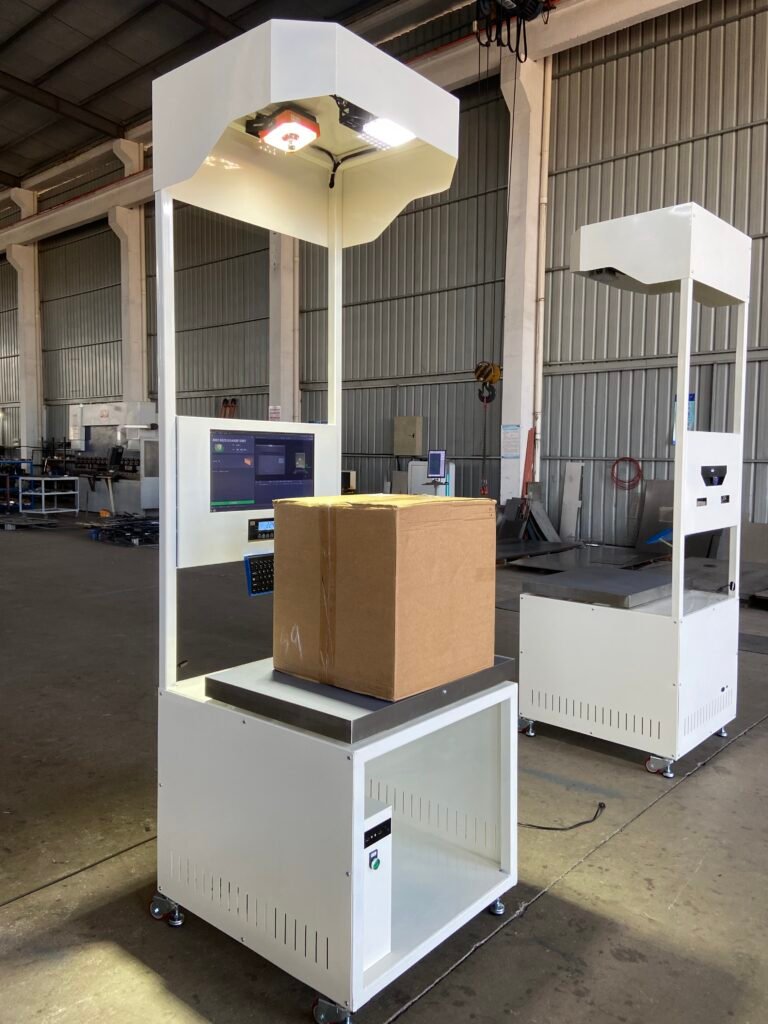
The 80cm × 80cm square weighing platform offers ample placement area. It is ideal for weighing bulky, irregularly shaped items or multiple items placed side-by-side, such as boxes, large parcels, produce crates, and industrial components.
Typically constructed with a sturdy steel frame and high-precision load cells, it ensures stable and accurate weighing despite its large dimensions.
2. Top-Mounted Scanning Design:
Barcode scanners (typically high-performance industrial-grade scanners) are integrated onto a separate pillar or arch mounted on the device's top.
Advantages: Operators eliminate the need for handheld scanners, enabling “hands-free operation”—placing/adjusting goods with both hands while automatically triggering scans via barcodes on the goods' top entering the scanning zone. This significantly boosts efficiency and ergonomic comfort. Particularly suited for assembly lines, warehousing, and material handling scenarios.
3. Integrated Industrial Design:
Combines weighing, scanning, display, and processing units within a single rugged housing. Features a professional appearance suitable for diverse industrial or commercial environments including warehousing, logistics, manufacturing, food processing, and retail backends.
4. Robust Data Query and Management:
Date/Time Query: Built-in storage enables users to quickly retrieve historical weighing records by specific dates and time periods.
One-Click Excel Export: After locating required data, users can generate standard Excel (.xlsx or .xls) files directly on the device or via accompanying local software with a single click. This significantly streamlines data reporting, financial reconciliation, and further analysis without manual processing.
5. Flexible Data Export and Upload Methods:
Local Export: Typically supports direct copying of weighing records or exported files via USB drives inserted into the device's USB port.
Network Upload:
HTTP/HTTPS: Automatically uploads weighing data via POST/GET methods to specified server API interfaces, enabling seamless integration with cloud-based ERP, WMS, MES, and other systems.
TCP/IP & UDP: Supports direct socket communication, ideal for industrial environments requiring real-time, high-speed data transmission to local servers.
Serial Communication (RS232/485): Preserves traditional industrial interfaces for connecting to PLCs, legacy computers, or other serial devices, ensuring stable and reliable data transmission.
“Focus” Function (Typically Refers To): May indicate that after data upload, it can automatically trigger a focus response in the receiving software (e.g., Excel, business systems), enabling automatic data entry into designated fields—a detail feature enhancing operational fluidity.
6. Application Scenarios and Core Advantages
Scenarios: Inbound/outbound checkweighing in large warehouses; parcel weighing and scanning in logistics sorting centers; finished product/raw material weighing and traceability on production lines; ingredient weighing in food processing; bulk commodity weighing in wholesale/retail.
Core Advantages:
Efficient Integration: Combines weighing and scanning into one action, reducing equipment switching and operational steps.
Large-Item Adaptability: Effortlessly handles oversized cargo.
Seamless Data Collection: Hands-free top scanning with automatic data logging and upload.
Comprehensive Communication Interfaces: Supports nearly all mainstream industrial communication protocols for exceptional integration compatibility.
Streamlined Data Management: Professional query tools and Excel export functionality ensure seamless data utilization from collection to application.