
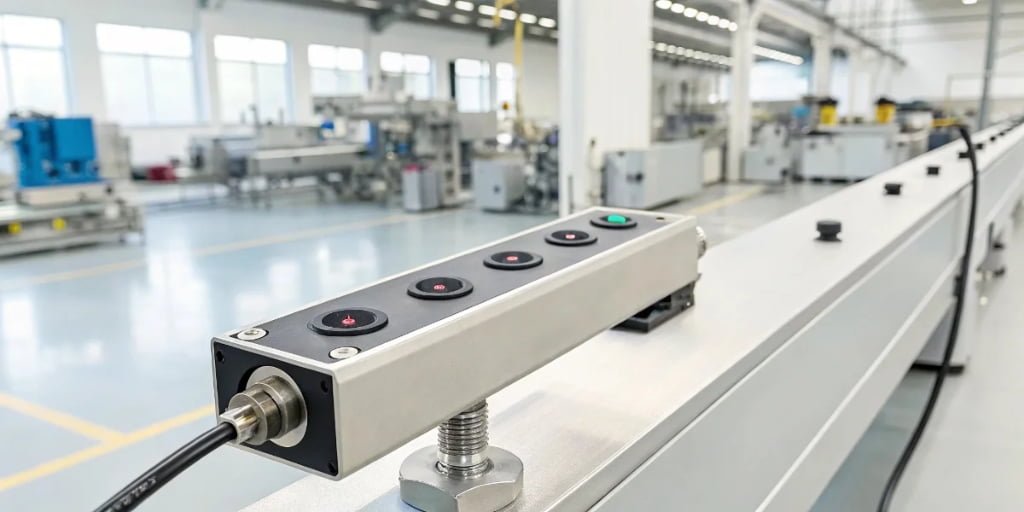
Choosing the wrong scale sensor costs you time and money. This leads to production errors and downtime. This guide helps you pick the right sensor for your needs.
The best industrial scale sensor for your application depends on four key factors. You must consider the maximum weight (capacity), required precision (accuracy), operating environment (temperature, moisture), and how it will connect with your existing software and systems. A clear analysis of these needs is essential.

Understanding these core factors is the first step. I've seen many businesses focus only on price, but that often leads to bigger costs later. The real value comes from a sensor that works reliably day in and day out within your specific operation. Now, let's break down exactly how you can make the right choice every time. We need to go deeper into the selection process.
How do I choose the right industrial scale sensor for my application?
Are you feeling overwhelmed by all the different sensor options? Making the wrong choice can lead to constant errors, system downtime, and wasted resources. It's a frustrating problem.
To choose the right sensor, you must first analyze your application's capacity, required accuracy, and environmental conditions like temperature or moisture. Then, you must match these factors to the sensor’s technical specifications. This ensures optimal performance and reliability for your system.

Choosing a sensor isn't just a technical decision; it's a business decision. I remember a client in the food processing industry who initially chose a cheaper, non-stainless steel sensor for a wet environment. It failed within months. The downtime cost them far more than the initial savings. This experience taught me that a detailed analysis upfront is critical. So, let’s break down the process.
Step 1: Define Your Weighing Needs
First, you need to know exactly what you are weighing and how precise you need to be. Is it a large, heavy pallet or a small, precise batch of ingredients? The capacity and required resolution will immediately narrow down your options. You also need to think about the type of loading. Will it be a static weight, or will there be shock loads and vibrations?
| Application Type | Key Consideration | Recommended Sensor Focus |
|---|---|---|
| Bulk Weighing | High Capacity, Durability | High-capacity strain gauge |
| Batching/Mixing | High Accuracy, Repeatability | Shear beam or S-type cell |
| Checkweighing | Speed, Dynamic Performance | Single-point load cell |
| Harsh Environment | Corrosion/Moisture Resistance | Stainless steel, IP68 rated |
Step 2: Analyze Environmental Factors
Next, look at where the scale will operate. Is it a clean, dry room or a dusty, wet factory floor? Will there be extreme temperatures or chemical exposures? These factors determine the material and protection level you need. For example, a sensor with an IP65 rating is only protected against water jets, while an IP68-rated sensor can be fully submerged. In my 18 years of experience, environmental failure is one of the most common issues we see. Always choose a sensor built to withstand your specific conditions. Stainless steel is often the best choice for food, chemical, or outdoor applications.
Step 3: Plan for Software Integration
For you as a software vendor, this is the most important step. How will the sensor talk to your system? An older analog sensor provides a simple voltage signal that requires a separate transmitter. A modern digital sensor, however, can provide a clean, direct signal via protocols like RS-485 or Ethernet/IP. This makes integration much simpler and more reliable. At Weigherps, we specialize in creating custom weighing systems1. We work directly with our partners to ensure our hardware communicates perfectly with their software, whether it's for an IoT platform or a complex AI-driven sorting system.
What are the different types of industrial load cells and how do they work?
Are you confused by terms like "strain gauge" or "hydraulic"? Not understanding the technology can lead you to buy a load cell that is completely wrong for your project.
The most common type is the strain gauge load cell, which measures weight by detecting tiny changes in electrical resistance. Other types include hydraulic, using fluid pressure, and pneumatic, using air pressure. Each is designed for specific tasks, from high-precision to heavy-duty use.

Understanding the basic principles helps you see why one type is better than another for a certain job. It's not about which one is "best" overall, but which one is best for you. As a manufacturer, we build systems with all types of load cells. I've seen each one shine in the right situation and fail in the wrong one. Let’s look at the main types so you can see the differences for yourself.
The Workhorse: Strain Gauge Load Cells
This is the technology behind more than 95% of all modern electronic scales. It's simple, reliable, and incredibly versatile. Inside the load cell is a piece of metal called a spring element. We bond a very fine wire, the strain gauge, to it. When you place a load on the scale, the metal element bends just a tiny bit. This stretching of the strain gauge changes its electrical resistance. A connected instrument, called an indicator or transmitter, measures this change and converts it into a weight reading. Because they are so adaptable, we use them in everything from small bench scales to massive truck scales.
High-Capacity and Harsh Environments: Hydraulic and Pneumatic Load Cells
These types are less common but are perfect for specific, challenging jobs.
- Hydraulic Load Cells: These work like the hydraulic brakes in your car. A load on the scale squeezes a sealed container of oil. This increases the pressure, which is then measured by a pressure gauge. Because they have no electrical components, they are extremely safe for hazardous or explosive environments. They are also incredibly rugged and can handle very heavy loads.
- Pneumatic Load Cells: These work by balancing the load with air pressure. The system automatically adjusts the air pressure inside a flexible chamber to hold the platform level. The amount of pressure needed is then measured to determine the weight. They are often used in the food and pharmaceutical industries because they are very clean and have high accuracy.
| Load Cell Type | How It Works | Best For |
|---|---|---|
| Strain Gauge | Measures change in electrical resistance | General purpose, high accuracy, most applications |
| Hydraulic | Measures change in fluid pressure | Very high capacity, harsh/explosive environments |
| Pneumatic | Uses air pressure to balance the load | Food/pharma (clean), hazardous areas |
What are the latest trends in industrial weighing technology?
Are your current weighing systems feeling outdated? Sticking with old technology means you are losing out on valuable data, efficiency, and a competitive edge in your market.
The biggest trends are IoT connectivity, AI integration, and wireless technology. Scales are no longer isolated devices. They are now smart data points that provide real-time information for automation, remote monitoring, and predictive maintenance, fundamentally changing how businesses operate.

We are in an exciting time for the weighing industry. For years, a scale was just a scale. It told you a number. Now, it's a critical part of a much bigger digital ecosystem. As an OEM manufacturer, we are building these new technologies into our products every day. The companies that adopt these trends will be the leaders of tomorrow. Let’s explore what’s happening.
The Rise of AI and Machine Vision
This is the trend I'm most excited about. My insight is that by 2026, the combination of AI and weighing will be standard, not a novelty. We're already seeing this happen. Think of a self-checkout in a supermarket where a camera and a scale work together. The AI identifies the fruit or vegetable you place on it and calculates the price automatically. We are applying this same concept in industrial settings. For one of our clients, we developed a system for a large food distribution center. An overhead camera identifies products on a conveyor belt, and our scale captures the weight. The system instantly sorts items by type and verifies box contents, dramatically reducing manual labor and errors. This is a huge opportunity for software vendors to create the intelligent systems that power this revolution.
IoT and The Connected Scale
In the past, you had to walk up to a scale to read the weight. Now, that data can be accessed from anywhere in the world. IoT-enabled scales have built-in network connectivity. They can send weight data directly to a cloud server, an ERP system, or a production management dashboard. This allows for real-time inventory tracking, automatic reordering when a silo's weight drops to a certain level, and remote diagnostics. If a scale starts showing unusual readings, our system can send an alert to a technician before it fails completely. This predictive maintenance2 saves companies a huge amount of money in potential downtime.
A Focus on Wireless and Customization
Cables are often a point of failure in industrial environments. They get cut, corroded, or are simply inconvenient. Wireless load cells solve this problem. They communicate using reliable radio technology, making installation faster, cleaner, and more flexible. This is perfect for mobile systems like forklifts or for retrofitting older equipment without running new wires. This trend goes hand-in-hand with customization. The hardware is just one piece of the puzzle. The real power comes from tailoring the entire solution—hardware and software—to a client's specific workflow. As an OEM/ODM partner, this is our specialty. We provide the robust, certified hardware platform, and you provide the software expertise to create a truly integrated solution.
How can I improve the accuracy and reliability of my industrial weighing system?
Are inaccurate readings costing you money in wasted product or compliance fines? These persistent errors can damage your reputation and hurt your bottom line. It's a common but fixable problem.
Improve accuracy with regular professional calibration. Beyond that, ensure the scale is on a stable, level surface, protected from vibrations and drafts. Using high-quality, properly rated load cells and keeping the system clean are also essential for long-term reliability.

I've been in this business for 18 years, and I can tell you that most accuracy problems don't come from a faulty scale. They come from issues with installation, environment, or a lack of maintenance. A weighing system is a precision instrument, even if it weighs tons. Treating it like one is the key to getting reliable results. We take quality seriously, putting every unit through rigorous software, battery, and weight tests before it ever leaves our factory. Here’s what you can do on your end.
Calibration is Non-Negotiable
Calibration is the process of comparing your scale's output to a known, certified weight and making adjustments to correct any errors. It's not a one-time thing. It needs to be done regularly. How often depends on how you use the scale and any industry regulations you must follow. I once visited a client in the chemical industry who was having major batching inconsistencies. It turned out their main mixing scale hadn't been calibrated in over two years. A simple calibration3 service immediately solved their problem and saved them thousands in wasted materials. You must make calibration part of your regular maintenance schedule.
Environmental and Installation Best Practices
Where and how you install your scale has a massive impact on its performance. You need to control the variables around it.
- A Solid Foundation: The scale must be on a perfectly level and stable surface that doesn't move or vibrate. Vibration from nearby machinery can cause weight readings to fluctuate wildly.
- No Air Movement: Air drafts from fans, heaters, or open doors can "push" on the scale platform, affecting the accuracy of sensitive scales. Use shields if you can't eliminate the draft.
- Consistent Temperature: Extreme temperature changes can cause the metal components in a load cell to expand or contract, which can affect readings. Choose a sensor with built-in temperature compensation for environments with temperature swings.
The Role of Quality and Maintenance
Finally, you can't overlook the quality of the components themselves. A cheap, poorly made load cell will never be as reliable as one from a reputable manufacturer. At Weigherps, we stand behind our products with a 12-month service guarantee because we know the quality we build into them. Regular maintenance is also important. Keep the scale and the area around it clean. Debris buildup under the scale platform is a very common cause of accuracy problems. A quick check and clean can prevent a lot of headaches.
Conclusion
Choosing the right sensor and embracing new AI and IoT technology will define your success. Let us be your expert partner in this journey to achieve a quantum leap.



Comments (0)