
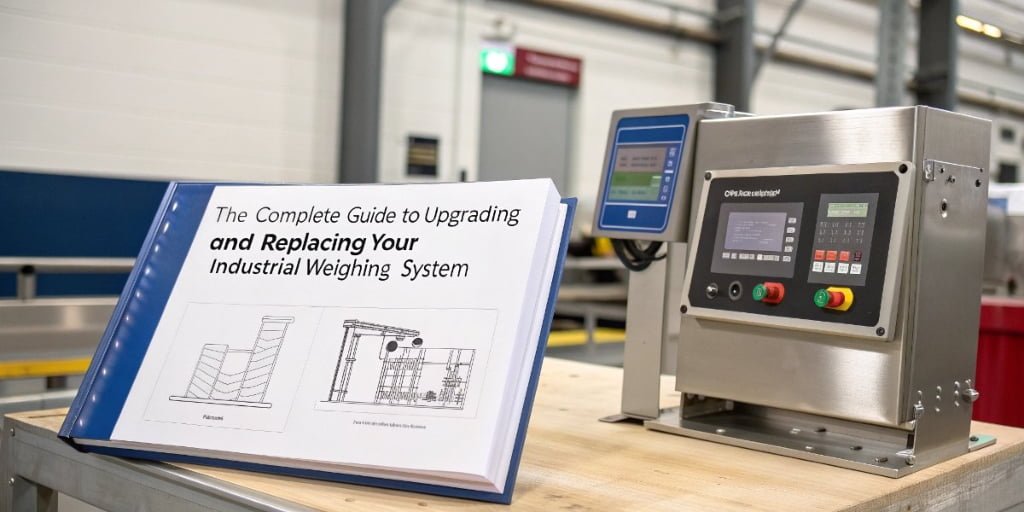
Your current weighing system is getting old, causing slow production and errors. These issues cost your business money and time. This guide makes upgrading simple and profitable.
You should upgrade when your system has frequent breakdowns, lacks modern data features, or gives inaccurate readings. A new system improves efficiency, reduces material loss, and connects with other factory software, boosting long-term profits.
Deciding to replace a core piece of equipment feels like a huge task. I've seen many clients hesitate, worried about the cost and disruption. But waiting too long often costs more in the long run. The real question isn't if you should upgrade, but how to do it smartly. Let's break down the process step-by-step so you can make the best decision for your business's future.
What are the key signs that it's time to upgrade your industrial weighing system?
You notice small issues with your scale, but they seem minor. However, these hidden problems add up, costing you in repairs and wasted product. Let's identify the clear signals.
Key signs include rising repair costs, frequent downtime, and inaccurate weights that lead to waste. If your system can't connect to modern software for data analysis, it's holding you back.
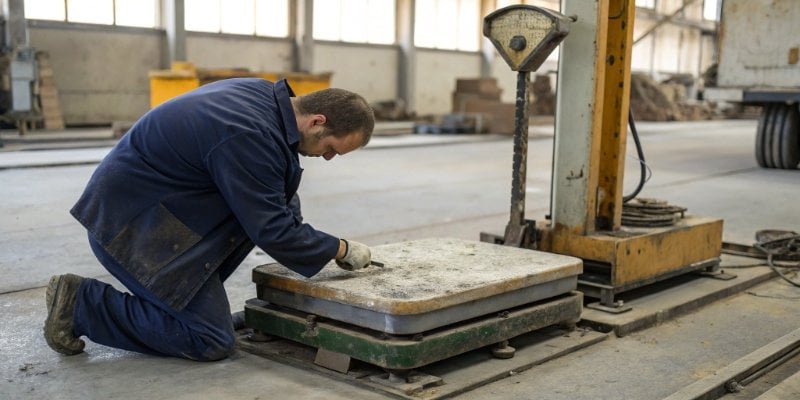
In my 18 years of experience, I've learned that weighing systems rarely fail overnight. They usually die a slow death, hurting your profits along the way. Recognizing the warning signs early is key to protecting your bottom line. We can separate these signs into two groups.
Tangible and Intangible Signs
Tangible signs are the obvious, physical problems you can see and measure. These are things like increased maintenance bills and production stops. Intangible signs are the hidden opportunity costs. For example, your old scale can't provide the data you need for process optimization, which means you can't get more efficient. A client of mine once discovered that small, daily inaccuracies on an old scale added up to tons of wasted material over a year. That's a huge loss that a new system could have prevented. It's not just about what the old system is costing you in repairs, but also what it's costing you in lost potential.
| Sign of an Old System | Benefit of a New System |
|---|---|
| Rising Repair Costs | Lower maintenance, covered by warranty |
| Frequent Downtime | Increased uptime and production throughput |
| Inaccurate Readings | Reduced material waste and chargebacks |
| No Data Connectivity | Seamless integration with ERP/MES systems |
| Compliance Issues | Meets current and future industry standards |
How can you calculate the return on investment (ROI) for a new weighing system?
A new weighing system has a significant price tag. Justifying the expense to your team can be tough. I'll show you how to calculate the ROI to prove its value.
To calculate ROI, add up the savings from reduced waste, faster production, and lower labor and repair costs. Then, subtract the new system's price. A positive result shows the investment pays for itself.
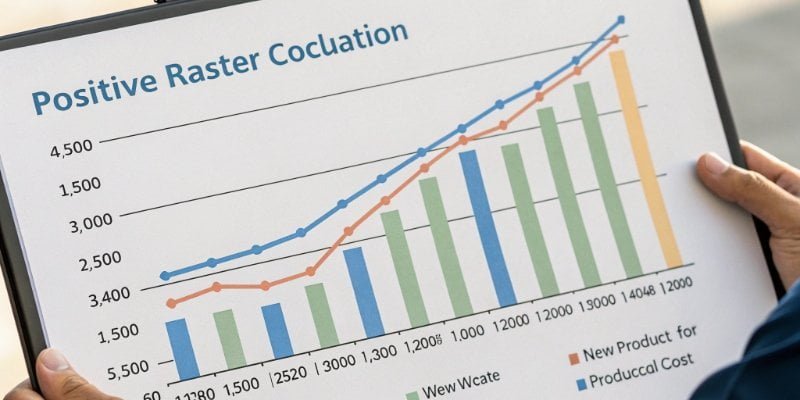
Thinking about a new weighing system purely as a cost is a mistake. It's an investment. The goal is to show your management team how this investment will deliver long-term benefits and financial returns. The key is to shift the conversation from "How much does it cost?" to "How much will it make or save us?"
Identifying Costs and Quantifying Gains
First, you need to list all the costs associated with the old system. This includes repair bills, the cost of downtime1 per hour, and the value of wasted materials due to inaccurate weighing. Next, you estimate the gains from a new system. This includes savings on maintenance, increased output from faster weighing cycles, and precise material usage. Once you have these numbers, the calculation is simple. This transforms the purchase from an expense into a strategic decision for growth.
| ROI Calculation Element | Example Value | Description |
|---|---|---|
| Cost of New System | -$50,000 | Total price including installation. |
| Annual Material Savings | +$15,000 | From eliminating measurement errors. |
| Annual Labor Savings | +$10,000 | Faster weighing frees up operator time. |
| Annual Maintenance Savings | +$5,000 | No more frequent repair bills. |
| Total Annual Gain | +$30,000 | The total value the new system generates. |
| Payback Period | 1.67 Years | The time it takes for the system to pay for itself. |
What steps are involved in planning a seamless transition to a new weighing system with minimal downtime?
The biggest fear when upgrading is shutting down your production line. Every minute of downtime costs money and delays orders. But with a clear plan, you can minimize disruption.
Plan the transition carefully. Prepare the installation site in advance, schedule the work during slow periods, and train your team before the new system arrives. Phased rollouts are essential to avoid delays.
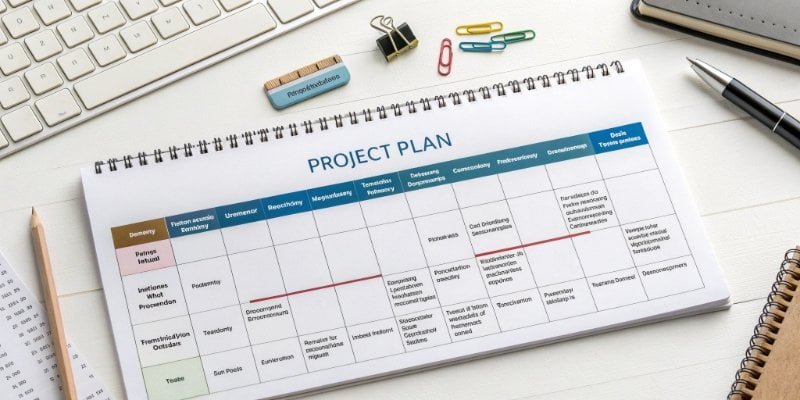
A successful upgrade is 90% planning and 10% execution. Over the years, our team at Weigherps has perfected a process to ensure our clients experience a smooth transition. We don't just sell you a scale; we partner with you to integrate it into your workflow without causing chaos. It comes down to a three-phase approach.
Phase 1: Pre-Installation Planning
This is the most critical phase. We work with you to understand your production schedule. We map out the physical site, check for power and data connections, and create a firm timeline. This is also when we coordinate with your IT team to plan for data integration.
Phase 2: Installation and Go-Live
We schedule the physical installation during a planned shutdown or a weekend to avoid interrupting your core business hours. Our technicians install the hardware, connect it to your network, and run a full suite of tests. We don't leave until the system is running perfectly.
Phase 3: Post-Installation Support
After installation, we stay on-site to train your operators. We make sure they are comfortable and confident with the new equipment. And our 12-month warranty and after-sales support mean we're always just a call away.
| Transition Checklist | Status |
|---|---|
| Site Survey Complete | ✅ |
| Installation Date Scheduled | ✅ |
| Staff Training Planned | ✅ |
| Data Integration Plan Ready | ✅ |
| Go-Live Testing Protocol | ✅ |
How do you choose a replacement weighing system that integrates with modern data management and automation?
You don't want to buy a new system that becomes obsolete in two years. A scale that cannot share data with your other software is a dead end. Here’s what to look for.
Look for systems with open APIs, Ethernet, and IoT capabilities. This ensures it can send weight data to your ERP, MES, and other business software. Prioritize vendors who offer customization for integration.
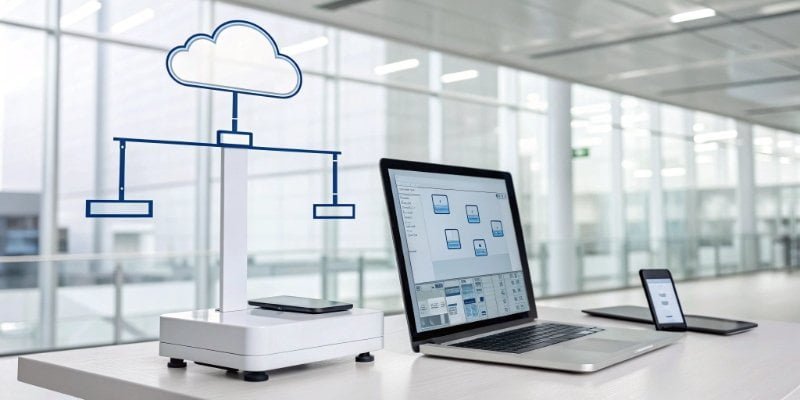
In today's smart factories, a weighing scale is no longer an isolated island. It's a critical data source. As a technical director or purchasing manager for a software company, you know that data is everything. The right weighing system should act as a reliable sensor that feeds accurate, real-time information into your larger digital ecosystem. This is where our expertise in IoT and custom systems becomes so valuable. We build our scales to communicate.
Key Integration Features to Demand
Your new scale must be a team player. It needs to speak the same language as your other systems. Look for standard communication protocols like TCP/IP, Ethernet/IP, or ProfiNet. Even better is a system with a modern REST API, which allows your software developers to easily pull data as needed. This flexibility is crucial for building custom dashboards, tracking inventory in real-time in your ERP, or triggering actions in your Manufacturing Execution System (MES).
Future-Proofing Your Investment
Think beyond today's needs. Choose a system that is ready for the future. This means cloud connectivity2 and edge computing capabilities. An IoT-enabled scale can send data directly to cloud platforms for advanced analytics, predictive maintenance, and AI-driven insights. It's about buying a system that not only solves today's problems but also gives you the foundation for tomorrow's innovations.
| Integration Feature | Why It's Important |
|---|---|
| Open API | Allows your developers to easily connect the scale to any software. |
| Ethernet/IP & ProfiNet | Standard industrial protocols for easy connection to PLCs. |
| IoT/Cloud Connectivity | Sends data to cloud services for advanced analytics and AI. |
| Software Support | The vendor provides tools (SDKs) and help for integration. |
Conclusion
Upgrading your weighing system is a strategic investment in efficiency and long-term growth. It's about optimizing production, reducing losses, and preparing your business for a data-driven future.


Comments (0)