
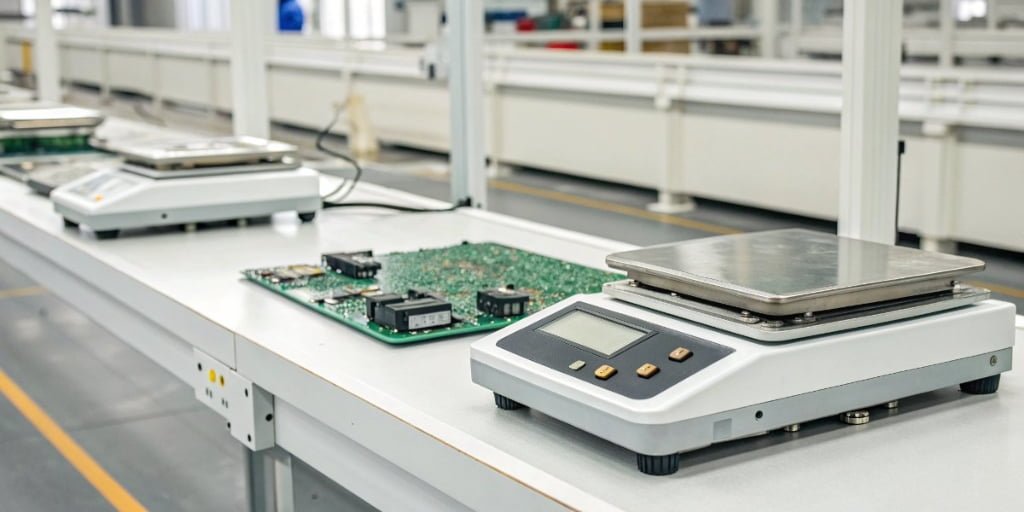
Your electronics have tiny components, and even a small weight difference can cause big failures. This can lead to costly recalls and damage your brand's reputation. Ultra-precision balances are essential for quality control.
Ultra-precision balances play a critical role in electronics manufacturing by ensuring every component meets exact weight specifications. This level of detail is vital for product consistency, functionality, and reliability, preventing defects and guaranteeing high-quality output on the production line. These balances are the foundation of modern quality control.
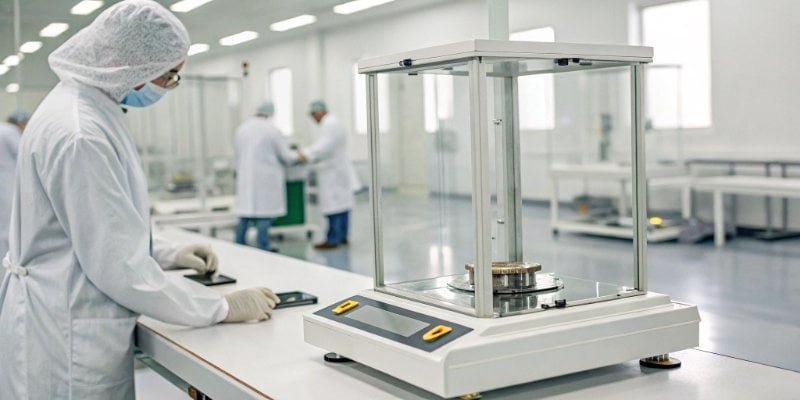
In my 18 years of manufacturing industrial scales, I’ve seen firsthand how the smallest details can have the biggest impact. We once had a client in the high-end audio sector who was experiencing inconsistent performance in their amplifiers. After months of investigation, they traced the issue back to a minuscule variation in the coating applied to a specific capacitor. The weight difference was almost undetectable without a high-precision balance. Once they integrated our ultra-precision balances into their quality control1 (QC) process, the problem vanished. This experience taught me a valuable lesson: in the world of electronics, precision isn't just a goal; it's a requirement. Let’s explore why this is so important.
What is the function of a precision balance?
You know you need precision, but what does a balance actually do? Without understanding its function, you might not use it correctly. A precision balance gives you exact weight measurements for quality.
A precision balance is a highly sensitive instrument designed to measure mass with exceptional accuracy. Its primary function is to provide repeatable and reliable weight readings, which are essential for tasks like material formulation, component verification, and ensuring products meet strict quality standards in manufacturing.
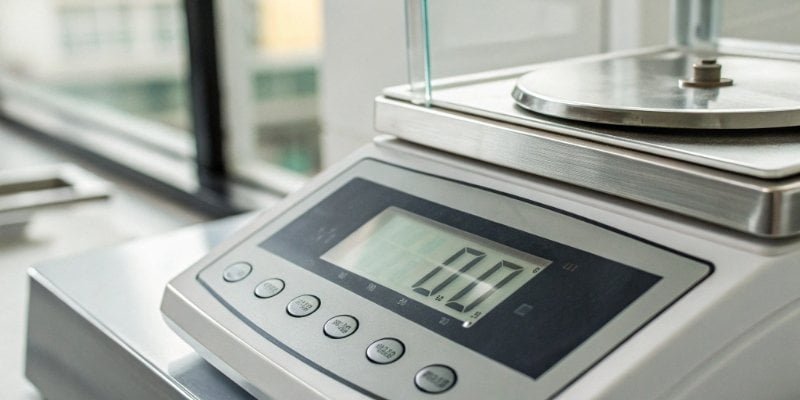
When we talk about electronics, we are often dealing with materials measured in micrograms or milligrams. A tiny deviation can completely alter an electronic component's performance. As a manufacturer, I know that if we can’t control the weight of our inputs, we can't guarantee the quality of our outputs. This is where the precision balance becomes the hero of the production line. It's not just about weighing things; it's about providing the confidence to move forward at each stage of production. From checking raw materials to the final product inspection2, the balance provides critical data that informs our entire quality control process.
The Core Jobs of a Precision Balance
A precision balance does more than just give a number. It performs several key roles in the electronics manufacturing process.
| Function | Description | Impact on Quality |
|---|---|---|
| Material Verification | Checks if incoming raw materials, like conductive pastes or semiconductor powders, meet the required weight specifications3. | Prevents defective materials from entering the production line, saving time and resources. |
| Formulation and Mixing | Measures precise amounts of different materials needed for creating components like resistors or coatings. | Ensures chemical and physical properties are consistent, leading to reliable component performance. |
| In-Process QC Checks | Weighs components or sub-assemblies at various stages to ensure nothing is missing or incorrect. | Catches errors early, reducing the cost of rework and minimizing waste. |
| Final Product Audit | Conducts a final weight check on the finished product to confirm all parts are included and correctly assembled. | Acts as a final safety net, guaranteeing the product shipped to the customer is complete and functional. |
What is the role of QC in manufacturing?
Many people see Quality Control (QC) as just a final inspection. This view can lead to catching mistakes too late, which causes a lot of waste. Understanding QC's full role helps you build quality checks into the entire process.
The role of QC in manufacturing is to implement a systematic process of checks and inspections to ensure products meet predefined standards. It focuses on identifying defects in products before they are shipped, protecting both the customer and the company's reputation for quality and reliability.
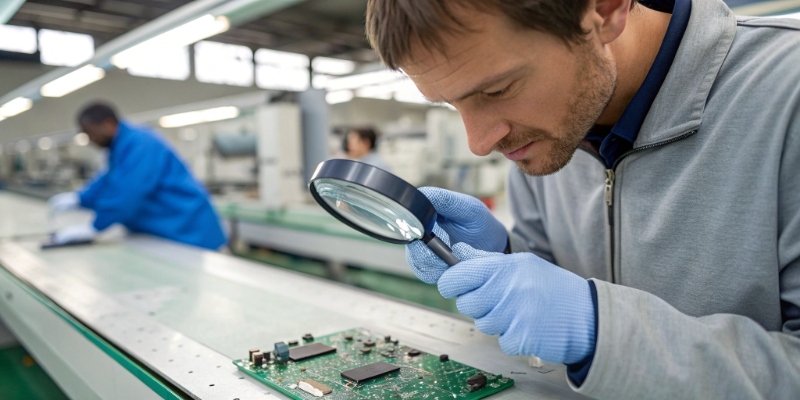
At our company, Weigherps, we live by the rule that quality cannot be inspected into a product; it has to be built in. QC is not just the final department that says "yes" or "no." It is a philosophy that must be present at every step. For example, our QC team works directly with the production and supply chain departments. They test all incoming materials before they even reach the assembly line. Every scale we produce goes through a series of tests for weight accuracy, battery life, and software stability. Only products that pass every single check are cleared for shipment. This comprehensive approach is how we ensure that our customers receive a reliable product4 every time. It’s about preventing problems, not just finding them.
Integrating QC Throughout Production
Effective QC is not a single event but a continuous cycle5. It starts before production begins and ends only after the customer is satisfied.
| QC Stage | Purpose | Example in Electronics |
|---|---|---|
| Pre-Production | To inspect raw materials and components from suppliers. | Using a precision balance to verify the weight of a shipment of microchips against the manufacturer's spec sheet. |
| In-Production | To monitor processes and catch deviations in real-time. | Periodically weighing circuit boards during assembly to ensure the correct amount of solder paste has been applied. |
| Post-Production | To inspect finished goods before they are sent to the customer. | Checking the final weight of a smartphone to ensure all components, including the battery, are present. |
| Feedback Loop | To analyze data from defects6 to improve future production runs. | If a certain batch shows weight anomalies, that data is used to adjust the dispensing machine on the assembly line. |
What is precision in quality control?
People often use the words "precision" and "accuracy" to mean the same thing. They are not. This confusion can create bad quality control systems that miss major problems. Understanding precision helps you get reliable results every time.
In quality control, precision refers to the repeatability and consistency of a measurement. It means getting the same result over and over when measuring the same item. High precision is crucial for a stable and predictable manufacturing process, as it indicates that the process itself is under control.
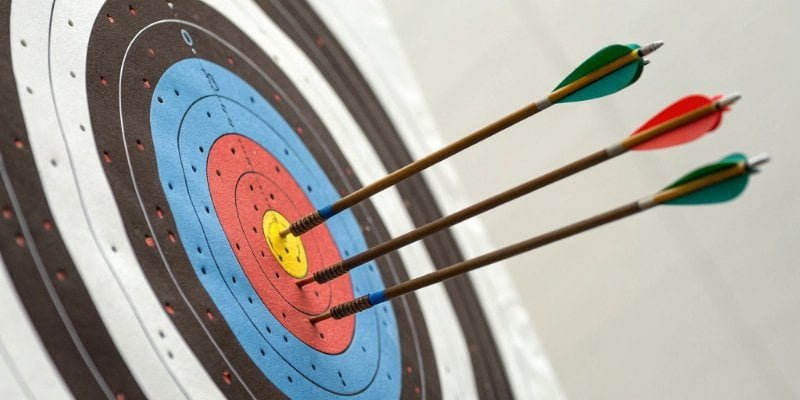
I often use a simple analogy to explain this to my team. Imagine you are shooting arrows at a target. If all your arrows hit the same spot on the outer ring, you are very precise, but you are not accurate. Accuracy would be hitting the bullseye. In manufacturing, sometimes precision is more important than accuracy. For example, if we are producing a tiny resistor, it’s more important that every single resistor has the exact same weight (high precision) than for them to match a theoretical perfect weight (high accuracy). This consistency allows engineers to design systems that work reliably. Ultra-precision balances7 are designed for exactly this—delivering the same result time after time, which gives us the process stability we need.
Precision vs. Accuracy in Weighing
Understanding the difference is key to effective quality control. It helps you choose the right tools and set the right standards for your production line.
- Accuracy: How close a measurement is to the true or accepted value. If a component is supposed to weigh 10mg, an accurate scale will read 10mg.
- Precision: How close multiple measurements of the same item are to each other. If you weigh the same 10mg component three times and get 10.2mg each time, your scale is precise but not accurate.
| Scenario | Measurement Results (True weight: 5.0g) | Analysis | Implication for QC |
|---|---|---|---|
| High Accuracy, Low Precision | 4.9g, 5.1g, 5.0g | The average is correct, but the results are spread out. | The process is unpredictable and unreliable. |
| Low Accuracy, High Precision | 5.2g, 5.2g, 5.2g | The results are consistent but wrong. | The process is stable but needs calibration. |
| High Accuracy, High Precision | 5.0g, 5.0g, 5.0g | The results are consistent and correct. | This is the ideal state for any manufacturing process. |
What are the 4 types of quality control?
Trying to set up QC can seem like a huge task. A one-size-fits-all plan often fails and lets bad products get through. Knowing the four main types helps you build a strong quality system.
The four fundamental types of quality control are process control, acceptance sampling, product inspection, and control charts. Together, these methods provide a comprehensive framework for monitoring quality at different stages, from raw materials to the final product, ensuring consistency and adherence to standards.

In our own factory, we use all four types of QC to build our industrial scales. It creates a multi-layered defense against defects. For instance, we use process control8 by having our automated systems constantly check the weight application during calibration. We use acceptance sampling9 on every batch of steel and load cells that arrive from our suppliers. Every single scale undergoes a final product inspection before it gets packed. And our quality department uses control charts10 to track performance data over months, which helps us spot trends and prevent potential issues before they even happen. This complete system is how we built our reputation for reliability over the past 18 years. It’s about being proactive, not reactive.
A Deeper Look at the 4 QC Types
Each type of quality control serves a specific purpose. Integrating them creates a robust system that catches errors at every step.
| QC Type | What It Does | Role of Precision Balance |
|---|---|---|
| 1. Process Control | Monitors the manufacturing process in real-time to ensure it stays within set limits. | A balance connected to the production line can weigh components as they are added, alerting operators immediately if a deviation occurs. |
| 2. Acceptance Sampling | Involves testing a random sample from a batch of incoming materials to decide whether to accept or reject the entire lot. | A lab technician uses a precision balance to verify that a sample of gold wire for bonding meets the micrograms-per-inch specification. |
| 3. Product Inspection | Examines the final product to find any defects before it is shipped to the customer. | A final QC check involves weighing a finished smartwatch to ensure no internal components are missing. |
| 4. Control Charts | Uses statistical methods to plot data over time, helping to identify trends and process instability. | Data from a balance weighing a specific component is plotted daily to ensure the dispensing machine remains consistent over thousands of cycles. |
Conclusion
Ultra-precision balances are essential for quality in electronics. They ensure consistency, prevent defects, and build trust. They are a core part of modern, efficient manufacturing and a truly reliable partner.
- Learn about the critical role of quality control in maintaining product standards and customer satisfaction. ↩
- Understand the critical role of product inspection in delivering defect-free products. ↩
- Understand the significance of adhering to weight specifications for product quality and performance. ↩
- Learn about the factors that contribute to product reliability and customer trust. ↩
- Learn about the continuous cycle of quality control and its role in manufacturing excellence. ↩
- Explore the common defects in electronics manufacturing and how to prevent them. ↩
- Explore how ultra-precision balances enhance quality control in manufacturing, ensuring product reliability. ↩
- Learn about process control and its importance in maintaining manufacturing standards. ↩
- Discover how acceptance sampling helps ensure quality in incoming materials. ↩
- Explore how control charts help monitor quality and identify trends in manufacturing processes. ↩



Comments (0)