
You see a low price on a scale and think it's a great deal. But hidden costs and future problems might be lurking. It's smart to know the real price.
The true cost of a cheap scale isn't the purchase price. It's the money you lose from inaccurate measurements, frequent downtime for repairs, and the need for early replacement. These hidden expenses often make a quality scale the more economical choice in the long run.
That initial low price tag is tempting. I've seen it many times in my 19 years in this industry. A purchasing manager tries to save a little on the budget, and it seems like a win. But what we often forget to ask is what that low price is costing us in other areas. The real story of a scale's value isn't told on the day you buy it, but over the years of its service. Let's explore what really happens when you choose price over performance.
What are the long-term implications of using an inexpensive scale?
A cheap scale seems like a smart purchase today. But over time, small errors add up, costing your business much more. You need to see the full picture.
In the long term, a cheap scale leads to wasted materials from overfilling, angry customers from inconsistent products, and potential fines for not meeting regulations. You will also face higher repair costs and the need to buy a new scale sooner, hurting your bottom line.
When we talk about long-term costs, we're not just talking about the scale breaking down. The problems are often quieter and harder to spot until real damage is done. Over the years, I have seen clients deal with three major issues that stem directly from trying to save money on a basic piece of equipment.
The Financial Drain of Small Mistakes
Imagine you are packaging coffee. If your cheap scale is off by just two grams, and you sell 1,000 bags a day, you're giving away two kilograms of coffee for free every single day. That doesn't sound like much, but it adds up to over 700 kilograms a year. This is a direct loss of profit caused by a scale that can't hold its accuracy. This kind of waste happens in every industry, from mixing chemicals to counting small parts.
The High Cost of a Bad Reputation
Your customers expect consistency. If they buy a product from you that is supposed to weigh 500 grams, they don't want to get 490 grams one day and 510 the next. Inconsistent weights make your brand look unprofessional and untrustworthy. This leads to customer complaints, costly returns, and, worst of all, customers who decide to buy from your competitor instead. A good reputation is hard to build and very easy to lose.
The Risk of Breaking the Rules
Many industries have strict rules about weights and measures. If you sell products by weight, you are legally required to be accurate. A government inspector can check your scales at any time. If they find your scales are inaccurate, you could face large fines and be forced to stop selling your product until the issue is fixed. The initial savings from a cheap scale are nothing compared to the cost of these penalties.
How to assess the accuracy of a budget scale and decide when it’s time for an upgrade?
Your scale gives you a number, but can you trust it? Inaccurate data could be quietly costing your business money. It's important to know how to check your scale.
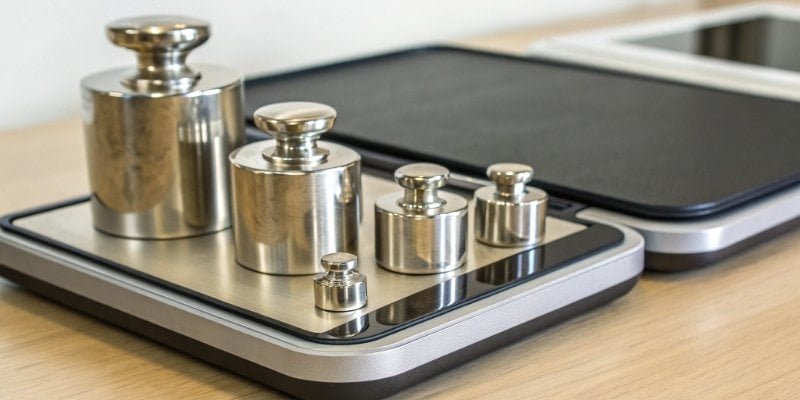
You can check your scale's accuracy with certified calibration weights. Look for consistency when you weigh the same item multiple times. If the readings wander, or if the scale fails a calibration test, it's time to upgrade, especially if your product quality depends on precision.
You don't need to be a weighing expert to see if your scale is still doing its job. A few simple tests can tell you everything you need to know. At our company, we tell our clients to watch for clear signs that their equipment is becoming a liability instead of an asset. It’s all about knowing what to look for and when to act.
The Basic Accuracy Check
The easiest way to test your scale is with a weight you know is accurate. These are called calibration weights. Place a certified 1kg weight on the scale. Does it read 1.000kg? Now try it in different corners of the platform. The reading should stay the same. If it changes, your load cell1 is likely wearing out. I've created a simple table to help you spot problems.
| Test Type | What to Look For | Red Flag for an Upgrade |
|---|---|---|
| Repeatability | Weigh the same object 10 times. | The reading changes by more than a tiny amount. |
| Linearity | Check accuracy with light, medium, and heavy weights. | The scale is accurate with light weights but wrong with heavy ones. |
| Corner Load | Place a weight on each corner of the platform. | The reading is different depending on the corner. |
The Obvious Signs of Failure
Besides a formal test, a scale will often tell you when it's getting old. Does the display flicker? Does it take a long time for the numbers to settle? Do you have to re-calibrate it more and more often? These are all signs that the internal components are failing. Ignoring them is like ignoring the check engine light in your car. Sooner or later, you're going to break down, probably at the worst possible time. An upgrade is needed when these signs appear.
What factors determine the durability and performance of affordable scales?
Two scales can look the same but have very different prices. How can you be sure which one will last and perform well? You need to look under the surface.
Durability comes from the quality of the internal load cell and the materials used, like a steel frame instead of plastic. Performance is driven by the internal electronics, which control speed, stability, and the ability to connect to other computer systems for data transfer.
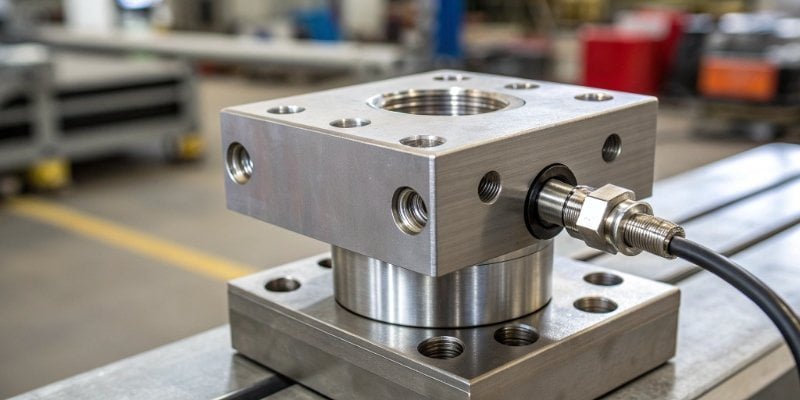
When you look at a scale, you mostly see the platform and the display. But the parts that really matter are hidden inside. From my experience building scales, I can tell you that the difference between a one-year scale and a ten-year scale comes down to a few key parts.
The Heart of the Scale: The Load Cell
The load cell is the sensor that actually measures the weight. It's the most important, and often most expensive, part of a scale. In cheap scales, manufacturers use low-grade load cells made from cheaper materials. These are easily affected by changes in temperature and humidity, which causes the readings to drift. They also wear out much faster under heavy use. A high-quality load cell is engineered to resist these environmental factors and provide stable, accurate readings for years.
The Body of the Scale: Build Quality
Think about your work environment. Is it wet, dusty, or busy? A scale with a cheap plastic body might be fine in an office, but it won't last long on a factory floor. We build our industrial scales with stainless steel because it's tough and easy to clean. You should also look for an IP rating, which tells you how well the scale is protected from dust and water. Better build quality2 means a longer life and fewer repairs.
The Brains of the Scale: Electronics and Software
This is especially critical for our clients who are software vendors. You need a scale that can communicate with your systems. Cheap scales often have very basic electronics. They might not have the connections you need, like an RS-232 port or Ethernet, to send data to a computer or a network. Good scales have better electronics that provide fast, stable readings and offer multiple ways to connect and integrate the weight data into your software, which is essential for automation and quality control.
When should you consider investing in a higher-quality scale for better accuracy?
A better scale has a higher upfront cost. Is that extra investment really worth it for your business? The answer is yes when the cost of a mistake is high.
You should invest in a quality scale when your product's value depends on precise measurements, like in chemical mixing or packaging expensive goods. It's also necessary when you need to automate your process by connecting the scale to your software for tracking and quality control.
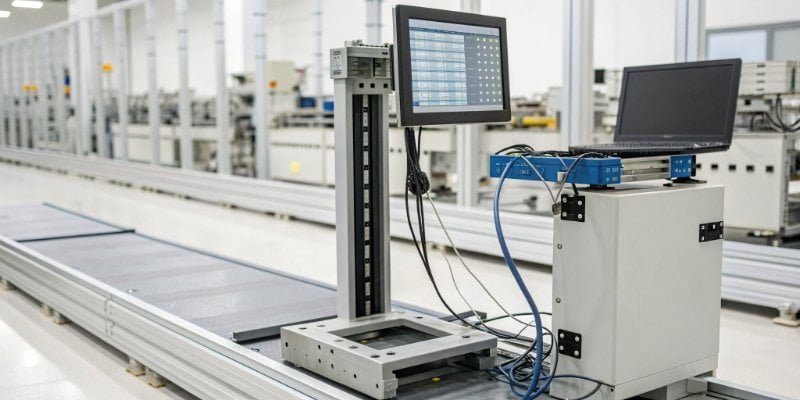
Moving from a budget scale to a high-quality one is a strategic business decision. It's not just about getting a better piece of hardware; it's about improving your entire operation. There are specific moments in a company's life when this upgrade becomes absolutely necessary for growth and stability.
When Your Product Demands Precision
If you are mixing ingredients for pharmaceuticals or blending expensive chemicals, a tiny error in weight can ruin an entire batch. The cost of that lost product is far greater than the cost of a precision scale. The same is true if you are selling a high-value product by weight, like rare spices or precious metals. The more valuable your material is, the more important accuracy becomes. In these cases, a cheap scale is too big a risk.
When You Need to Connect and Automate
For my clients in the software world, this is the biggest reason to upgrade. You can't build a smart factory or an efficient warehouse with dumb equipment. If you need to track every item, manage inventory in real-time, or ensure quality control through data, you need scales that can talk to your systems. A quality scale3 with good connectivity options is a must. It lets you eliminate human error from manual data entry and creates a seamless flow of information that makes your entire operation smarter and more efficient.
When Your Business is Growing
What worked when you were a small startup will not work when you become a bigger company. As your production volume increases, any small inefficiency or inaccuracy gets magnified. A scale that was "good enough" when you made 100 units a day becomes a major bottleneck when you need to make 1,000. Investing in better, more reliable weighing equipment is a key part of scaling your business for future growth. It provides the solid, reliable foundation you need to expand.
Conclusion
A cheap scale can seem like a good deal at first. But a quality scale will save your business money over time by ensuring accuracy, reliability, and long-term performance.



Comments (0)