
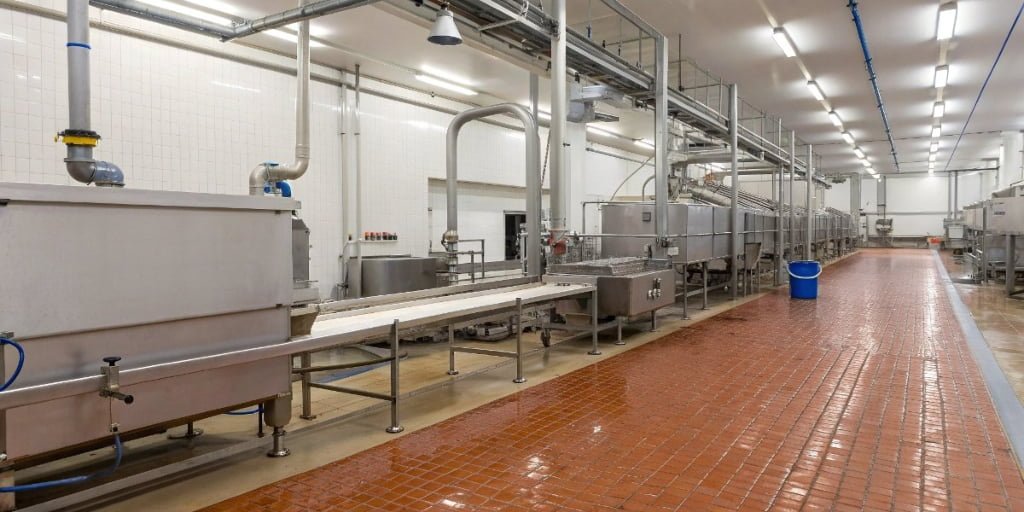
Your scales keep failing in your wet, corrosive plant, and the downtime is eating your profits. Choosing the right washdown scale can solve these constant, expensive headaches.
A scale built for food processing needs a high IP rating, like IP68/IP69K, a hygienic design to prevent contamination, and corrosion-resistant materials like 316 stainless steel. These features ensure longevity and safety in harsh, daily washdown environments, protecting your investment.

It seems simple enough to just buy a "waterproof" scale. But in my 18 years in this industry, I've seen too many clients choose the wrong one and pay the price with constant failures and production stops. There's more to it than just keeping water out. Let's break down what you really need to look for, so you don't make the same costly mistake. We'll go through the key questions you should be asking your supplier.
What IP rating is necessary for a scale in a food processing washdown environment?
Are you confused by all the IP ratings like IP67, IP68, and IP69K? Choosing the wrong one can mean your scale fails from a simple daily cleaning.
For general washdowns, IP67 might be enough. But for high-pressure, high-temperature cleaning, you need IP69K. We typically recommend an IP68 or IP69K rated scale for food plants to ensure maximum protection and peace of mind against daily water exposure.

Let's dive deeper into what these numbers actually mean for your operations. The IP (Ingress Protection) rating is a standard that tells you how well a device is sealed against dust and water. The first digit is for solids (dust), and the second is for liquids (water). In a food plant, we are mostly concerned with the second digit.
I often simplify it for my clients like this: a high rating means the difference between being able to be rinsed and being able to be submerged. An IP67-rated scale can be submerged in up to 1 meter of water for 30 minutes. This is good, but is it enough? Think about your cleaning routine. You likely use high-pressure hoses. That's where IP69K1 comes in. It's the highest rating and protects against powerful, high-temperature water jets. This is the gold standard for food safety sanitation.
IP Rating Comparison for Washdown
| IP Rating | Protection Against Water | Common Application in Food Plants |
|---|---|---|
| IP67 | Submersion up to 1m for 30 mins | Light washdown areas, occasional splashing |
| IP682 | Continuous submersion (depth specified by manufacturer) | Wet environments, heavy rinsing, seafood processing3 |
| IP69K | High-pressure, high-temperature spray-downs | Aggressive sanitation, sterile environments |
At Weigherps, we almost always guide our food processing clients toward IP68 or IP69K. A client in the poultry industry once tried to save money with IP67 scales. Their intense daily cleanup routine caused half of them to fail within six months. Upgrading to IP69K solved the problem permanently.
How does the hygienic design of a scale prevent cross-contamination and bacteria buildup?
Unseen bacteria can hide in your scale's tiny nooks and crannies. This creates a huge risk for product recalls and can seriously damage your brand's reputation.
A hygienic design eliminates crevices, sharp corners, and exposed threads where bacteria love to grow. It uses smooth surfaces, rounded edges, and sealed enclosures. This design ensures your scale can be cleaned effectively and quickly, supporting your food safety standards.

A truly hygienic scale is designed from the ground up to be cleaned. It's not just about using stainless steel. It’s about the shape and construction of every single part. The goal is to leave no hiding places for food particles or bacteria. I once visited a customer who was failing their food safety audits. The problem was their scales, which had exposed screw threads and sharp internal corners that their cleaning crews just couldn't get to.
Here are the features we focus on when building a hygienic scale.
Key Features of a Hygienic Design
- Smooth, Polished Surfaces: Surfaces, especially food-contact zones, should be free of pits and cracks. A polished finish makes it harder for bacteria to stick and easier to wash away.
- Rounded Corners and Edges: Sharp 90-degree angles are almost impossible to clean properly. Gently curved junctions prevent dirt from getting trapped.
- Sloped Surfaces: Any flat surface on a scale is a place where water can pool, creating a breeding ground for microbes. We design our scales to drain water away completely.
- Fully Sealed Enclosures: The indicator and platform should be completely sealed, with no gaps or seams. We avoid exposed threads by using special hygienic feet and hardware.
By focusing on these design principles, we help our clients meet strict HACCP4 and food safety regulations, ensuring their equipment is an asset, not a liability.
Why is 316 stainless steel often recommended over 304 for corrosive food plant applications?
You might think all stainless steel is basically the same. But salty brines or acidic cleaners could be slowly eating away at your 304 steel scales without you noticing.
316 stainless steel contains an element called molybdenum, which makes it much more resistant to corrosion from chlorides (like salt) and acids. While 304 is fine for general use, 316 is critical for environments like seafood processing or where harsh chemical sanitizers are used.

This is where my insight about waterproofing and anti-corrosion comes in. In a humid environment, they seem like the same problem. But when you add chemicals or salt, it's a different story. For seafood processing, chemical handling, or even some dairy applications, preventing corrosion is not just about keeping water out. You need a material that can stand up to chemical attack.
A few years ago, we worked with a large seafood processor. They were buying 304 stainless steel floor scales, and the frames were rusting and pitting within a single year because of the constant exposure to saltwater. This wasn't just ugly; it created rough surfaces where bacteria could hide. We made them custom floor scales using 316L stainless steel. Five years later, those scales still look almost new. The initial cost was slightly higher, but they have saved thousands in replacement costs and reduced their food safety risks.
304 vs. 316 Stainless Steel
| Feature | 304 Stainless Steel | 316 Stainless Steel |
|---|---|---|
| Key Alloy | Chromium, Nickel | Chromium, Nickel, Molybdenum |
| Corrosion Resistance | Good for general atmospheric corrosion | Excellent against chlorides (salt), acids |
| Best For | General food handling, dry processing | Seafood, cheese, tomato processing, chemical washdowns |
| Cost | Lower | Higher (approx. 20-30% more) |
Choosing the right material from the start saves you a massive headache down the road.
Beyond material, what features protect a scale's load cells and electronics from water damage?
Your stainless steel scale frame looks perfect, but the electronics inside keep failing. This leads to frustrating downtime, inaccurate readings, and expensive service calls.
Key protective features include hermetically sealed load cells, potted electronics, and waterproof cable glands. These create multiple, redundant barriers to stop moisture from ever reaching the critical weighing sensors and display circuits, which are the brains of the scale.

As a manufacturer, we know that a scale is only as strong as its weakest link. A perfect 316 stainless steel5 frame is useless if the sensitive electronics inside get wet. The load cell is the heart of the scale; it's what actually measures the weight. The indicator is the brain. Both must be protected.
We build protection in layers. Here are the most important internal defenses we engineer into our washdown scales.
Hermetically Sealed Load Cells
This is the ultimate protection for the most vital component. A hermetically sealed load cell is made of stainless steel and is welded completely shut. This creates an impermeable barrier against moisture. It's far superior to "environmentally sealed" load cells6, which often just use gaskets or glue that can degrade over time with exposure to chemicals and temperature changes.
Potted Electronics
Inside the indicator, the main circuit board is vulnerable. We use a technique called "potting," where we encase the entire board in a solid block of epoxy or resin. This makes it a solid, waterproof brick. Even if moisture were to somehow get inside the housing, it couldn't touch the electronic components. It also adds great protection against vibrations.
Waterproof Connectors and Glands
The single most common point of failure I see on competitors' scales is where the cable enters the indicator or the platform. It’s a natural weak spot. We use special IP68-rated cable glands that tighten around the cable, creating a compression seal that water cannot get through. This prevents water from wicking down the cable and into the electronics.
Conclusion
Investing in the right washdown scale with a high IP rating, hygienic design, 316 steel, and internal protections is critical. It protects your product, your process, and your profits.
-
Find out why IP69K is the gold standard for high-pressure cleaning in food plants. ↩
-
Explore the significance of IP68 ratings for ensuring scale longevity in wet environments. ↩
-
Understanding these challenges can help you choose the right equipment for your needs. ↩
-
Understanding HACCP is vital for maintaining food safety and preventing recalls. ↩
-
Discover the benefits of 316 stainless steel for durability and corrosion resistance. ↩
-
Understanding load cells is crucial for ensuring accurate weight measurements in scales. ↩

Comments (0)