
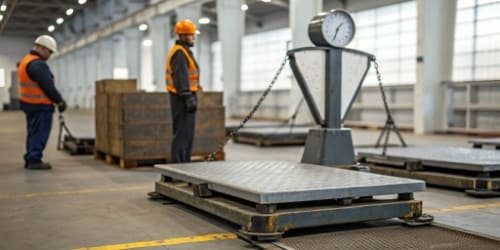
Wrestling with production waste and inconsistent quality? These issues drain profits and risk non-compliance. Industrial scales are the key to precise control and consistent output, securing your bottom line.
Industrial scales are essential weighing devices used across various industries for everything from quality control and inventory management to batching raw materials and ensuring shipping compliance. They ensure accuracy and efficiency in production processes, turning simple weight data into valuable business intelligence.
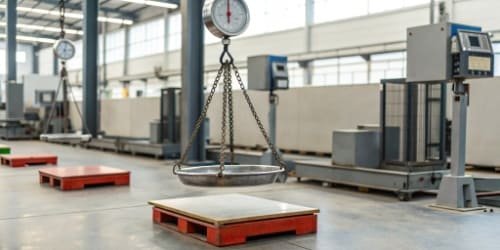
Now that you know their basic purpose, you might be surprised by just how widespread their use is. As someone who has spent nearly two decades in this business, I've seen firsthand how these tools transform operations. It's more than just weighing; it's about making your entire process smarter. Let's explore the specific applications and see how they can revolutionize your workflow.
What Are the Common Applications of Industrial Scales?
Unsure how to use weighing to boost your business? This uncertainty can mean missing key efficiency opportunities. Let's look at common applications that directly translate into operational value for you.
Industrial scales are commonly used for receiving raw materials, controlling portions in batching and formulation, monitoring production output, performing quality control checks, managing inventory, and verifying package weights for shipping and compliance. These applications span the entire production line from start to finish.
From Raw Materials to Finished Goods
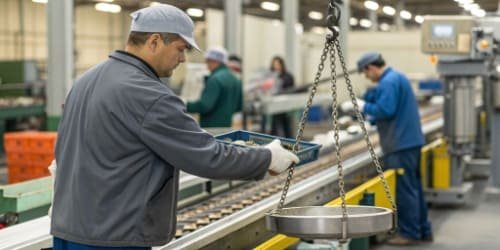
In my 19 years of manufacturing industrial scales, I’ve learned that a scale’s true value is its role in the entire production journey. It starts when raw materials arrive. A floor scale or pallet scale verifies that you received the exact amount you paid for, preventing supplier shortages from becoming your problem. During production, bench scales or hopper scales ensure every ingredient in a batch is measured perfectly. This is critical for consistency. Finally, a checkweigher or shipping scale confirms the final product weight before it goes to the customer. Each step relies on accurate data. The scale is not just a tool; it's a gatekeeper for quality and cost control throughout your entire process. This process is where customized software1 becomes essential, tracking each weigh-in and integrating that data into your management systems.
How Do Industrial scales Impact Manufacturing Processes?
Struggling with hidden inefficiencies in your manufacturing line? These small problems add up to big losses over time. Industrial scales provide the clear data you need to tighten processes and boost profitability.
Industrial scales directly impact manufacturing by improving material management, ensuring consistent product quality, reducing waste, and increasing overall efficiency. They provide precise data that allows for better process control and automation, leading to significant cost savings and higher output for your business.
Turning Data into Action
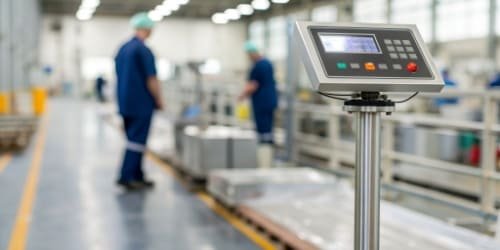
A scale on its own just gives you a number. The real impact comes when that number is used to make decisions. This is where modern industrial scales, especially IoT-enabled ones, make a huge difference. Think about a connected scale in a food processing2 plant. It can automatically stop a filler once a package reaches its target weight, eliminating overfilling and saving product. If a part on a manufacturing line is weighed and found to be too light, the system can automatically flag it for inspection. This prevents a defective product from ever reaching the customer.
As a provider of weighing solutions to software vendors, we focus on this integration. Our scales are designed to be the reliable hardware foundation for smart systems3. They provide a steady stream of accurate data, which your software can then use to create dashboards, generate reports, and automate actions. This partnership turns a simple weighing process into a powerful data-driven control system4.
What Types of Industries Rely on Industrial Scales for Accuracy?
Think industrial scales are only relevant to heavy manufacturing? This common assumption might prevent you from discovering a key tool for growth and efficiency, no matter what your sector is.
Nearly every industry relies on industrial scales, including manufacturing, logistics and shipping, agriculture, food and beverage, pharmaceuticals, and chemical processing. Accuracy is critical in all these fields for safety, compliance, and profitability, making scales an indispensable tool for success.

Custom Solutions for Diverse Needs
Over the years, we've built scales for almost every environment imaginable. Each industry has unique challenges, which means they need more than a one-size-fits-all solution. The hardware itself must be customized. A scale for a seafood processor needs to be made of stainless steel and have a high IP rating, like IP68, so it can be washed down with high-pressure jets. On the other hand, a scale used in a chemical plant might need to be explosion-proof (ATEX certified) to operate safely in a hazardous environment. This customization is key to performance and longevity.
Here is a simple breakdown of how different industries require different features:
| Industry | Common Scale Type | Key Requirement |
|---|---|---|
| Food & Beverage | Washdown Bench Scale | Hygiene, Water Resistance (IP68/IP69K) |
| Pharmaceutical | High-Precision Lab Balance | Extreme Accuracy, Data Integrity |
| Logistics & Shipping | Floor Scale, Pallet Jack Scale | High Capacity, Durability |
| Chemical Processing | Explosion-Proof (ATEX) Scale | Intrinsic Safety, Material Resistance |
This is where our OEM/ODM experience becomes your advantage. We engineer the hardware to meet these specific market demands.
What Are Key Features of Effective Industrial Scales?
Overwhelmed by the options when choosing an industrial scale? A wrong choice can mean costly errors, operational downtime, and a wasted investment that fails to deliver the data you need.
Effective industrial scales must have high accuracy and repeatability, a durable construction suited to their environment (e.g., stainless steel), and a clear, easy-to-use display. Critically, they also need robust connectivity options for seamless integration with software systems like ERP and MES.
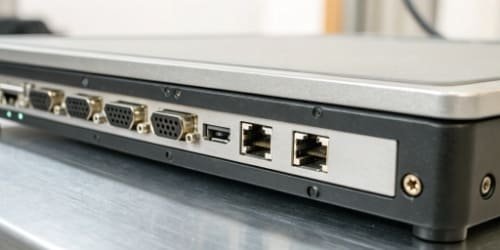
Hardware Fundamentals and Smart Connectivity
When choosing a scale, you first need to look at the hardware. Accuracy tells you how close a measurement is to the true value, while durability ensures the scale can withstand your work environment. For example, an IP rating indicates its resistance to dust and water.
However, the most critical feature for modern businesses—especially for our software vendor clients—is connectivity. The true power of a scale is unlocked when it can talk to other systems. That's why we build our scales with a range of communication ports like RS-232, USB, and Ethernet. Many of our newer models also include wireless options like Wi-Fi and Bluetooth. These connections allow the scale to send weight data directly to a plant's control system (PLC), a company's enterprise resource planning (ERP) software, or even a cloud platform for remote monitoring. This seamless data flow is what enables true automation and business intelligence. We provide the stable hardware so you can build powerful software solutions on top.
Conclusion
Industrial scales are more than just weighing tools; they are vital data points. They drive efficiency, quality, and profitability across countless industries through precise measurement and smart system integration.
-
Discover how tailored software solutions can optimize industrial processes. ↩
-
Understand the unique challenges in food processing and effective solutions. ↩
-
Learn how smart systems can transform manufacturing operations through automation. ↩
-
Explore how data-driven systems can revolutionize manufacturing processes and decision-making. ↩



[…] other modern IT device. They speak the same language as your software. For your team, this means integration8 is faster and more reliable. You can use a common API to pull data, instead of writing custom […]