

Confused by technical terms like resolution and accuracy on a scale's spec sheet? This confusion can lead to buying the wrong equipment, resulting in costly measurement errors for your business.
Resolution is the smallest weight change a scale can detect and display, like 0.1g. Accuracy is how close the scale's measurement is to the item's true weight, often shown as an error range like ±0.1g. A scale can have high resolution but low accuracy.
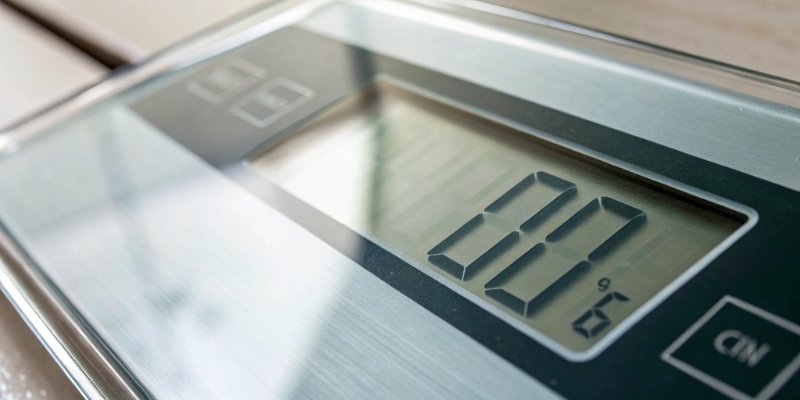
It's a common problem. You're looking at two scales, and one seems much more precise because it shows more decimal places. But does that really mean it's better for your needs? Maybe not. I've spent nearly two decades in the industrial scale1 business, and I've seen countless clients mix up these two critical specifications. This can be a very expensive mistake. Getting this right is the first step toward reliable weighing, which impacts everything from product quality to shipping costs. In this post, I'll break down what these terms really mean for you and your operations. Let's make sure you get the right tool for the job.
Which is more important for reliable measurements: a scale's accuracy or its resolution?
You have to choose between a scale with amazing resolution and one praised for its accuracy. Picking the wrong priority can disrupt your entire process, from production to shipping. The answer isn't always simple, but one is generally more critical.
For reliable measurements, accuracy is more important than resolution. A scale can show tiny weight changes (high resolution) but still be consistently wrong (low accuracy). Accuracy confirms the measurement is close to the true value, which is essential for almost all professional applications.
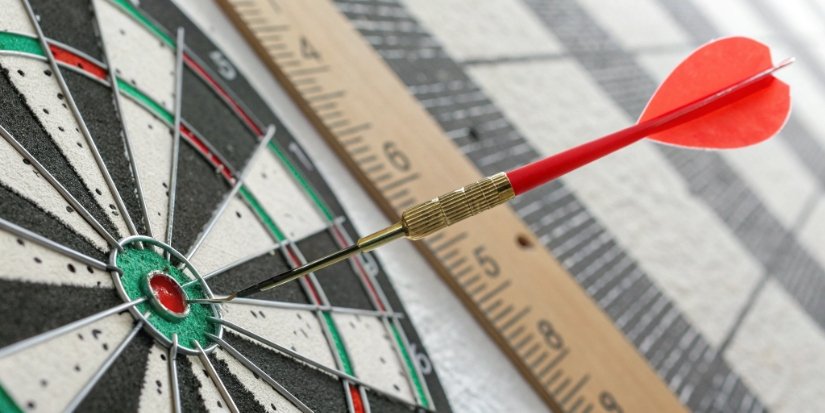
Think of it this way. Accuracy2 is about getting the right answer. Resolution is about how detailed that answer is. If you need to measure a 10kg part, an accurate scale will read very close to 10kg. It might read 10.01kg or 9.99kg. An inaccurate scale might read 10.5kg every single time. It might be very repeatable, but it's wrong. Now, imagine that inaccurate scale also has high resolution3. It might read 10.503kg. The extra decimal places look impressive, but they are just giving you a more detailed wrong answer. For any process where the final weight matters—like trade, chemical mixing, or quality control—accuracy is your foundation. We build our scales to meet international accuracy standards like OIML4 because we know our clients depend on reliable, correct results. High resolution is a great feature, but only when it's built on a foundation of high accuracy.
Can a scale have high resolution but still be inaccurate?
It is very tempting to believe a scale that measures to tiny decimal places must be correct. But making this assumption is a risk. You could end up trusting precise-looking measurements that are actually wrong, leading to big problems in your products or inventory.
Yes, a scale can absolutely have high resolution but be inaccurate. High resolution means it can display very small increments, like 0.001g. But if it isn't calibrated correctly or has an internal flaw, it could be consistently off, showing a weight that is always wrong.

This happens more often than you might think. A scale's accuracy can be affected by many things. For example, temperature changes in a factory, vibrations from other machinery, or just normal wear and tear can throw off its calibration. The scale's display might still show you a weight down to the milligram (high resolution), but the starting point of its measurement is wrong. It has a systematic error.
Here is a simple table to show what I mean:
| True Weight | High-Resolution, Inaccurate Scale | High-Accuracy, Lower-Resolution Scale |
|---|---|---|
| 100.00g | 100.523g | 100.0g |
| 101.00g | 101.524g | 101.0g |
| 102.00g | 102.522g | 102.0g |
As you can see, the high-resolution scale can detect very small changes, but its results are always about 0.5g too high. The accurate scale gives you the correct weight every time, even if it has fewer decimal places. In my experience, this is a classic mistake. A client buys a scale with impressive resolution but doesn't consider if it's durable enough for their industrial environment. The result is precise but useless data.
How do you use a scale's specifications to determine its real-world accuracy?
Scale data sheets are often full of technical terms that can be hard to understand. If you can't translate those numbers into how the scale will perform in your factory, you're essentially guessing. You need to look beyond the marketing claims and dive into the specs.
To find a scale's real-world accuracy, look for specifications like its accuracy class (e.g., OIML Class III), linearity, and repeatability. Linearity tells you how accurate it is across its full capacity. Repeatability tells you if it gives the same result every time you weigh the same object.
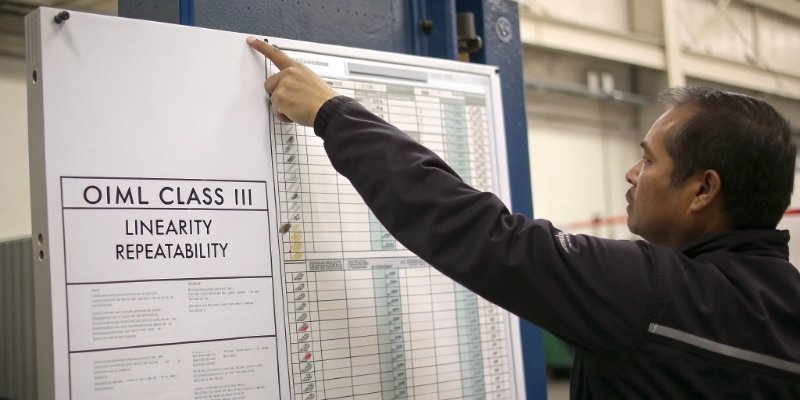
When we create a data sheet for one of our scales, we include several key metrics that paint a full picture of its performance. As a purchasing manager or technical director, these are the terms you should focus on.
Key Accuracy Indicators
- Accuracy Class: Look for certifications like OIML or NTEP. These are international standards that group scales into classes based on their performance. For example, a Class III scale is approved for general commercial trade. This certification is an independent guarantee of a certain level of accuracy.
- Linearity: A scale might be very accurate when weighing 1kg but less accurate when weighing 50kg. The linearity5 specification, often written as a ± value (e.g., ±2g), tells you the maximum error you can expect across the scale's entire weighing range. A smaller number is better.
- Repeatability: This measures consistency. If you weigh the same object 10 times, how much do the readings vary? Poor repeatability6 means the scale is unreliable, even if its readings average out to the correct weight. High repeatability is crucial for process control.
Don't just look at the resolution. Ask the manufacturer for the full data sheet and look for these three numbers. They will give you a much better understanding of the scale's true, real-world accuracy.
What are some practical examples that illustrate the difference between scale accuracy and resolution?
These ideas about accuracy and resolution can feel a bit theoretical. Without seeing them in a real-world context, it can be hard to use this knowledge when you need to make an important purchase for your company. Let's look at two common scenarios.
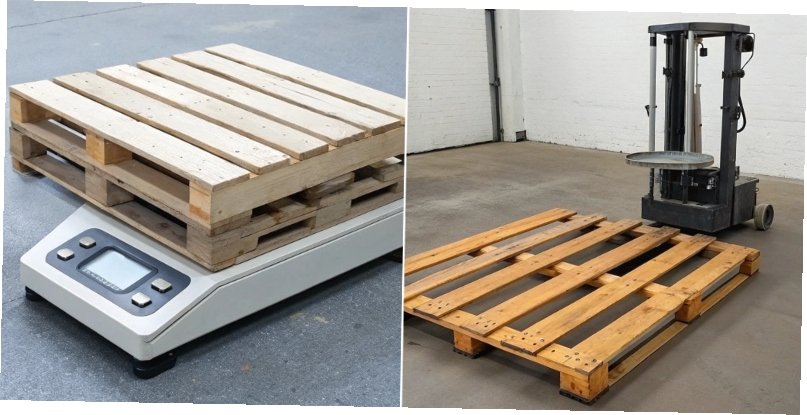
Think about a chemistry lab versus a shipping warehouse. The lab needs high resolution (0.001g) to measure tiny amounts of chemicals and high accuracy (±0.001g) to ensure the formula is perfect. The warehouse needs lower resolution (0.1kg) for large pallets but still demands high accuracy to prevent costly shipping errors.
The right balance of resolution and accuracy depends entirely on the job. A scale that is perfect for one task can be completely wrong for another. As a manufacturer for global brands, we create different scales for different jobs, and we always help our clients understand which specs matter for them.
Here is a table showing two different applications:
| Application | Required Resolution | Required Accuracy | Why It Matters |
|---|---|---|---|
| Laboratory Formulas | Very High (0.001g) | Very High (±0.001g) | You need to see tiny additions (resolution) and trust the final total (accuracy). |
| Warehouse Shipping | Low (0.1kg) | High (±0.1kg) | You don't need gram-level detail, but the total weight must be correct to avoid fines. |
In the lab, a scientist is mixing a precise chemical formula. The high resolution allows her to see the effect of adding a single drop of a liquid. The high accuracy ensures that when the display reads 5.000g, the true weight is extremely close to 5.000g. Both are critical.
In the warehouse, a worker is weighing a pallet of goods before shipping. The pallet weighs around 500kg. He doesn't need to know if it weighs 500.001kg or 500.002kg. A resolution of 0.1kg is plenty. However, the accuracy is still vital. If the scale is off by 5kg, the company could face expensive fines from the shipping carrier. Here, accuracy is king, and high resolution would be an unnecessary expense.
Conclusion
To choose the right scale, you must understand that accuracy ensures a reliable result, while resolution provides fine detail. Always consider both together based on your specific needs to avoid costly mistakes.
-
Explore the essential features of industrial scales to make informed purchasing decisions. ↩
-
Learn about accuracy to ensure your measurements are reliable and meet industry standards. ↩
-
Discover the implications of high resolution for precise measurements in your operations. ↩
-
Learn about OIML certification to ensure your scale meets international accuracy standards. ↩
-
Understanding linearity helps you assess a scale's performance across its full capacity. ↩
-
Learn about repeatability to ensure consistent results in your weighing processes. ↩


Comments (0)