

Struggling to find the right scale for your lab's specific needs? The wrong choice can ruin your sensitive experiments and waste valuable materials, costing you time and money.
The five main types of laboratory scales are precision balances, analytical balances, microbalances, ultra-microbalances, and special-purpose balances. Each offers a different level of precision and capacity, making them suitable for various scientific and research applications.
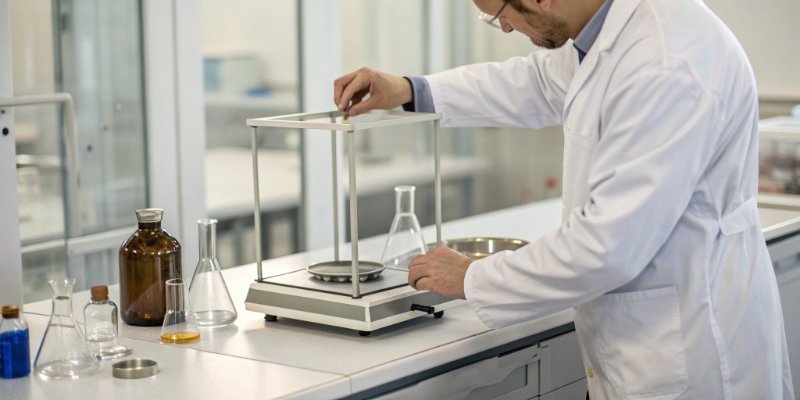
Choosing the right balance is crucial for accurate results. I've spent 18 years in the weighing industry, and I've seen firsthand how the correct instrument can transform a lab's efficiency. Let’s break down what each type of scale does and how to select the best one for your work. My goal is to help you make an informed decision that will support your research for years to come. This journey starts with understanding their fundamental uses.
What are the uses of a scale in a laboratory?
Are manual measurements slowing down your lab's workflow and causing errors? Inaccurate weighing can compromise your entire research project, leading to costly re-dos and delays.
Laboratory scales are essential for precise measurements in various tasks. They are used for sample preparation, formulation, density determination, quality control, and chemical analysis. Every milligram matters, and these scales ensure your data is reliable.
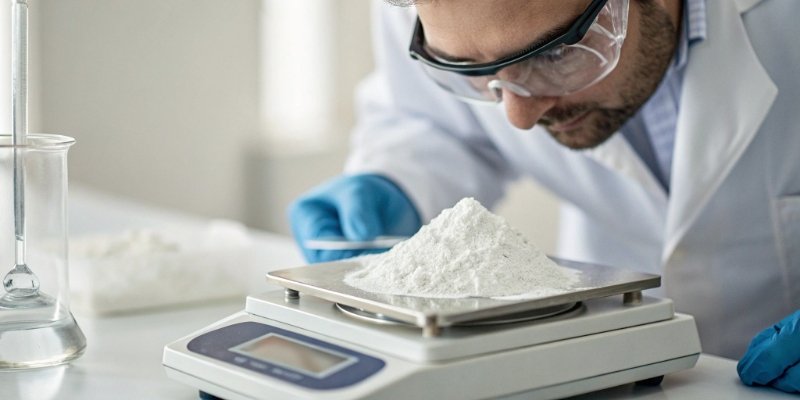
In my experience, the role of a balance goes far beyond just getting a number. It's the starting point for almost every experiment, and its accuracy affects every subsequent step. A client of mine in the pharmaceutical industry was struggling with inconsistent batches. We discovered their old scales weren't precise enough for their new, more sensitive formulas. By upgrading their balances, they immediately improved their product consistency and reduced waste. The right balance isn't an expense; it's an investment in quality.
Sample Preparation and Formulation
This is the most common use. Whether you're creating a chemical solution, mixing compounds for a new product, or preparing a sample for analysis, you need to weigh your ingredients exactly. For instance, in drug development, a tiny error in weighing an active ingredient can change the entire efficacy and safety of the product. That’s why a reliable balance is non-negotiable.
Quality Control Checks
For manufacturers, balances are critical for quality control1. You might need to check the weight of a finished product to ensure it meets specifications, or weigh individual components to verify consistency. This process helps guarantee that every product leaving your facility is the same, building trust with your customers. Software vendors who integrate with our scales often use this data to track production quality in real-time.
Scientific Research and Development
In R&D, you are often working with small, expensive, or rare materials. Precision here is paramount. Balances are used for everything from quantitative chemical analysis to density determination. The goal is to get repeatable and publishable results, and that starts with weighing your materials with the highest possible accuracy. The right balance makes your research credible.
What are the 5 instruments for measuring weight?
Confused by the different names for weighing instruments? Using the wrong one can mean the difference between a groundbreaking discovery and a failed experiment, a simple but costly mistake.
The five primary types of laboratory balances are Precision, Analytical, Micro, Ultra-micro, and Special-purpose balances. They are categorized by their readability and capacity, which determines their suitability for different lab tasks.
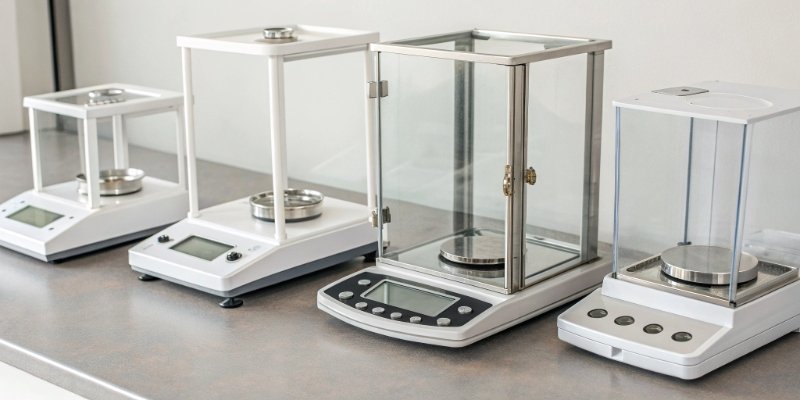
The core of choosing a lab balance comes down to two factors: how much weight it can handle (capacity2) and the smallest increment it can detect (readability3). I always tell my clients to first define the heaviest and lightest samples they need to weigh. This simple step narrows down the options significantly. From there, we can look at the specific types.
Understanding Readability and Capacity
- Capacity is the maximum weight the balance can measure.
- Readability is the smallest division of weight the balance can display. For example, a readability of 0.001g means the balance can measure in increments of one-thousandth of a gram.
A Comparison of the 5 Main Balances
To make it easier, I've put the key differences into a simple table. This is the same chart I use to help new clients quickly identify which category they should be looking at.
| Balance Type | Typical Readability | Common Uses |
|---|---|---|
| Precision Balance | 0.1g - 0.001g | General lab work, quality control, formulation. |
| Analytical Balance | ≤ 0.0001g (0.1mg) | Quantitative analysis, density determination, research. |
| Microbalance | ≤ 0.000001g (1µg) | Small sample analysis, filter weighing, pipette4 calibration. |
| Ultra-microbalance | ≤ 0.0000001g (0.1µg) | Weighing extremely small quantities, emissions testing. |
| Special-Purpose Balance | Varies | Moisture analysis, high-capacity industrial needs. |
Precision balances are the workhorses of the lab for everyday tasks. Analytical balances, with their draft shields to protect against air currents, are for when you need higher precision. Microbalances and ultra-microbalances5s](https://weigherps.com/which-type-of-balance-should-my-laboratory-choose-analytical-balance-precision-balance-or-microbalance/)[^6] are for highly specialized research where you're weighing samples that are barely visible. Finally, special-purpose balances like moisture analyzer6s do more than just weigh; they perform a specific function.
What are the scales used in labs called?
Do you feel lost in the technical jargon when sourcing lab equipment? Ordering the wrong "scale" could be a simple, but expensive, mistake when precision is on the line.
The scales used in labs are generally called "balances." This term emphasizes their high precision and ability to measure mass by balancing forces. Common names include analytical balances, precision balances, or lab balances, depending on their accuracy.
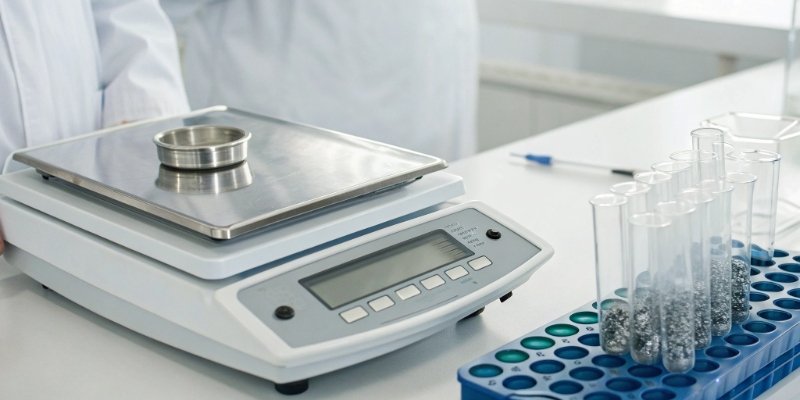
Early in my career, a purchasing manager called me asking for a "heavy-duty lab scale" that could weigh up to 10kg. I almost quoted him an industrial bench scale. But after a few questions, I realized he needed to weigh 10kg batches with 0.1g precision, not just get a rough weight. He actually needed a high-capacity precision balance. This taught me a valuable lesson: terminology matters.
The Difference Between a Scale and a Balance
Technically, a scale measures weight, which is the force of gravity on an object. A balance measures mass by comparing an unknown mass to a known mass. For most lab applications where high accuracy is needed, the correct term is "balance." While many people use the words interchangeably, when you are sourcing equipment, using the word "balance" signals to the supplier that you require a high-precision instrument.
Common Terminology You Will Encounter
- Top-Loading Balance: This is another name for a precision balance, where you place the sample on a pan at the top.
- Analytical Balance: This always refers to a high-precision balance, usually with a draft shield enclosure.
- Moisture Analyzer: This is a special-purpose balance with a built-in heating element to measure the moisture content of a sample.
Why Terminology Matters for Procurement
As a purchasing manager or technical director, using precise language saves time and prevents confusion. When you request a quote for an "analytical balance with 0.1mg readability," you will get accurate proposals. If you ask for a "lab scale," you might get quotes for a wide range of products, from simple bench scales to high-end instruments. Being specific ensures that you and the vendor are speaking the same language, leading to a smoother and more effective procurement process.
What are the 20 laboratory apparatus and their uses?
Overwhelmed by the long list of equipment needed for a new lab? Missing just one key piece of apparatus can halt your entire operation before it even begins.
While balances are crucial, a full lab needs more. Key apparatus include beakers for holding liquids, graduated cylinders for measuring volume, pipettes for accuracy, and Bunsen burners for heating. This list of 20 items forms the foundation.

A balance is often the heart of the lab, but it needs a supporting cast of equipment to function. Imagine trying to weigh a liquid without a beaker, or heat a substance without a flask and hot plate. Everything works together. I've helped many clients outfit their labs from scratch, and it always starts with a checklist of the essentials. Here are the 20 items that I always recommend as a starting point.
Essential Equipment for Measurement
This group is all about getting accurate numbers. The balance is for mass, while others handle volume and temperature.
- Analytical Balance: For precise mass measurement.
- Graduated Cylinder: For measuring approximate volumes of liquids.
- Pipette: For accurately transferring small, specific volumes of liquid.
- Burette: For dispensing precise, variable volumes of liquid, often in titrations.
- Thermometer: For measuring temperature.
Apparatus for Handling and Processing
This equipment is used to hold, mix, and transport your samples.
- Beaker: A cylindrical container for holding and mixing liquids.
- Erlenmeyer Flask: A cone-shaped flask that's good for swirling liquids without splashing.
- Test Tube: For holding small samples or for observing reactions.
- Funnel: For guiding liquid or powder into a small opening.
- Spatula: For scooping and transferring solid chemicals.
- Watch Glass: A curved piece of glass used to cover a beaker or evaporate liquids.
Apparatus for Heating and Mixing
- Bunsen Burner: For heating, sterilization, and combustion.
- Hot Plate: An electric device for heating glassware.
- Stirring Rod: For mixing chemicals and liquids.
- Magnetic Stirrer: A device that uses a rotating magnetic field to stir liquids.
Support and Safety Equipment
This gear keeps you safe and holds your experiments in place.
- Ring Stand: Used with clamps to hold glassware.
- Clamps: To secure glassware to a ring stand.
- Tongs: For grabbing hot beakers or flasks.
- Safety Goggles: Essential eye protection.
- Lab Coat: To protect your skin and clothing from spills.
Conclusion
Selecting the right lab balance is about matching precision and capacity to your needs. This guide helps you choose the perfect tool for accurate, reliable results in your lab.
-
Explore how quality control ensures the reliability of laboratory results and products. ↩
-
Understand how capacity affects the choice of balance for specific laboratory tasks. ↩
-
Learn about the concept of readability and its importance in selecting the right balance. ↩
-
Explore the critical role of pipettes in achieving precise liquid transfers in labs. ↩
-
Explore the specialized applications of ultra-microbalances in scientific research. ↩
-
Learn about moisture analyzers and their role in measuring moisture content accurately. ↩



Comments (0)