

Confused by industrial scales? The wrong choice hurts your bottom line and slows operations. Let's find the perfect scale for your specific business needs to boost efficiency.
The five most common industrial scales are bench scales, counting scales, platform scales, crane scales, and waterproof scales. Each is designed for specific tasks, from high-precision weighing in labs to handling heavy loads in warehouses or operating in wet environments like food processing plants.
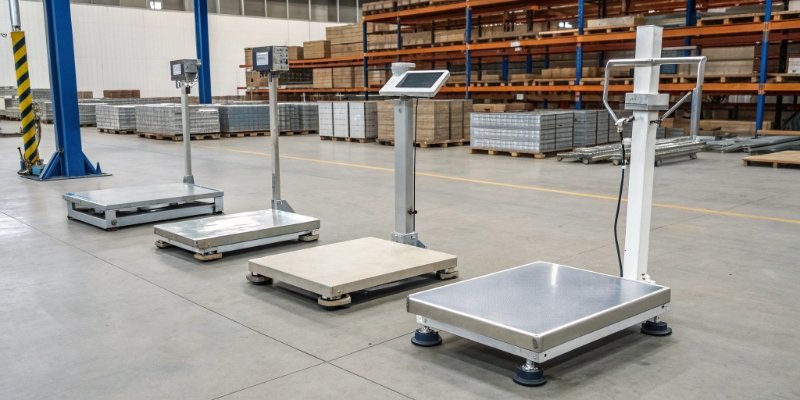
You now have a basic list of the types. But how do you know which one is right for your business? It's not just about the type; it's about matching the scale's function to your daily work. Over my 18 years in this industry, I've seen that the best choice always comes from a deep understanding of your operational needs. Let's look closer at how each scale can solve specific problems you might be facing in your workflow.
What are the different types of industrial scales available for businesses?
Frustrated with slow, manual parts counting or weighing small items accurately? These tedious tasks are prone to human error, which can disrupt your inventory records and production flow.
For precision and efficiency, bench scales handle small, detailed weighing tasks, while counting scales automate inventory counts. They eliminate guesswork and save valuable time in workshops, labs, and stockrooms, making your operations smoother.
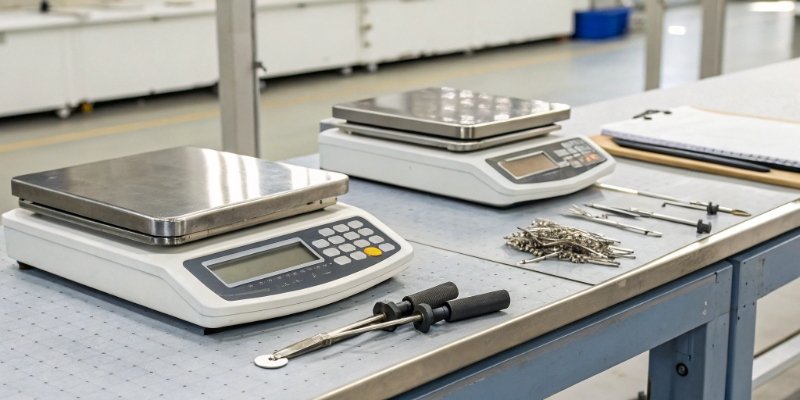
Let's dive deeper into these two essential scales. They might look similar, but their functions are specialized for improving efficiency in very different ways. I always advise clients to first analyze their small-item workflow. Do you need high precision for mixing formulas, or do you need to quickly count thousands of identical parts? The answer will point you to the right scale.
Bench Scales for Precision Work
Bench scales are the versatile workhorses for tasks that demand high accuracy. They are compact enough to fit on a workbench and are ideal for laboratories, production workshops, and even retail environments. Their strength lies in precision, with models capable of measuring from as little as 0.001g up to 300kg. This makes them perfect for quality control1 checks, a delicate formulation in a lab, or weighing small packages for shipping.
Counting Scales for High-Volume Inventory
Counting scales are designed for one primary purpose: to make counting large quantities of identical items fast and error-free. You simply place a small sample of items on the scale, input the quantity, and it calculates the average piece weight. From then on, you can place a large batch of the same items on the scale, and it will instantly tell you the exact count. This is a game-changer for inventory management2 and production kitting, saving hours of manual labor.
| Scale Type | Primary Use Case | Key Benefit |
|---|---|---|
| Bench Scale | High-precision weighing of small items | Accuracy for formulation and quality control |
| Counting Scale | Counting large volumes of uniform parts | Speed and efficiency in inventory management |
How do various industrial scales meet business needs?
Struggling to weigh heavy, bulky items like pallets or suspended loads? Using the wrong equipment is not only inefficient but also a major safety risk, creating bottlenecks in your logistics.
Platform scales are perfect for heavy ground-level items in warehouses, while crane scales handle suspended loads safely and accurately. These heavy-duty scales are built to manage the biggest challenges in logistics, manufacturing, and construction.
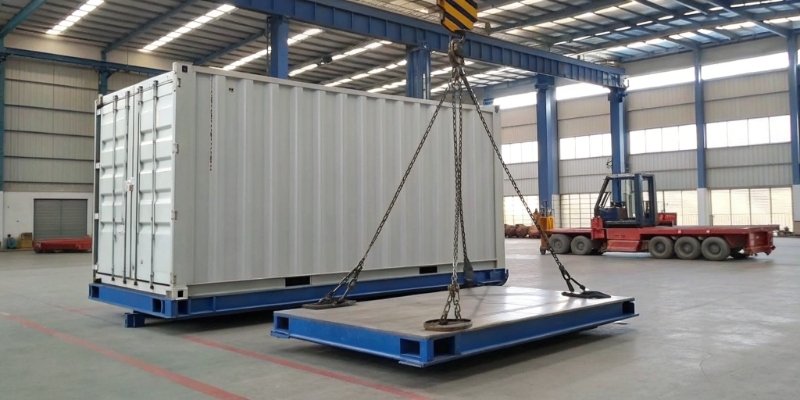
When your business moves into heavy-duty territory, the scale needs to be tough, reliable, and built for the job. From our experience providing weighing solutions globally, we know that durability is paramount. These scales are not just tools; they are critical infrastructure for your supply chain and production lines. A platform scale keeps your warehouse floor moving, while a crane scale ensures safety and accuracy in the air. Both types are fundamental for businesses that handle significant weight daily.
Platform Scales for Heavy Loads
Platform scales are designed for weighing large, heavy items. You'll find them in warehouses, logistics centers, and manufacturing plants. Built with durable materials like stainless steel, these scales can handle capacities from one ton to several tens of tons. They are the go-to solution for weighing pallets, shipping containers, and other bulky goods that can be moved with a forklift or pallet jack. Their large, flat surface makes loading and unloading simple and efficient.
Crane Scales for Suspended Weighing
Crane scales, also known as hanging scales, are used when items need to be weighed while suspended. They attach directly to a crane or hoist hook. This allows a load to be weighed as it's being lifted, which is incredibly efficient in environments like construction sites, shipping ports, and metal foundries. A clear, real-time weight display, often with a remote, ensures the operator can work safely and accurately from a distance.
| Scale Type | Typical Environment | Capacity Range |
|---|---|---|
| Platform Scale | Warehouses, Logistics Hubs | 1 ton - 20+ tons |
| Crane Scale | Construction Sites, Ports | 100 kg - 50+ tons |
Which industrial scales are essential for your business operations?
Worried about scales failing in wet or dusty environments? Moisture and corrosion can destroy standard equipment, leading to costly replacements and downtime in your food processing or chemical plant.
Waterproof scales, with their high IP68/IP69K ratings, are essential for these harsh conditions. Built from stainless steel, they resist corrosion and are easy to clean, ensuring reliable performance in demanding industries.

In certain industries, a scale's ability to withstand its environment is just as important as its accuracy. I’ve worked with many clients in the food and chemical sectors where hygiene and durability are non-negotiable. A standard scale would fail in weeks. This is where waterproof scales3 become not just an option, but an absolute necessity. They are engineered from the ground up to resist water, cleaning agents, and corrosive materials, providing a long-term, reliable weighing solution that protects your investment and your product quality.
The Importance of IP Ratings
The "IP" in IP rating stands for Ingress Protection. It's a universal standard that tells you how well a device is protected from solids (like dust) and liquids (like water).
- IP684: This rating means the scale is completely dust-tight and can withstand continuous immersion in water under conditions specified by us, the manufacturer.
- IP69K5: This is an even higher level of protection. It means the scale can withstand high-pressure, high-temperature water jets. This is essential for facilities that require intense, regular washdowns to maintain sanitary conditions, like in food processing.
Applications in Demanding Industries
Waterproof scales are primarily built with food-grade stainless steel, which is resistant to rust and corrosion. Their sealed design and smooth surfaces make them easy to clean thoroughly, preventing bacteria buildup. This makes them indispensable in:
- Food Processing: For weighing ingredients, portioning products, and checking package weights in wet and washdown areas.
- Aquaculture and Fisheries: For weighing fresh catches on boats or in processing plants.
- Chemical and Pharmaceutical Plants: For use in environments where spills or corrosive substances are common.
| IP Rating | Protection Against Solids | Protection Against Liquids |
|---|---|---|
| IP68 | Totally protected against dust | Protected against long-term immersion |
| IP69K | Totally protected against dust | Protected against high-pressure, high-temperature jets |
What features should you consider when choosing an industrial scale?
Overwhelmed by technical specifications when choosing a scale? Picking based on price alone can lead to a purchase that doesn't fit your needs, causing frustration and wasted investment.
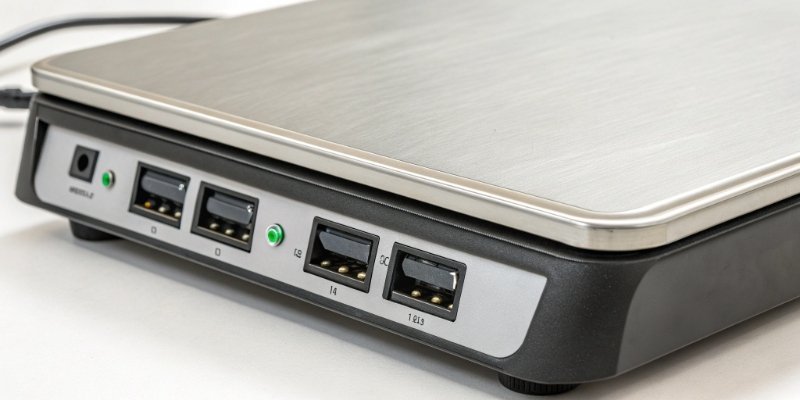
Focus on core features: capacity and readability, material and durability, and necessary certifications (like CE). Also, consider data connectivity for integrating the scale into your software systems, which is crucial for modern operations.
After you’ve identified the right type of scale, you need to drill down into the specifications. As a manufacturer, we help customers balance these features to find the most cost-effective solution. Don't just look at the price tag; think about the total cost of ownership. A slightly more expensive scale with better durability or connectivity can provide a much higher return on investment by improving your workflow and reducing downtime. Let's break down the most critical features to look for.
Capacity, Readability, and Accuracy
- Capacity: This is the maximum weight the scale can measure. Always choose a capacity that is safely above the heaviest item you plan to weigh.
- Readability: This is the smallest increment the scale can display (e.g., 0.1g, 1kg). It determines the level of precision. Your required readability depends entirely on your process.
- Accuracy: This refers to how close the displayed weight is to the true weight. We ensure all our scales undergo comprehensive testing to guarantee accuracy before they leave our factory.
Material, Durability, and Certifications
The scale's construction material directly impacts its lifespan. For dry environments, painted mild steel may be sufficient. But for harsh or hygienic environments, stainless steel is the best choice for its corrosion resistance. Check for IP ratings if you need protection from dust or water. Furthermore, ensure the scale complies with international certifications like CE, which signifies it meets high safety, health, and environmental protection standards.
Connectivity and Software Integration
In today's data-driven world, a scale is more than a weighing device; it's a data collection point. Look for connectivity options like RS-232, USB, or Ethernet ports. This allows the scale to send weight data directly to a computer, printer, or your company's management software. As an OEM/ODM partner, we often work with clients to ensure seamless integration with their systems, turning a simple scale into a smart, connected device that boosts efficiency.
Conclusion
Choosing the right bench, counting, platform, crane, or waterproof scale optimizes your operations. By focusing on your specific needs and key features, you ensure accuracy, efficiency, and long-term value.
-
Learn how scales are essential for maintaining quality standards in production. ↩
-
Discover how the right scales can streamline your inventory management. ↩
-
Explore the importance of waterproof scales in maintaining hygiene and accuracy. ↩
-
Learn about IP ratings and their significance in protecting your equipment. ↩
-
Discover how IP69K ratings ensure your scales withstand harsh conditions. ↩



Comments (0)