
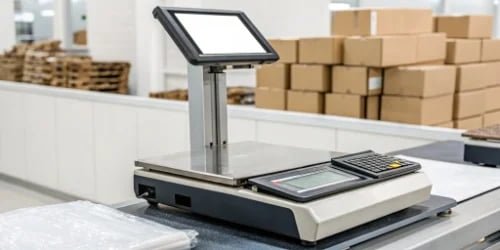
Manual labeling is slow and full of mistakes. These errors create inventory chaos and shipping delays. Our integrated printing scales automate the process and solve these problems at the source.
A scale that prints barcodes and QR codes directly streamlines your entire workflow. It combines weighing and labeling into one fast action. This reduces human error, improves data accuracy for your software, and speeds up your supply chain from production to shipping.
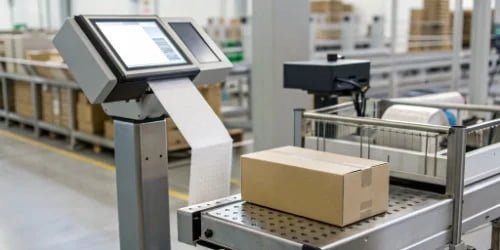
That is the high-level answer. But the true value is hidden in the operational details and how this technology transforms your day-to-day work. Let's dig deeper into how these scales can make your business more efficient, accurate, and profitable. This is how you can leverage technology to revolutionize conventional weighing.
How Do Scales with Printing Capabilities Improve Inventory Management?
Inaccurate inventory counts are a huge cost. When you rely on employees to write down weights and enter data manually, stock discrepancies are practically guaranteed. Our scales with printers ensure every item is logged correctly from the start.
These scales improve inventory management by capturing an item's exact weight and instantly creating a labeled record. This eliminates manual entry mistakes and provides real-time, accurate data, making cycle counts faster and reducing the gap between your physical stock and your software system.
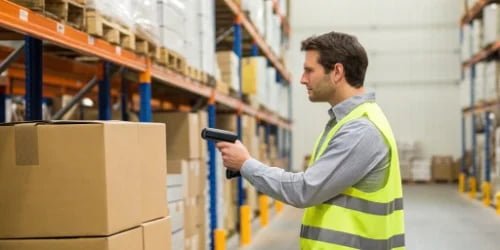
Let's break down how this works in a real-world setting. As a software provider, you know that bad data in means bad data out. The point of weighing is the first point of data collection for a physical product. If that data is wrong, every system that uses it downstream, like a Warehouse Management System (WMS) or an Enterprise Resource Planning (ERP) system, will also be wrong. An integrated printing scale acts as a reliable gatekeeper for data accuracy1.
Eliminating Human Error
The most common source of inventory problems is simple human error2. A tired worker might write "15.2 kg" instead of "12.5 kg," or grab the wrong pre-printed label. A printing scale makes this impossible. The scale captures the weight and prints a label with that exact data encoded in a barcode or QR code. The process is instant and automatic. This single step removes the opportunity for typos or mix-ups.
Real-Time Data Sync
Our IoT-enabled scales can connect directly to your network. When an item is weighed and a label is printed, the data (weight, timestamp, product ID) can be sent to your central database at the same moment. This means your inventory software always reflects the ground truth.
| Feature | Manual Process | Integrated Printing Scale |
|---|---|---|
| Data Entry | Manual writing and typing | Automated data capture |
| Error Rate | High | Near-zero |
| Speed | Slow, multiple steps | Fast, single action |
| System Update | Delayed, batch-based | Instant, real-time |
This turns your scale from a simple measuring device into an intelligent data collection terminal for your software.
What Advantages Do Barcode and QR Code Printing Scales Offer to Businesses?
Many businesses suffer from disconnected and inefficient processes. This separation wastes valuable time and money on tasks that could be combined. A single device that weighs and labels creates a more connected workflow.
The main advantages are increased efficiency, improved data accuracy, and enhanced product traceability. By automating the labeling step, businesses reduce labor costs, eliminate expensive data mistakes, and can quickly trace any product through its entire lifecycle, which is vital for quality control.

When we talk to purchasing managers and technical directors, the conversation always turns to Return on Investment (ROI)3. Investing in new hardware must deliver clear business benefits. An integrated printing scale offers one of the fastest and most tangible ROIs you can find in industrial hardware. I remember a client in the food processing industry who was dealing with frequent labeling errors. After upgrading, they tracked a 98% reduction in mislabeled products, saving them thousands in rework and customer complaints.
Boosting Profitability
Efficiency and accuracy directly translate to profit. Reducing labor time per item means you can process more volume with the same staff. Eliminating errors means you avoid the costs of correcting mistakes, like re-shipping an order or dealing with a product recall. These scales are not a cost center; they are a profit driver.
Enhancing Product Traceability
Traceability is no longer a "nice-to-have" feature. For many industries, it's a requirement. QR codes are especially powerful here. Unlike a simple barcode that might just hold a product number, a QR code can store a wealth of information:
- Batch Number
- Production Date
- Exact Weight
- Operator ID
- Expiration Date
This data, printed directly at the source, creates a digital passport for every single item. If a quality issue arises, you can scan the code and know its entire history in seconds.
| Business Benefit | How Printing Scales Help |
|---|---|
| Cost Savings | Reduces labor, eliminates error correction costs. |
| Time Savings | Consolidates weighing and labeling into one step. |
| Quality Control | Enables instant and accurate product traceability4. |
| Data Integrity | Ensures clean data enters your ERP/WMS systems. |
How Can Direct Printing from Scales Simplify Logistics and Tracking?
Tracking products through the logistics chain is complicated. A missing or incorrect label can cause a package to be delayed, sent to the wrong place, or lost completely. Direct printing ensures every package starts its journey with perfect, scannable information.
Direct printing simplifies logistics by creating a ready-to-scan shipping label right at the final weigh station. This removes extra process steps and potential mix-ups. The barcode or QR code provides a unique identifier for real-time tracking from your warehouse to the customer's door.
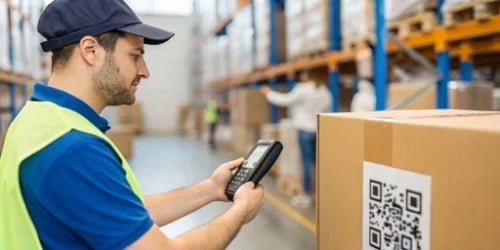
Think about the journey of a package. The final checkpoint before it leaves your facility is often the weigh station, where the shipping cost is calculated. This is the most logical place to generate the shipping label. Separating these two tasks—weighing at one station and printing at another—is a classic workflow bottleneck5. It doubles the handling time and creates an opportunity to put the wrong label on the wrong box.
A Single Source of Truth
By integrating the printer with the scale, you create a single source of truth. The scale captures the final weight, your system calculates the shipping cost, and the printer immediately produces the label with all the correct information, including the tracking number. This labeled package is now ready for the carrier. The workflow is seamless.
Built for Your Environment
We know that industrial environments6 can be harsh. A standard office printer would not last long in a dusty warehouse or a wet food processing plant. This is where our 19 years of manufacturing experience comes in. We have designed and optimized printer integrations for these exact conditions. We offer:
- External printers for flexibility.
- Built-in printers for a compact, all-in-one solution.
- Waterproof and dustproof enclosures to protect the printing mechanism.
Your hardware must be as tough as the environment it operates in. We ensure our scales are built to last and perform reliably.
| Logistics Step | Old Method | With Printing Scale |
|---|---|---|
| 1. Weigh Package | Weigh at Station A | Weigh at Station A |
| 2. Get Label | Walk to Station B | Print at Station A |
| 3. Apply Label | Walk back to package | Apply label instantly |
| 4. Sort for Shipping | Scan package | Scan package |
What Are the Efficiency Gains from Using Scales with Built-In Label Printing?
Your workers are wasting time moving between different stations. They weigh an item, walk over to a desk with a computer, print a label, and then walk back to the item. This constant back-and-forth adds up.
The main efficiency gain is raw speed. Combining weighing and printing into a single action at one station dramatically reduces the total time per task. This allows you to handle more volume with the same number of staff, directly increasing throughput and operational productivity.
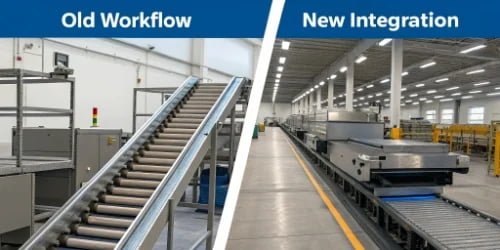
The concept of "lean manufacturing7" is all about eliminating waste, and one of the biggest forms of waste is unnecessary motion. I visited a client’s distribution center and we timed their process. A worker was spending an average of 15 seconds per package just walking between the scale and the printer. That doesn’t sound like much, but they handled thousands of packages a day. After switching to our all-in-one weighing and printing stations, they could process an extra 500 packages per shift with the same team. The efficiency gain was massive.
Reducing Steps in Your Workflow
A simpler workflow is a better workflow. It's faster, less prone to error, and easier to train new employees on. The goal is to get a product from Point A to Point B with the fewest touches possible. An integrated printing scale is a perfect example of this principle in action. It turns a three-step process (weigh, walk, print) into a one-step action.
Increasing Throughput
Ultimately, efficiency is about throughput8. How many units can you process per hour? By shaving seconds off every single transaction, you achieve a cumulative effect that significantly boosts your facility's overall capacity. This allows your business to grow and take on more orders without needing to proportionally increase your headcount or facility size. It's about empowering your existing team to achieve more with better tools.
| Workflow Comparison | Without Integrated Printing | With Integrated Printing |
|---|---|---|
| Step 1 | Place item on scale | Place item on scale |
| Step 2 | Note the weight | Scale captures weight |
| Step 3 | Walk to printer station | Label prints automatically |
| Step 4 | Print label | Apply label to item |
| Step 5 | Return and apply label | Task complete |
| Total time per item | ~20-30 seconds | ~5-10 seconds |
Conclusion
Integrating weighing and printing is a simple change that delivers huge results. It boosts efficiency, ensures total accuracy, and gives you complete control over your products and data.
-
Understand the significance of data accuracy in maintaining effective inventory systems. ↩
-
Explore the impact of human error on inventory and how to mitigate it. ↩
-
Discover the financial benefits of investing in integrated printing scales for your business. ↩
-
Understand the importance of product traceability for quality control and compliance. ↩
-
Learn about workflow bottlenecks and how to eliminate them for better efficiency. ↩
-
Learn about the specific challenges faced in industrial environments and how to address them. ↩
-
Learn about lean manufacturing principles and their application in inventory processes. ↩
-
Understand how to increase throughput in your warehouse operations for better efficiency. ↩



Comments (0)