
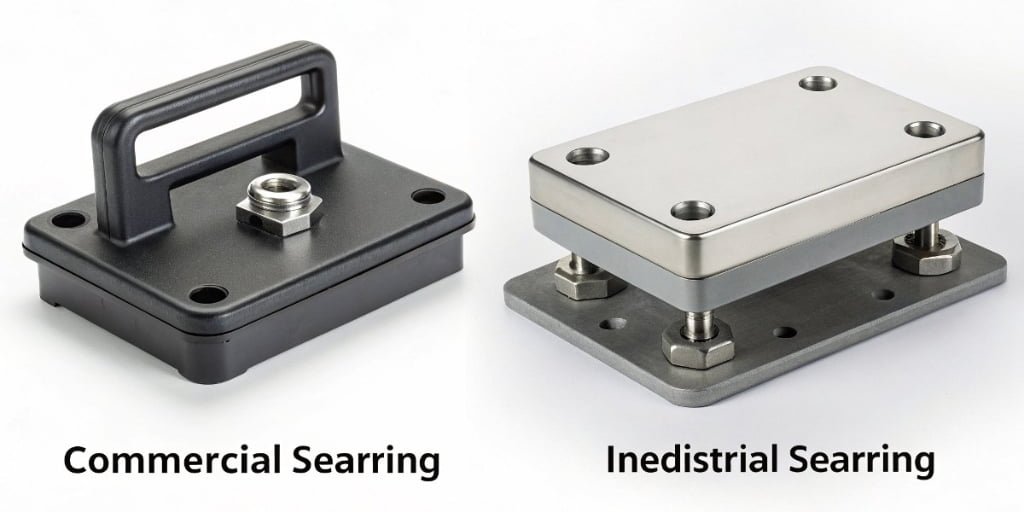
Struggling to find a sensor that survives your tough factory floor? Commercial models break easily. You need a solution built for industrial demands without the high cost.
Industrial weighing sensors are built with robust materials like stainless steel for harsh environments and offer higher precision and capacity. Commercial sensors are designed for retail or light use, prioritizing cost over durability and advanced features. They simply aren't the same tool for the job.

I remember a client, a software developer for logistics companies, who tried to integrate their system with off-the-shelf commercial scales. It was a disaster. The scales failed within weeks due to dust and vibration. This experience highlights a crucial point: choosing the right type of weighing device is fundamental. Let's break down the key differences so you don't make the same mistake and can choose hardware that truly supports your software.
How do commercial and industrial scales differ in design and use?
Your software is smart, but is your hardware tough enough? Using a retail scale in a factory leads to constant failures and downtime, costing you money and reputation.
Industrial scales are designed for durability and specific tasks with materials like heavy-duty steel. They handle dust, water, and vibrations. Commercial scales are for clean, stable environments like shops and kitchens, focusing on simple, direct-to-consumer use. They are not built for industrial stress.

The core difference really boils down to the environment and the task. When we at Weigherps design an industrial scale, we think about the worst-case scenario. Will it get hosed down for cleaning? Will a forklift accidentally bump into it? Will it need to run 24/7 without fail? This thinking dictates every material and component we choose. An industrial scale is a piece of factory equipment, built to last. A commercial scale is more like a countertop appliance, designed for a less demanding life. They solve completely different problems, and confusing them is a recipe for failure, especially when integrating with sophisticated software that relies on consistent, accurate data.
Key Design Distinctions
| Feature | Industrial Scales (Our Specialty) | Commercial Scales |
|---|---|---|
| Environment | Harsh (dust, water, vibration, temperature extremes) | Clean, stable (retail, office, lab) |
| Materials | Stainless steel, heavy-duty mild steel | Plastics, light-gauge aluminum |
| Protection | High IP ratings1 (e.g., IP67/IP68) for water/dust proofing | Low or no IP rating |
| Functionality | Counting, checkweighing, dynamic weighing, data output | Basic weighing, price calculation |
What is the difference between commercial and non-commercial scales?
Paying for certifications you don't need? Or worse, using uncertified scales where they are legally required can lead to big fines. Let's clarify this crucial difference.
The key difference is legal certification for trade. Commercial scales are used to sell goods by weight and must be government-approved (e.g., NTEP, CE-M). Non-commercial scales are for internal processes like quality control or portioning and do not require this legal certification.

This distinction is less about the scale's physical build and more about its legal status. I once worked with a client in the food processing industry. They were using our highly accurate, robust IP67 bench scales2 on their packaging line. These were for internal quality control to ensure each package had the right amount of product. These were critical, but non-commercial scales3. However, at the end of the line, they had a different scale to weigh the final boxes sold to a distributor by the kilogram. That scale had to be "legal-for-trade," making it a commercial scale. Your software may need to interact with both types, so knowing the difference is vital.
Commercial vs. Non-Commercial Checklist
- Is weight used to determine a price for an external customer?
- Yes -> You need a Commercial (Legal-for-Trade) scale.
- No -> A Non-Commercial scale is sufficient.
- Is the scale for internal processes like batching, quality checks, or logistics?
- Yes -> A Non-Commercial scale is ideal.
- Does local law require certification for this specific weighing task?
- Yes -> You must use a Commercial (Legal-for-Trade) scale.
So, what exactly is a commercial weighing device?
Confused by industry terms? Choosing the wrong device for your software integration can be a costly mistake. You need a clear, simple definition to guide your hardware choices.
A commercial weighing device is a scale used in transactions where products are sold by weight. Think of the deli, the post office, or the candy shop. These scales must often be "legal-for-trade" certified to ensure fairness for both the buyer and the seller.

The term "commercial" has a specific meaning tied to trade. For a scale to be used in a transaction, it often needs official approval. In Europe, this involves CE marking with specific metrology certifications (CE-M); in the US, it's the NTEP certification4. This process ensures the scale is accurate, reliable, and tamper-proof for its intended purpose: facilitating a fair sale. However, not all scales used in a business are "commercial" in this legal sense. A scale in a factory kitchen for portioning ingredients is used in a business setting, but because it's not for selling goods by weight to a customer, it's a non-commercial application. This distinction is vital for you as a software provider, as it impacts cost, compliance, and the type of data interface you'll need to support.
What are the different types of weighing devices available?
Overwhelmed by the sheer number of scales on the market? It is hard to know which type fits your specific industrial application. Let's simplify the options available.
Weighing devices range from simple kitchen scales to complex industrial systems. Key types include bench scales for small items, floor scales for pallets, vehicle scales for trucks, and specialized IoT scales that integrate directly with software for automation and data collection.
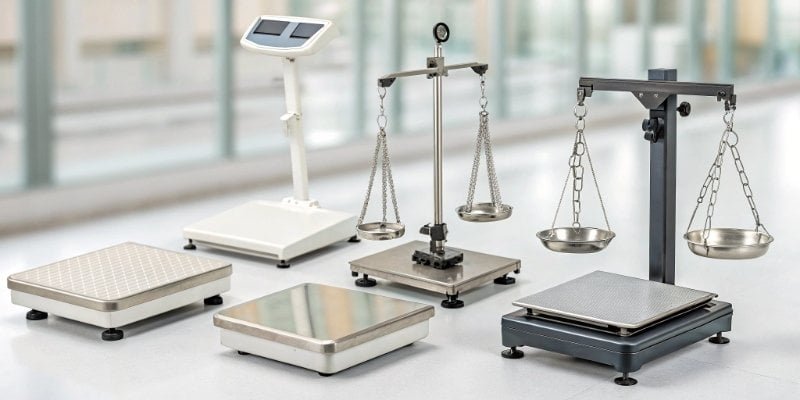
The world of weighing is vast, but we can group devices into categories based on their application. At Weigherps, we focus entirely on the industrial side, where reliability, durability, and seamless integration are essential. Let me walk you through some common types we build for clients who, like you, are bridging the gap between physical processes and smart software. As a software vendor, the IoT systems are probably most interesting to you. They are designed from the ground up to be part of a larger, smarter system. This is where hardware like ours and software like yours truly merge to create incredible value.
Common Industrial Weighing Devices
| Scale Type | Common Use Case | Why It's Industrial-Grade |
|---|---|---|
| Bench Scales | Parts counting, quality control checks, mailrooms. | High precision, durable platform, robust data connectivity. |
| Floor Scales | Weighing pallets, drums, and large containers. | Heavy-duty steel construction, high capacity, forklift-friendly. |
| Truck Scales | Weighing entire vehicles for logistics & material tracking. | Massive capacity, extreme durability, complex software integration. |
| IoT Weighing Systems | Automated production lines, smart inventory management. | Custom sensors, direct network connection, real-time data analysis. |
Conclusion
In short, industrial scales are custom, durable tools for harsh environments. Commercial scales are for simple transactions. Choosing correctly is vital for your system's success, reliability, and profitability.
-
Understand the significance of IP ratings in ensuring protection against dust and water. ↩
-
Learn about the applications and advantages of bench scales in industrial environments. ↩
-
Explore the applications of non-commercial scales in internal processes and quality control. ↩
-
Learn about NTEP certification and its role in ensuring scale accuracy for commercial use. ↩



Comments (0)