
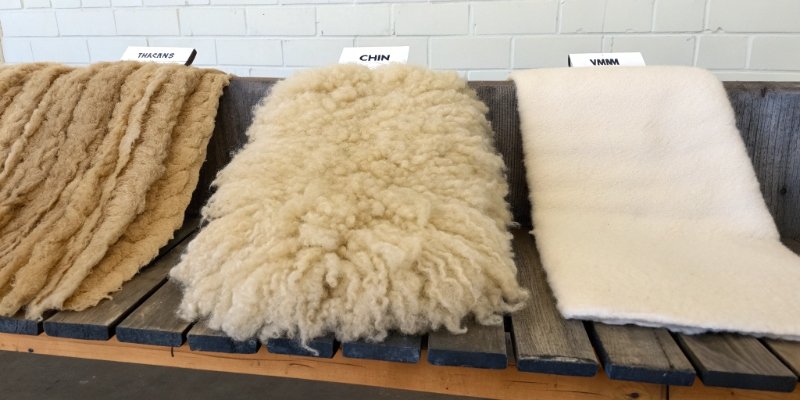
Struggling to pick a sheep scale? The wrong one wastes money and can give you bad data. I will show you the main types so you can choose the right one for your farm.
Sheep scales mainly come in three types: mechanical, electronic, and hydraulic. Mechanical scales are simple and affordable for basic use. Electronic scales offer high accuracy with digital readouts, perfect for modern farms. Hydraulic scales are for heavy-duty, large-volume weighing in bigger operations.
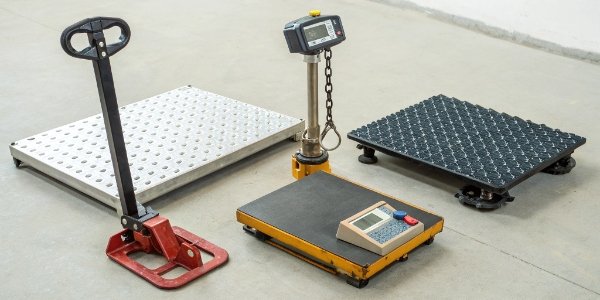
Choosing the right tool for the job is a lesson I learned early in my 18 years in the industrial scale business. A client once told me they were using a basic bathroom scale for their lambs. Their data was all over the place, and they couldn't figure out why some lambs weren't thriving. The problem wasn't their animals; it was their tool. Upgrading their equipment changed everything. This is why understanding the different types of sheep scales is so important. It's the first step toward collecting data you can actually trust. Let's break down the options so you can find the perfect match for your needs and avoid making the same mistakes.
What's the best type of sheep scale for a small flock?
Running a small flock on a tight budget? You probably feel like you don't need a complex, expensive scale. I can help you find the perfect, affordable fit for your specific needs.
For a small flock, a platform electronic scale offers the best balance of accuracy, ease of use, and cost. It provides reliable data for tracking growth and health. This helps you manage your herd effectively without the high cost of industrial-grade systems.
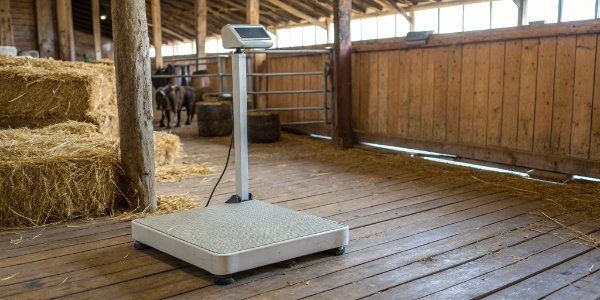
When you have a small flock, every dollar counts. You need tools that provide value without breaking the bank. Years ago, many small farms I worked with used old mechanical scales1. They were cheap and didn't need power, which was great. But the readings were often inconsistent. It was hard to tell if a lamb's weight change was real or just a glitch in the scale. Today, I almost always recommend a simple platform electronic scale2. The technology has become so affordable that the benefits far outweigh the small extra cost. You get a clear, digital number that is highly accurate. This accuracy is crucial for making smart decisions about feed, health, and breeding, even in a small operation.
Let's compare the two most common options for smaller farms.
Scale Type Comparison
| Feature | Mechanical Scale | Platform Electronic Scale |
|---|---|---|
| Accuracy | Low to Medium | High |
| Cost | Very Low | Low to Medium |
| Ease of Use | Manual, requires careful reading | Digital, instant, easy to read |
| Data Management | Manual pen-and-paper logs | Can be easily entered into a spreadsheet |
| Durability | High, due to simple parts | Good, requires protection from elements |
Ultimately, the choice comes down to what you want to achieve. If you just need a rough weight estimate once a year, a mechanical scale might be fine. But if you want to actively manage your flock's performance and health, the precision of an electronic scale is a must-have tool. The reliable data it provides is the foundation of modern, profitable sheep farming.
How to weigh a sheep properly?
Are you getting inconsistent weights for your sheep? This can lead to bad decisions about their feed and health. I will guide you through a simple process for perfect accuracy every time.
To weigh a sheep properly, first make sure your scale is on level ground and you have zeroed it. Gently guide the animal onto the scale. Make sure all four feet are on the platform. Wait for the reading to stabilize before you record it.
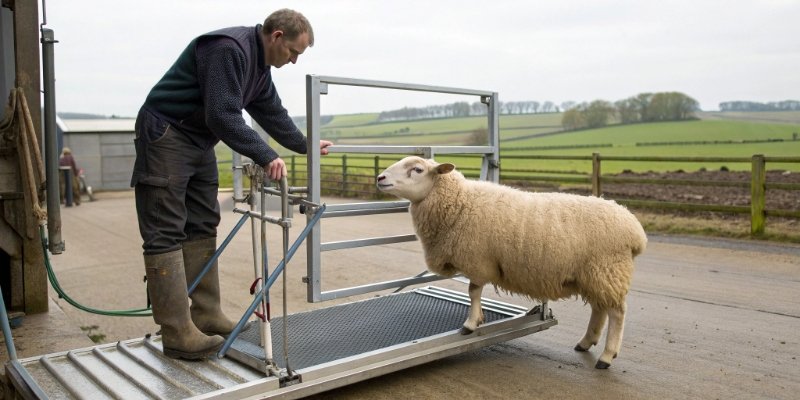
The process is just as important as the equipment. I once visited a farm where they had a top-of-the-line electronic scale, but their records were a mess. I watched them work, and the problem became clear. They were rushing the animals, weighing them on a slope, and not waiting for the scale to settle. Proper procedure is key to getting data you can rely on. A good weighing routine doesn't have to be complicated. It just needs to be consistent. By following a few simple steps, you ensure that every weight you record is accurate and meaningful. This helps you make better management decisions for the health and productivity of your entire flock.
Here’s a breakdown of the steps I recommend to every client.
Step-by-Step Weighing Guide
-
Prepare Your Equipment and Space
Before you bring the sheep in, get everything ready. Place the scale on a hard, level surface. This is critical for accuracy. Turn on the scale and press the 'Zero' or 'Tare' button to make sure it starts at 0.00. This removes the weight of any crate or mat. Have your notebook or device ready to record the weights next to each sheep's ID tag. -
Move the Sheep Calmly
Stress can affect weighing. Use a race or a small pen to guide the sheep toward the scale. Work quietly and avoid sudden movements. Sheep are flock animals, so they will often follow each other calmly. A smooth, low-stress process is faster and safer for both you and the animals. -
Position the Sheep Correctly
Gently guide one sheep at a time onto the scale platform. The most important part is to ensure all four of its feet are on the scale. If one foot is off, the reading will be wrong. The sheep should be standing as centrally as possible. -
Read and Record the Weight
Now, wait for the weight to stabilize. Sheep rarely stand perfectly still, so modern electronic scales3 have a feature called an "animal weighing mode4" or "hold function". This function is a piece of software that calculates a stable average weight even when the animal is moving. At Weigherps, developing this software is a key part of our R&D. Once the number is steady, record it immediately.
How do I get a sheep to stand still on a scale?
Is weighing time a chaotic and frustrating experience? Jumpy sheep make it almost impossible to get an accurate weight. I will share some simple tricks to help keep them calm and still.
To get a sheep to stand still, use a scale that has a crate or cage, as this physically contains them. You should also reduce their stress by weighing them in a familiar, quiet area. An "animal mode" on an electronic scale is also very helpful.
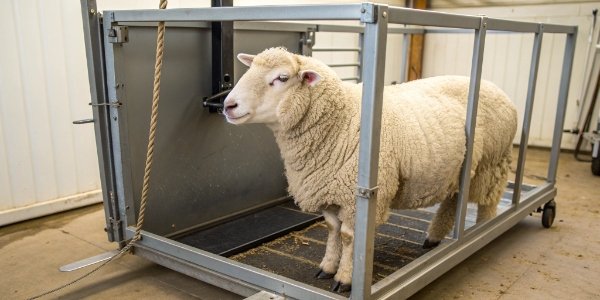
I remember talking with a sheep farmer who called weighing day "the weekly rodeo." It was a stressful event for him and his animals. Getting an accurate weight was more luck than skill. The solution isn't to be faster than the sheep; it's to create a system that calms them. A calm sheep is easier to handle and stands stiller, giving you a precise weight. The best systems use a mix of physical barriers, low-stress handling, and modern technology. Our goal as a manufacturer isn't just to sell a scale; it's to provide a weighing solution. That includes thinking about how the animal interacts with our equipment.
Here are the three main strategies we advise our customers to use.
Methods for Calmer Weighing
-
Use Physical Containment
The most effective method by far is to use a weigh crate5. This is a small cage built around the scale platform with entry and exit gates. The sheep walks in, you close the gate behind it, and it is safely contained. It cannot move around too much, which allows the scale to get a quick and stable reading. We can design custom crates that fit our scales perfectly, creating a seamless system for our clients. -
Create a Low-Stress Environment
Sheep are sensitive to their surroundings. Loud noises, unfamiliar places, and aggressive handling will make them anxious and jumpy. Set up your scale in a familiar location, like the corner of their regular pen. Handle them gently and use their natural flocking instinct to your advantage. Move them as a group towards the weighing area. A positive experience means they will be less anxious the next time. -
Leverage Technology
This is where modern electronic scales shine. As I mentioned before, the "animal weighing" or "hold" function is a game-changer. Our technical department has spent years perfecting this software. It takes hundreds of readings in a few seconds and the software algorithm calculates a precise average weight, ignoring the sharp fluctuations from movement. This means you can get an accurate weight even if the sheep is still moving slightly. This feature turns a frustrating task into a simple, efficient process. It's a perfect example of how the right technology can solve a real-world farming problem.
How often should I weigh my sheep?
Are you unsure about your weighing schedule? Weighing too often is a lot of extra work, but not weighing enough means problems can slip by. I will provide a simple schedule for optimal flock management.
Weighing frequency depends on the sheep's age and its purpose. You should weigh lambs every two to four weeks to track their growth. Weigh ewes before mating and before lambing. It's also good to weigh the whole flock at key management times.
Data is only useful when you collect it at the right time. Think of it like checking the gauges in a car. You don't stare at the fuel gauge constantly, but you glance at it before a long trip. The same logic applies to your flock. Weighing sheep isn't just about getting a number; it's about getting a number at a time when you can act on it. Regular, scheduled weighing transforms the scale from a simple measuring device into a powerful management tool. It lets you monitor health, optimize feeding programs, and make profitable decisions based on hard data, not guesswork.
Here is a practical weighing schedule that we recommend.
Recommended Weighing Schedule by Life Stage
| Life Stage / Event | Recommended Frequency | Primary Reason |
|---|---|---|
| Lambs (Birth to Weaning) | Every 2-4 weeks | To monitor growth rates6 and milk production of the ewe. You can identify underperforming lambs early and intervene. |
| Ewes (Pre-Mating) | Once, 4-6 weeks before mating | To check Body Condition Score (BCS)7. This ensures ewes are at the target weight for optimal fertility and conception rates. |
| Ewes (Mid-Pregnancy) | Once, around 90 days pregnant | To ensure they are maintaining condition and not losing weight, which can affect lamb development. |
| Ewes (Pre-Lambing) | Once, 3-4 weeks before lambing | To confirm they are in good condition for the demands of birth and lactation. This is key to preventing health issues. |
| Rams (Pre-Mating) | Once, 8 weeks before mating | To make sure they are fit and healthy, but not overweight, to perform effectively during the breeding season. |
| Entire Flock (Seasonal) | At key events like weaning or shearing | For general health checks, making culling decisions, or determining dosages for medications and treatments. |
Each weight you record is a data point that tells a story about an animal's health and performance. By weighing at these key times, you gather the information you need to manage your flock effectively, improve your breeding outcomes, and ultimately, increase your farm's profitability.
Conclusion
Choosing the right scale and using it correctly are very important. This regular data helps you manage your flock's health and profit, turning simple weighing into a powerful business tool.
-
Explore the benefits of mechanical scales, especially for basic sheep weighing needs, and see if they fit your farm. ↩
-
Find out why platform electronic scales are the perfect balance of cost and accuracy for small sheep flocks. ↩
-
Discover how electronic scales enhance accuracy and efficiency in sheep weighing, making them ideal for modern farms. ↩
-
Learn about the animal weighing mode feature and how it helps in getting stable weight readings for sheep. ↩
-
Explore the benefits of using a weigh crate to keep sheep calm and still during weighing for accurate results. ↩
-
Find effective methods to monitor lamb growth rates and ensure they are thriving on your farm. ↩
-
Learn about Body Condition Score (BCS) and its significance in managing ewe health and fertility. ↩



Comments (0)