
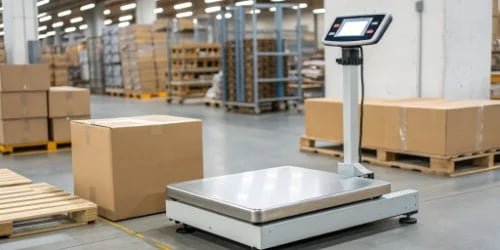
Your current labeling process is slow and full of errors. This inefficiency costs you time and money. A modern label printing scale can solve these problems and streamline your entire workflow.
The best modern label printing scales have key features like high-speed thermal printers, PC-based processors, and full IoT connectivity for ERP integration. They also need a user-friendly touchscreen interface and a durable, industrial-grade build to ensure reliability and a long lifespan in demanding environments.
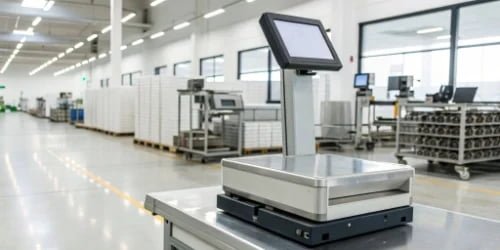
When I talk to clients, they often think of a scale as just a tool for weighing. But today's technology has transformed them into so much more. The best way to think about a modern label printing scale1 is as a smart hub for your production line. It's like an AI assistant that not only weighs and prints but also controls processes, handles feedback, and communicates with your core business systems. Let's break down the features that make this possible.
Which Technological Advancements Enhance Label Printing Scale Efficiency?
Old technology is holding your production line back. Slow printing and manual data entry are creating bottlenecks. These advancements can make your entire operation faster and more accurate.
Modern scales use thermal printing for speed, powerful PC-like processors for instant data handling, and IoT capabilities. These technologies connect directly to your ERP system, automate data flow, and provide real-time feedback, which dramatically boosts your overall efficiency and reduces errors.
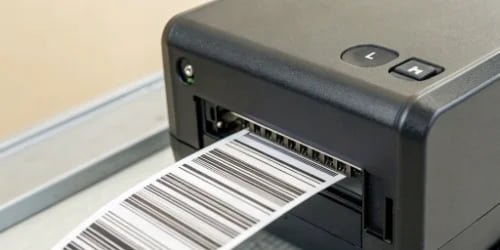
The biggest leap in scale technology is the shift from a simple tool to a smart, connected device. As a manufacturer, I've seen this evolution firsthand. The core idea from my insight is that a modern Smart IoT PC Scale acts as an AI assistant for your production line. It combines printing, control, data processing, and ERP system integration into one powerful package. This isn’t just about making one step faster; it’s about making the entire workflow smarter.
High-Speed Thermal Printing
Older dot matrix printers were slow, loud, and required ribbon changes. Modern scales use direct thermal printing technology2. This method is incredibly fast and quiet. More importantly, it has fewer moving parts and doesn't use ink or ribbons. This means less maintenance, fewer consumables to stock, and reduced downtime for your team.
Powerful Processing and Onboard Memory
Think of these new scales as industrial computers with a weighing platform. They have powerful processors that can handle complex label templates, manage large product databases, and run software directly on the device. An operator can access thousands of PLUs (Price Look-Up codes) instantly without needing a separate PC, which simplifies the workstation and reduces potential points of failure.
| Feature | Old Scale Technology | Modern Scale Technology |
|---|---|---|
| Printing | Slow, noisy Dot Matrix/Impact | Fast, quiet Direct Thermal |
| Processing | Basic, limited functions | Multi-core PC-based processor |
| Data Flow | Manual input, one-way data | Two-way sync with ERP/IoT |
| Functionality | Weigh and print only | Weigh, print, control, process data |
How Do Connectivity Options Impact the Functionality of Label Printing Scales?
Isolated equipment creates manual work and data errors. Staff have to walk around with USB drives to update information. A scale with the right connectivity integrates seamlessly into your workflow.
Connectivity like Wi-Fi, Ethernet, and USB is essential. It lets the scale sync with central databases like your ERP or WMS, receive remote updates, and send production data in real-time. This turns a standalone device into a networked information hub.
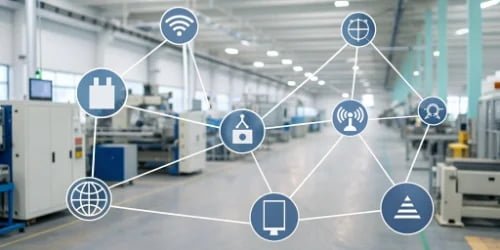
Connectivity is what truly unlocks the potential of a modern scale, transforming it from an isolated island of data into a fully integrated part of your factory's nervous system. I remember a client who wasted hours every week updating product information on twenty separate scales using a USB stick. It was a tedious process and a huge source of errors. After upgrading to networked scales, their technical director could update all devices in two minutes from his desk. That’s the power of connectivity.
Wired vs. Wireless Connectivity
Ethernet provides a stable, high-speed wired connection perfect for fixed production lines where reliability is the top priority. Wi-Fi offers flexibility, allowing you to place scales on mobile carts or reconfigure your floor layout without worrying about running new cables. Many scales also offer Bluetooth for connecting peripherals like barcode scanners, further reducing cable clutter.
The Power of Centralized Management
When your scales are connected to the network, they become much easier to manage. You can push software updates, change label designs, or update pricing across your entire facility from one central computer. This ensures consistency and accuracy everywhere. It also allows the scale to send data back, giving you a real-time view of production output3 without anyone having to write down numbers or enter them into a spreadsheet.
| Connection Type | Primary Use Case | Key Benefit |
|---|---|---|
| Ethernet | Fixed workstations, production lines | Most stable, secure, and fast data transfer. |
| Wi-Fi | Mobile carts, flexible factory layouts | High mobility and no cable clutter. |
| USB Ports | Data backup, connecting peripherals | Easy connection for scanners or keyboards. |
| Serial (RS-232) | Integrating with older machines | Ensures backward compatibility with legacy equipment. |
What User-Friendly Features Are Essential in Modern Label Printing Scales?
Complicated machines slow down your team and require lengthy training. This frustration can lead to costly mistakes. An intuitive scale makes work faster, easier, and much more accurate.
Essential user-friendly features are a large touchscreen, a simple icon-based interface, and customizable hotkeys for common tasks. Also, look for easy-to-load media compartments. These features shorten training time, reduce operator errors, and boost productivity.
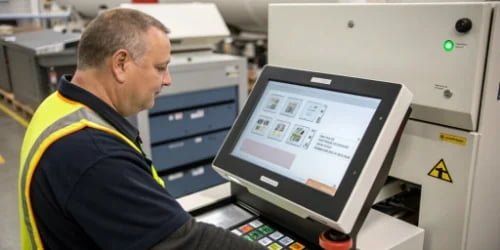
The best technology is the kind that people actually want to use. We design our scales with the operator in mind. The experience should be as simple and intuitive as using a smartphone. If your team has to spend weeks learning how to operate a scale, or if they constantly make mistakes because the interface is confusing, then it doesn't matter how advanced the technology is. A user-friendly design directly translates into higher productivity and fewer errors.
Intuitive Touchscreen Interface
Gone are the days of small, text-only screens and confusing button combinations. A modern scale should have a large, responsive color touchscreen. A graphical user interface (GUI) with clear icons allows operators to find the product they need quickly and confidently. We can even display a picture of the product on the screen to provide a final visual check and eliminate selection errors.
Customizable Workflows
Every business process is slightly different. That's why modern scale software allows us to customize the workflow directly on the screen. For a repetitive task, we can create a simple interface with just one or two large buttons. This guides the operator through the process step-by-step, making it almost impossible to make a mistake. It simplifies the job and dramatically speeds up the weighing and labeling process.
Simplified Maintenance
Downtime is a killer for productivity. User-friendly design also applies to maintenance. Features like tool-less printhead replacement and simple, drop-in label roll loading are essential. When a roll of labels runs out, any operator should be able to replace it in under a minute without needing to call for technical support.
How Does Durability Factor into Choosing a Label Printing Scale?
Industrial environments are tough on equipment. A cheap, flimsy scale that breaks down will cost you more in downtime and repairs. Investing in a durable scale from the start pays off.
Durability is critical for reliability and long-term return on investment. You must look for a stainless steel body to resist corrosion, a sealed design with an IP rating against dust and water, and robust internal parts built for constant use.
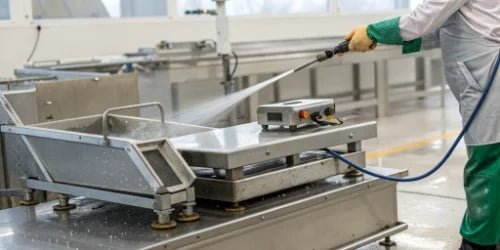
A scale is a long-term investment in your production capability, not a disposable office supply. In my 19 years of manufacturing industrial scales, I’ve seen what happens to equipment that isn't built for the job. Downtime is incredibly expensive, not just in repair costs but in lost production. That's why we focus on building scales that can withstand the harshest industrial environments, from dusty warehouses to wet food processing facilities. The true cost of a scale is not its purchase price but its total cost of ownership4 over its lifespan.
Materials Matter: Stainless Steel vs. Plastic
For many of our clients in the food or chemical industries, hygiene and chemical resistance are mandatory. A full stainless steel housing5 is easy to clean, sanitize, and won't rust or corrode. While a plastic housing might be fine for a clean retail store, it simply won't last in a serious industrial setting where it's exposed to moisture and harsh cleaning agents.
Understanding IP Ratings
An IP (Ingress Protection) rating tells you exactly how well a device is sealed against dust and water. For example, an IP67 rating means the scale is completely dust-tight and can even be temporarily submerged in water. This feature is crucial in environments where equipment is washed down with high-pressure hoses at the end of every shift. A high IP rating6 ensures the sensitive electronics inside are fully protected.
Internal Build Quality
Durability goes deeper than just the outer case. A truly robust scale has high-quality load cells7, an over-engineered frame to prevent flexing, and internal components designed for millions of weighing cycles. As manufacturers, we know that the quality of these unseen parts is what determines whether a scale will provide reliable service for three years or for more than ten.
Conclusion
A modern scale is a smart hub for your operations. It should be advanced, connected, easy to use, and tough enough for your environment to deliver a true return on investment.
-
Explore how label printing scales can enhance your workflow and reduce errors. ↩
-
Explore the benefits of thermal printing technology in modern scales. ↩
-
Find out effective methods for measuring and improving production output. ↩
-
Understand the factors that contribute to the total cost of ownership in scales. ↩
-
Learn about the benefits of stainless steel housing in industrial environments. ↩
-
Understand how IP ratings affect the durability and reliability of scales. ↩
-
Discover the role of load cells in ensuring accurate weight measurements. ↩


Comments (0)