

Inaccurate readings cost your business money and trust. These errors happen when load cells drift. Regular, precise calibration is the only way to ensure accuracy and reliability.
The main methods for load cell calibration include dead weight calibration using certified weights for high precision, field calibration for on-site adjustments, and smart sensor calibration using software. Electrical tests like bridge resistance checks are also crucial for verifying sensor health before calibration.
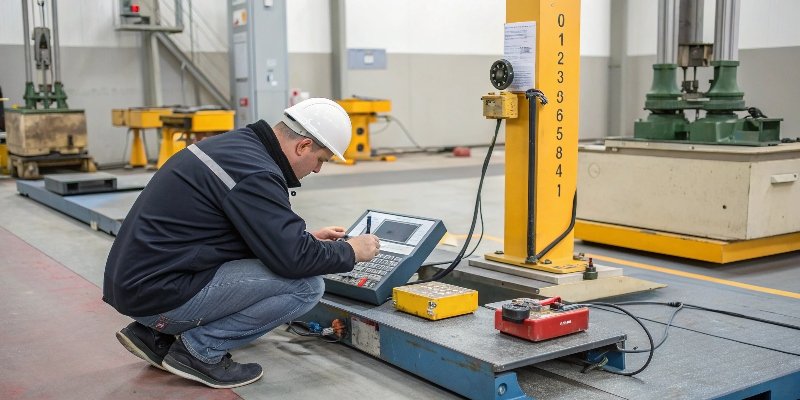
Getting accurate measurements from your weighing systems1 is non-negotiable. But with different methods available, how do you know which one is right for you? It all starts with understanding the process. Let's explore how we handle this in real-world industrial settings.
How is load cell calibration performed in industrial settings?
An on-site calibration goes wrong. Now your production line is down. This costs time and money. Knowing the right field calibration steps prevents these exact expensive disruptions.
In industrial settings, we perform field calibration by first ensuring the load cell is installed correctly and has no load. We then adjust the indicator to zero. Finally, we apply a known test weight, often around two-thirds of the scale's capacity, and adjust the span or gain.

Dive Deeper
In my 18 years of manufacturing industrial scales, I've seen many issues arise not from the load cell, but from its installation. Before any calibration, we must get the basics right. This is our first step on the factory floor.
Installation and Environment Checks
The sensor must be perfectly vertical. Any side forces, even small ones, will give you wrong readings. The environment also matters a great deal. We look for a stable temperature2, ideally around 20°C (68°F), and make sure there are no vibrations from nearby machinery. We always use a spirit level to check that the scale is perfectly flat before we begin. These environmental and physical checks are quick, but they are essential for a reliable calibration that will last.
The Two-Step Field Process
Once the setup is confirmed, the actual process is straightforward. We call this a zero and span calibration3.
| Step | Action | Purpose |
|---|---|---|
| 1. Zero Calibration | With the scale empty, press the "zero" button on the indicator or software. | This sets the zero point, telling the system that "no load" equals zero. |
| 2. Span Calibration | Place a known, certified weight on the scale. We suggest 2/3 of max capacity. Enter that weight value into the indicator and confirm. | This sets the measuring range or "span," ensuring it reads correctly across its capacity. |
This simple field process is vital for maintaining accuracy on the factory floor without needing to send equipment to a lab.
What techniques are commonly used to calibrate load cells?
You need the highest accuracy possible. But standard field methods aren't quite enough. This uncertainty risks the quality of your product. Using proven, precise techniques provides the confidence you need.
The most common techniques are dead weight calibration, which offers the highest precision using certified weights, and smart calibration, which uses software for automated adjustments. We also perform electrical bridge tests to check the internal health of the load cell before any calibration begins.

Dive Deeper
Choosing the right technique depends on your accuracy needs and the equipment you have. At Weigherps, we use a few key methods in our factory and labs to guarantee performance for our clients.
Dead Weight Calibration: The Gold Standard
This is the most accurate method available. In our controlled lab environment, we place highly accurate, certified weights4 directly onto the load cell. We record the electrical output (in mV/V) at different steps, from zero to full capacity. This process allows us to map the sensor's performance and create a precise calibration curve. This method can achieve an accuracy better than 0.01%. It's the most reliable technique, but it needs a specialized lab.
Smart & Electrical Checks
Modern digital load cells and diagnostic tools give us more options. These methods help ensure a load cell is not just accurate, but also healthy.
| Technique | Description | Best For |
|---|---|---|
| Smart Calibration | Connect the sensor to a computer. The software guides you to apply a known weight. It then automatically adjusts the zero point, span, and even compensates for temperature changes. | IoT weighing systems and applications requiring digital integration. |
| Bridge Test | We use a multimeter to check the sensor's internal wiring. We measure bridge resistance, insulation resistance, and zero output stability. | A preliminary health check. If these values are wrong, the load cell is likely faulty and calibration won't fix it. |
Using a combination of these techniques ensures that the load cell we ship is both accurate and built to last.
How often should load cells be calibrated for optimal performance?
Your scales were accurate last month. But are they today? Unchecked drift can slowly ruin your batch consistency. A clear calibration schedule is the simple solution to this common problem.
For optimal performance, you should calibrate load cells at least once a year in standard industrial environments. For high-precision applications, like in laboratories or with systems under heavy use, we recommend calibrating every three to six months.

Dive Deeper
I often get asked this question, and the honest answer is "it depends." A yearly check-up is a good starting point for most users. However, several factors can change this schedule. The goal is to balance the cost of calibration with the risk of inaccuracy in your operations. You need to think about your specific situation.
Key Influencing Factors
The environment and usage patterns are the biggest drivers of calibration frequency. A load cell in a stable, clean laboratory will need less frequent checks than one on a vibrating factory floor exposed to constant temperature swings. Heavy, continuous use also causes performance to drift much faster than occasional use. Any physical shock5, such as dropping the scale or a sudden overload, means you need to recalibrate immediately.
Recommended Calibration Frequency
Here is a simple guide we provide our clients to help them build a maintenance schedule.
| Scenario | Recommended Frequency | Reason |
|---|---|---|
| High-Precision Laboratory | Every 3-6 months | Requires the tightest accuracy for research or quality control. |
| Standard Industrial Use | Annually | A good balance for most production lines with stable conditions. |
| Harsh/Heavy Environment | Every 6 months | High vibration, dust, or temperature changes accelerate performance drift. |
| After a Shock Event | Immediately | If the scale is dropped, overloaded, or moved, it must be recalibrated. |
Sticking to a schedule like this prevents small, unnoticed errors from becoming big, expensive problems.
What tools are necessary for accurate load cell calibration?
You're ready to calibrate, but you don't have the right tools. Guesswork leads to bigger errors down the line. Having the correct, certified equipment is the only way to guarantee a proper calibration.
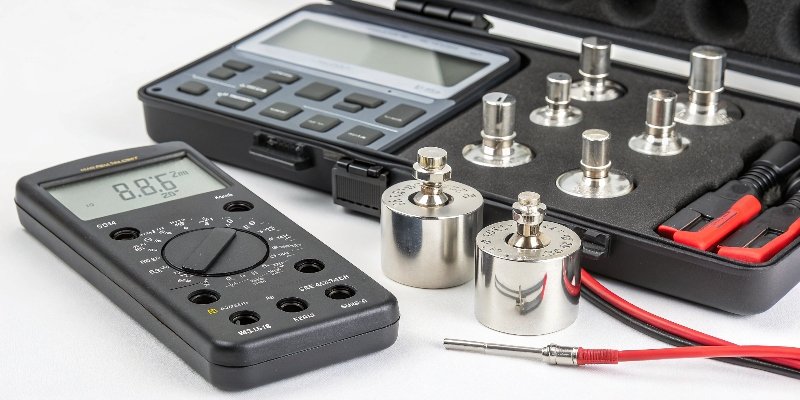
The most critical tool is a set of certified test weights appropriate for the scale's capacity. You will also need the scale's indicator or calibration software. For advanced diagnostics, a high-quality digital multimeter is necessary to perform electrical checks on the load cell itself.
Dive Deeper
Having the right tools is just as important as knowing the right steps. Without them, any calibration attempt is just guesswork. At our facility, we rely on a specific set of equipment for every calibration job we perform to ensure the results are accurate and repeatable.
The Non-Negotiable Tool: Certified Test Weights
These are not just any heavy objects. They are weights manufactured to a specific tolerance (like OIML or NIST classes6). More importantly, they come with a certificate of accuracy that is traceable to an international standard. You need a range of weights to test the scale at different points, not just at its maximum capacity. This is how you verify the scale is linear and measures correctly across its entire range.
Essential Supporting Equipment
Beyond the weights, other tools are vital for a complete and professional job.
| Tool | Purpose | Why It's Important |
|---|---|---|
| Digital Multimeter | To measure resistance and voltage on the load cell's bridge. | It helps us diagnose the health of the sensor before calibration. A bad sensor cannot be properly calibrated. |
| Calibration Software | For digital or 'smart' load cells. | The software interfaces directly with the sensor to automate adjustments and store calibration data. |
| Stable Surface & Spirit Level | To ensure the weighing platform is perfectly level before starting. | An unlevel scale will produce inconsistent and inaccurate readings, making the calibration useless. |
Using these specific tools ensures that our calibrations are repeatable, traceable, and above all, accurate for our customers.
Conclusion
To summarize, proper load cell calibration involves the right method, tools, and schedule. It is essential for ensuring your weighing systems are accurate, reliable, and trustworthy.
- Best practices for weighing systems help ensure consistent accuracy and reliability in measurements. ↩
- Stable temperature conditions are crucial for accurate measurements, preventing environmental influences on readings. ↩
- Understanding zero and span calibration is crucial for maintaining accurate measurements across the scale's capacity. ↩
- Certified weights ensure accuracy in calibration, providing a reliable standard for testing load cells. ↩
- Physical shocks can compromise calibration, making immediate recalibration essential for accuracy. ↩
- OIML and NIST classes define the accuracy standards for certified weights, ensuring reliable calibration. ↩



[…] processing industry. They were manually subtracting container weights for their spice blends, and batch consistency1 was a constant issue. We showed them how to use the tare function for sequential weighing, and it […]