
Struggling to find the right scale for your trucks? The wrong choice can cost you time and money. We can help you find the best fit for your business.
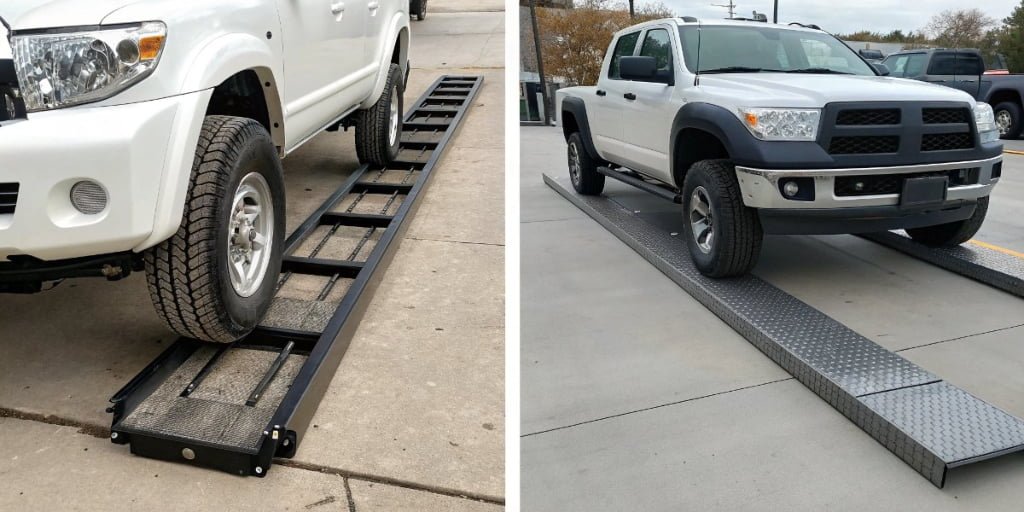
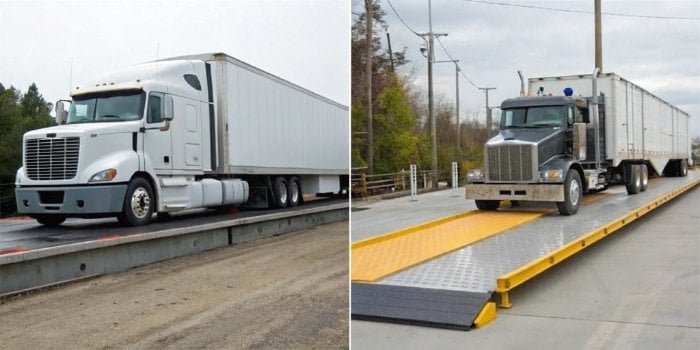
Axle scales are portable and measure weight per axle, great for compliance checks and dynamic weighing. Single-draft scales, or weighbridges, weigh the entire vehicle at once, offering higher overall accuracy but at a greater cost and space requirement.
Making the right choice involves more than just the initial price. It is about how well the scale works with your daily operations. During my 19 years at Weigherps, I have helped many clients navigate this exact decision. They often worry about making a large investment that doesn't solve their core problem. Let's look closer at the key differences to help you decide on the best path forward. This information will make your decision much easier.
What type of weighing scale is more accurate?
Worried that inaccurate weight readings could lead to fines or lost revenue? Inaccuracy is a real business risk. We have the data to show you which scale performs best.
For total vehicle weight, a single-draft scale (weighbridge) is generally more accurate because it captures the entire weight at once. Axle scales are very accurate for individual axle weights, but summing them can introduce small errors.

When we talk about accuracy, we need to be specific about what we are measuring. The two types of scales are designed for different kinds of precision. As a software provider, you understand how important clean, reliable data is, and the same principle applies here.
Single-Draft Scale Accuracy
A single-draft scale, or weighbridge, weighs the entire truck in a single measurement. Because the whole vehicle is on the platform at the same time, the reading represents the true total gross weight. This method eliminates errors from weight shifting1 between axles. For this reason, these scales are often certified as "legal for trade2," meaning you can use their measurements for commercial transactions.
Axle Scale Accuracy
An axle scale measures the weight of one axle or axle group at a time. For that specific axle, the accuracy is very high. However, when you add the weights of all axles to get a total, small errors can creep in. This can happen if the truck moves slightly or if the ground is not perfectly level.
Key Factors Influencing Accuracy
The final accuracy depends on more than just the scale type. Here is a breakdown of what to consider.
| Factor | Single-Draft Scale (Weighbridge) | Axle Scale System |
|---|---|---|
| Measurement Method | Weighs the entire vehicle in one go. | Weighs axle by axle, then sums the results. |
| Total Weight Accuracy | Very High (Typically ±0.1% or better). | Good, but can have summing errors (up to ±1-2%). |
| Axle Weight Accuracy | Not directly measured. | Very High, ideal for this purpose. |
| Best Use Case | Point of sale, getting legal-for-trade total weight. | Checking for overload fines3, vehicle balancing. |
| Installation | Requires a permanent, dedicated foundation. | Can be portable, but requires a very level surface. |
How do axle scales work?
Confused by how a small pad can weigh an entire truck? The technology might seem complex at first. Let me break it down into simple, understandable steps for you.
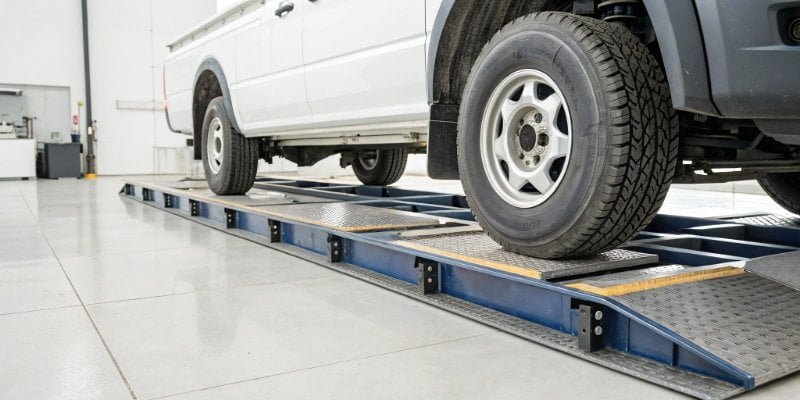
Axle scales use one or more platforms with load cells underneath. A vehicle drives over them, and the scale measures each axle's weight individually. Software then adds these weights to calculate the total vehicle weight.
Understanding the mechanics of an axle scale is key to appreciating its benefits and limitations. For you as a software director or purchasing manager, knowing how the data is generated is crucial for integration. I've personally overseen the development of our IoT scales, so I know how important this connection is.
Key Components
An axle scale system is fairly straightforward. It consists of a weighing platform that the tire rests on and high-precision load cells4 inside that measure the force. This data is sent to an indicator, which is a digital display that shows the weight. In modern systems, this indicator can also send the data directly to your software via APIs for logging and analysis.
Static vs. Weigh-In-Motion (WIM)5
There are two primary ways axle scales operate.
- Static Weighing: The truck stops to place each axle on the scale. This is the most accurate method for axle scales but is slower.
- Weigh-In-Motion (WIM): The truck drives slowly over the scale without stopping. This is much faster and ideal for high-traffic areas, but it is slightly less accurate than the static method. WIM systems are perfect for screening vehicles to identify potential overloads.
The Weighing Process and Data Output
The process is simple. The driver positions the first axle, the operator records the weight, and the driver moves forward to the next axle. For your software team, the interesting part is that each axle weight is a separate data point. Your system can capture each one, flag overloaded axles in real-time, and store a complete weight profile6 for every vehicle. This data is invaluable for fleet management, safety compliance, and logistics planning.
What are the disadvantages of a single axle scale system?
Thinking an axle scale is the perfect, low-cost solution? Be careful, as hidden drawbacks can create operational headaches. Let's look at the potential problems to avoid any surprises later.
The main disadvantages are lower accuracy for total vehicle weight compared to a full weighbridge, a slower weighing process, and high sensitivity to uneven ground, which can cause significant errors in the readings.

While axle scales offer great portability and are cost-effective, they are not a perfect solution for every situation. In my experience, clients who overlook these disadvantages often face challenges with efficiency and data reliability. Acknowledging these issues upfront allows you to plan for them.
The most critical factor is the ground surface. An axle scale must be placed on a perfectly flat and level area. Even a small slope can shift weight from one axle to another, making the final summed weight inaccurate. This requirement can sometimes add unexpected site preparation costs7.
Another point is the speed of operation. Weighing a truck with five or six axles one by one takes time. If you have a long line of trucks waiting, this can become a major bottleneck in your operations. A single-draft weighbridge weighs the entire truck in under a minute, which is much more efficient for high-volume sites. Finally, the process relies more on the operator to position the truck correctly for each measurement, introducing a potential for human error.
| Disadvantage | Operational Impact | How to Mitigate |
|---|---|---|
| Summing Errors | Can lead to inaccurate total weight, billing issues, or incorrect loading. | Ensure proper operator training and use scales on a certified level surface. |
| Slower Throughput | May create bottlenecks and delays in busy facilities. | Use a Weigh-In-Motion (WIM) system for screening or plan workflows accordingly. |
| Surface Sensitivity | Incorrect readings and disputes if the ground is not perfectly level. | Invest in proper site preparation or use portable leveling tracks. |
| Operator Dependency | The accuracy of the result depends on the driver's skill in positioning the truck. | Provide clear visual guides on the ground and thorough training for all operators. |
Is a single-axle scale or a multi-axle weighbridge system better?
Stuck between a portable axle scale and a large weighbridge? This decision impacts your budget and your entire workflow. We can make the choice clear based on your specific needs.
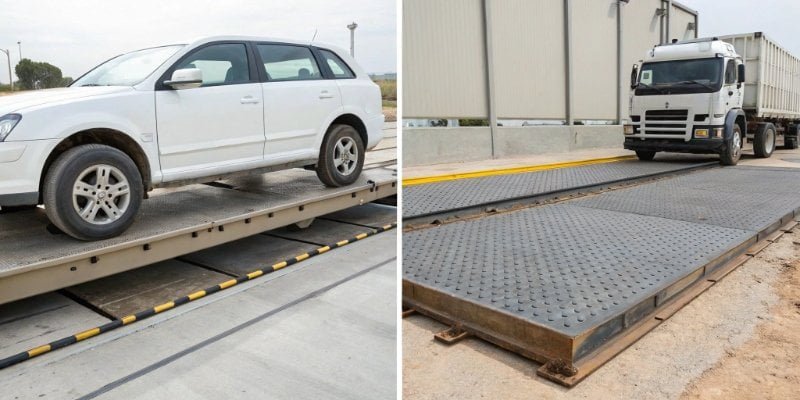
A single-axle scale is better for mobility, checking axle load compliance, and lower initial cost. A multi-axle weighbridge is superior for high throughput and when an accurate total vehicle weight is required for commercial transactions.
The best scale is the one that fits your job. After 19 years of providing weighing solutions, I can tell you that the decision comes down to your primary goal. You need to ask yourself: "What problem am I trying to solve with this scale?" The answer to that question will point you in the right direction.
When to Choose an Axle Scale
Based on my direct experience helping clients, an axle scale is the right tool for specific jobs.
- High-Precision Axle Data: If your main concern is avoiding fines for overloaded axles, an axle scale gives you the exact data you need.
- Dynamic or Mobile Weighing: If you need to weigh vehicles at different locations, such as construction sites or farms, the portability of axle scales is a huge advantage.
- Intense Use in Tight Spaces: When you don't have the space for a 60-foot weighbridge, axle scales can fit almost anywhere.
- Budget Constraints: Axle scales8 have a much lower upfront cost, making them more accessible for smaller operations or for companies just starting to implement weight checks.
When to Choose a Single-Draft Scale (Weighbridge)
On the other hand, a full weighbridge is an essential piece of infrastructure for other types of businesses.
- Single, Accurate Weighing: If you buy or sell products by weight, you need a legal-for-trade scale. A single-draft weighbridge provides the highest accuracy for total vehicle weight.
- High Volume: For quarries, waste management facilities, or large distribution centers, a weighbridge can handle a high volume of trucks quickly and efficiently, maximizing throughput.
Ultimately, your choice should empower your business. We design our scales to provide reliable data that can integrate with your software, helping you achieve growth and efficiency.
Conclusion
Choosing between an axle and a single-draft scale depends on your specific needs for accuracy, portability, and throughput. Carefully assess your primary business goals to make the best investment.
-
Learn about weight shifting and its impact on weighing accuracy. ↩
-
Understand the significance of 'legal for trade' certifications for your business. ↩
-
Understand the financial implications of overload fines and how to avoid them. ↩
-
Discover the technology behind load cells and their role in accurate measurements. ↩
-
Learn about WIM technology and how it enhances vehicle weighing efficiency. ↩
-
Understand the concept of weight profiles and their role in fleet management. ↩
-
Learn about site preparation costs and how to budget for them effectively. ↩
-
Explore this link to understand the functionality and benefits of axle scales for your business. ↩



Comments (0)