

Losing track of your stock is chaotic and costly. This disorganization directly eats into your profits and creates massive headaches for your team. The right tools can restore order and efficiency.
The best inventory management tools are a combination of hardware and software working together. This includes software like a Warehouse Management System (WMS) and hardware like barcode scanners and industrial weighing scales to capture accurate data for the software to process.

In my 19 years in the industrial weighing industry, I've seen companies transform their operations with the right setup. It's rarely just one piece of software that solves the puzzle. The magic happens when reliable hardware provides clean, accurate data to smart software. This integration is what separates a struggling warehouse from a highly efficient one. It’s about creating a complete system where every part speaks the same language. Let's break down the specific tools that make this happen.
What Are the Most Common Software Tools for Inventory Management?
Manually tracking inventory on spreadsheets is a recipe for disaster. This leads to constant stockouts or overstocking, tying up capital and frustrating customers. Dedicated software automates this entire process.
The most common software tools include Enterprise Resource Planning (ERP) systems, which cover all business areas, and specialized Warehouse Management Systems (WMS). Simpler, standalone inventory management applications are also popular for smaller businesses needing focused solutions.
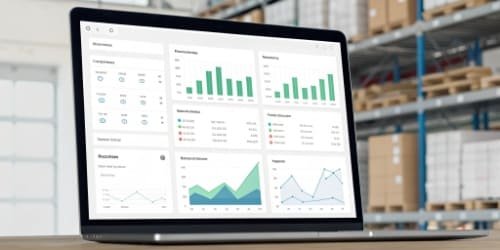
Software acts as the brain of your inventory operations1, but choosing the right one depends on your scale and needs. As a manufacturer of hardware that feeds data into these systems, I've worked with clients using all types. The key is understanding what each one does best. A good system should provide real-time tracking2, demand forecasting3, automated reordering4, and detailed reporting. It needs accurate data to function, which is where the hardware comes in. Software can only be as good as the information it receives. Let's look at how these common software types compare.
Breaking Down Software Options
Each software type serves a different purpose within a business.
| Software Type | Primary Focus | Best For | Key Feature |
|---|---|---|---|
| ERP System | Entire Business Operation | Large enterprises | Integrates inventory with finance, HR, and sales data. |
| WMS | Warehouse Operations | Businesses with complex logistics | Optimizes picking, packing, shipping, and storage. |
| Standalone App | Inventory Control Only | Small to medium businesses | Simple, focused tracking of stock levels and orders. |
When we develop our IoT-enabled scales5, we design them to communicate with all these systems. This ensures that no matter which software our clients' customers use, our hardware can provide the precise weight and count data needed to make the system effective.
How Do Barcode Systems Improve Inventory Management Efficiency?
Counting items by hand and writing them down is painfully slow. More importantly, it’s full of human errors that lead to inaccurate stock records, causing major operational and financial problems.
Barcode systems drastically increase efficiency by automating data capture. Using a scanner to read a barcode is instant and virtually error-free, speeding up every process from receiving goods to shipping orders and conducting cycle counts.

The impact of implementing a barcode system is immediate. I’ve personally witnessed operations go from taking days to count inventory to completing the same task in just a few hours. The process is simple: an item is scanned, and its data is instantly sent to the central inventory system, updating records in real time. This eliminates guesswork and provides a clear, accurate picture of what you have and where it is. This technology is fundamental to modern inventory control6, and its effectiveness can be boosted even further when combined with other hardware.
The Role of Barcode Scanners and Scales
The real power comes from combining technologies to eliminate steps. In our work at Weigherps, we often integrate barcode scanners7 directly with our industrial weighing scales8. Imagine this workflow: a warehouse operator scans the barcode on a box of components. They then place the box on one of our scales. In a single action, the system captures both the product ID from the barcode and its exact weight from the scale. This combined data point—item and quantity—is sent directly to the WMS or ERP. This simple integration eliminates two separate manual tasks and removes a huge potential for error. It creates a single, seamless data entry point that is fast, accurate, and foolproof. For businesses that deal in items sold or counted by weight, this is not just an improvement; it's a complete game-changer.
What Are the Benefits of Using Cloud-Based Tools for Inventory Management?
Being chained to a desktop computer at the warehouse is inefficient. If your data is stuck on-premise, you can't make quick decisions or check stock levels when you're off-site.
Cloud-based tools give you real-time access to inventory data from any device, anywhere in the world. They offer superior scalability, lower IT setup costs, automatic software updates, and seamless collaboration across multiple locations.

In the past, setting up an inventory system meant buying expensive servers and hiring an IT team to maintain them. The cloud changed everything. Now, you can subscribe to a service and get started almost immediately. We've seen our clients, especially global wholesalers and retailers, embrace this shift because it gives them the flexibility to manage inventory across continents without the heavy infrastructure investment. The ability to see your entire stock picture on your phone while talking to a supplier is incredibly powerful. It allows for faster, more informed decision-making.
Local vs. Cloud Data Storage
Flexibility is essential because not every warehouse has a perfect internet connection. This is a practical reality we have to address as hardware providers.
| Feature | On-Premise System | Cloud-Based System |
|---|---|---|
| Accessibility | Limited to internal network | Accessible from anywhere with internet |
| Upfront Cost | High (servers, licenses) | Low (subscription fee) |
| Maintenance | Managed by in-house IT | Managed by the service provider |
| Scalability | Difficult and expensive | Easy and flexible |
My company, Weigherps, builds our IoT weighing systems with this in mind. Our scales are designed for dual functionality. They can operate offline and store data locally in environments with unstable connectivity. Once a connection is restored, they can transmit that stored data directly to the cloud. This hybrid approach ensures data is never lost. It gives our software partners a reliable hardware endpoint that performs consistently, whether it’s in a modern city warehouse or a remote production facility.
How Does Inventory Management Software Integrate with Other Business Tools?
When your inventory system doesn't talk to your sales or accounting software, you create data silos. This forces your teams to work with conflicting information, leading to confusion and costly mistakes.
Inventory software integrates with other business tools using APIs (Application Programming Interfaces). These APIs act as bridges, allowing separate systems like accounting software, e-commerce platforms, and CRMs to share data automatically and operate as one unified system.

Integration is what brings an entire business together. An API is simply a set of rules that lets different software programs communicate. For example, when a customer places an order on your e-commerce website, an API tells your inventory software9 to reduce the stock count. When that stock level hits a predefined minimum, the inventory software can use another API to trigger a purchase order in your accounting system. This automation eliminates manual work and ensures that everyone in the company is looking at the same up-to-date information. It’s the key to creating a smooth, efficient flow of data from the sales floor all the way to the supply chain10.
The Crucial Hardware-Software Link
As a hardware manufacturer, we see ourselves as a critical part of this integrated ecosystem. Our scales aren't just for weighing things; they are primary data collection points. The work of our R&D and technical departments is focused on ensuring our scales can communicate flawlessly with any software through standard protocols and APIs. We provide the tools and support for software vendors to easily connect to our hardware. This means a software provider like you can offer your clients a complete, end-to-end solution. Your software provides the intelligence to manage the data, and our hardware provides that data with unmatched accuracy and reliability. Together, we create a powerful system that solves real-world operational challenges and helps the end-user's business grow.
Conclusion
Effective inventory management relies on the seamless integration of hardware and software. The best solution combines smart software with reliable data-capture hardware like scales and scanners to create a single, powerful system.
-
Explore the essential components that contribute to successful inventory operations. ↩
-
Understand the importance of real-time tracking for maintaining accurate stock levels and improving efficiency. ↩
-
Learn how effective demand forecasting can help you optimize stock levels and reduce costs. ↩
-
Discover how automated reordering can streamline your inventory processes and prevent stockouts. ↩
-
Discover how IoT-enabled scales can enhance data collection and improve inventory accuracy. ↩
-
Explore best practices that can help you maintain optimal inventory levels and reduce waste. ↩
-
Find out how barcode scanners can enhance your inventory tracking and reduce errors in your operations. ↩
-
Discover how industrial scales can provide accurate data for better inventory control and decision-making. ↩
-
Find out the essential features that make inventory software effective for managing stock. ↩
-
Discover the critical role of inventory management in ensuring a smooth supply chain operation. ↩



[…] focus on removing any chance for error. It's not just about measuring weight; it's about creating a foolproof workflow1. The machine has to be smarter than the busiest operator on your factory floor. I once worked with […]