

Choosing the right industrial scale feels complicated. The wrong choice can lead to inaccurate data, wasted material, and lost profits. But understanding the basics makes the decision much easier.
An industrial scale’s weighing range and accuracy depend entirely on its intended use. High-capacity truck scales weigh tons with lower resolution, while sensitive laboratory balances measure milligrams with extreme precision. The key is matching the scale's specifications to your specific operational needs.

Getting the right scale is about more than just picking the one that can handle your heaviest load. It involves a deeper look into how you use weight data1 in your daily operations. An investment in the wrong equipment can be a costly mistake, not just in the initial purchase but in long-term operational inefficiencies. As a manufacturer with nearly two decades of experience, we've helped countless businesses navigate these choices. Let's break down the key factors you need to consider to ensure you select the perfect weighing solution for your business, saving you time and money.
What is the difference in capacity and readability between a floor scale and a bench scale?
You need to weigh different sized items, but a floor scale seems too big and a bench scale too small. Getting this choice wrong wastes valuable space and money.
Floor scales are built for large, heavy items, with capacities from 500 kg to 20 tons and lower readability. Bench scales handle smaller objects from 1 kg to 50 kg on a countertop and offer much higher readability, sometimes down to 0.1g.
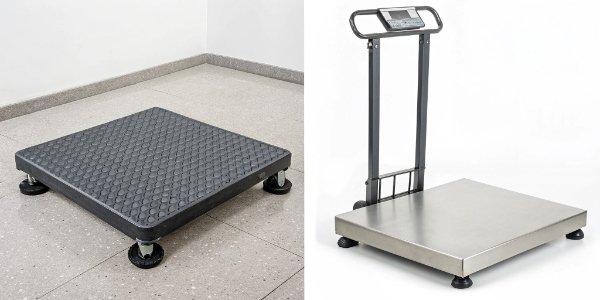
The main difference between these two types of scales is their physical size and the application they are designed for. In my 18 years of helping clients, I've seen this choice make or break workflow efficiency. It’s not just about what you can weigh, but where and how you weigh it.
Bench Scales: Precision on the Desk
Bench scales are the go-to for tasks that require precision in a compact space. You'll find them on workbenches, in labs, or at shipping stations. They are perfect for parts counting, quality control2 checks, or mailrooms. Because they handle lighter loads, their load cells3 can be more sensitive, providing higher readability. This is critical when you're mixing formulas or ensuring small products meet a tight weight specification. A small error here can compromise an entire batch.
Floor Scales: Heavy-Duty on the Ground
Floor scales are the workhorses of the industrial world. Placed directly on the factory or warehouse floor, they are designed for weighing pallets, drums, large crates, and other bulk materials. Their construction is rugged to withstand the demands of a tough environment, including forklift traffic and heavy impacts. While their readability is lower (e.g., in increments of 0.5 kg or 1 kg), this is perfectly acceptable for logistics and bulk inventory management, where you are more concerned with total weight than gram-level precision.
| Feature | Bench Scale | Floor Scale |
|---|---|---|
| Typical Capacity | 1 kg – 50 kg | 500 kg – 20,000 kg |
| Typical Readability | 0.1 g – 10 g | 0.1 kg – 10 kg |
| Platform Size | Small (e.g., 30x40 cm) | Large (e.g., 1.2x1.2 m) |
| Common Use | Parts counting, labs | Pallets, shipping docks4 |
How does a scale's maximum capacity affect its measurement accuracy?
You might think a scale with a much higher capacity than you need is a safe bet. But this common mistake can cause serious inaccuracies when weighing lighter items.
A scale's accuracy is linked to its total capacity. A high-capacity scale has larger weight increments (lower readability), making it less precise for light objects. Therefore, using a scale where your load is a reasonable fraction of its capacity gives the most reliable results.

The relationship between capacity and accuracy is one of the most misunderstood aspects of choosing a scale. A scale's "readability" or "division" is the smallest increment it can display. This is a fixed value based on its load cell and electronics. For example, a 5,000 kg floor scale might have a readability of 1 kg. It simply cannot see the difference between a 10.1 kg item and a 10.8 kg item; both will read as 10 kg or 11 kg. Trying to weigh a 2 kg sample on this scale would be meaningless. This is why we always ask our clients about the full range of items they need to weigh.
Finding the Sweet Spot
To get accurate measurements, the scale's readability must be fine enough to capture the variations that matter to you. A good rule of thumb is to choose a scale where your typical target weight falls somewhere in the middle of its capacity. A scale is most accurate and reliable when it's not being pushed to its maximum limit or struggling to register a weight that is too light for it. For example, if you are regularly weighing boxes that are around 20 kg, a 30 kg capacity scale with 5g readability is a much better choice than a 100 kg scale with 50g readability.
| Scale Capacity | Typical Readability | Best for Weighing... | Not Good for Weighing... |
|---|---|---|---|
| 200 g | 0.001 g | Pharmaceutical powders | Small hardware parts |
| 30 kg | 5 g | Shipping boxes, produce | Lab samples |
| 5,000 kg | 1 kg | Loaded pallets | Individual boxes |
How do you determine the required precision for your industrial weighing application?
Guessing the precision you need can lead to costly production errors or overspending on a scale that’s too sensitive. Your process demands accuracy, but how much is truly enough?
To determine the right precision, identify the smallest weight difference that is critical to your product quality, cost, or compliance. Consider manufacturing tolerances, the value of the material being weighed, and any applicable industry regulations. This will define your minimum required readability.
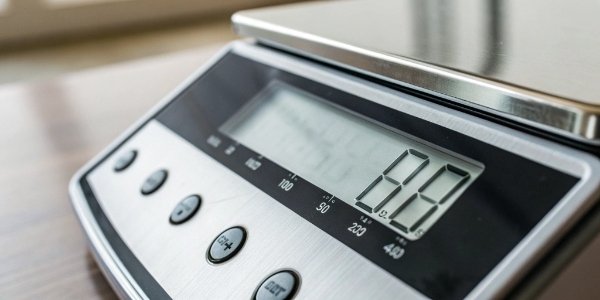
As manufacturers, we guide our customers through this decision by breaking it down into practical questions about their business. The goal isn't to buy the most precise scale on the market, but the most appropriate one. I remember a client in the food industry who was having trouble with inconsistent package weights. They were using a scale with 5g readability for a product that had a legal tolerance of only 2g. The scale was simply not precise enough to give them the control they needed.
Step 1: Analyze Your Process Tolerance
Look at your product specifications. If you are manufacturing a part that must be 500g with an acceptable tolerance of ±2g, you need a scale that can reliably measure much smaller increments than 2g. A common rule is the "10 to 1 rule," where your scale's readability should be at least 10 times smaller than the tolerance you need to hold. In this case, you would need a scale with a readability of 0.2g or better.
Step 2: Consider the Value of the Material
The cost of your material directly impacts the need for precision. If you are batching inexpensive aggregates like sand or gravel, a small percentage of error is acceptable. However, if you are adding expensive pigments, pharmaceuticals, or precious metals, even a tiny weighing error can be incredibly costly. Higher precision here translates directly to better cost control and profitability.
| Application | Key Factor | Required Precision Example |
|---|---|---|
| Batching Chemicals | Formula accuracy, safety | High (e.g., 0.1 g) |
| Shipping Pallets | Freight cost calculation | Low (e.g., 0.5 kg) |
| Quality Control | Manufacturing tolerance | Medium (e.g., 1 g) |
| Filling Food Bags | Net weight compliance | Medium-High (e.g., 0.5 g) |
What does it mean for an industrial scale to be "Legal for Trade"?
If you sell any products based on weight, using a standard, non-certified scale can get you into serious legal trouble. You need a properly certified scale to protect your business.
A "Legal for Trade" (LFT) scale is one that has been officially tested and certified by a regulatory body to meet strict standards for accuracy and reliability. It must be used whenever the price of a commodity is determined by its weight, ensuring fairness.
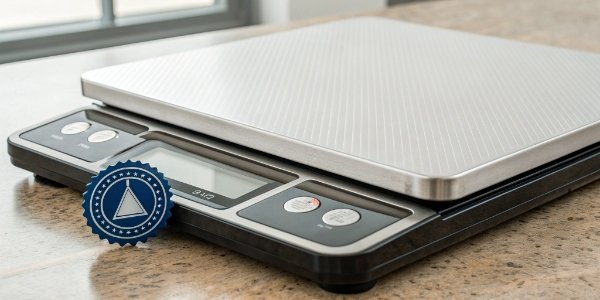
This certification is not just a marketing gimmick; it's a legal requirement in most parts of the world. A few years ago, a new client who ran a small chain of markets came to us after being fined by a weights and measures inspector. They were using standard shipping scales to weigh and sell bulk grains and spices. The scales were not LFT-certified, and they paid a heavy price. Switching to our certified scale5s made them compliant, and it also boosted their customers' confidence, as they knew they were getting exactly what they paid for.
Who Needs a Legal for Trade Scale?
The rule is simple: if money is exchanged based on a weight measurement, the scale must be Legal for Trade. This applies to a huge range of businesses:
- Grocery stores selling produce, meat, or bulk foods.
- Shipping companies that charge freight based on package weight.
- Scrap metal yards buying and selling materials.
- Jewelry stores weighing precious metals.
- Any business that packs and sells items with a stated weight on the label.
The Certification Process
Organizations like the National Conference on Weights and Measures (which issues NTEP certificates in the US) or the International Organization of Legal Metrology (OIML) set the standards. A scale model must pass extensive testing for accuracy across its full capacity range, durability, and resistance to environmental factors and tampering. LFT scales are often sealed to prevent unauthorized adjustments. At Weigherps, we ensure our products comply with international standards like CE and can guide clients on obtaining the specific certifications they need for their region.
Conclusion
Choosing the right industrial scale means matching its capacity and accuracy to your specific job, whether for heavy logistics or precise, trade-approved measurements.
-
Discover the significance of weight data in optimizing industrial processes. ↩
-
Discover how accurate weighing is essential for maintaining product quality. ↩
-
Understand the technology behind load cells for better scale performance. ↩
-
Understand the importance of accurate weighing at shipping docks for efficiency. ↩
-
Find guidance on selecting certified scales to ensure compliance and accuracy. ↩



Comments (0)