
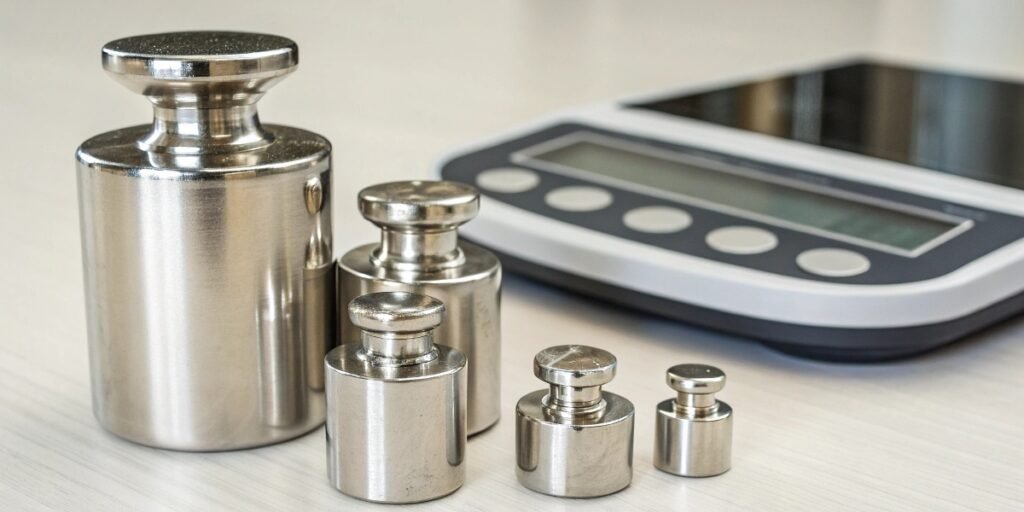
Your digital scale is giving inaccurate readings. This can mess up everything from your recipes to your lab work. You can easily fix this with proper calibration right now.
To calibrate a 100g digital scale, a certified 100g calibration weight is the best choice for accuracy. If you don't have one, U.S. nickels are a great alternative, as each weighs exactly 5 grams. You'll need 20 of them to reach 100g.
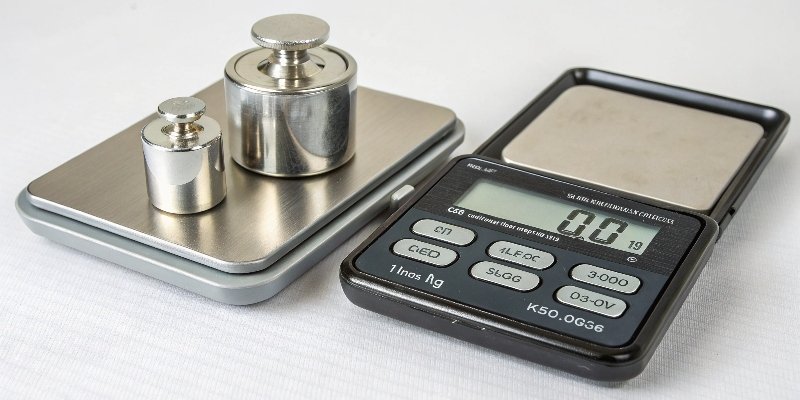
Getting that perfect 100g reading is easier than you think. But the method you choose depends on the accuracy you need. Let’s break down the best options, from professional tools to handy household items, so you can pick what's right for you.
What can I use to calibrate a digital scale?
Need to calibrate your scale but have no special weights? Using the wrong item will only make things worse. Let's look at reliable options you already have around.
For precise calibration, always use certified calibration weights. For a quick check or home use, you can use items with a government-regulated weight, like fresh coins. A specific volume of distilled water also works, as 1 milliliter of water weighs 1 gram.
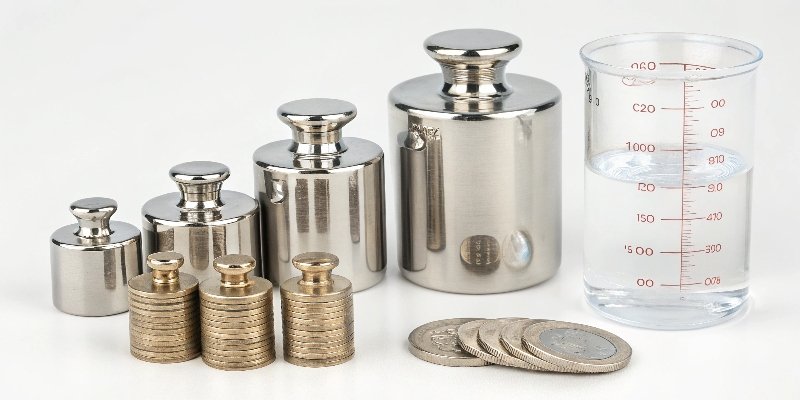
The choice of calibration tool1 really comes down to your needs. As someone who has been in the industrial weighing business for 18 years, I can tell you that nothing beats a certified weight for professional applications. But for everyday tasks, some household items can get you close.
Professional vs. DIY Calibration Tools
The main difference is guaranteed accuracy. A certified weight has a known, minimal tolerance for error. Household items can vary.
Here’s a quick comparison:
| Calibration Tool | Pros | Cons | Best For |
|---|---|---|---|
| Certified Weights | Highly accurate, reliable | Can be expensive | Labs, Businesses, Serious Hobbyists |
| Coins | Easily accessible, cheap | Weight can vary with wear | Quick checks, Kitchen scales |
| Water | Available everywhere | Hard to measure precisely | Emergency situations only |
Before you start, make sure your scale is on a flat, stable surface away from vibrations or drafts. The temperature in the room should also be stable, ideally around 20°C (68°F). Temperature shifts can affect the scale's internal components and skew your results.
What weighs 50 grams to calibrate a scale at home?
Trying to find something that weighs exactly 50 grams for calibration? Just grabbing a random object is a recipe for disaster. Luckily, common household items can work perfectly.
A U.S. nickel weighs 5 grams, so ten nickels make a perfect 50g weight. Alternatively, two standard AA batteries weigh approximately 48-50 grams, which is close enough for a quick check. A standard C-cell battery also weighs around 50 grams.
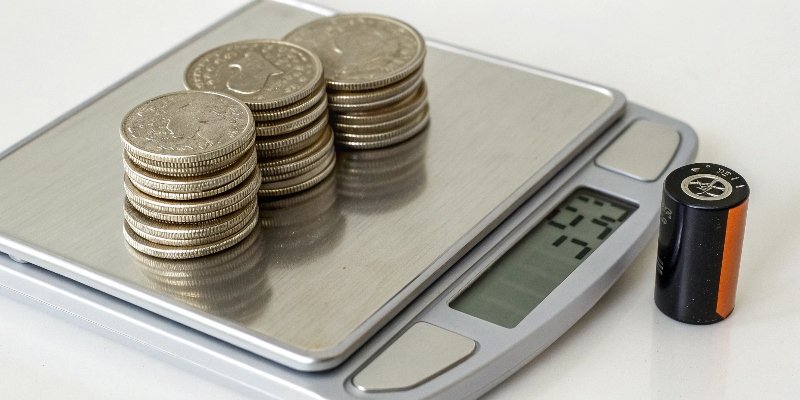
When you don’t have a certified weight, your next best option is something with a standardized, consistent weight. Coins are often the best choice for this.
Using Coins for Calibration
In the United States, a nickel is manufactured to weigh exactly 5 grams. This makes it a very reliable tool. To get 50 grams, you simply need to stack 10 nickels.
- 10 U.S. Nickels = 50 grams
Other Household Items
If you don't have nickels, other items can get you in the ballpark. But be aware of slight variations.
- Batteries: Two fresh AA batteries will typically weigh between 48 and 50 grams. It’s not perfect, but it's a good approximation for non-critical tasks.
- Water: Since 1 ml of water weighs 1 gram, you can use a medical syringe or a precise measuring spoon to measure out 50 ml of water into a lightweight container. Don't forget to tare the container's weight first.
Remember, these are approximations. We use these methods for a quick check. For any scale used in business, we always insist on using certified weights2 for accuracy.
How to calibrate a digital weighing scale without calibration weight?
Your scale is off, and you don't have a proper calibration weight. You can't trust your measurements, but work must go on. Let's use everyday items instead.
First, find an item with a known weight, like coins or a package of food with the weight printed on it. Turn on your scale, let it warm up, and press the 'tare' or 'zero' button. Then, enter calibration mode and follow the display prompts.

Calibrating without a certified weight is an emergency measure. But if you do it carefully, you can get a reasonably accurate result. The process involves using a substitute item whose weight you trust.
Step 1: Prepare Your Scale and Workspace
First, place your scale on a completely level and stable surface. A wobbly table will give you inconsistent readings. Let the scale turn on and warm up for about 30 minutes, especially if it's a high-precision model. This allows the internal electronics to stabilize. Make sure the area is free of drafts from windows or air conditioners.
Step 2: Find Your Substitute Weight
Gather your chosen items, like 20 U.S. nickels for a 100g calibration. Double-check their condition because old, worn coins may weigh less. Another good option is an unopened packet of sugar or flour since their weight is regulated.
Step 3: Follow the Calibration Process
Press the 'CAL' or 'Mode' button until you enter calibration mode. The display will likely show 'CAL' or flash a number. Place your substitute weight on the center of the platform. The scale will perform the calibration automatically. Once it’s done, it will return to normal weighing mode. Always test it afterward with a different known weight to verify the accuracy.
What can I use as a 100g weight?
You need a 100g weight for your scale but have nothing certified. Being off by even a gram can ruin your results. Here are some reliable substitutes.
The most common DIY 100g weight is a stack of 20 U.S. nickels, as each weighs precisely 5 grams. Alternatively, 100 milliliters of water in a tared container also weighs 100 grams. A standard stick of butter often weighs 113g.
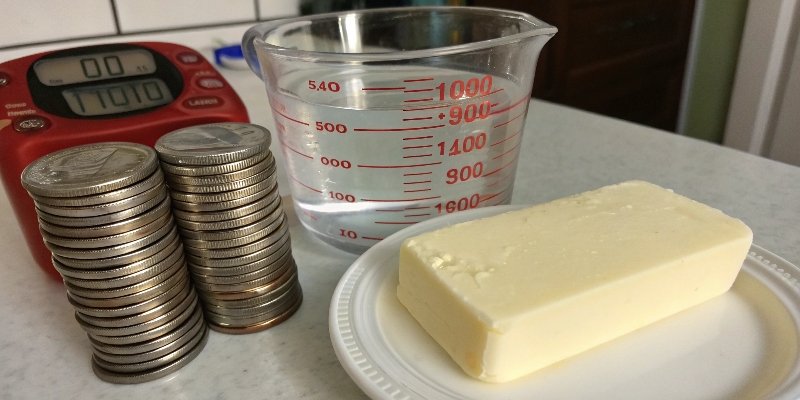
Finding a perfect 100g object can be a fun challenge. I remember once I was visiting a client's remote site and they needed a quick calibration. We had to get creative. We ended up using coins, and it worked well enough to get them through the day.
Common Items Weighing 100g
Here are a few options you can try, ranked from most to least accurate.
| Item | Weight (Approx.) | How to Use |
|---|---|---|
| 20 U.S. Nickels | 100g (exact) | Stack 20 clean, new nickels. |
| 100ml of Water | 100g | Use a syringe to measure 100ml into a light cup (tare the cup first). |
| Two Large Eggs | 100g-120g | Weigh them first on another trusted scale if possible. Highly variable. |
| Small Bag of Sugar | 100g | Look for single-serving packets with the weight printed on them. |
For home use, these creative solutions are fantastic. But if your business relies on accurate measurements, I cannot stress this enough: invest in a proper set of F2 class calibration weights. The peace of mind and accuracy are worth it.
Conclusion
Calibrating your 100g scale is simple with certified weights or common household items. Regular checks ensure your measurements are always accurate and trustworthy, which is key for any application.


Comments (0)