
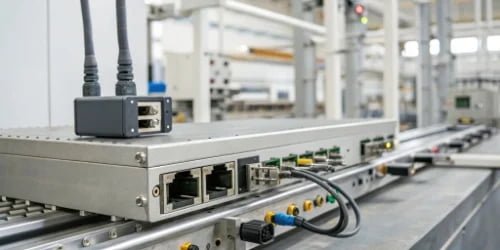
Are your old scales creating data bottlenecks? Manual data entry is slow and prone to errors. We’ll show you the essential connections that turn your scale into a smart data hub.
Modern industrial scales need a mix of wired (Ethernet, RS-232) and wireless (Wi-Fi, Bluetooth) options. This combination ensures reliable data transfer, seamless integration with existing systems, and the flexibility to adopt future IoT applications for smarter operations.

Choosing the right connectivity is more than just picking a plug. It is about building a system that prepares your business for the future. It’s about making your data work for you, not against you. This fundamental choice impacts everything from your daily workflow to your long-term growth. So, you might be asking what all the fuss is about with wireless options1. Let’s explore why they have become so important in today’s industrial environments.
Why Is Wireless Connectivity Important for Modern Industrial Scales?
Tangled wires are a safety hazard and limit where you can place scales. This clutter restricts your workflow and makes reconfiguring your space a major headache. Wireless connectivity offers the freedom and flexibility your dynamic factory floor needs.
Wireless connectivity, like Wi-Fi and Bluetooth, is crucial for operational flexibility. It allows scales to be placed anywhere without cable constraints, simplifies installation, and enables easy connection to mobile devices and cloud platforms for immediate data access.
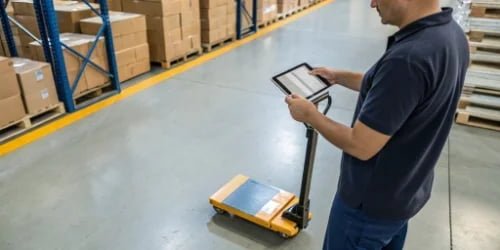
The move toward wireless is one of the biggest shifts I’ve seen in my 19 years in this industry. It’s not just about convenience; it’s about making your entire operation more agile. When your layout needs to change for a new production run, you can move a wireless scale in minutes, not hours. This adaptability is key in a fast-paced market. It removes physical barriers and allows data to flow freely from the point of measurement to the people who need it, wherever they are.
The Freedom of a Wireless Workplace
Imagine a large warehouse where scales are needed at receiving docks, in inventory aisles, and at packing stations. Running cables to all these locations is expensive, time-consuming, and creates trip hazards. Wireless scales solve this problem instantly. They communicate over the air, which means you can place them in the most optimal spot for your workflow. This improves both safety and efficiency, as workers don’t have to navigate a maze of wires.
Key Wireless Technologies for Industrial Use
Choosing the right wireless technology depends entirely on your specific needs. Not all wireless is the same, and the right choice makes all the difference.
| Technology | Typical Range | Best Use Case | Why It’s Useful |
|---|---|---|---|
| Wi-Fi | Up to 100m | Connecting to a main factory network (LAN) | Allows scales to send data directly to servers and ERP systems. |
| Bluetooth | Up to 10m | Connecting to nearby devices like tablets or printers | Perfect for mobile workstations and printing labels on the spot. |
| Cellular (4G/5G) | Miles | Remote locations without Wi-Fi access | Ideal for scales used in logistics, agriculture, or field operations. |
As manufacturers, we can build scales with the exact wireless module your software requires. This ensures a perfect handshake between our hardware and your system.
How Do Different Connectivity Options Impact the Functionality of Industrial Scales?
Your scale collects critical data, but is that data getting where it needs to go? Using the wrong connection can turn a powerful tool into an isolated island. The port on your scale directly determines if it can talk to your software, your network, or just a simple printer.
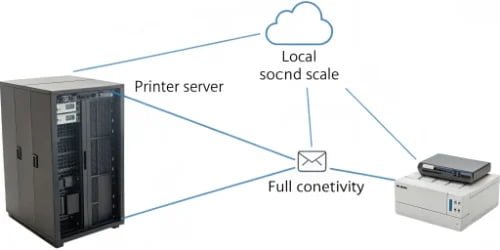
The choice of connectivity directly defines a scale’s role. A basic RS-232 connection might only send weight to a local printer. An Ethernet connection integrates the scale into a factory network, while full IoT connectivity turns it into a smart sensor for advanced analytics.
The impact of this choice is huge. I remember a client in the food processing industry who was struggling with their batching system. They needed their scales to communicate with a 15-year-old batching controller that only used a specific RS-485 protocol. We designed a scale for them with that exact port. For them, that “old” technology was the most essential feature. It shows that the “best” connection is always the one that solves your problem perfectly.
Wired for Unshakable Stability
While wireless offers flexibility, wired connections provide unmatched stability and security. In environments with a lot of electronic noise or for processes where a dropped connection is not an option, wires are still king. An Ethernet connection2, for example, makes the scale a true network device. It can communicate directly with your Manufacturing Execution System3 (MES) or Enterprise Resource Planning4 (ERP) software, feeding real-time data into the heart of your business operations. Older standards like RS-232 remain vital for connecting to legacy equipment like barcode scanners or standalone printers, ensuring your new scales can work with your existing tools.
A Functional Comparison of Connections
Understanding the strengths and weaknesses of each option helps you design a better weighing system.
| Connectivity Type | Primary Function | Key Strength | Common Limitation |
|---|---|---|---|
| RS-232/485 | Direct device-to-device link | Extremely reliable and simple | Point-to-point only; short distance |
| Ethernet | Full network integration | High speed and very stable | Requires physical cable infrastructure |
| USB | PC and peripheral connection | Plug-and-play, easy to use | Short cable length; not for networking |
| Wi-Fi | Wireless network integration | Excellent flexibility and mobility | Can be affected by signal interference |
This isn’t an “either/or” decision. The most robust systems we build often include a combination of these, giving our clients the best of both worlds.
What Role Does IoT Play in Enhancing Industrial Scale Connectivity?
Are you making critical business decisions based on yesterday’s data? Your production line moves in real-time, but your data collection might be lagging behind. IoT-enabled scales provide the live insights you need to stay ahead of problems and seize opportunities.
IoT transforms a scale from a simple measurement tool into a smart, connected data source. It enables remote monitoring, predictive maintenance alerts, and seamless integration with cloud platforms. This allows for data-driven decisions from anywhere, at any time.
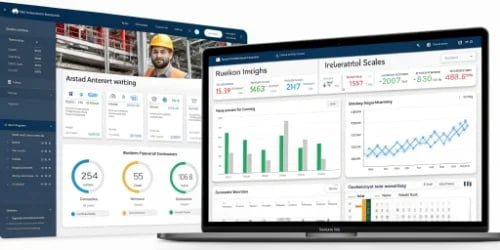
The Internet of Things (IoT) is not just a buzzword; it’s a fundamental change in how we use industrial equipment. An IoT scale doesn’t just wait to be asked for data. It actively pushes information to where it is needed. This allows for a level of process control and visibility that was impossible just a decade ago. It’s about making your scales active participants in your business intelligence strategy.
Beyond Weighing: The Dawn of the Smart Scale
An IoT-enabled scale uses lightweight protocols like MQTT to broadcast data efficiently. Instead of a central computer constantly polling the scale, the scale itself sends an update whenever there’s a new weight or a change in its status. This creates a stream of real-time information that can be used for incredible things. Imagine a scale that automatically emails a manager when a hopper is nearly empty, or sends an alert to your maintenance team if its internal diagnostics detect an issue that could lead to a future failure. That’s the power of IoT: it helps you fix problems before they happen.
Your Custom IoT Solution
As an OEM/ODM manufacturer, this is where we work most closely with software vendors like you. You may need a scale that speaks a specific language to work with your proprietary cloud platform, or one that integrates with a custom logistics application. We can design the hardware and firmware from the ground up to meet these exact needs. By embedding your required protocols directly into the scale, we ensure a perfect, seamless integration right out of the box. This level of customization requires a certain minimum order quantity, but for clients who need a truly tailored solution, it V a perfect partnership.
Which Connectivity Features Are Critical for Real-time Data Collection in Industrial Scales?
Is your production data always one step behind the action? Delayed information leads to costly mistakes in inventory management, quality control, and order fulfillment. Real-time data collection closes this gap completely and gives you immediate control over your operations.
For real-time data, high-speed and low-latency connections are critical. Ethernet provides stable, fast wired communication. Wi-Fi offers flexible, high-speed wireless access. Support for modern protocols like TCP/IP and MQTT is also essential for instant data transmission.
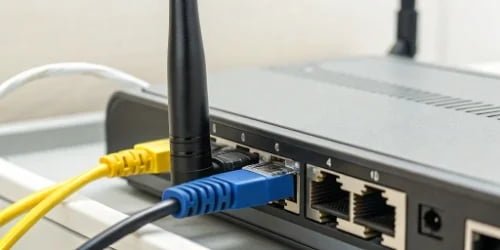
When we talk about “real-time,” we mean that the data appears on your screen the instant the measurement is taken. In a fast-moving filling or checkweighing line, even a one-second delay can be the difference between a correct package and a rejected one. Achieving this requires more than just a fast port; it requires the entire system, from the scale’s sensor to your software’s dashboard, to be optimized for speed.
The Need for Speed and Stability
Latency, or the delay in data transmission, is the enemy of real-time systems. While Wi-Fi is fast, an Ethernet connection provides the most reliable, low-latency link for mission-critical applications. It’s a dedicated, physical connection that isn’t prone to the same interference as wireless signals. This is why many automated production lines rely on wired Ethernet for their scales. It guarantees that the data from the scale arrives at the controller or PC instantly and without interruption, every single time. This stability is the bedrock of dependable, high-speed data collection.
The Protocol Layer: The Language of Data
The physical connection is only half the story. The communication protocol—the digital language spoken over that connection—is just as important.
| Protocol | What It Does | Why It’s Good for Real-Time |
|---|---|---|
| TCP/IP | The base language of the internet and local networks | Ensures data packets arrive reliably and in the correct order. |
| MQTT | A lightweight messaging protocol for IoT devices | Ideal for sending small, frequent updates with minimal network load. |
| HTTP/REST API | The standard for web communication | Makes it easy to integrate scale data with modern web-based software. |
We help our clients select and implement the right protocol stack5. By ensuring the scale speaks the same language as your software, we eliminate integration headaches and create a system that delivers truly real-time performance6.
Conclusion
Essential connectivity transforms scales from isolated tools into vital data hubs. Choosing the right mix of wired, wireless, and IoT options is key to building a smart, efficient operation.
- Explore the advantages of wireless technology in enhancing operational flexibility. ↩
- Learn how Ethernet connections provide stability and speed for critical operations. ↩
- Learn how MES can streamline production processes and improve efficiency. ↩
- Discover how ERP systems can enhance business operations and data management. ↩
- Understanding protocol stacks can help you optimize data communication in your systems. ↩
- Explore strategies to enhance real-time performance for better operational control. ↩



Comments (0)