
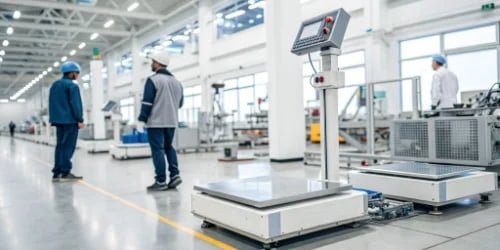
Your current weighing systems feel disconnected, creating data silos. This isolation leads to manual errors, production delays, and missed opportunities, directly impacting your bottom line and efficiency.
The future of industrial weighing will be shaped by key Industrial IoT (IIoT) trends. These include edge computing, AI/ML, enhanced 5G connectivity, and digital twins. They will make scales smarter, more predictive, and deeply integrated, but the fundamental requirement will always be precision measurement.
In my 19 years in this industry, I have seen technology change dramatically. We have moved from simple digital readouts to complex networked systems. Today, the conversation is all about the Industrial Internet of Things (IIoT). Everyone wants to connect everything. This is exciting, and it opens up incredible possibilities for our customers, especially for software providers who build the brains behind these operations. But as we look at these future trends, we must never forget what a scale is for. It is for accurate measurement. I want to walk you through the most important trends and show how they will change our world, but also bring it back to this core principle. Let’s explore what this future looks like and how we can prepare for it together.
How Will Emerging Industrial IoT Developments Influence Weighing Technology?
Your scales collect valuable data, but it is often stuck in one place. This isolation makes it impossible to make fast, informed decisions, leaving you a step behind your operations.
Emerging IIoT developments will transform scales from simple measurement tools into active data points in your factory. They enable real-time data analysis, predictive maintenance alerts, and seamless integration with your ERP and MES systems. This connection drives major improvements in operational efficiency.
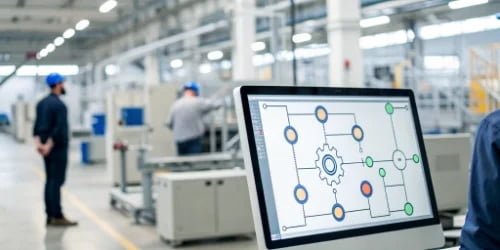
The biggest change I see is how we use the data from our scales. For years, a scale’s job ended when it showed a number. Now, that number is just the beginning. The real power comes from what you do with it. We work with software companies like yours to make this happen. Your software needs good, clean data to work its magic, and our scales are designed to provide it. This is where IIoT changes the game.
From Isolated Data to Actionable Insights
In the past, an operator would write down a weight or manually enter it into a system. This process was slow and full of potential errors. With IIoT, our scales can now send data directly to your software in milliseconds. This means a purchasing manager can see real-time inventory levels1, a quality manager2 can spot a problem instantly, and a logistics director3 can plan shipments with up-to-the-minute information. Our scales come with robust APIs4, making it simple for your team to integrate this data flow.
The Shift to Predictive Maintenance
Another key development is predictive maintenance5. Our scales are built to last, but like any machine, they require maintenance. Instead of waiting for a breakdown that stops your production line, IIoT allows the scale to monitor its own health. It can detect patterns that suggest a future problem and send an alert. This allows you to schedule maintenance during planned downtime, saving you time and money. It turns a reactive problem into a proactive solution.
| Traditional Weighing | IIoT-Enabled Weighing |
|---|---|
| Manual data entry | Automated, real-time data transfer |
| Reactive maintenance (fix when broken) | Predictive maintenance (fix before it breaks) |
| Isolated information | Integrated with ERP/MES systems |
| Slow decision-making | Instant, data-driven decisions6 |
What Are the Upcoming IoT Trends That Will Transform Weighing Systems in Industry?
You see competitors adopting new tech and you worry your systems are falling behind. This feeling of being outdated can be stressful, as market leaders are gaining an edge with smarter operations.
Two key upcoming trends will transform weighing systems: edge computing and Artificial Intelligence (AI). Edge computing allows for faster local data processing, while AI enables intelligent decisions right on the scale. This combination reduces latency and creates powerful new automation possibilities.
While sending data to the cloud is powerful, it is not always the best solution. Sometimes, you need answers instantly. Sending data to a server, waiting for it to be processed, and then getting a response can take too long, especially in a high-speed production environment. This is why the next big leap is happening right at the scale itself. We call this "the edge."
Edge Computing: Bringing the Brain Closer to the Scale
Edge computing means we put more processing power directly into the weighing instrument. Instead of just sending a raw weight number, the scale can analyze the data on its own. For example, it can determine if a product is within its target weight range and immediately signal a sorting gate to accept or reject it. This happens instantly, without any network delay. For our software partners, this means their applications can focus on bigger-picture analysis, as the simple, time-sensitive decisions are handled locally. It makes the entire system more efficient and resilient.
Artificial Intelligence: Making Scales Truly Smart
Once you have processing power at the edge, you can start using Artificial Intelligence (AI) and Machine Learning (ML). A smart scale can learn what a "normal" weighing process looks like. I remember we worked with a client who packed coffee beans. Using AI, their scales learned to detect subtle vibrations that indicated the dispenser was getting clogged, long before the weight went out of spec. The system flagged it for cleaning proactively. This is the kind of intelligence that turns a simple tool into a valuable partner in production. It helps prevent waste, ensure quality, and optimize your entire process.
How Does the Future of IoT Affect Innovations in Weighing Technology?
Keeping up with technology feels like a constant race. You know innovation is key, but it is hard to know where to focus your efforts to stay ahead of the competition.
The future of IoT pushes weighing innovation in two main directions. First, by creating "digital twins" of your physical operations for simulation and optimization. Second, by using enhanced connectivity like 5G to enable more flexible and widespread deployment of weighing devices.
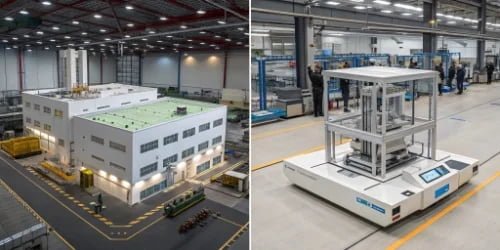
As we look further into the future, the scale becomes even more central to the factory ecosystem. The innovations are not just about the scale itself, but about how it connects to the wider world and enables entirely new ways of working. As a manufacturer for 19 years, our role is not just to build hardware, but to provide the innovative tools our partners need for the future.
Digital Twins: A Virtual Copy of Your Weighing Process
Imagine having a complete virtual replica of your production line on your computer. This is a "digital twin." This virtual model is fed real-time data from all the sensors in your factory, including every weighing scale. With this, you can simulate changes before you make them. For instance, what would happen if you increased the line speed? The digital twin, using live weight data, could predict the impact on accuracy and product spillage. For a software provider, this is a massive opportunity. Your company can build the platform that creates and manages these digital twins7, with our scales providing the critical, real-world data points.
The Power of New Connectivity
For a long time, connecting a scale meant running a physical cable or relying on Wi-Fi. But what if you need a scale in a moving vehicle, a temporary outdoor site, or a vast warehouse with poor Wi-Fi coverage? This is where new connectivity standards like 5G and LoRaWAN come in. 5G offers incredible speed and low latency, while LoRaWAN provides long-range, low-power communication. We are already developing weighing modules that incorporate these technologies. This will give you the freedom to place scales anywhere your business needs them, creating a truly connected operation without limits.
What Role Will IoT Play in the Evolution of Industrial Weighing Solutions?
Weighing is often viewed as a simple, necessary task. This perspective overlooks the huge potential hidden in that data, preventing you from using it to improve your entire business operation.
IoT’s role is to evolve weighing solutions from passive tools into active, strategic assets. The data they provide becomes the foundation for supply chain management, quality assurance, and compliance, driving enterprise-wide improvements. They are the single source of truth for your physical goods.
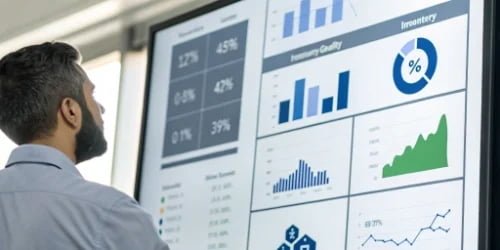
Ultimately, we come back to a fundamental question. What is the true role of a scale in a modern, connected factory? After all these years, my answer has become clearer than ever. While the technology is exciting, the scale’s primary role is to provide the truth. Everything else is built on that.
The Scale as a Strategic Data Source
All the amazing IIoT trends we have discussed—AI, edge computing8, digital twins—are about making better decisions. But those decisions are only as good as the data they are based on. This is where your weighing solution becomes a strategic asset. The weight data it generates is not just a number; it is the ground truth for your physical inventory. It is the basis for calculating shipping costs, ensuring product quality, and proving compliance to regulators. When you have reliable, accurate weight data, you have a solid foundation for your entire business intelligence strategy9.
The Cornerstone of Precision
This brings me to my most important point, the insight that guides our work here at Weigherps. Modern industry is rushing towards total connectivity. But this rush is meaningless if the data being connected is wrong. The cornerstone of the entire IIoT structure in weighing is, and always will be, precision. You can have the fastest network and the smartest AI, but if the scale reports 10.1 kg when the actual weight is 10.0 kg, your whole system is built on a lie. Our 19 years of OEM/ODM experience has taught us that our most important job is to guarantee the accuracy and reliability of the hardware. We provide the trustworthy foundation so that our software partners can build their innovative solutions with confidence.
| Business Function | How It Relies on Accurate Weight Data |
|---|---|
| Inventory Management | Prevents costly stockouts or wasteful overstocking. |
| Logistics & Shipping | Calculates correct shipping costs to avoid fees and disputes. |
| Quality Control | Ensures product fill levels are consistent and meet standards. |
| Regulatory Compliance | Provides accurate, auditable records for legal and trade requirements. |
Conclusion
The future of industrial weighing is connected, intelligent, and transformative. However, this exciting evolution is only possible when built upon the solid, unchanging foundation of precise and reliable measurement.
-
Discover how real-time data can enhance inventory management and reduce costs. ↩
-
Explore the key responsibilities of a quality manager in ensuring product standards. ↩
-
Learn about the critical responsibilities of a logistics director in optimizing supply chains. ↩
-
Understand how APIs enable seamless data integration across different systems. ↩
-
Discover how predictive maintenance can save time and costs by preventing equipment failures. ↩
-
Learn how to leverage data for making informed and effective business decisions. ↩
-
Understand the concept of digital twins and their applications in optimizing industrial processes. ↩
-
Learn how edge computing can improve data processing speed and efficiency in industrial settings. ↩
-
Understand the significance of a solid business intelligence strategy for organizational success. ↩



Comments (0)