
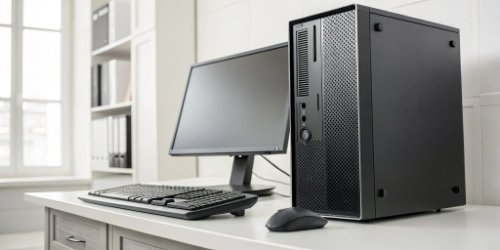
Your software is brilliant, but hardware is a weak link. This forces your clients to juggle vendors, creating a fragmented experience. Imagine offering a seamless, single-branded solution instead.
By partnering with a reliable OEM/ODM hardware manufacturer, you can offer a complete solution under your brand. This strategy allows you to focus on your software expertise while providing clients with a seamless, integrated system, eliminating the friction of dealing with multiple vendors and enhancing your market value.

I remember a conversation I had with a software developer in Germany. He was frustrated. His innovative logistics software was a hit, but his clients constantly complained about finding compatible, reliable scales. They loved his software but hated the hardware hunt. His story isn't unique. Many software companies face this exact challenge, turning a potential triumph into a support nightmare. If this sounds familiar, it's time to explore how bridging this hardware gap can transform your business.
What are the important factors you consider when purchasing any software or hardware solutions systems for the organization?
Choosing a new solution system feels risky. The wrong pick means wasted money and endless technical problems. Let's focus on the key factors that guarantee a smart, reliable decision.
Key factors include reliability, scalability, and long-term TCO (Total Cost of Ownership). You also need to consider the quality of technical support, ease of integration with existing systems, and the provider's ability to customize. Security and compliance with industry standards are absolutely non-negotiable for success.

When we advise our partners, we tell them to look beyond the initial price. A cheap solution can become very expensive over time. It is crucial to evaluate every potential system from several angles to ensure it delivers real value.
Technical and Functional Fit
First, the solution must be technically sound. For hardware like industrial scales, this means stability and accuracy. For software, it means it won't crash and is secure from threats. You should also think about scalability. Will this system support your client's business as it grows, or will they need to replace it in two years? Compatibility is also key. The hardware and software must communicate flawlessly with each other and with any other systems your client already uses. This is a primary concern for any Technical Director1.
Vendor Support and Partnership
A purchase doesn't end when the money changes hands. What happens when something goes wrong? You need a partner with responsive and professional technical support2. At Weigherps, we provide a 12-month after-sales service guarantee because we stand behind our products. Your vendor should feel like an extension of your team, ready to help solve problems. This partnership is vital for your peace of mind and your client's satisfaction.
Cost and Long-Term Value
The sticker price is only one part of the equation. You must consider the Total Cost of Ownership3 (TCO).
| Factor | Short-Term View | Long-Term View (TCO) |
|---|---|---|
| Cost | Lowest initial price | Overall cost including maintenance, support, and upgrades |
| Support | Basic setup help | A responsive, long-term partnership for troubleshooting |
| Reliability | Works out of the box | Minimal downtime and replacement costs over years of use |
A focus on TCO helps a Purchasing Manager4 make a much smarter financial decision that benefits the organization in the long run.
Who needs to be involved when assembling business solutions that include hardware and software?
Assembling a solution in a silo is a recipe for failure. Key voices get ignored, resulting in a product that looks good on paper but doesn't work in the real world.
You need a cross-functional team. This includes the Purchasing Manager for budget, the Technical Director for integration, and crucially, end-users who will operate the system daily. Involving your hardware partner’s R&D team early is also vital for ensuring seamless hardware and software co-development.

Building a complete solution is a team sport. Everyone brings a different perspective, and all of them are important. Leaving someone out can lead to big problems down the road.
The Core Decision-Makers
At the heart of the decision are the Purchasing Manager and the Technical Director. The Purchasing Manager focuses on the budget, cost-effectiveness5, and the supplier's reliability. They want the best value for the money. The Technical Director, on the other hand, is concerned with integration, security, and future-proofing. They need to be sure the new system will work with existing infrastructure and won't become obsolete quickly. Their two viewpoints must align to choose a solution that is both affordable and technically robust. These are the clients we work with most closely to tailor a solution.
The Implementation and Support Team
Once a decision is made, your IT department and your hardware partner’s support team become critical. They are responsible for a smooth rollout and ongoing maintenance. As a hardware manufacturer, we know our role here is to provide clear documentation and responsive technical support. We want to make the IT team's job as easy as possible so they can get the solution up and running without headaches.
The Most Important Voice: The End-User
Often, the most overlooked person is the most important one: the end-user. This is the worker on the factory floor or in the warehouse who will use the scale and software every single day. If the system is complicated or unreliable, their work is disrupted. We always recommend getting their feedback early in the process. A solution that is technically brilliant but practically useless to the end-user is a failure.
How does the underlying software enable seamless communication between your application and weighing hardware?
Your brilliant application is useless if it can't communicate with the hardware. This disconnect frustrates users, slows down operations, and creates a flood of support tickets for your team.
This crucial software layer, often an API (Application Programming Interface) and drivers, acts as a translator. It manages communication protocols, allowing your application to get data from the weighing hardware without needing to know the complex low-level electronic details. It makes integration simple.

For you, as a software provider, the bridge between your application and our hardware is everything. A weak bridge can collapse, taking your project with it. A strong bridge makes everything smooth and effortless.
The Role of Drivers and APIs
Think of drivers as the basic language a computer's operating system uses to talk to a piece of hardware. But for your application, the API is the real key. An API is a set of defined rules and tools that allows your software to request information from our scale. For example, your application can use the API to say "give me the current weight" or "tare the scale." The API handles the complex background communication, so your developers don't have to. It saves an incredible amount of time and effort.
What Makes a Good Hardware API?
A good API is a software developer's best friend. The most important quality is clear and complete documentation. Without it, developers are just guessing. The API should also be consistent across a manufacturer's product line, so you don't have to learn a new system for every new model. At Weigherps, we focus on providing a stable, predictable, and well-documented API. We want to empower our software partners to integrate our hardware into their systems in hours, not weeks.
The Power of an SDK (Software Development Kit)
To make things even easier, we can provide an SDK. An SDK is a complete package that includes the API, sample code, libraries, and technical documentation. It gives your developers a running start. Instead of building from scratch, they can use our sample code as a foundation. This dramatically accelerates the development and integration process, helping you get your combined hardware-software solution to market faster.
What are the essential points we should consider in choosing the hardware for such a business?
Choosing industrial hardware for your solution feels like a gamble. A poor choice means equipment failures and production downtime, which reflects badly on your entire brand and solution.
Focus on industrial-grade durability and reliability. The hardware must withstand the target environment. Check for international certifications like CE. Most importantly, look for a supplier who offers customization (OEM/ODM) to ensure the hardware perfectly fits your software and can be branded as your own.
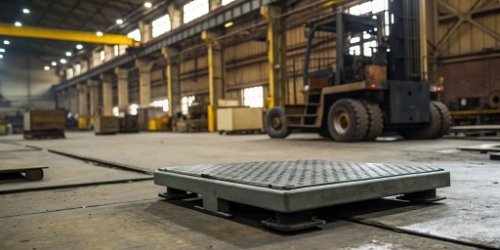
When you put your brand on a complete solution, the hardware is just as much a reflection of your quality as the software. Choosing the right hardware partner isn't just a supply chain decision; it's a brand decision.
Durability and Environmental Resistance
Industrial environments are tough. They can be dusty, wet, hot, or cold. The hardware you choose must be built to survive these conditions. We take this very seriously. Our quality inspection department performs comprehensive tests on every single product before it leaves our factory. We test for weight accuracy, battery performance, software stability, and resistance to environmental factors. Only products that pass every test are shipped. This ensures that the hardware you pair with your software won't fail your customers.
Certifications and Compliance
Certifications are a guarantee of trust and safety. For selling into markets like Europe or North America, certifications like CE are not optional; they are required. They prove that the product meets high safety, health, and environmental protection standards. All our products comply with these international standards, giving you the confidence to sell your combined solution globally. It removes a major barrier to entry for your business.
The Power of Customization (OEM/ODM)
This is where you can truly create a unique offering. An off-the-shelf scale will never be a perfect fit. As an OEM/ODM manufacturer with 19 years of experience, we specialize in customization. You can define the hardware specifications6, you can customize the firmware to work perfectly with your API, and most importantly, you can put your own brand on the product. This transforms a generic scale into your scale. It creates the seamless, one-stop-shop experience that makes customers choose your solution over competitors who only offer software.
Conclusion
Partnering with an OEM hardware expert lets you offer a complete, branded solution. This strategy elevates your brand, simplifies your customer's experience, and drives growth for a true win-win.
-
Explore how a Technical Director ensures that solutions are technically sound and future-proof. ↩
-
Explore the significance of reliable technical support in ensuring smooth operations and customer satisfaction. ↩
-
Learn why TCO is crucial for making informed purchasing decisions that benefit your organization long-term. ↩
-
Learn about the critical responsibilities of a Purchasing Manager in ensuring cost-effective decisions. ↩
-
Explore the elements that help achieve cost-effective solutions without compromising quality. ↩
-
Learn about the essential specifications that ensure hardware meets your business needs. ↩



[…] to select hardware that is built for software. This means checking for its connectivity options and software development kit (SDK)2 or API availability. A scale isn't just a scale anymore; it's a data collection point. Here’s a […]