
Struggling with slow network speeds or tech jargon? You're not alone. Let's demystify what’s really happening behind the scenes on your network.
In LTE, cell load is the percentage of a cell's resources being used at any given time. It's measured by Resource Block (RB) utilization. A high load, like 80%, can slow down speeds for everyone connected, affecting user experience and system capacity.

Understanding 'cell load1' in a network is a bit like understanding 'load' in our field of industrial weighing. Before we dive deeper into the network side, it is helpful to first grasp the concept of a 'load cell2' in the physical world. Let's break it down.
What is a load cell and how does it work?
Need precise weight measurements for your operations? Inaccurate readings cost you money. A load cell is the core component that guarantees accuracy every single time.
A load cell is a transducer that converts a force, like weight, into a measurable electrical signal. As a manufacturer, we build them using a strain gauge. When weight is applied, the gauge deforms slightly, changing its electrical resistance, which we then measure.
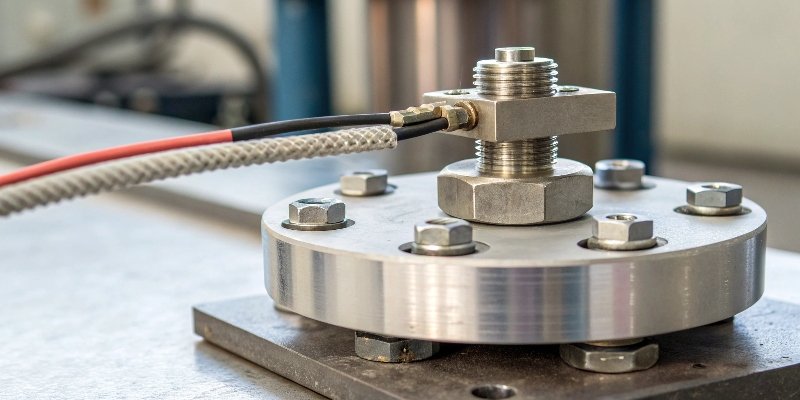
In our 18 years of manufacturing, the strain gauge3 load cell has been the foundation of modern weighing. Its brilliance is in its simplicity and reliability. When a force is applied to the load cell's body, the metal structure bends ever so slightly. This tiny deformation is captured by a component called a strain gauge, which is essentially a flexible resistor bonded to the surface. As it stretches or compresses, its electrical resistance changes. This change is very small, but it's directly proportional to the force applied. I remember a client in the chemical industry who needed extreme precision. We spent weeks fine-tuning the amplifiers in their system to ensure the weak signal from the gauge was converted into a flawless, accurate weight reading. It's a delicate process.
How Strain Gauges Power Load Cells
The process from applying weight to getting a digital reading involves several key steps. Each step must be perfectly calibrated for the final measurement to be accurate.
| Component | Function |
|---|---|
| Strain Gauge | Senses the tiny change in shape due to force. |
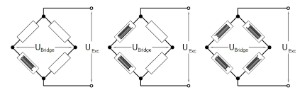
| Wheatstone Bridge4 | A circuit that precisely measures the resistance change. |
| Amplifier | Boosts the very weak electrical signal for processing. |
| ADC (Analog-to-Digital Converter) | Converts the analog signal into a digital value. |
What is a digital load cell?
Worried about signal interference and complex calibration? Analog signals can be unreliable. A digital load cell solves these problems by handling everything internally for a cleaner output.
A digital load cell integrates the analog-to-digital converter (ADC) and microprocessor directly inside its housing. This provides a clean, pre-calibrated digital signal, which reduces interference and simplifies system integration. It’s a smarter, more robust version of a standard load cell.
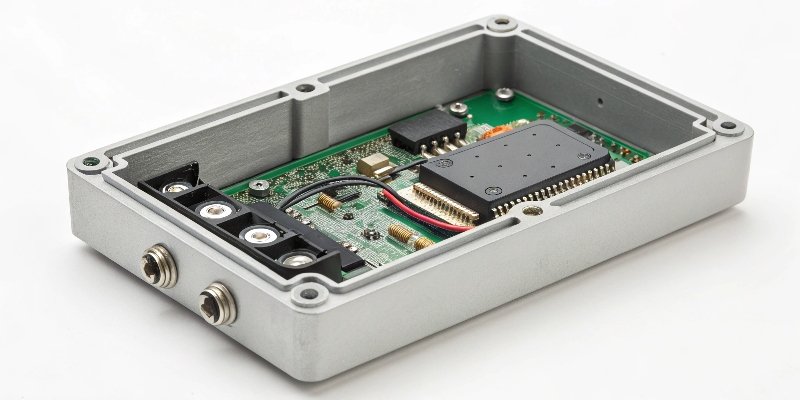
The main difference between analog and digital load cell5s is where the signal conversion happens. With analog cells, a weak millivolt signal has to travel through a cable to an external indicator, where it's converted. This cable run makes the signal vulnerable to electrical noise and interference, especially in industrial settings. A digital load cell puts the "brain" right inside the sensor itself. The conversion happens immediately, and a robust digital signal is sent out. We often recommend digital load cells to our clients setting up smart factories. For them, the ability to run diagnostics on each individual cell without shutting down the whole production line is a game-changer. It dramatically reduces their downtime and maintenance costs.
Key Advantages of Going Digital
Choosing between analog and digital depends on the application, but the benefits of digital are becoming more critical in modern, data-driven industries. They offer a level of control and reliability that's hard to achieve with older analog systems.
| Feature | Analog Load Cell | Digital Load Cell |
|---|---|---|
| Signal Output | Weak, analog (mV/V) | Strong, digital (RS-485, etc.) |
| Interference | Prone to noise and interference | High immunity to electrical noise |
| Calibration | Complex, requires system-level tuning | Pre-calibrated, allows simple replacement |
| Diagnostics | Limited to none | Advanced, provides per-cell health data |
What are cells in LTE?
Ever wonder how your phone always stays connected while you move around? It's not magic. It's thanks to a vast, organized network of cells working together seamlessly.
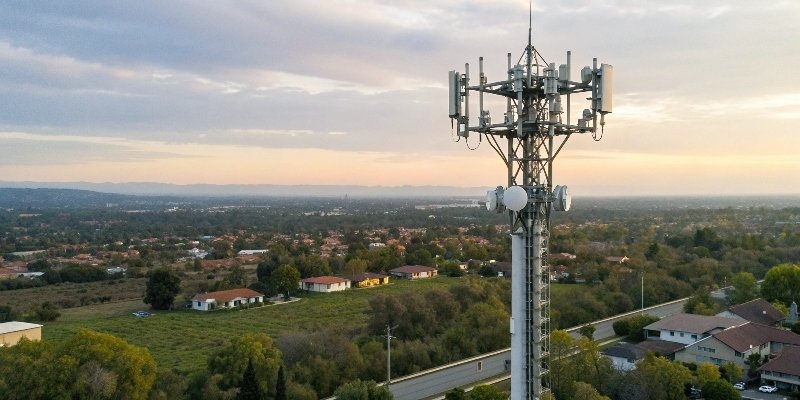
In LTE (Long-Term Evolution), a "cell" is a specific geographic area covered by a single base station, also known as a cell tower. Your phone connects to the cell you are currently in. The network is made up of thousands of these interlocking cells.

Now, let's connect the two worlds. Just like one of our physical load cells measures the weight or "load" placed upon it, an LTE cell manages the data "load" from all the users connected to it. The "load" in this context isn't a physical weight but rather the demand for network resources. Every person streaming video, making a call, or browsing the web in that geographic area contributes to the cell's total load. Each cell has a finite capacity6, a maximum amount of data it can handle at once. When the demand exceeds this capacity, the system becomes overloaded, and performance suffers for everyone connected. This is why your connection can feel slow in a crowded stadium or a busy city center.
From Physical Load to Network Load
The analogy between a weighing system and a mobile network is surprisingly direct. Both are designed to manage a specific type of load within a set capacity to avoid failure.
| Concept | Industrial Weighing (Load Cell) | LTE Network (Cell) |
|---|---|---|
| The 'Cell' | The physical weighing sensor | A geographic coverage area |
| The 'Load' | The physical weight or force applied | The data traffic7 from connected users |
| Capacity | The maximum weight it can measure | The total available data resources (RBs) |
| Overload | Potential damage to the sensor | Dropped calls and very slow speeds |
What is load balancing in LTE?
Stuck in a crowded area with a terrible signal? Everyone trying to use the network at once can overload a single cell tower, which causes major slowdowns for you.
Load balancing in LTE is a technique networks use to distribute user traffic evenly across multiple cells. If one cell becomes too crowded (high load), the network automatically moves some users to a neighboring cell with more available capacity. This prevents congestion and improves performance.
This process is critical for maintaining a good user experience. The network constantly monitors the load on each cell, which is measured by the Resource Block (RB) utilization. Think of RBs as the fundamental units of a cell's capacity. When the RB utilization in one cell reaches a certain threshold, maybe 70% or 80%, the system triggers a handover. It identifies users who could just as easily be served by a neighboring cell with a lower load and seamlessly switches their connection. This is similar to how our multi-cell weighing systems distribute a large load across several sensors to get a stable and accurate reading. In both cases, the goal is the same: avoid overwhelming any single component and maintain optimal system performance.
How Networks Manage User Traffic
Load balancing is just one tool networks use. It's part of a larger strategy to optimize performance by dynamically managing resources based on real-time demand and conditions.
| Strategy | Description | Goal |
|---|---|---|
| Load Balancing | Handover users to less congested cells. | Prevent slowdowns, improve user experience. |
| Dynamic Power Adj. | Increase a cell's transmit power during high load. | Improve signal quality for connected users. |
| Inter-Cell Coord. | Manage interference between neighboring busy cells. | Reduce signal noise, increase data rates. |
Conclusion
Understanding cell load, from physical sensors to network traffic, reveals a common principle. Both require balancing to avoid overload and ensure optimal, reliable performance for everyone.
-
Explore this link to understand how cell load impacts your network speed and user experience. ↩
-
Discover the fundamentals of load cells and their importance in accurate weight measurement. ↩
-
This resource will explain the critical role of strain gauges in ensuring precision in measurements. ↩
-
Explore this link to learn about the Wheatstone Bridge's role in measuring resistance changes. ↩
-
Find out why digital load cells are becoming essential in modern industrial applications. ↩
-
Learn about the capacity limits of LTE cells and their impact on connectivity. ↩
-
This resource will provide a comprehensive overview of data traffic management in LTE. ↩


Comments (0)