

Are you confused by tech jargon like "cell load" and "LTE" in the weighing industry? This confusion can lead to costly mistakes. Let’s clarify these terms for modern industrial weighing.
In the context of modern IoT scales, "cell load in LTE" refers to the amount of data a "load cell" sensor sends over an "LTE cell" network. Managing this data load is crucial for the speed and reliability of your entire remote weighing system.
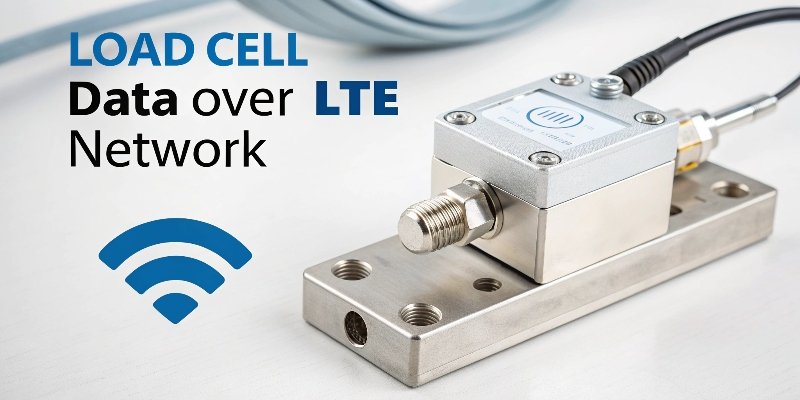
The world of industrial weighing is changing fast. It's no longer just about heavy steel and simple displays. Today, it’s about data, connectivity, and intelligence. As a manufacturer with 18 years of experience, I've seen this evolution firsthand. Many of our clients, especially software vendors, are looking to integrate their platforms with our hardware. But to do that successfully, everyone needs to speak the same language. Let's break down these key concepts, starting with the technology that connects your scales to the cloud, so you can make informed decisions for your projects.
What does an LTE cell mean for your equipment?
Struggling to connect remote equipment to your network? Relying on unstable Wi-Fi or short-range Bluetooth can disrupt your data flow. There's a better way for wide-area industrial applications.
An LTE cell is a geographic coverage area from a cellular tower. For an IoT scale, this means it uses the same reliable mobile network as your phone to transmit weight data, eliminating the need for local Wi-Fi and enabling monitoring from virtually anywhere.
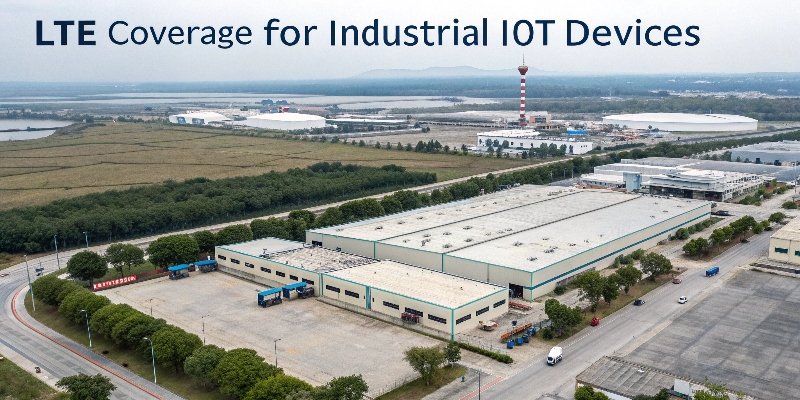
When we started developing our IoT weighing solutions, we had to decide on the best way to transmit data. In many industrial settings—like farms, construction sites, or sprawling logistics hubs—local internet access is either unreliable or non-existent. This is where LTE1 (Long-Term Evolution, a 4G mobile standard) becomes a game-changer. Unlike Wi-Fi, which has a limited range, LTE provides broad, consistent coverage.
For a software vendor, this is a huge advantage. Your platform can receive real-time data from scales located miles apart without complex network infrastructure. Here’s a quick comparison:
| Connectivity Type | Best For | Key Limitation |
|---|---|---|
| Wi-Fi | Indoor, single-site operations | Limited range, can be congested. |
| Bluetooth | Short-range device-to-device | Very short range (typically < 30 feet). |
| Wired (Ethernet) | Fixed, high-security installations | Immobile, requires physical cabling. |
| LTE/Cellular | Remote, mobile, or wide-area assets | Requires data plan, dependent on cell service. |
At Weigherps, we embed LTE modules directly into our IoT scales2. This allows our clients to deploy a scale, turn it on, and start receiving data on their dashboards immediately. It simplifies deployment and ensures the data stream—the lifeblood of any smart system—is stable and secure.
What is the meaning of a load cell?
Is the core weighing part of your system a complete mystery? When this component fails or gives inaccurate readings, your entire operation's data becomes worthless, costing you time and money.
A load cell is the heart of any electronic scale. It's a highly engineered sensor (a transducer) that converts physical force, like weight or tension, into a measurable electrical signal. This signal is then translated into the weight reading you see on a display or in your software.
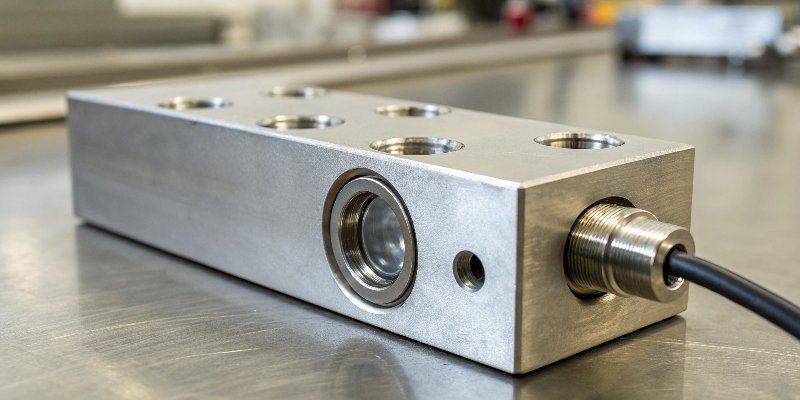
Think of a load cell3 as the primary source of truth for any weighing system. Without a quality load cell, even the most advanced software is useless because it will be working with bad data—a classic "garbage in, garbage out" scenario. In my 18 years in this industry, I’ve learned that the quality of this single component determines the reliability of the entire system. It’s precision-engineered metal, usually aluminum or steel, with tiny sensors called strain gauges bonded to it. When you place a load on the scale, the metal body deforms ever so slightly. The strain gauges detect this microscopic change and alter their electrical resistance. This change is what we measure.
For our software vendor clients, the quality of the load cell is paramount. You need a consistent, repeatable, and accurate electrical signal to ensure your software is processing reliable data. The choice of load cell depends entirely on the application.
Key Load Cell Considerations
- Material: Stainless steel is great for harsh or wet environments, while alloy steel is a cost-effective workhorse for dry, indoor applications.
- Capacity: You must match the load cell's capacity4 to the expected maximum weight to avoid damage and ensure accuracy.
- Form Factor: They come in many shapes—shear beams for platform scales, S-types for tension measurement, and canisters for high-capacity silos.
Choosing the right one is something our technical team excels at, ensuring the hardware perfectly matches the software's data requirements.
What is a digital load cell?
Are you still dealing with signal noise, complex calibration, and troubleshooting analog systems? This outdated process is slow and prone to error, causing downtime and requiring specialized technicians.
A digital load cell is an intelligent sensor that combines a traditional load cell with a built-in microprocessor and A/D converter. It outputs a clean, ready-to-use digital signal, which minimizes electrical interference, simplifies installation, and enables advanced self-diagnostics.
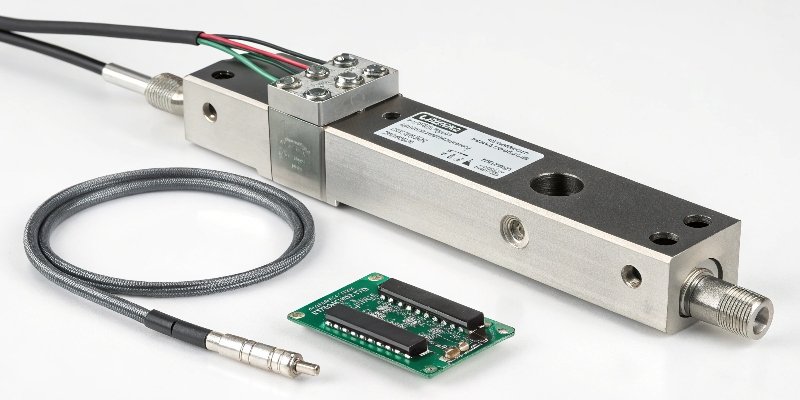
The shift from analog to digital load cells is one of the biggest leaps forward I've seen. With traditional analog load cells, you get a very weak electrical signal that must travel through long cables to a separate amplifier and A/D converter. Along the way, this signal can pick up interference from motors, power lines, or radios, compromising data accuracy. Calibration is also a tricky, manual process.
Digital load cells solve all these problems. By converting the signal to digital right at the source—inside the load cell's housing—it becomes immune to electrical noise. The data that travels through the cable is a clean stream of ones and zeros. This is a game-changer for a Technical Director.
| Feature | Analog Load Cell System | Digital Load Cell System |
|---|---|---|
| Signal Output | Weak, sensitive mV signal | Strong, noise-immune digital signal |
| Cabling | Requires shielded, multi-wire cables | Simpler, more robust cabling |
| Calibration | Manual, requires junction box trimming | Automatic or semi-automatic via software |
| Diagnostics | Difficult; must test each component | Simple; can query each cell's status |
| Integration | Requires external indicator/converter | Can connect more directly to PC/PLC |
For any software-driven weighing system, digital load cell5s are the superior choice. They provide cleaner data, are easier to integrate via standard protocols like RS-485, and allow your software to perform health checks on individual load cells. This is a core focus of our R&D department—creating smarter hardware that makes software integration seamless.
What is a load cell in rigging?
Worried about safety during heavy lifts? An overloaded crane or hoist can lead to catastrophic failure, endangering lives and destroying valuable assets. You can't just guess the weight.
In rigging, a load cell is a specialized, rugged device used to measure the exact tension force on cranes, hoists, and cables during lifting operations. It provides critical, real-time weight data to prevent overloads and ensure every lift is performed safely.
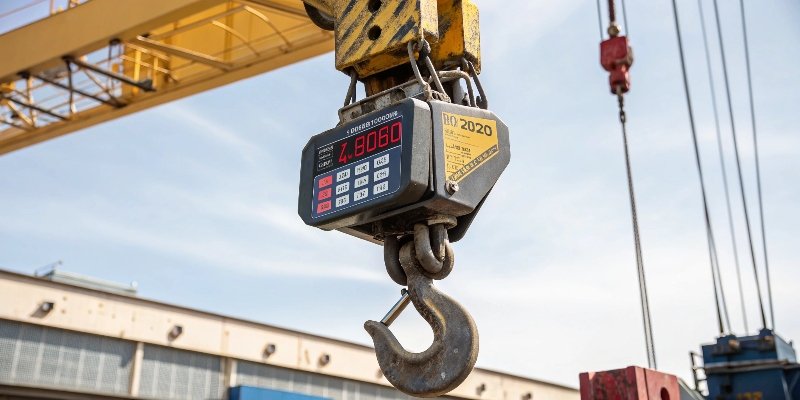
Safety is non-negotiable in rigging and lifting. That’s why load cells designed for these applications are some of the most robust we manufacture. These aren't the same components you'd find inside a standard floor scale. Rigging load cells, often called dynamometers6 or tension links, are built to withstand enormous forces, extreme weather, and rough handling. They are placed directly in the line of the rigging assembly—for example, between a crane hook and the load itself.
I remember working with a port authority client who was experiencing too many near-misses during container loading. They were estimating weights, which was incredibly risky. We provided them with a set of our wireless tension link7 load cells. The crane operator could now see the exact weight on a remote display in their cab before even starting the lift. This simple change drastically improved their safety record.
Types of Rigging Load Cells
- Tension Links / Dynamometers: Placed in-line with a cable or chain to measure tensile force. Often wireless for operator safety.
- Shackle Load Cells: A load-measuring pin is integrated directly into a standard rigging shackle, making it easy to add measurement to existing setups.
- Crane Scales: A self-contained unit with a hook, load cell, and large display, designed to be hung from a crane.
For a software provider, this is a high-value niche. Your software could log every lift, generate safety reports, and alert managers to overload events, all powered by the real-time data from our ruggedized hardware.
Conclusion
Understanding "cell load" in both telecom and weighing contexts—from LTE data to load cell sensors—is key. This knowledge empowers you to build smarter, more reliable industrial systems for today's data-driven world.
-
Exploring LTE's role in industrial applications can enhance your understanding of modern connectivity solutions. ↩
-
Discover the technology behind IoT scales to improve your industrial weighing processes. ↩
-
Learn about load cells to grasp their importance in accurate weight measurement and data integrity. ↩
-
Learn how to determine load cell capacity to ensure accurate and safe operations. ↩
-
Learn about digital load cells to understand their advantages over traditional systems. ↩
-
Learn about dynamometers to enhance safety and accuracy in lifting applications. ↩
-
Discover the benefits of wireless tension link load cells for enhanced safety in rigging. ↩

Comments (0)