
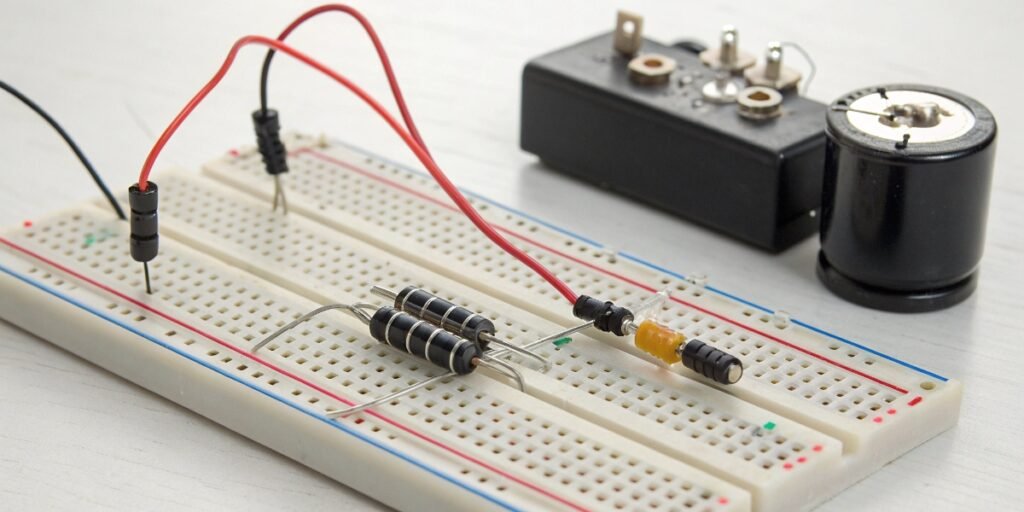
Struggling to measure tiny electrical changes with accuracy? This process is often unstable and prone to errors. The Wheatstone bridge provides a simple, yet powerful, solution for precision measurement.
A Wheatstone bridge is an electrical circuit designed to measure an unknown electrical resistance with high precision. It works by balancing two legs of a bridge circuit. When a change occurs in one unknown resistor, it unbalances the bridge, creating a measurable voltage difference that corresponds to the change.

This elegant circuit is the hidden hero behind many of the sensors we use every day. As someone who has spent nearly two decades in the industrial weighing industry, I’ve seen firsthand how this principle is fundamental to our technology. It’s the key that unlocks precise measurement, turning physical force into digital data1. But how does it really work, and why is it so important for businesses that rely on accurate data, like yours? Let's break it down in a way that makes sense.
What is a Wheatstone bridge for dummies?
Are you confused by complex electrical diagrams and technical terms? The jargon can make simple ideas seem difficult. However, you can easily understand the Wheatstone bridge with a simple analogy.
Think of it like two connected water pipes. If the water pressure is perfectly equal on both sides, no water flows through the middle connection. The Wheatstone bridge works the same way with voltage. A change in resistance on one side unbalances the electrical "pressure," creating a flow you can measure.
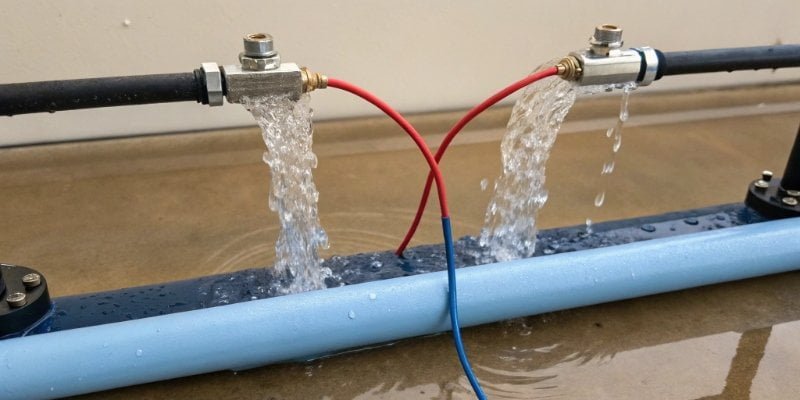
To dive a bit deeper, the whole concept is about balance. Imagine an old-fashioned balancing scale. When both sides are equal, the scale is level. If you add a tiny weight to one side, it tilts. The Wheatstone bridge2 does the same thing with electricity.
The Components
A basic bridge circuit has four resistors. In many sensor applications, like the load cells3 we manufacture at Weigherps, one of these resistors is a variable sensor. This sensor changes its resistance based on a physical force, like pressure or weight. A voltmeter is connected across the middle of the bridge to detect any imbalance.
Balanced vs. Unbalanced
When all resistors are in the correct ratio, the bridge is "balanced," and the voltmeter reads zero. But when the sensor resistor changes—for example, when someone steps on a scale—the bridge becomes "unbalanced." This creates a small voltage. This voltage is directly proportional to the change in resistance, which is why it's so useful for measurement.
| Component | Role in the Bridge | Analogy |
|---|---|---|
| Known Resistors (R1, R2, R3) | Provide a stable reference voltage. | Fixed weights on the balancing scale. |
| Unknown Resistor (Rx) | Acts as the sensor (e.g., a strain gauge). | The side of the scale where you add weight. |
| Voltmeter (or Galvanometer) | Measures the voltage difference. | The pointer that shows if the scale is tilted. |
Where is the Wheatstone bridge used in real life?
Have you ever wondered how a modern industrial scale can accurately weigh a 50-ton truck? This technology might seem like futuristic magic, but it often relies on a 19th-century invention.
The Wheatstone bridge is a critical component in countless real-life devices. It is found in digital bathroom scales, industrial weighbridges, pressure sensors, thermostats, and modern IoT devices. It's the core technology inside load cells that translates physical force into a readable electrical signal.

In my work at Weigherps, we rely on the Wheatstone bridge every single day. It's the foundation of the modern digital scale and many other precision instruments.
In Industrial Weighing
The most direct application for us is in load cells. A load cell is a transducer that converts force into an electrical signal. Inside most load cells are strain gauges4—tiny, sensitive resistors—arranged in a Wheatstone bridge configuration. When a heavy object is placed on a scale, it deforms the load cell slightly. This deformation stretches or compresses the strain gauges, changing their resistance. The Wheatstone bridge circuit is sensitive enough to detect this tiny change and produce a voltage output5 that our systems then convert into a weight reading. This is how our weighbridges and IoT scales achieve their high accuracy.
Other Key Applications
The principle isn't limited to weighing. It's used across many industries for various types of sensing.
| Application | Sensor Used with Bridge | How It Works |
|---|---|---|
| Temperature Control | Thermistor | A thermistor's resistance changes with temperature. The bridge detects this to control thermostats. |
| Pressure Measurement | Piezoresistive sensor | Pressure deforms a diaphragm, changing the sensor's resistance, which the bridge measures. |
| Light Detection | Photoresistor | A photoresistor6's resistance changes with light intensity, used in light meters and automatic lighting. |
Is a Wheatstone bridge still relevant today?
In a world driven by AI, cloud computing, and IoT, is a circuit invented in the 1800s still useful? It can seem like an outdated piece of tech. However, its fundamental principle is more essential than ever.
Yes, absolutely. The Wheatstone bridge's core ability to accurately measure tiny changes in resistance makes it indispensable for modern sensors. In the era of IoT, where devices depend on reliable physical data, the bridge serves as a fundamental building block for accurate information.

I often talk to software vendors and technical directors who are amazed that such an old principle underpins our advanced IoT weighing systems. The truth is, without the reliability of the Wheatstone bridge, the data feeding into their sophisticated software would be useless.
The Foundation of Good IoT Data
The Internet of Things (IoT) is all about connecting the digital world to the physical world. This connection happens through sensors. Smart factories, automated logistics, and remote monitoring systems all need precise data about weight, pressure, temperature, and more. The Wheatstone bridge makes sensors highly sensitive and reliable, ensuring the data that powers AI analytics and business decisions is accurate from the start. "Garbage in, garbage out" is a real problem, and the bridge helps ensure you start with clean data.
Why It Endures in a Noisy World
Industrial environments are full of electrical "noise" from motors, power lines, and other equipment. This noise can easily interfere with small sensor signals. One of the greatest strengths of the Wheatstone bridge is its ability to cancel out this common noise, leading to a much cleaner and more stable measurement.
| Feature | Simple Voltage Divider | Wheatstone Bridge |
|---|---|---|
| Sensitivity | Low | High (measures very small changes) |
| Accuracy | Good | Excellent |
| Noise Rejection | Poor | Excellent (rejects common-mode noise) |
| Temperature Effects | Prone to drift | Compensates for temperature changes |
What is the working principle of a bridge circuit?
Understanding the math and physics behind circuits can be difficult. It's easy to get lost in complex equations. But the main idea behind a bridge circuit is simply about finding and measuring imbalance.
The working principle is null measurement. The circuit has two parallel voltage-dividing branches. When the bridge is "balanced," the voltage between the two branches is zero. A change in the sensor's resistance "unbalances" the bridge, creating a measurable voltage proportional to that change.

Let's look a little closer at the mechanics. When I first joined this industry, understanding this concept was a turning point. It's the key to how we convert a physical force into a digital number you can use.
The Balanced Condition
The bridge is balanced when the ratio of resistors in one leg is equal to the ratio in the other leg (R1/R2 = R3/Rx). In this ideal state, no current flows through the voltmeter, and it reads zero. We use this principle during calibration7 to set a zero point for our scales, ensuring accuracy before any weight is applied. It establishes a perfect baseline for measurement.
The Unbalanced Condition for Measurement
In practical use, the circuit is almost always in an "unbalanced" state. The unknown resistor, Rx, is the sensor. As a physical force changes—like a truck driving onto a weighbridge—the resistance of Rx changes. This shift unbalances the ratio, and a voltage appears across the voltmeter. This output voltage is very small but directly proportional to the change in resistance. Our electronics then amplify this voltage and convert it into a final, readable value, such as kilograms or pounds.
| Step | Action | Result |
|---|---|---|
| 1 | A force is applied (e.g., weight on a scale). | The load cell structure deforms. |
| 2 | Strain gauges inside the load cell are stretched. | The resistance (Rx) of the gauges changes. |
| 3 | The bridge circuit becomes unbalanced. | The voltage ratios8 are no longer equal. |
| 4 | A small voltage signal is produced. | The voltmeter shows a non-zero reading. |
| 5 | The signal is amplified and processed. | The voltage is converted into a digital weight reading. |
Conclusion
The Wheatstone bridge is a simple yet incredibly powerful circuit. Its precision and reliability ensure it remains a core technology for sensors in industrial weighing and modern IoT systems today.
-
Learn how physical measurements are converted into digital data for analysis. ↩
-
Explore the fundamental principles of the Wheatstone bridge to understand its significance in precision measurement. ↩
-
Gain insights into load cells, their function, and their applications in weighing technology. ↩
-
Explore the working principles of strain gauges and their role in force measurement. ↩
-
Understand the concept of voltage output and its significance in circuit design. ↩
-
Learn about photoresistors and their applications in light detection. ↩
-
Learn about the calibration process and its importance for accurate measurements. ↩
-
Understand the role of voltage ratios in achieving balance in bridge circuits. ↩



Comments (0)