
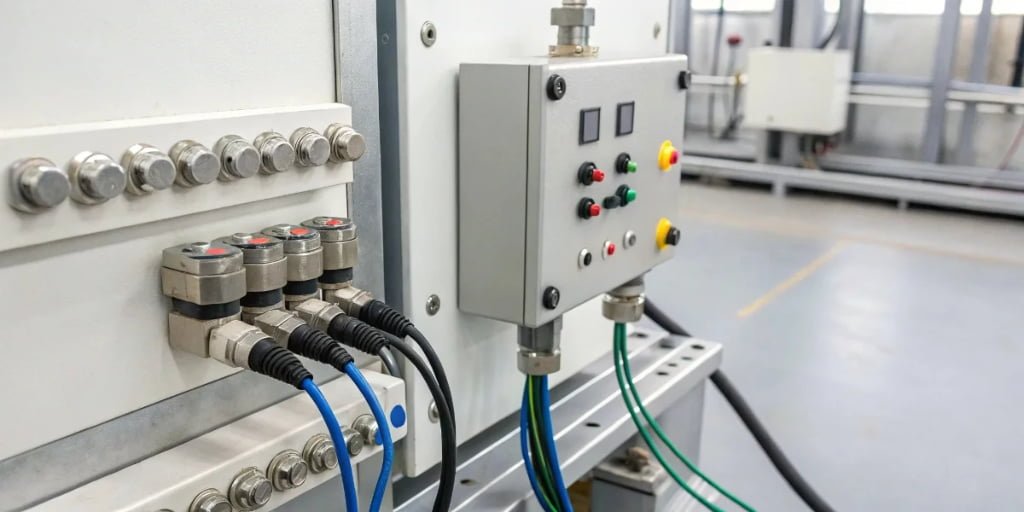
Manual weighing is slow and inaccurate. This costs your business time and money. An automatic control system using a load cell can solve these problems and streamline your operations.
It's a system where a load cell measures weight and sends this data to a controller. The controller then automatically adjusts a process, like filling a container, to reach a target weight without human help. It makes industrial processes faster and more accurate.
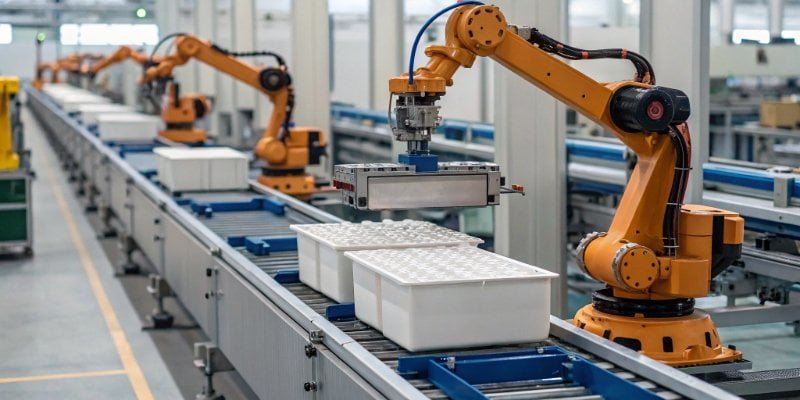
I've seen countless factories transform their output with this technology. But to really grasp how it works, you need to understand its core components. Let’s break it down piece by piece to see how it all comes together for you.
What do you mean by an automatic control system?
Are you trying to manage complex tasks that require constant attention? Human error is always a risk. An automatic control system works like a dedicated robot, ensuring consistency every time.
An automatic control system is a set of devices that manages a process without direct human command. It uses feedback from sensors to compare the actual output with a desired setpoint and makes corrections automatically. Think of a cruise control system in a car.

In my 19 years of experience, the best way to explain this is with a simple example: your home's thermostat. It has three main parts that every automatic control system1 shares. First, you have the sensor2. For a thermostat, it's the thermometer measuring the room's temperature. Second, there's the controller3. This is the main brain, the thermostat unit itself, where you set your desired temperature (the setpoint). The controller3's job is to read the sensor2's data and decide if an action is needed. Finally, you have the actuator4. This is the device that does the work—in this case, your furnace or air conditioner. The controller3 tells the actuator4 to turn on or off to bring the room to the right temperature. Industrial systems work exactly the same way, just on a much bigger and faster scale for your production line.
What is a load cell system?
Do you need to know the exact weight of a product in your production line? Inaccurate measurements can lead to waste and quality issues. A load cell system is the solution for you.
A load cell system is the heart of any modern electronic scale. It consists of a load cell, which is a sensor that converts force or weight into an electrical signal. This signal is then read by an indicator or controller to display the final weight.
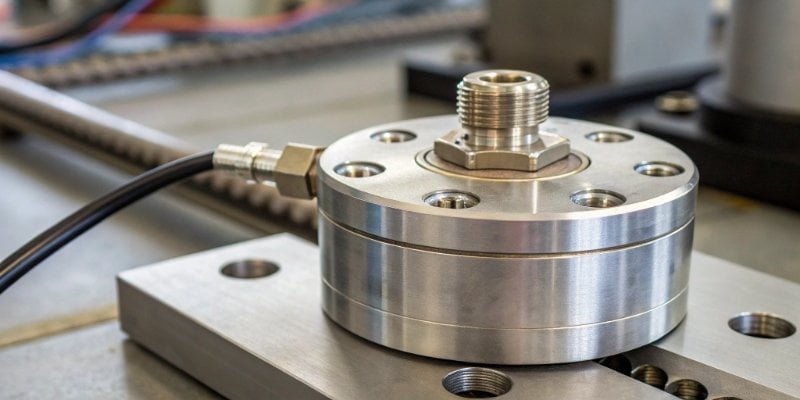
At its core, a load cell5 is a transducer. That's a technical term for a device that converts one form of energy into another. Here, it converts the physical force of weight into a tiny electrical signal. I've worked with thousands of them. Inside most load cell5s is a precision-machined metal structure6 with strain gauges7 bonded to it. When you put a weight on the scale, the metal structure deforms slightly, stretching or compressing the strain gauges7. This changes their electrical resistance, which creates the signal. This signal is the raw weight data. The accuracy and range of the entire weighing machine depend almost entirely on the quality of this load cell5. That's why we spend so much time testing them. A bad load cell5 means a bad scale, no matter how good your software is.
What does automatic control mean?
You want your machines to operate on their own. But what happens if something changes? "Automatic control" is the smart process that lets machines adapt and self-correct without your help.
Automatic control means a system can maintain a desired output by constantly monitoring itself and making adjustments. It uses a "feedback loop" where the output is measured and fed back to the controller, which then corrects any errors. This is also called a closed-loop system.
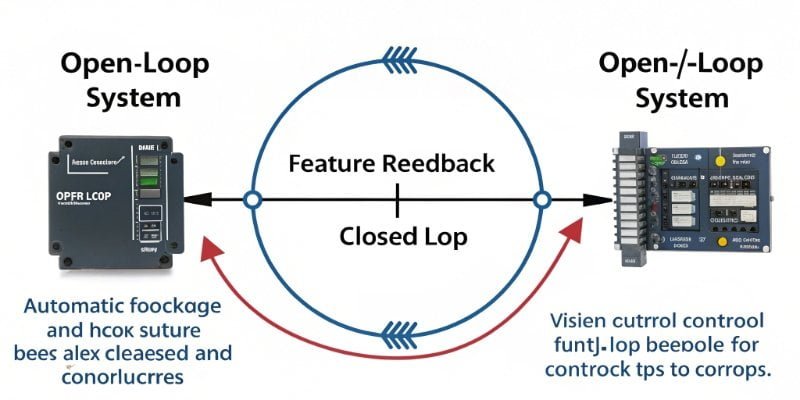
Automatic control is really about one key idea: the feedback loop8. This is what makes a system "smart." Let’s think about two ways to cook food. An open-loop system9 is like a simple microwave. You set the timer for two minutes and press start. The microwave runs for two minutes and stops, regardless of whether the food is hot or still cold. It has no feedback. A closed-loop system10 is like a modern oven. You set it to 350 degrees. A sensor2 inside measures the temperature and tells the heating element to turn on or off to maintain that temperature. That's the feedback loop8 in action. It constantly checks and corrects. This is what automatic control is all about in your business.
| System Type | How it Works | Example |
|---|---|---|
| Open-Loop | Runs a preset program without checking the result. | A simple kitchen timer |
| Closed-Loop | Measures the output and adjusts to meet a target. | A car's cruise control |
What is the function of a load cell in industrial automation?
Your automated process needs to fill, sort, or mix things. But how does it know when to stop? Without accurate data, automation can create huge mistakes. The load cell provides this data.
In industrial automation, the load cell acts as the primary sensor for any weight-based process. It provides the real-time weight measurement that the control system uses to make decisions, such as starting a conveyor, closing a valve, or rejecting an under-filled package.
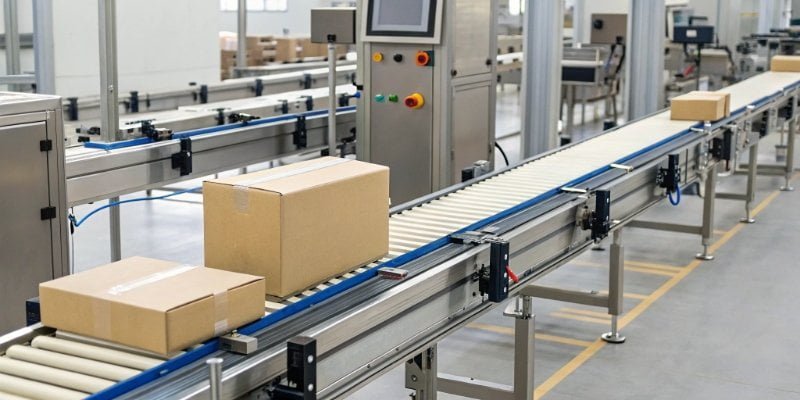
This is where everything we've talked about comes together for you. The load cell5 is the "sensor2" in our automatic control feedback loop8. It's the component that answers the question, "How much does this weigh right now?" Imagine a machine that fills bags of coffee. The empty bag moves into place. The control system opens a valve to let the coffee beans flow. The load cell5 system under the bag is constantly sending weight data to the controller3. Once the controller3 sees the weight data match the target—say, 500 grams—it sends a signal to the actuator4 (the valve) to close instantly. This all happens very fast. This is why dynamic weighing11, or weighing objects while they are in motion, is much harder than static weighing. We have to account for vibration and speed to get an accurate reading. Achieving precision here is what separates a good automated system from a great one.
Conclusion
In short, a load cell gives an automatic control system its "sense of touch" for weight. This combination is essential for creating fast, accurate, and efficient modern industrial processes.
-
Explore this link to understand the fundamentals of automatic control systems and their applications in various industries. ↩
-
Explore various sensors used in automation and how they contribute to system accuracy and reliability. ↩ ↩ ↩ ↩
-
Understand the function of controllers in managing processes and ensuring desired outcomes in automation. ↩ ↩ ↩ ↩ ↩
-
Learn about actuators and their role in executing commands from controllers in automated systems. ↩ ↩ ↩
-
Learn about load cells and their critical role in ensuring accurate weight measurements in automated systems. ↩ ↩ ↩ ↩ ↩ ↩
-
Learn about the engineering behind load cells and how precision affects measurement accuracy. ↩
-
Discover the technology behind strain gauges and their critical role in weight measurement. ↩ ↩
-
Discover the importance of feedback loops in maintaining system stability and performance in automation. ↩ ↩ ↩
-
Understand the differences between open-loop and closed-loop systems and their applications. ↩
-
Explore the concept of closed-loop systems and their advantages in maintaining desired outputs. ↩
-
Discover the challenges and techniques involved in dynamic weighing for accurate measurements in motion. ↩

Comments (0)