
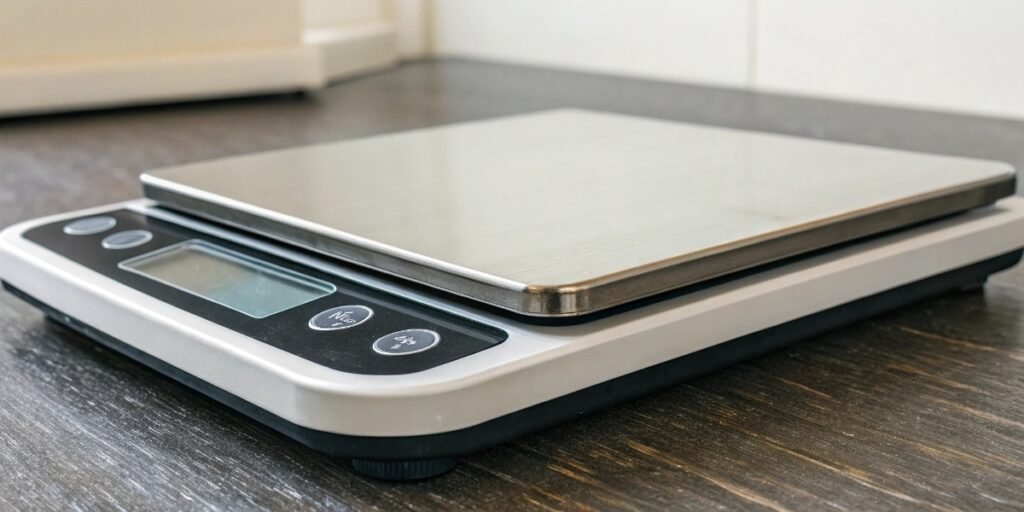
Confused about the difference between a mechanical and an electronic scale? This isn't just about old versus new; it's about accuracy and function for your specific needs.
An electronic scale is a weighing device that uses a sensor to measure the load. It converts the force of the weight into an electrical signal. A microprocessor then translates this signal into a digital weight reading, which is displayed on an LCD screen for you to see.

Understanding the basics of how an electronic scale1 works is the first step. I've been in the scale manufacturing business for nearly two decades, and I've seen how this technology has revolutionized weighing. It’s not just about a digital display; it’s about the precision2 and data potential underneath. But how does this technology apply in the real world, from your kitchen to a large factory? Let's explore the common uses and clear up some frequent questions people have about them.
What is an electronic scale used for?
Do you need to weigh something with precision? Old-fashioned scales can be slow and inaccurate. Electronic scales provide fast, reliable measurements for nearly any application you can imagine.
Electronic scales are used everywhere. You can find them in homes for cooking, in hospitals for patient monitoring, in post offices for shipping, and in industrial settings for quality control and inventory management. They provide highly accurate and consistent weight measurements.
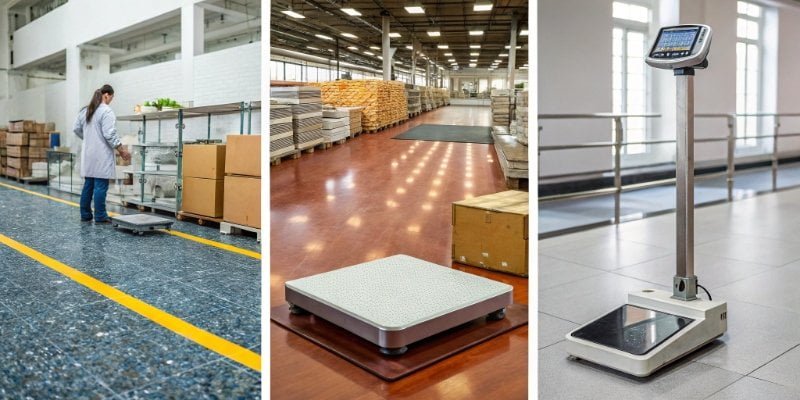
The applications for electronic scales are incredibly diverse, and we can group them into a few key areas. Each area has its own specific requirements for accuracy, durability, and features. As a manufacturer, we see these different needs firsthand every day.
In the Home
At home, you probably use electronic scales without even thinking about it. The kitchen scale helps you follow recipes perfectly, and the bathroom scale helps you track your health journey. They are designed for simplicity and convenience.
In Commerce
When you go to the grocery store, the scale at the checkout is an electronic one. The same goes for the post office when they weigh your package. These are often called "Legal for Trade3" scales, which means they have been certified to be accurate enough for commercial transactions where product is sold by weight.
In Industry
This is where things get really interesting and it’s the area we at Weigherps specialize in. In a factory or warehouse, electronic scales are critical. They are used for:
- Quality Control: Ensuring every product part meets weight specifications.
- Inventory Management: Counting thousands of tiny parts instantly by weight.
- Batching & Formulation: Mixing precise amounts of ingredients in food production or chemical manufacturing.
- Logistics: Weighing pallets and trucks to calculate shipping costs and ensure safety.
Industrial scales are built to be tough, handle heavy loads, and often connect to other systems. For a software company, this is a huge opportunity. Our IoT scales can send weight data directly to your inventory or management software, creating a fully automated system. This is what we mean when we say we help our customers revolutionize conventional weighing.
Is 70 kg my mass or weight?
You hear "mass" and "weight" used as if they are the same thing. This common mix-up can cause confusion, especially in technical fields where precision matters.
A scale actually measures your weight, which is the force of gravity pulling on you. However, it is calibrated to display your mass, which is 70 kg. So while the reading says mass, the measurement process is based on weight.

Let's break this down because it's a classic physics question that has practical importance in the world of weighing. Understanding this difference is key to understanding what a scale truly does. I remember my physics teacher explaining this with a simple analogy that has stuck with me.
What is Mass?
Mass is the amount of "stuff" or matter in an object. It's a fundamental property of an object and it never changes, no matter where you are in the universe. Whether you are on Earth, on the Moon, or floating in space, your mass4 remains the same. It is measured in kilograms (kg) or grams (g).
What is Weight?
Weight is the force exerted on an object by gravity5. It's calculated by multiplying the object's mass by the acceleration due to gravity.
Weight = Mass × Gravity
Because gravity is different in different places, your weight can change. For example, on the Moon, where gravity is about 1/6th of Earth's, you would weigh only 1/6th of what you do here, even though your mass is identical. Weight is technically measured in Newtons (N).
How Scales Bridge the Gap
So, if a scale measures force (weight), why does it show kilograms (mass)? Electronic scales are clever. They measure the downward force you exert, but their internal software is calibrated for Earth's specific gravity. The scale does a quick calculation behind the scenes: it divides the measured weight (in Newtons) by the constant for Earth's gravity (9.8 m/s²) to display your mass (in kg). This is why for everyday purposes on Earth, we can use the terms interchangeably without much issue.
| Feature | Mass | Weight |
|---|---|---|
| Definition | Amount of matter in an object | The force of gravity on an object |
| Unit | Kilogram (kg) | Newton (N) |
| Changes with Location? | No | Yes |
| What a scale shows | The calculated value (kg, lbs) | The force it actually measures |
Why don't doctors use electronic scales?
You may have noticed that old-fashioned balance beam scale at your doctor's office. It might make you think that medical professionals don't trust modern electronic ones. Let's look at the real reason.
The truth is, many doctors and hospitals do use high-quality electronic scales. When they use the traditional balance beam scales, it's because these devices are incredibly durable, need no electricity, and can remain accurate for decades with proper calibration.

The choice between a balance beam scale6 and a digital scale in a medical setting isn't about old vs. new technology. It's all about certification, reliability, and the specific needs of a clinical environment. In our experience providing weighing solutions, we know that medical-grade equipment is in a class of its own.
The Case for Balance Beam Scales
The classic doctor's scale is a mechanical masterpiece.
- Durability: They are built with simple, robust levers and have very few parts that can break. They can withstand constant use for many years.
- No Power Needed: They work without batteries or a power outlet, which can be an advantage in certain clinical settings.
- Proven Accuracy: When properly calibrated, these scales are extremely accurate and reliable. They are often Class III certified, which means they are "Legal for Trade" and suitable for medical use where diagnoses and treatments depend on precise weight.
The Rise of Medical-Grade Electronic Scales
Modern medicine is increasingly adopting digital technology, and scales are no exception.
- Advanced Features: Today's medical electronic scales do more than just measure weight. They can calculate BMI instantly, and many can connect directly to a patient's electronic health record (EHR). This eliminates transcription errors and saves time for medical staff.
- Ease of Use: A digital display is easier and faster to read than sliding weights on a beam, which is especially helpful in a busy clinic.
- High Standards: Just like balance beam scales, high-quality electronic medical scales7 must meet strict certification standards8 like CE Medical Device Directive (MDD) or OIML. These certifications ensure their accuracy and reliability are suitable for professional medical use. At Weigherps, all our products comply with international certifications like CE, so we understand the rigorous testing required. The key takeaway is that doctors use certified scales, whether mechanical or electronic.
How does an electronic scale tell body fat?
You've seen them: smart scales that promise to measure your body fat, muscle mass, and more. It seems complex, but the science behind it is surprisingly straightforward.
These scales use a method called Bioelectrical Impedance Analysis (BIA). The scale sends a very low, safe electrical current through your body. Fat and muscle resist this current differently, and the scale measures this resistance to estimate your body composition.
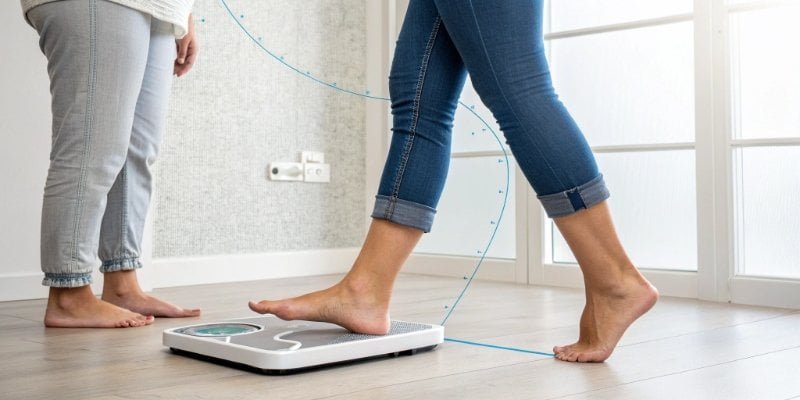
This BIA technology has turned the simple bathroom scale into a powerful health tracking tool. But how exactly does an electrical current tell you how much fat you have? It's all about the different properties of your body's tissues.
The Science of Bioelectrical Impedance Analysis9 (BIA)
When you step on the scale with bare feet, the metal pads send a harmless electrical signal up one leg and down the other. The scale measures the opposition, or impedance10, that this signal encounters.
- Muscle and Water: Muscle tissue contains a high percentage of water. Water is a great conductor of electricity, so the signal passes through it easily with low impedance.
- Fat Tissue: Fat, on the other hand, contains very little water. It acts as an insulator and resists the electrical signal, resulting in high impedance.
The scale's microprocessor takes this impedance measurement and plugs it into an equation. This algorithm also uses the personal data you provide—your height, age, gender, and activity level—to calculate an estimate of your body fat11, muscle mass, water percentage, and bone mass.
How Accurate is it?
This is the million-dollar question. BIA scales are fantastic for tracking trends over time. If you use the scale consistently under the same conditions, it can tell you if your body fat percentage is generally going up or down. However, for a single measurement, they are not as accurate as clinical methods like a DEXA scan. They are best seen as a convenient guide, not a diagnostic tool.
Factors Affecting Readings
The accuracy of a BIA reading can be influenced by many factors. To get the most consistent results, you should always weigh yourself:
- At the same time of day (mornings are best).
- After using the restroom.
- Before eating, drinking, or exercising.
- With clean, dry feet.
Hydration level is the biggest factor. Being dehydrated will increase electrical impedance and can make the scale overestimate your body fat.
Conclusion
From basic weight to complex body composition, electronic scales use smart sensor technology. Understanding how they work is the key to choosing the right tool for any weighing task.
-
Explore the workings of electronic scales to understand their advantages over traditional scales. ↩
-
Understand the significance of precision in scales for accurate measurements in different applications. ↩
-
Learn about the certification process that ensures scales are accurate for commercial use. ↩
-
Clarify the concepts of mass and weight to better understand scale readings. ↩
-
Learn about the role of gravity in weight measurement and its variations in different locations. ↩
-
Understand the reasons behind the continued use of traditional scales in medical settings. ↩
-
Discover the unique features and certifications of medical scales for clinical use. ↩
-
Learn about the rigorous standards that ensure the reliability of medical scales. ↩
-
Learn about BIA technology and its application in smart scales for body composition analysis. ↩
-
Understand the concept of impedance and its significance in measuring body fat. ↩
-
Understand the science behind body fat measurement using electronic scales for health tracking. ↩


Comments (0)