
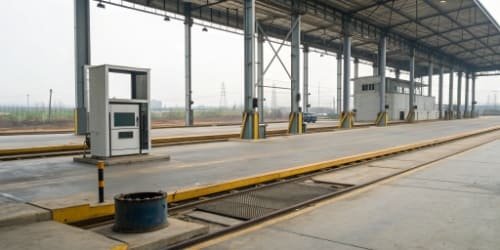
Is your weighbridge operation slow, costly, and prone to human error? These issues create long truck queues and inaccurate data, directly impacting your bottom line and operational efficiency.
An unattended terminal is a self-service kiosk that automates weighbridge transactions. It allows drivers to manage the entire weighing process—from identification to printing a ticket—without needing staff assistance. This is achieved using technology like card readers, cameras, and integrated software for 24/7 operation.

We've established that an unattended terminal1 is essentially a robot assistant for your weighbridge. It sounds great in theory, but you're probably wondering how it works in practice. Understanding the step-by-step process is crucial to appreciating its true value for your business. Let's explore how these systems turn a complex manual task into a simple, automated workflow2 that anyone can follow.
How Do Unattended Terminals Function at Weighbridges?
Are your drivers often confused about where to stop or what to do at the weighbridge? This uncertainty causes delays, incorrect measurements, and a disrupted workflow that frustrates everyone involved.
An unattended terminal functions through a guided, sequential process. The driver initiates the transaction with an ID card or PIN. The system then uses voice prompts and traffic lights to guide the vehicle correctly onto the scale. It automatically captures the weight and prints a detailed ticket.
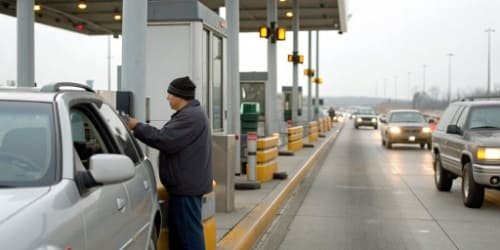
The magic of an unattended terminal lies in its seamless integration of simple hardware and smart software. As a manufacturer with nearly two decades of experience, I've seen this process perfected. It all boils down to a clear, repeatable workflow for the driver.
The Step-by-Step Transaction Flow
The system is designed to be intuitive, even for a first-time user. The goal is to eliminate any chance of confusion. Here is a typical transaction:
| Step | Driver's Action | Key Technology |
|---|---|---|
| 1. Arrival & ID | Driver scans an RFID card3 or enters a pre-assigned code. | RFID Reader / Touchscreen |
| 2. Guidance | Follows voice instructions and traffic light signals to drive onto the weighbridge. | Voice Synthesis / LED Lights |
| 3. Positioning | Stops the vehicle once the system confirms it is fully on the scale. | Infrared Sensors |
| 4. Weighing | The system automatically captures the stable weight and records it. | Weighbridge Indicator |
| 5. Completion | A ticket with all relevant data is printed for the driver. | Thermal Printer |
This entire process often takes less than a minute. The key is how these components communicate. The terminal acts as the field commander, but it reports directly to the central management software4—your software. Our hardware is built to make this connection effortless for you.
What Are the Benefits of Using Unattended Terminals in Weighbridge Operations?
Are high labor costs, constant human errors, and operational slowdowns hurting your business? Relying on manual weighing is an expensive and inefficient model in today's fast-paced world.
The primary benefits are drastically reduced operational costs and a huge boost in efficiency. These terminals enable 24/7 operation without staff, eliminate data entry mistakes, and significantly increase vehicle throughput. This translates to higher accuracy, better security, and a very fast return on investment.

When we talk to clients, their main concerns are always cost and efficiency. An unattended system directly addresses both. At Weigherps, we don't just sell a product; we provide a solution that delivers tangible results. I once worked with a logistics company that was struggling with paying for three shifts of weighbridge operators. After installing our unattended system, they could run their gates 24/7 with zero dedicated staff, and their weighing data became 100% accurate.
Boosting Efficiency and Cutting Costs
The advantages become clear when you compare the old way with the new.
| Feature | Manual Weighing | Unattended Terminal |
|---|---|---|
| Operating Hours | Depends on staff shifts | 24/7, 365 days a year |
| Data Entry | Manual, prone to error | Automated, flawless |
| Labor Cost | High and continuous | Minimal maintenance cost |
| Vehicle Throughput | Slow, often delayed | Fast, consistent cycle time |
The efficiency gains are immediate. Trucks spend less time waiting and more time moving. The cost savings are just as impressive. By eliminating the need for dedicated weighbridge operators, our clients often see a full return on their investment in as little as 12 to 18 months. The data is captured and sent directly to your ERP or management software, creating a seamless, paperless workflow5.
How Is Automation Achieved in Weighbridge Unattended Terminals?
Does the idea of implementing a fully automated system seem complex and intimidating? You might be worried about difficult integrations and a steep learning curve for your team and customers.
Automation is achieved by integrating key hardware components with a central software brain. Devices like RFID readers for identification, LPR cameras for verification, traffic lights for guidance, and barrier gates for control all work together. The software orchestrates their actions to create a fully hands-off process.
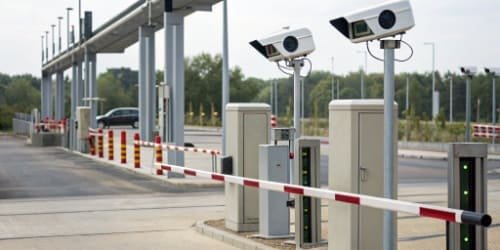
From my experience in engineering these systems, "automation6" isn't one single piece of technology. It's a team of reliable components working in perfect harmony. Think of it like a symphony orchestra—each instrument has a specific role, but it's the conductor (the software) that creates the music. For a software provider like you, this is where the opportunity lies.
The Core Components of Automation
Our job as a hardware manufacturer is to provide the best "instruments" for your "orchestra." Here are the core components that make automation possible:
- Identification Hardware: RFID readers and License Plate Recognition (LPR)7 cameras are the most common. They instantly identify the vehicle and pull up associated data like tare weight or customer information.
- Positioning and Safety Hardware: Infrared light beams create an invisible curtain across the weighbridge. If a vehicle isn't positioned correctly, the system will not record a weight, preventing fraudulent measurements.
- Interaction Hardware: Industrial-grade touchscreens, intercoms, and voice synthesis modules provide a simple interface for the driver to receive instructions and, if needed, call for help.
- Control Hardware: This includes traffic lights8 to manage flow and barrier gates to control access. The terminal sends signals to these devices based on the software's logic.
We design our terminals with open APIs and standard communication protocols. This means your software can easily connect and take control. We provide full SDKs and dedicated technical support9, so your development team can integrate our hardware quickly and build a powerful, seamless solution for your customers.
What Security Features Are Essential for Unattended Weighbridge Terminals?
Are you concerned about fraud at an unmanned station? The thought of someone cheating the system, whether by mistake or on purpose, can lead to significant financial losses and data corruption.
Essential security features form a multi-layered defense. This includes video surveillance that captures images of the vehicle during weighing, infrared sensors to ensure correct positioning, and License Plate Recognition (LPR) to match the vehicle to the transaction. Secure, tamper-proof data logs are also critical.
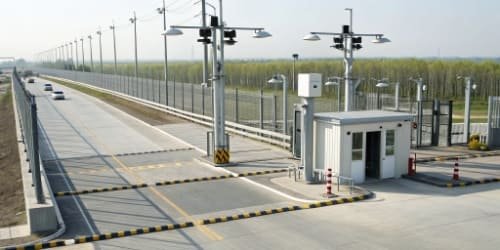
This is one of the most common questions I get from new clients. They love the idea of efficiency but worry about losing control. The truth is, a properly equipped unattended system is often more secure than a manual one. It creates an undeniable audit trail10 for every single transaction. My insight about catching non-compliant vehicles comes directly from this. The system leaves a digital footprint for every action, making audits and checks simple.
A Multi-Layered Security Approach
A single security feature is not enough. A robust system uses several layers to prevent different types of fraud.
| Fraud Type | Description | The Technological Solution |
|---|---|---|
| Incorrect Positioning | The truck is not fully on the scale to reduce its weight. | An array of infrared beams or light curtains confirms the vehicle's position. |
| Driver Swapping | The driver gets out of the truck for the gross weighing. | An HD camera captures an image of the driver's cabin with the weight record. |
| Unauthorized Access | A driver attempts to use the weighbridge without permission. | Secure RFID card, PIN system, or LPR database check prevents access. |
Beyond the physical hardware, data security is paramount. The terminal must capture and timestamp images from multiple cameras (e.g., front, back, and overhead view) and link them permanently to the weighment record. This data should then be transmitted securely to your central software. As a software provider, your system's role-based access controls, encrypted databases, and detailed audit logs are the final, critical layer of this security framework. We provide the hardware triggers; you provide the secure data fortress.
Conclusion
In short, unattended terminals are a crucial upgrade for any modern weighbridge. They deliver unmatched efficiency, accuracy, and security, paving the way for data-driven, profitable weighing operations.
-
Explore how unattended terminals can revolutionize weighbridge operations by automating processes and reducing costs. ↩
-
Understand how automated workflows enhance operational efficiency in weighbridge systems. ↩
-
Find out how RFID technology improves identification and transaction speed at weighbridges. ↩
-
Explore how central management software integrates with weighbridge terminals for seamless operations. ↩
-
Learn how a paperless workflow enhances efficiency and reduces environmental impact in weighbridge systems. ↩
-
Understand the significance of automation in enhancing weighbridge efficiency and accuracy. ↩
-
Explore how LPR technology enhances security and efficiency in weighbridge operations. ↩
-
Learn about the importance of traffic lights in managing vehicle flow at weighbridges. ↩
-
Find out about the technical support options that facilitate smooth integration of weighbridge systems. ↩
-
Understand the importance of maintaining an audit trail for accountability in weighbridge transactions. ↩

Comments (0)