

Inaccurate measurements can create trade disputes and damage your business. This uncertainty costs both money and trust. Legal metrology provides the rules to ensure fairness and accuracy for everyone.
Legal metrology is the application of legal requirements to measurements and the instruments used to make them. This system guarantees that measurements in trade, health, and safety are accurate, reliable, and fair. It protects both consumers and businesses and is typically managed by government bodies.

This might sound a bit academic, but it hugely impacts our daily lives and, especially, international business. As an industrial scale manufacturer1 for 19 years, I've seen firsthand how these regulations shape product development and build trust between partners. It's the invisible foundation that makes global trade possible. So, let’s break down what it really means and why it's so critical for businesses like yours.
What actually is legal metrology?
Confused by the term "legal metrology"? It sounds complex and bureaucratic. But ignoring it can lead to non-compliant products, blocking your access to valuable international markets.
Legal metrology is the branch of metrology focused on measurements and instruments that are subject to legal requirements. Its goal is to provide public assurance regarding the security and accuracy of measurements, particularly in commerce and public safety.

At its core, legal metrology is about creating a level playing field. It makes sure that a kilogram of grain in one country is the same as a kilogram in another. This trust is essential for global trade. For us at Weigherps, it's not just a rule; it's a promise to our clients. Our scales must meet these strict standards to be sold in regulated markets like Europe, which requires certifications like the CE mark. The entire system is built on a few key activities that ensure this promise is kept from the factory to the marketplace. For a software company, understanding this is vital. Your software must work with hardware that is legally certified for trade.
Core Components of Legal Metrology
| Component | Description | Why It Matters for Your Business |
|---|---|---|
| Type Approval2 | A government body tests and certifies a model of an instrument (e.g., a scale) to ensure it meets all legal and technical standards. | Your software needs to be compatible with a hardware model that has already passed this rigorous certification. |
| Verification | After production, an authorized official inspects and tests each individual instrument before it can be used for trade. | This confirms the specific unit you are integrating with is accurate and legally compliant. |
| Market Surveillance3 | Authorities conduct random checks on instruments already in use to ensure they remain accurate and have not been tampered with. | This maintains long-term trust in the system and the data your software processes. |
What are some examples of legal metrology in action?
You experience measurements every day but may not notice the laws behind them. This can make it hard to see how legal metrology impacts your own business operations.
Common examples include grocery store scales for produce, gas pumps measuring fuel, and home electric meters. In industry, it applies to truck scales weighing cargo for transport fees and batching systems in manufacturing that require precise ingredient amounts.
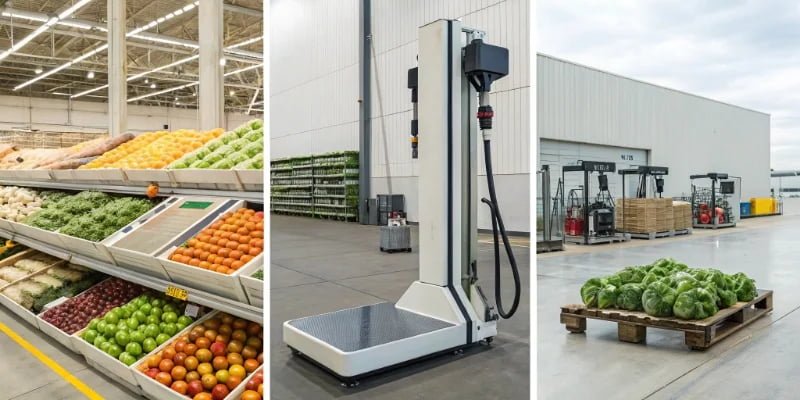
The reach of legal metrology is wide because fair measurement is fundamental to so many parts of our economy. In my experience, these applications fall into a few major categories. For software vendors, these examples highlight critical points where your software interacts with legally controlled data. For instance, if your software integrates with a Point of Sale (POS) system, it must be able to trust the weight data from an approved scale. Any error or vulnerability could have legal consequences. The same applies to industrial settings. Our custom weighing systems4 for manufacturing plants rely on precise batching. The software that controls these systems must be robust and secure, as the measurements directly affect product quality and may be subject to regulatory audits5.
Real-World Applications
| Sector | Example Instrument | Reason for Regulation |
|---|---|---|
| Retail & Commerce | POS scales, Gas pumps | To ensure customers pay the correct price for the quantity of goods or services received. |
| Logistics & Transport | Weighbridges, Axle weighers | To determine shipping costs, collect tariffs, and enforce road safety weight limits. |
| Manufacturing | Batching controllers, Industrial scales | To guarantee product quality control, ensure recipe consistency, and comply with industry standards. |
| Health & Safety | Medical scales, Pharmaceutical balances | To ensure accurate dosages of medicine and provide correct data for health diagnostics. |
What does a metrologist actually do?
Do you think a metrologist just calibrates scales all day? This view misses their vital role. Understanding their work reveals the deep expertise required to ensure measurement accuracy across entire industries.
A metrologist is a specialist in the science of measurement. They develop measurement standards, calibrate instruments, design measurement systems, and ensure compliance with legal requirements. They are the guardians of accuracy, from the factory floor to the national standards laboratory.

A metrologist is much more than a technician; they are a problem-solver and a scientist. At Weigherps, our technical experts, who are specialists in metrology, are involved in every stage of a product's life. In our quality control department, they perform daily calibrations6 and verifications. This means they compare every scale we produce against internationally recognized standard weights to confirm its accuracy7 before it leaves our factory. But their role goes deeper. When a client needs a custom weighing solution, our metrologists act as consultants. They work with the client's team—and often their software providers—to design a system that meets unique production needs while staying fully compliant. I recall a project integrating IoT sensors into a weighing system. Our metrology expert was critical in developing new testing protocols to prove that the "smart" data was just as reliable and legally valid as a traditional physical readout.
What are the three main types of metrology?
Is all metrology about laws and regulations? Not quite. This misconception can limit your understanding. There are different branches, each with a specific and important focus.
The three main types are Scientific, Industrial, and Legal Metrology. Scientific metrology establishes measurement standards. Industrial metrology ensures instruments function correctly in manufacturing. Legal metrology, as discussed, enforces measurement laws for trade and public protection.
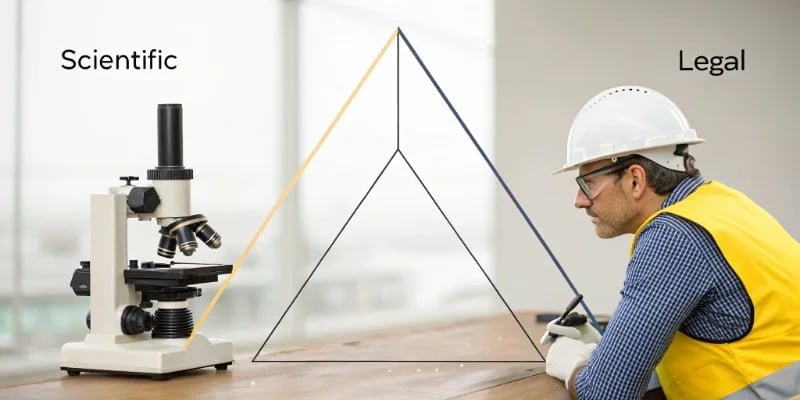
These three branches work together like a pyramid. At the top is Scientific Metrology, the ultimate source of truth. This is where national laboratories define the fundamental units of measure, such as the kilogram. They create the primary standards that everything else is compared against. Below that is Industrial Metrology. This is about applying measurement science on the factory floor for quality control. In our company, we use industrial metrology8 principles to make sure every component is built to exact specifications. This ensures our products are durable and reliable. For a software provider, this means the hardware you integrate with is well-made. Finally, Legal Metrology forms the base of the pyramid in daily life. It takes the precision from scientific metrology9 and the quality from industrial metrology and makes them legally binding in specific applications. It’s the branch that directly protects consumers and businesses in trade.
The Three Branches Compared
| Type | Focus | Key Activity | Example |
|---|---|---|---|
| Scientific | Establishing units of measure and primary standards at the highest level of accuracy. | Research and development in national metrology institutes (e.g., NIST, PTB). | Defining the exact mass of the International Prototype of the Kilogram. |
| Industrial | Ensuring the fitness of measurement instruments used in production and quality control. | Calibration of machinery, process monitoring, quality assurance in a factory. | Calibrating the tools used to manufacture scale load cells. |
| Legal | Protecting the public and ensuring fairness in commercial and official measurements10. | Type approval, verification, and market surveillance of regulated instruments. | Certifying a grocery store scale or a weighbridge for trade use. |
Conclusion
Legal metrology is the backbone of fair trade and public trust. It standardizes measurements globally, ensuring accuracy and reliability from the store to the factory and fostering international business growth.
-
Gain insights into the role of manufacturers in ensuring measurement accuracy. ↩
-
Understand the Type Approval process and its importance for compliant instruments. ↩
-
Explore how market surveillance maintains trust in measurement systems. ↩
-
Learn about tailored weighing solutions and their importance in various industries. ↩
-
Learn about the importance of regulatory audits for compliance in measurements. ↩
-
Understand the calibration process and its significance for measurement accuracy. ↩
-
Discover the significance of accuracy in measurements for consumer trust and business integrity. ↩
-
Learn how industrial metrology ensures quality control in manufacturing. ↩
-
Explore the foundational role of scientific metrology in establishing measurement standards. ↩
-
Explore how accurate measurements are vital for fair trade and avoiding disputes. ↩



Comments (0)